
Sylhet Test, Day 1: Wickham's 400 dream, Taskin's 'all out for 50' reply
संक्षिप्त उत्तर: सिलहट में खेले जा रहे टेस्ट मैच के पहले दिन के खेल के बाद कैरेबियाई टीम चार विकेट पर 235 रन पर थी। टीम के डेब्यू बल्लेबाज़ केविन विकम ने पहली पारी का लक्ष्य 350 से 400 रन बताया, जबकि बांग्लादेश के तेज़ गेंदबाज़ तस्कीन अहमद ने कहा कि टेस्ट में कोई टीम 450 भी बना सकती है और कोई एक घंटे में 50 पर ढेर भी हो सकती है। दोनों बयान पूर्वानुमान नहीं, बल्कि रणनीतिक और मानसिक टकराव हैं; मैच की असली स्थिति 235/4 है। 400 तक पहुंचने के लिए कैरेबियाई टीम को बचे छह विकेट के साथ करीब 165 रन और चाहिए। तस्कीन ने यह भी कहा कि विकम नए खिलाड़ी हैं और उनके उत्साहित बयानों को ज़्यादा तवज्जो नहीं दी जानी चाहिए। ध्यान दें: रिपोर्ट के आधार पर टीमों की पहचान (बांग्लादेश मेज़बान, वेस्टइंडीज़ मेहमान) और अन्य ब्योरे स्वतंत्र रूप से सत्यापित नहीं हैं; टॉस, मौसम, चोट और गेंदबाज़ी के आंकड़े उपलब्ध नहीं हैं। यह जानकारी केवल खेल-संदर्भ के लिए है, किसी सट्टे या नतीजे की सलाह नहीं।
At stumps on Day 1 of the Test in Sylhet, the Caribbean side finished on 235 for 4 — a total that reflects patience and survival rather than any explosive intent. Against that backdrop, the team's young batter Kevin Wickham set a first-innings target of 350 to 400 runs, arguing that such a total would force the opposition to bat again. Bangladesh's senior fast bowler Taskin Ahmed responded with a measured counter: in Test cricket a side can reach 450, and a side can also be bowled out for 50 inside an hour.
In the language of Test cricket, this score is a foundation, not a harvest. Over five days, the first day of the first innings often sets a team's direction, but a single day tells us nothing about the result. A score of 235 for 4 means the Caribbean side has negotiated the difficult early phase and now has a platform to build a substantial total. It also means neither side is yet in a winning position.
Wickham's statement rests on exactly that platform. He said the team's target should be 350 to 400 and that such a score would force the opposition to bat again. That sentence is not a declaration of aggressive batting; it is a pointer to a well-known Test strategy — bat long, wear the pitch down, and then make life difficult for the opposition in their second innings.
The idea of making the opposition bat again is tied directly to the possibility of a follow-on. A follow-on applies when a side builds a large first-innings lead and the captain chooses to send the opposition back in immediately. That strategy becomes logical only if the pitch becomes more helpful to spinners from the third and fourth days and batting gets progressively harder.
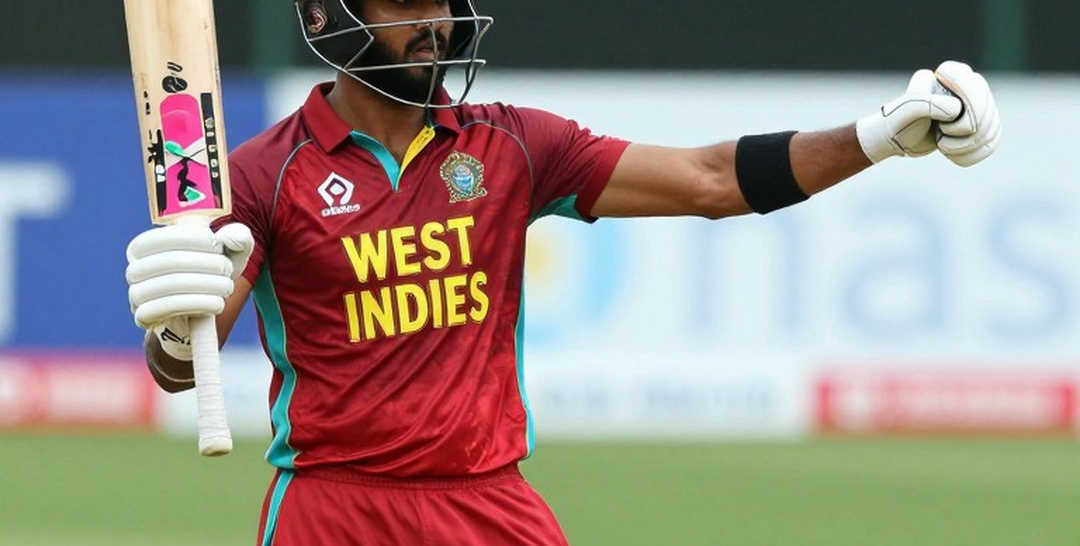
This is Wickham's first Test. He is reported to have scored runs in his debut innings. For a new player, runs in the first innings build confidence, but in cricket one innings is not proof of a player's ability. His 400-run target should therefore be read as an expectation, not a forecast.
Taskin underlined precisely this. He said Wickham is a new player, naturally excited, and that young players say many things on such occasions which should not be given too much weight. That comment is a clear example of a senior player's role — cooling an opponent's young batter and keeping his own dressing room free of psychological pressure.
Taskin then reminded everyone of Test cricket's central truth: a team can reach 450, and a team can be bowled out for 50 within an hour. Technically this is entirely correct. Across five days, the direction of an innings can change within a few sessions, especially on subcontinent pitches where the ball begins to turn sharply.
But a fine distinction matters here. Wickham's statement is a target; Taskin's is a possibility. Both can be true, and neither predicts what will happen in the next two sessions. In cricket terms, this is a clash of opinions, not a clash of data.
The most useful information about the match state is hidden in the scoreline itself: 235 for 4. That means the home bowlers still need six wickets, and the visiting side still has an opportunity to take the innings to 350-400. It is equally true that if two or three wickets fall quickly on the second day, the same innings could be wrapped up around 280-300.
One thing is clear from both players' remarks: the pitch will change as the match progresses and batting will get harder. That is the normal character of a subcontinent Test, where the first two days are relatively easier for batters and spinners begin to dominate from the third day.
For Bangladesh the challenge is twofold. On one hand it must dismiss the Caribbean innings quickly; on the other it must ensure it does not itself fall short with the bat. In home conditions the role of spinners grows, and the host team usually relies on that weapon.
Bangladesh's natural plan will be to restrict the Caribbean side to under 350 and then bat big to take a lead. If that happens, the pressure flips immediately and the visiting side may have to bat in the fourth innings.
The Caribbean side's aim, meanwhile, is clear — bat long and wear the pitch down as much as possible. The Day 1 score fits that approach, because 235 in roughly 90 overs signals occupation of the crease rather than acceleration.
The arithmetic is straightforward. To reach 400, the Caribbean side needs about 165 more runs from its remaining six wickets. That is neither impossible nor easy — especially once the pitch begins to turn and the ball is older.
The other side of the risk is just as real. If two or three early wickets fall on the second day, the same innings could collapse around 300. Six wickets falling in a session is not unusual in Test cricket, and on a turning pitch that risk only grows.
It should also be clear what information is not available. Who won the toss, what the weather will do, the fitness status of any player, the bowlers' figures — none of this is available. Drawing any firm conclusion under those conditions would be premature.
There is a media dimension to this debate as well. Pairing two quotes to create a war of words is a familiar habit of subcontinent cricket reporting. The headline manufactures tension, while the actual state of the match is far calmer.
There is also a false balance at work. Taskin's statement describes a reality of Test cricket, while Wickham's describes a hope. Presenting both with equal weight is easy journalism but misleading analysis.
On Wickham, any conclusion must remember that his sample is a single innings. Runs made against a Day 1 attack do not tell us how he will cope when the ball is turning in the fourth innings.
A reputational risk attaches here too. If the Caribbean side gets close to 400, Taskin's all-out-for-50 line will be recycled as a joke. If the side is bowled out for 250-300, Wickham's 400 target will become the butt of the story.
In the broader cricket context, Wickham's debut is itself a signal. Giving young players an opportunity in the Test side is one direction for West Indies cricket, and picking a new batter on a tour like Sylhet can be read as part of that.
All eyes now turn to the second day. The biggest question is whether the Caribbean side takes its first innings past 350 or whether Bangladesh's bowlers restrict it to around 300. That single number will decide whose statement looks right.
The second question concerns the pitch. If the ball starts turning from the second day, the home side's spin-based gamble grows stronger and talk of a follow-on becomes real. If the pitch continues to favour batters, the contest will stretch longer.
The third question is Wickham's future output. His next innings will indicate whether his first-innings runs were an exception or a sign of durable ability. Taskin's bowling figures, meanwhile, are not available in this report, so no conclusion can be drawn about his form.
One necessary caution applies. This report rests on the stumps score from Day 1 and the statements made by the two players. The identification of the teams and other details have not been independently verified, so it would be prudent to confirm against official sources before drawing conclusions.
The conclusion is simple. Day 1 of the Sylhet Test offers a story in which there is less cricket and more talk. The score of 235 for 4 keeps the match open, Wickham's 400 is an ambition, and Taskin's 50 is a warning. The real verdict will come from the pitch, from patience, and from the cricket of the next two sessions.

संबंधित खिलाड़ी
लोकप्रिय/पसंदीदा पुस्तकें
Nepal to Host ICC Men's Cricket World Cup Qualifier Playoff in December, Four Teams to Advance to Global Qualifier2026-11-06
Wellington's Rain, Siraj's Wait, and the Scorecard With an Empty Format Column2026-11-06
The Air-Quality Line: What a Venue Change from Delhi to Visakhapatnam Leaves in the Fine Print2026-11-06
The Lesson of the Empty File: Why Indian Cricket's Record Is Smaller Than Its Claims2026-11-06
Thatta Cement's EV Leap: Behind the PSX Filing That Isn't Cricket2026-11-06
अनुशंसित
Furniture Fair Story Tagged cricket_asia: A Serious Classification Failure in the Sports Data Pipeline2026-10-28
The Truth of the Empty Sheet: Why Data Remains Invisible in Asian Cricket2026-11-02
MI's IPL 2027 Staff: Four Chairs, One Unnamed Exit — and the Real Signal in the Backroom Market2026-10-31
Fifty Wickets at 17, Still No Contract: How Lancashire Closed the Anderson Era2026-10-30
A Filled Template, an Empty Ground: Where the Evidence Went in Asian Cricket's Newsroom2026-10-28