
Blueprint under construction: India look to solve 2027 World Cup bowling puzzle in New Zealand ODI series
मुख्य सारांश: भारत न्यूज़ीलैंड में वनडे सीरीज़ को 2027 विश्व कप की गेंदबाज़ी योजना के परीक्षण के रूप में इस्तेमाल कर रहा है। यह चयन की नहीं, गेंदबाज़ी संयोजन की समस्या है — कौन-सा गेंदबाज़ किस चरण में (पावरप्ले, मध्य ओवर, डेथ) और कितने कार्यभार के साथ खेलेगा। वनडे को परीक्षण का माध्यम चुनना तर्कसंगत है क्योंकि 2027 विश्व कप भी 50 ओवर का है; टी20 या टेस्ट के आँकड़े सीधे स्थानांतरित नहीं होते। सबसे बड़ा जोखिम परिस्थिति-स्थानांतरण है: न्यूज़ीलैंड में सीम और स्विंग प्रमुख हैं, जबकि दक्षिणी अफ़्रीका में उछाल, रफ़्तार और सूखी सतह पर स्पिन का व्यवहार निर्णायक होगा — इसलिए दूसरी सत्यापन खिड़की ज़रूरी है। दूसरा बड़ा कारक प्रमुख तेज़ गेंदबाज़ का कार्यभार और चोट-जोखिम है, जिसके लिए रोटेशन मॉडल और स्पष्ट बैकअप चाहिए। सीरीज़ लगभग तीन मैचों की होने पर करीब 150 ओवर का नमूना मिलेगा, जो दो-साल की योजना के लिए छोटा है — इसलिए मूल्यांकन मानदंड पहले से तय होने चाहिए (चरण-वार इकॉनमी, विकेट दर, डॉट-बॉल प्रतिशत), न कि औसत या कुल विकेट। सीरीज़ का स्कोरलाइन टीम की ताकत का भरोसेमंद पैमाना नहीं होगा। ध्यान देने योग्य: इस विश्लेषण में किसी खिलाड़ी का नाम, आँकड़ा, उद्धरण या मैच परिणाम उपलब्ध नहीं है; इसलिए सभी खिलाड़ी-स्तरीय निष्कर्ष अनुमान हैं और स्क्वॉड घोषणा तथा ICC क्वालिफ़िकेशन दस्तावेज़ों से सत्यापन योग्य हैं।
An unfinished blueprint with a fixed deadline
India are touring New Zealand for an ODI series, and the series matters far more than its scoreline. It is an open testing ground for India's bowling plan for the 2027 World Cup. The question in front of the team management is not who the best bowler is. The question is which bowler bowls in which phase, in what role, and under what workload. In other words, this is not a selection problem but a combination problem — and combination problems are never solved in one series.
The framing itself carries information. It suggests India do not have a settled first-choice ODI attack, or that the workloads of whoever is incumbent cannot be assumed for a full cycle. That is significant in itself. A side short of options does not experiment in a bilateral series. Experimentation is a signal of depth.
Why ODI: the format argument
ODI is the analytically sound choice of vehicle, for an obvious reason: the 2027 World Cup will also be a 50-over tournament. Two new balls, a ten-over powerplay, a long middle phase and a ten-over death phase — the same architecture will be waiting there. T20 gives you only a six-over powerplay and a four-over death; Test cricket changes the maths entirely through ball age and spell length. A T20 death-bowling reputation is not ODI evidence, and Test discipline does not answer the question of overs 11 to 40.
So experimentation in New Zealand has direct transfer value — provided it is read correctly. Headline averages and economy rates mislead here. The real reading lies in phase-level numbers: powerplay wicket rate, the balance of economy and strike rate between overs 11 and 40, and runs conceded per over from 41 to 50. A series scoreline tells you almost nothing about any of this.

New Zealand air, southern African bounce
One problem gets discussed too little and carries too much risk. The 2027 World Cup is to be played in southern Africa — fast, bouncy pitches, an altitude effect, and a different kind of carry through the air. New Zealand is also a land of seam movement and wind, but the two environments are not the same. In New Zealand swing and seam dominate the question; in southern Africa bounce, carry and the behaviour of spin on drier surfaces become decisive.
That means success in New Zealand cannot be treated as a certificate for 2027. This is a condition-transfer risk, not a condition match. A bowler who is economical in New Zealand through movement off the seam will face a different challenge on a bouncy surface. The blueprint will therefore need two validation windows — one for seam and swing, one for bounce and pace. A selection group that ignores this distinction is writing a plan bounded by the limits of its own laboratory.
The five bowling slots
Even without individual data, a bowling unit can be broken into five roles. This framework does not replace names, but it can be filled the moment a squad is announced.
Slot one: the new-ball specialist. In the two-new-ball era you need at least two viable options who can take wickets in the first ten overs. Powerplay wickets break the opposition's foundation and reshape the entire batting structure that follows.
Slot two: the attacking middle-overs spinner. Overs 11 to 40 are where ODIs are won and lost. A containing spinner caps the scoring rate but does not break partnerships. India's real question here is whether spin is for control or for wickets. Finger spin for control versus wrist spin for attack is an old debate in ODI squad construction, and it remains unresolved.
Slot three: the death-overs yorker specialist. This is the scarcest skill in the format. Overs 41 to 50 demand not only yorker accuracy but also composure under pressure and the right mix of slower ball, cutter and wide line. Many teams try to fill this slot with an all-rounder and pay for it at a World Cup.
Slot four: a genuine all-rounder — top-six batting plus a full ten overs or a reliable six to eight. This slot frees a specialist place and covers the risk of a batting collapse. If the all-rounder's fitness or availability is uncertain, the entire five-bowler model wobbles.
Slot five: the left-arm seamer. This is less a question of skill than of structure. Against a right-hand-heavy batting order, changing the angle of the ball is a weapon with no substitute.
Workload: the biggest unmentioned variable
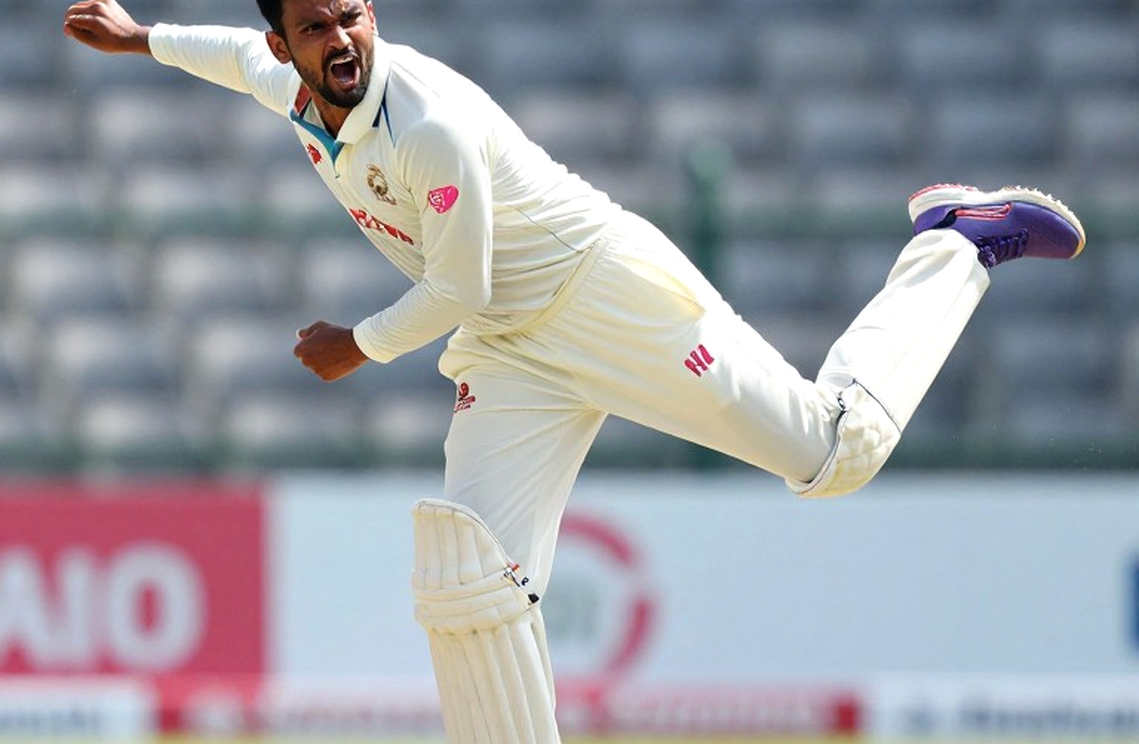
The variable least discussed and most consequential is the workload of the frontline fast bowler. Any long-horizon plan that assumes the premier quick will bowl a full quota in every series for two years is fragile. Recent Indian cricket history suggests the biggest uncertainty is injury, not talent.
In practice that means a rotation model — one designated spearhead, one clear backup, and tight monitoring of spell length. That is a decision taken more in the management room than on the field, but its effect lands directly on the bowling combination being trialled here. Rest the senior quick through the middle overs and someone else has to bowl them — and that is exactly where young bowlers come under the most pressure.
Another overlooked factor: several senior bowlers declining or retiring in the same window. The probability may be low, but the impact is heavy. The second line of seamers has to be developed now, in this cycle, not by late 2026.
Result versus process
There is a direct tension between a bilateral series result and an experimental agenda. If India rotate bowlers by design, the scoreline becomes a poor measure of team strength in either direction. Conversely, the only output worth reading is phase-level bowling data.
What follows is that evaluation criteria must be fixed before the series begins — not headline figures like average or total wickets, but powerplay wicket rate, middle-overs economy, death-overs runs per over and dot-ball percentage under pressure. Without that, a two-year plan gets written on three matches of noise and has to be reset within twelve months. That is the largest risk here: not selection error, but evaluation error.
New Zealand's incentives are different
One thing is often forgotten: New Zealand will not treat this series as an experiment. The hosts will field their best XI and try to win. That is a gift to India. Data generated against an opponent at full intensity is far more reliable than data from a friendly. A decision taken under pressure, a ball bowled under pressure — that is what gives an experiment meaning.
New Zealand's attack is traditionally built on seam movement and disciplined lengths suited to home conditions. A touring Asian middle order is its classic target. If India test new-ball combinations here, they are testing exactly the phase New Zealand's attack is designed to win. That makes it difficult, and therefore useful.
Commercially and emotionally, too, this is a low-pressure series. India–New Zealand is not a marquee rivalry. The absence of noise is what makes it a laboratory — a failed experiment costs little here.
The arithmetic of a small sample
Series length has not been formally confirmed, but such tours conventionally carry three ODIs. If so, roughly 150 overs of bowling are available in total, and rain may cut into even that. A fast bowler gets eight or nine overs a match, so about 25 to 30 overs across the series. Building a two-year plan on a sample that small is a weak statistical foundation. Add New Zealand's specific conditions and the sample shrinks further in relevance.
The answer is not to skip the experiment. The answer is to recognise the size of the sample and scale conclusions accordingly. What one series can deliver is this: which bowler actually possesses which skill, and who would be a risk to carry across a full cycle. Extracting more than that is an expectation no series can meet, and none should be asked to.
The commercial layer
There is an angle that almost never gets mentioned. Of the three formats, bilateral ODI sits lowest — both for broadcast value and for player availability. T20 leagues and T20 internationals dominate the calendar and the revenue pool. That is why boards take their easiest rest-and-rotate decisions in the ODI window. It is what makes it the natural experimental slot.
There is a second side to this. If the series is used primarily for rotation, its own commercial value falls — star-dependent viewership in the Indian market is unusually concentrated. That effect is secondary but real. It should also be remembered that at this level no broadcast-rights, contract or auction figures are available — so reading a commercial motive into selection decisions would be pure speculation, not analysis.
Rules and governance
There is no governance or integrity dimension to this story. It is a selection-planning story, not a rules story. No DLS controversy, no over-rate crisis, no eligibility question.
The only relevant governance lever is the board's authority over player availability — the practical power to decide who tours and who rests. Experimentation is possible only where that power exists.
But one point is worth verifying and should not be ignored. The 2026 cycle used an ODI Super League pathway; the route to 2027 is different. If bilateral ODI results carry ranking-based qualification weight, experimentation is not cost-free — the cost is small, but not zero. That must be checked against ICC documentation, not assumed.
The overall risk map
Risks sit in three layers. The first is sporting process: rotation for the sake of experimentation, a small sample, non-representative conditions — the resulting data may be inconclusive. This is a high-level risk because it affects the whole cycle. Its mitigation is pre-committed evaluation criteria.
The second is personnel: the frontline quick's workload and injury, the all-rounder's availability, and the simultaneous decline of several senior bowlers. The third is condition transfer: treating New Zealand data as southern African data.
Two lighter risks sit alongside. One is commercial — rotation diluting star power. The other is public opinion — a series defeat framed as a crisis, which would replace experimentation with damage control. There is only one mitigation: frame expectations publicly in advance. This is a trial; judge it by process, not by the scoreline.
Overall the risk rating is medium. The dominant risks are sporting-process risks rather than financial, legal or integrity risks, none of which appear here at all. One structural fact pushes the rating up: any long-horizon bowling plan that depends on the availability of the premier fast bowler carries a persistent, non-diversifiable injury exposure.
Public narrative: low heat, low pressure
The most interesting thing about this story is that it is not overheated — it is underheated. The usual Indian media star-making pattern runs the other way. There is no hero here, no controversy, no anguish over a defeat. The language is constructive rather than crisis-driven: "the blueprint is under construction" looks forward; it does not shout.
That means the gap between sentiment and fundamentals is small. The real risk is not hype but premature closure — treating a partial trial as a settled answer.
The expectation gap is large in exactly one place: the assumption that this series will "solve" the puzzle. A single bilateral series, in non-representative conditions, cannot settle a multi-year plan. That expectation is over-optimistic.
The narrative has a medium-term shelf life. Its temperature will drop over the next month or two, then it will return in the same frame — with far greater intensity — roughly a year before the World Cup, regardless of what happens in this series.
What to watch
The real question is not the result but what the team management is looking for. The squad announcement will clarify part of the picture, not all of it. The signals worth watching: are two different types of new-ball option trialled in the powerplay? Is the middle-overs spinner asked for wickets or only for containment? Is there a designated death specialist, or is an all-rounder covering the job? Does the left-arm seamer get a sustained run, or a single look?
The answers to those four questions will say more than the scoreline. They will also set the direction of 2027 preparation — a pace-led blueprint or a spin-control one. Given the bouncy, quick southern African venues, the first looks more logical, but that is inference, not evidence.
Conclusion
The hardest part of India's 2027 preparation is not finding bowlers. It is deciding which bowler bowls in which phase, and which numbers that decision is judged against. The New Zealand series will not answer the question. It will sharpen it — and if evaluation criteria are fixed in advance, it can change the direction of the next two years.
The truth about the puzzle is that it is not entirely a cricket puzzle. Half of it is workload management, half is condition transfer, and a little of it is patience. The team that reads this series as a test rather than as a test result is the one that arrives ready in 2027. The blueprint is unfinished. The question is not when it will be completed; the question is whether the right foundation is being laid now.