
Dakar Youth Olympics: Mosquitoes, Rooms Without AC and Tanvi Patri — How Strong Is This Story?
प्रश्न: दाकर 2026 यूथ ओलंपिक में तन्वी पात्रि के आवास को लेकर क्या विवाद है? संक्षिप्त उत्तर: यह विवाद एक अकेले स्रोत पर आधारित है। तन्वी के पिता रबीनारायण ने टाइम्स ऑफ इंडिया को बताया कि खेल गांव के कमरों में मच्छर हैं और एसी नहीं है। केल नाउ ने इसी रिपोर्ट को आगे प्रसारित किया। IOC, दाकर 2026 आयोजक समिति, भारतीय ओलंपिक संघ या स्वयं तन्वी पात्रि की कोई सीधी प्रतिक्रिया किसी भी रिपोर्ट में दर्ज नहीं है, और कमरे की कोई तस्वीर या तापमान का कोई आंकड़ा भी उपलब्ध नहीं है। मुख्य तथ्य: • तन्वी पात्रि, 15 वर्ष, भारतीय बैडमिंटन खिलाड़ी; दाकर 2026 यूथ ओलंपिक में बैडमिंटन 1 नवंबर से प्रस्तावित। • ग्रुप चरण के प्रतिद्वंद्वी: ऑस्ट्रेलिया, मेक्सिको, दक्षिण कोरिया। • सेमीफाइनल में जापानी खिलाड़ी की संभावना का दावा पिता का है, आधिकारिक ड्रॉ प्रस्तुत नहीं किया गया। • सितंबर-अक्टूबर में जापान में एशियाई खेल, अक्टूबर में मिस्र में BWF विश्व जूनियर चैंपियनशिप (16 का दौर, वहीं बीमारी), और 1 नवंबर से दाकर — करीब छह हफ्तों में तीन अंतरराष्ट्रीय आयोजन। सावधानी: दाकर नवंबर में तटीय शहर है और दिन का तापमान सामान्यतः 25-28 डिग्री सेल्सियस रहता है; इसलिए 'अत्यधिक गर्मी' की जगह 'बिना एसी कमरा, खराब वेंटिलेशन और मच्छर' को मुख्य समस्या माना जाना चाहिए। 'स्वर्ण पदक नज़र में' जैसे वाक्यांश तथ्यों से मेल नहीं खाते और उन्हें स्रोत के दावे के रूप में नहीं दोहराना चाहिए। क्या सत्यापित करना बाकी है: बैडमिंटन का 1 नवंबर का शेड्यूल, आयोजकों का एसी संबंधी वादा, समस्या का व्यापक या स्थानीय होना, मिस्र में विश्व जूनियर का आयोजन एवं झांग यिक्सिन का खिताब, तन्वी की आयु-योग्यता, और एशियाई U-17 खिताब तथा सीनियर नेशनल्स सफलता का विवरण।
The badminton competition at the Dakar 2026 Youth Olympic Games begins on November 1, and India's attention is fixed on 15-year-old Tanvi Patri. But the headlines of the past few days have had little to do with her game. They have been about mosquitoes in the Games Village and rooms allegedly without air conditioning. Tracing those headlines back to their origin produces a rather different picture — one that shows how a single source, repeated twice and re-reported once, can harden into a 'crisis'.
The entire structure of the story rests on one chain. The primary source is Tanvi's father, Rabinarayan, whose account appeared in The Times of India. The secondary source is that Times of India report itself, which Khel Now then relayed. The tertiary layer is Khel Now's own report, now circulating in both English and Hindi. At no point in this chain is there a statement from the International Olympic Committee, an official response from the Dakar 2026 organising committee, a comment from the Indian Olympic Association or any delegation official, a direct quote from Tanvi Patri herself, or any corroboration — or contradiction — from another country's athlete or delegation. There is no photograph of a room, no temperature reading, no humidity data.
None of this is an allegation that the complaint is false. It is an exposure of how the story was built, and of its limits.
What exactly is claimed, and by whom
According to the report, Tanvi 'has spoken about the challenges'. But every concrete detail that follows — the mosquitoes, the missing AC, the heat — is attributed to her father. This is a clear attribution error by professional standards. If the athlete said it, it should be on the athlete's record; if the father said it, it should be on the father's. Merging the two into one passage leaves the reader with the impression that this is the athlete's first-hand account.
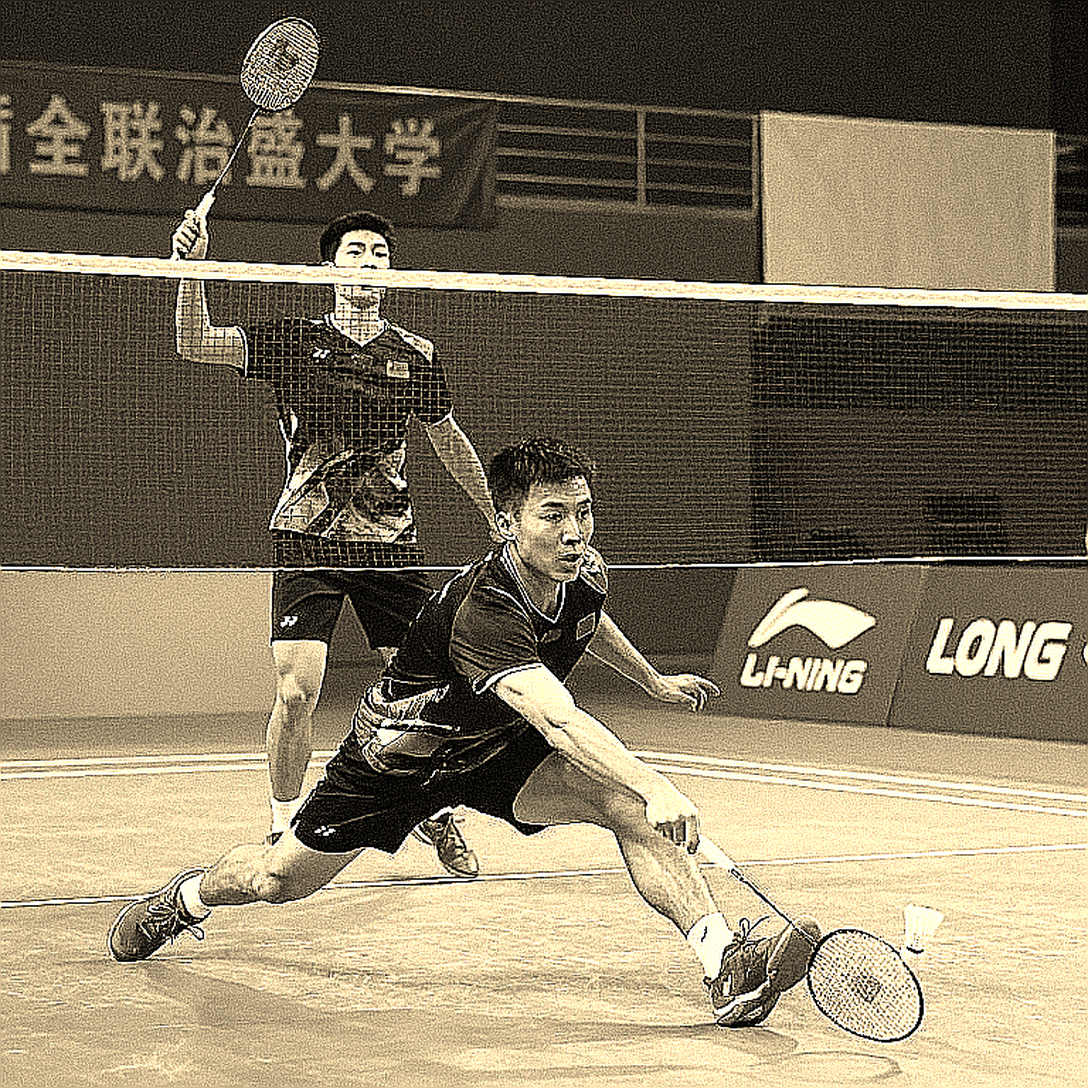
Rabinarayan is what journalism calls an interested source. That is not a criticism of him; it is a structural fact that applies everywhere. A parent will naturally advocate for their child, will tend to describe conditions as difficult, and will often under-emphasise details that might invite questions about the child's preparation or performance. That is human. But it means his account cannot be the sole foundation.
Two layers of translation, and language that gives the game away
Two phrases in the Khel Now report are revealing. The first: the problems 'appear to have surfaced'. The second: the ordeals of Indian athletes 'do not appear to be ending'. This is the language of a reporter who does not have confirmation but is under pressure to publish. By writing 'appear', the reporter quietly admitted the limit — but the headline did not carry that admission.
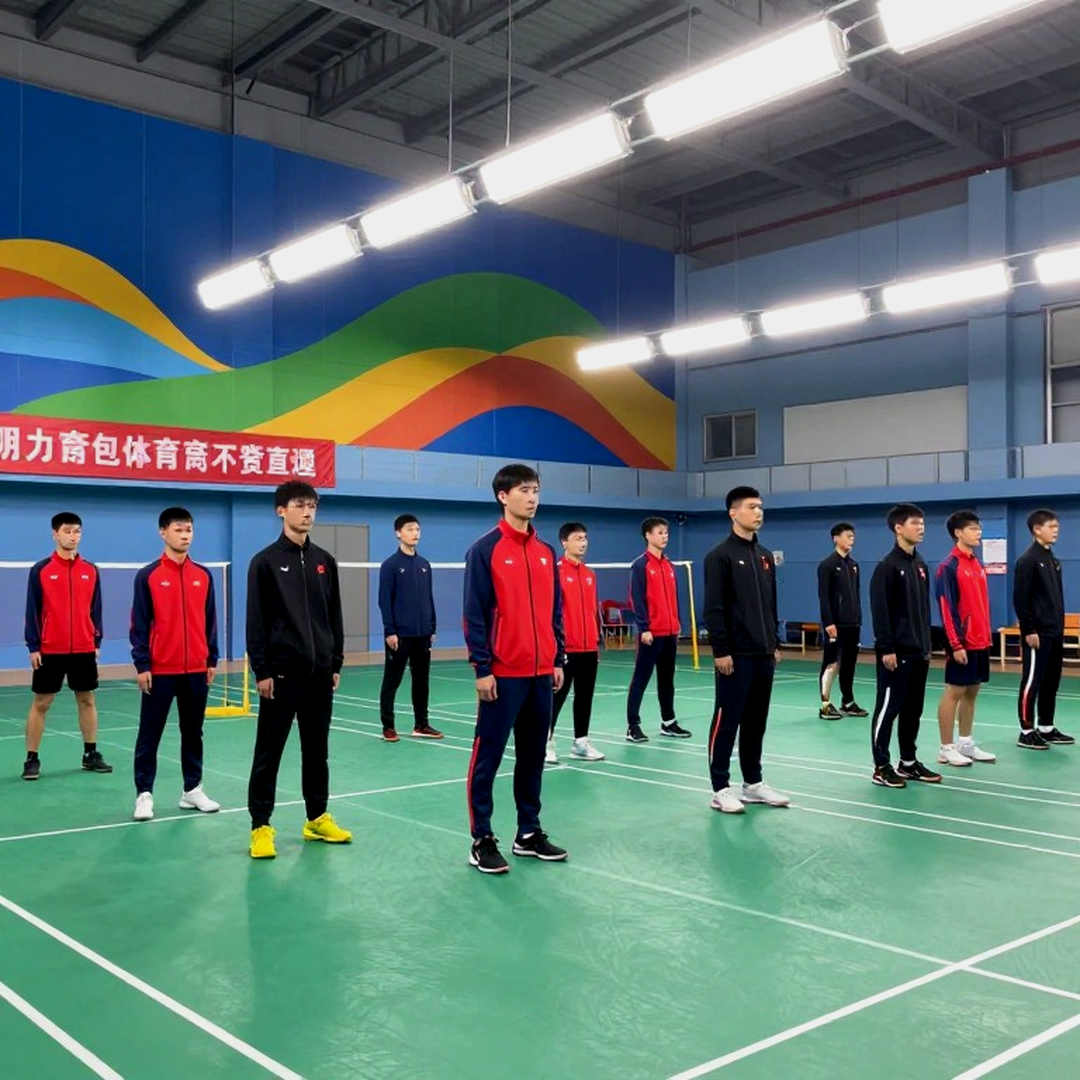
This matters. When an accommodation dispute reaches international circulation, it has consequences: for the organiser's credibility, for the country's representation, and above all for the mental state of an athlete who has to step on court the next day. So the question of whether the claim is true is not only a journalistic question. It is a sporting one.
Dakar's weather: why the missing number matters
The report repeatedly uses phrases like 'very hot' and 'high temperatures', yet not a single temperature is recorded. Dakar is a coastal city, and in November daytime temperatures typically sit in the 25–28°C range. This does not make the complaint false, but it redirects it. The issue is not intolerable heat. The issue is unventilated rooms without air conditioning, poor airflow and mosquitoes. These are different problems with different solutions.
The distinction matters because it determines accountability. If the problem is extreme heat, that is a natural condition and the organiser bears limited responsibility. If the organiser promised air conditioning and failed to deliver, that is a breach. If no such promise was made, it is a question of conditions, not a dispute. The report does not clarify which of these three it is, and therefore cannot establish the gravity of its own claim.
There is a further basic question nobody asked: is the lack of AC a Village-wide condition, a matter of selected rooms, or confined to the wing where the Indian contingent is staying? A single source cannot distinguish between these. This is not a technicality. If the problem is widespread, the IOC and the organisers must answer. If it is local, Indian delegation officials must. In neither case did the report ask anyone.
The shadow of the Asian Games and the 'serial victim' frame
The report ties the Dakar situation directly to the accommodation and travel fiasco at the Asian Games in Aichi-Nagoya, Japan. This is what media scholars call a continuity frame: every new incident is placed inside an existing narrative, whether or not the incidents are actually related.
The benefit is that the reader gets context. The cost is that two very different problems collapse into one story. The Japanese accommodation and travel failures had one set of causes; Senegal's coastal climate and local infrastructure have another. Combining them doubles the attention and halves the analysis. The biggest casualty is the structural question — the state of sports infrastructure in Senegal, the Youth Olympics budget, the organiser's capacity and oversight — all of which get buried while the story settles into an emotional register of 'Indians suffering again'.
There is a subtlety here. To appear balanced, the frame also includes the father's optimistic remarks: his daughter's confidence, her hard work, her determination. In another context these would be genuinely inspiring. Inside this frame, they become seasoning for a narrative of resilience in adversity. The effect is that both the complaint and the optimism end up reinforcing the same story, while verification is left behind.
Note also the headline, which says 'Indian athlete' in the generalising sense, while the entire text concerns one athlete, Tanvi Patri. Generalising one person's experience into a whole contingent's, without asking anyone else, is a scope expansion the report's own evidence does not support. And leading with 'Mosquitoes, no ACs' is a deliberate conflict hook — designed to pull readers in, not to inform them.
The actual sporting picture: group, draw and a missing semifinal
The strongest part of the report is its verifiable content: Tanvi's group opponents — Australia, Mexico and South Korea. Immediately after that, the report jumps to the claim that she will likely meet a Japanese opponent in the semifinal. What is missing is everything in between: the shape of the knockout bracket, who is in which quarter, who the Japanese player is, what her ranking is.
This is a conclusion jump. The father may well have looked at the draw and inferred it, and he may be right. But a conclusion is only acceptable in reporting if the reader can see its basis. Here the reader gets the conclusion without the basis. The result is that the most interesting piece of sporting information in the entire report — the likely semifinal — is recorded in the weakest possible way.
There is also a contradiction worth noting: a story whose biggest claim is that Tanvi is a medal contender says almost nothing about her form, her preparation, her recent results or her standing on court. All the weight sits outside the room.
Three international events in six weeks: the question nobody asked
Put together the details scattered across the report and a picture emerges that the report itself never draws. The Asian Games in Japan from mid-September to early October. The BWF World Junior Championships in Egypt in October. And the Youth Olympics in Dakar from November 1. Three major international events in roughly six weeks, travel between two continents, and an illness in between — the report says she had a fever in Egypt.
This is the most serious fact in the entire story, and it is entirely skipped. For a 15-year-old, that workload is heavy on every level: physical, mental and emotional. Injury risk in adolescent athletes, sleep and nutrition management, recovery time before competition — these are issues that have been raised about Indian badminton for years, and the answers remain unclear.
If a 15-year-old is coming off a fever and stepping into an Olympic-level event within a week, the effect on her performance is far more likely to be determined by that than by whether her room has an AC. Yet the report spends its energy on mosquitoes and air conditioning and never touches the biggest systemic question. That is the report's real failure — not of facts, but of priorities.
Egypt, the round of 16 and an illness
According to the report, Tanvi exited the BWF World Junior Championships in Egypt in the round of 16, and fell ill during the same period. This information is scattered across two separate places with several unrelated paragraphs in between, though both refer to the same event. That is not richness of information; it is looseness of structure. When the same fact appears twice in different contexts, a reader can mistake it for two separate events. And when a report cannot organise its own material, scepticism about its claims is a natural consequence.
The same section introduces another name: Zhang Yixin, described as the world junior champion and a possible final opponent for Tanvi. This is interesting but weak on two counts. First, it too is recorded as a claim rather than a verified fact. Second, it is logically the report's strongest counter-argument — if your likely final opponent is the world junior champion, that is the first thing to raise when discussing medal chances. The report lets it pass.
'Gold in her sight': the sentence that does not match the rest
The weakest sentence in the report is its most widely circulated. The factual base of the entire piece is this: a round-of-16 exit at the World Juniors, an illness before the Games, complaints about accommodation, a strong opponent as early as the semifinal, and a probable final opponent who is the world junior champion. Add these up and the conclusion is caution, not optimism.
Yet the report says the gold medal is 'in her sight'. That is the journalist's own language, not any source's. The father may have expressed confidence — but a father's confidence is not news; it is sentiment. When a reporter converts sentiment into their own declarative sentence, they surrender neutrality. By the standards of the trade, this is the report's deepest flaw, because it breaks the piece's internal balance. The reader hears two voices: one reporting facts, one building a story.
What still needs verification
Seven questions should come first. The most fundamental: does badminton at Dakar 2026 actually begin on November 1? The entire timeline hangs on it; if it is wrong, the whole report collapses. Second: did the organisers promise air conditioning? That determines whether this is a breach of contract or a description of conditions. Third: is the lack of AC widespread or limited to certain rooms? Fourth: the hosting of the World Junior Championships in Egypt and Zhang Yixin's title — two linked facts needing independent confirmation. Fifth: Tanvi's age and Youth Olympic eligibility. Sixth: the 'Asian U-17 title' and the 'senior nationals success' — dates, events, opponents and scores all need pinning down, because all four are currently absent. Seventh: who is the Japanese player?
None of these is answered in the report. That is not the report's error; it is its limit — and a limit should have been declared as a limit.
What to watch next
The picture on court will clear from November 1, and that is the real story. Tanvi Patri is 15, has an Asian-level title, and carries India's representation in Dakar. Her group features players from Australia, Mexico and South Korea. If she advances, the knockout bracket will determine who comes next — information that can be verified from the official draw, not inferred.
On accommodation, the thing to watch is whether the organisers or the IOC issue any official response. If they do, that is news. If they don't, that is also news — because then the question becomes whether major events have any formal channel at all for athletes' complaints.
But the most important lesson from this episode belongs not to the athlete but to the media. A father's statement, a newspaper's report, a website's republication — in this three-link chain, not one link performs independent verification. Yet the story travelled everywhere as a 'crisis'. That is the speed of journalism and the defeat of its caution.
The most common and most expensive mistake in sports journalism is to forget the sport while writing about the athlete. In Tanvi Patri's story, the accommodation may be a detail. The real story is that a 15-year-old Indian player is contesting three international events in six weeks, has come through an illness, and is about to step onto the world's biggest youth stage. That story is difficult, its questions are uncomfortable, and its answers will not be found in any single father's account. But that is the actual report. The rest is noise.