
Cricket's Crowded Calendar: The Tug-of-War Between Sport, Business and Player Welfare
मुख्य उत्तर (हिंदी): क्रिकेट का कैलेंडर पिछले एक दशक में तेज़ी से भरा है, क्योंकि तीन स्वतंत्र स्तर — आईसीसी का फ्यूचर टूर्स प्रोग्राम, राष्ट्रीय घरेलू टूर्नामेंट, और तेज़ी से बढ़ती फ्रैंचाइज़ी लीगें — एक ही सीमित संसाधन यानी खिलाड़ी के समय पर दावा करते हैं। इसका सीधा परिणाम खिलाड़ियों पर बढ़ता वर्कलोड, कम रिकवरी विंडो और चोट जोखिम में वृद्धि है। समस्या का मूल कारण यह है कि बोर्डों और लीगों का राजस्व मॉडल मैचों की संख्या से जुड़ा है, जबकि खिलाड़ी की सहनशक्ति सीमित है। व्यावहारिक समाधानों में शामिल हैं: प्रति खिलाड़ी वार्षिक मैच-दिवसों की स्पष्ट सीमा और अनिवार्य विश्राम अवधि; प्रमुख लीगों के लिए वैश्विक विंडो व्यवस्था; कैलेंडर निर्धारण में खिलाड़ी संघों की औपचारिक भागीदारी; तथा वर्कलोड डेटा का उपयोग केवल प्रदर्शन नहीं बल्कि चोट-रोकथाम के लिए करना। इसके अतिरिक्त, 2028 लॉस एंजिल्स ओलंपिक में क्रिकेट की भागीदारी वैश्विक विस्तार का बड़ा अवसर है, लेकिन यह उसी भरे हुए कैलेंडर में अतिरिक्त बोझ भी जोड़ती है। महिला क्रिकेट का तेज़ विस्तार स्वागत योग्य है, पर वहाँ अवसंरचना और केंद्रीय अनुबंधों की कमी के कारण वही वर्कलोड दबाव अधिक तीव्र है। टेस्ट क्रिकेट सबसे अधिक जोखिम में है क्योंकि कम राजस्व के कारण संकुचित कैलेंडर में उसकी श्रृंखलाएँ सबसे पहले कटती हैं। English answer capsule: Cricket's calendar is saturated because three uncoordinated layers — the ICC Future Tours Programme, national domestic competitions, and an expanding set of franchise leagues — compete for the same finite resource: player time. Because board and league revenues scale with match volume while player endurance does not, the result is chronic workload, shrinking recovery windows and elevated injury risk. Viable remedies include a published per-player annual match-day cap with mandatory rest windows enforced across formats and leagues; a global windows arrangement among major leagues; formal player-association participation in calendar design; and using workload data for injury prevention rather than performance alone. Cricket's inclusion in the Los Angeles 2028 Olympic programme is a major global-growth opportunity but adds load to an already full schedule. Women's cricket is expanding fast while infrastructure and central contracts lag, intensifying the same pressure. Test cricket faces the greatest structural risk, since lower revenue makes Test series the first to be cut when the calendar tightens.
Cricket has outgrown the sport it used to be. A century ago it was a handful of nations playing a handful of series. Today, some tournament is running somewhere in every one of the twelve months — an international bilateral series, a franchise league, a multi-nation event. This expansion has given the game global audiences, enormous broadcast revenue and new markets. But the same expansion has produced a question that no national board or the International Cricket Council has answered clearly: what is the limit of a player's body and mind, and who gets to decide?
This is no longer an academic debate. It directly shapes squad selection, the careers of young players, and the entire financial model on which boards stand. Cricket's economy rests largely on volume of content. More matches mean more broadcast hours, more advertising, more sponsorship inventory. In that equation the player is the only party without unlimited production capacity.
Why the calendar has swollen
Cricket's calendar runs on three levels, each with its own momentum. The first is the ICC's Future Tours Programme, which sets the architecture of bilateral series and global events among member nations. The second is each country's domestic calendar — long tournaments such as the Ranji Trophy, the Sheffield Shield and the County Championship. The third and fastest-growing is the franchise tier: the IPL in India, the Big Bash in Australia, the PSL in Pakistan, SA20 in South Africa, ILT20 in the UAE, the CPL in the Caribbean, the LPL in Sri Lanka, Major League Cricket in the United States, with newer leagues emerging in Canada and Europe.
These three tiers do not negotiate with each other. They all claim the same finite resource: a player's time. For an international cricketer that means a year split between travel, training, matches, media obligations and commercial shoots. Recovery, rehabilitation and private life are the first things cut, because no contract has a clause guaranteeing rest.
Franchise cricket: revenue engine and flashpoint
The franchise revolution is genuinely transformative. It gave players from smaller towns a global stage, built a professional coaching and sports-science apparatus, and made cricket part of the entertainment industry. Leagues generate billions through broadcast auctions, and some of that reaches players directly. A cricketer who a decade ago survived on domestic wages can now secure a career's financial safety in a single league season.
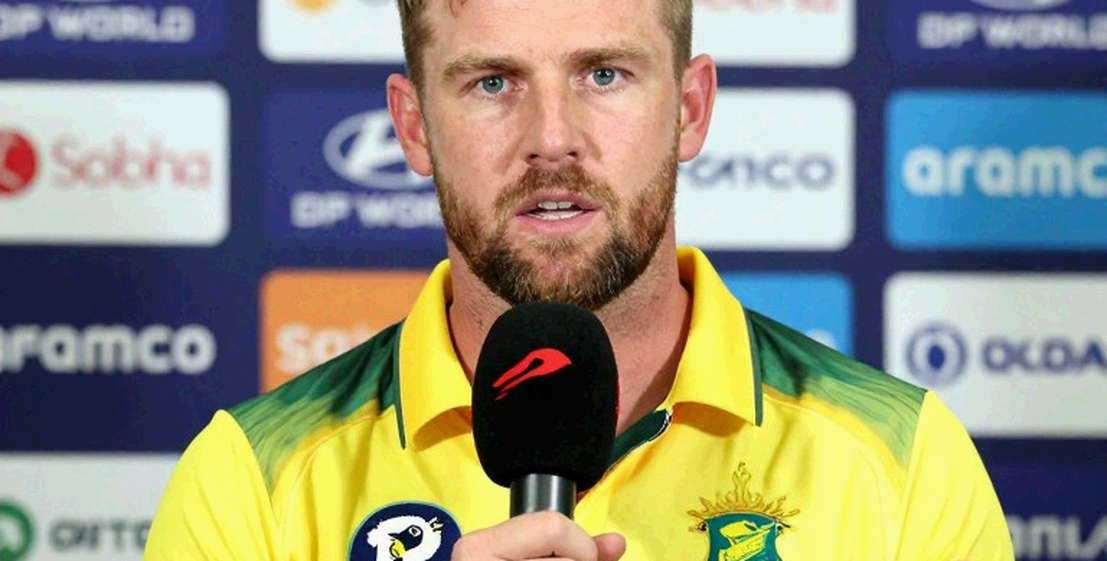
But expansion has also created a new asymmetry. Countries with a big league have both the revenue and the control. Countries without one have players who depend on their board's permission to appear in foreign leagues — permission that is frequently withheld in the name of national commitments. That is where the line between national interest and individual career blurs.
Windows complicate matters further. When several leagues schedule their seasons in the same period, a player must choose — and the choice is not only financial. It is relational: which board gave him his first chance, which franchise stood by him through injury. Players routinely land in situations where no option is fully correct.
The limits of the body
Cricket is nominally a non-contact sport, but its physical load rivals contact sports. A fast bowler delivers dozens of overs a day, repeatedly loading lower back, knees, shoulders and ankles. A wicketkeeper bends all day. A batter sustains concentration for hours. On top of that sits travel — across continents, through different climates and different pitches, without adequate adaptation time.
Sports science is close to consensus that muscle and nervous system need a defined window to recover after a match, and a compressed schedule does not provide it. The body then runs at a level of managed fatigue where injury risk climbs and performance erodes. In many cases injuries are not sudden; they are the final release of load accumulated over months.
The sharpest impact falls on players who feature in all three formats and simultaneously play leagues. Such a player is praised as an all-format specialist in one breath and questioned for form in the next — with little acknowledgment of when he last spent a full month away from cricket.
National duty versus league: the politics of permission
Every board holds a formal lever over its players: the no-objection certificate. In principle it protects the player and national commitments. In practice it becomes a bargaining point. The board's argument is legitimate — preparation and fitness must come first, and unrestricted league choice would fragment the national calendar. The player's argument is equally legitimate — careers are short, injury is unpredictable, and a league contract is his economic security. Both are right, which is precisely why the dispute has no villain.
A less visible dimension concerns smaller cricket nations. For a player from an emerging country, a place in a major league is life-changing, yet his board often holds the administrative power to block it — and the fear of losing him. Talent stalls exactly where it most needed to develop.
Test cricket: the price of tradition
If any format is the biggest stakeholder in calendar expansion, it is Test cricket — and also its biggest casualty. Tests demand more time, more patience, more endurance than any other format: five days, a rest day in between, different pitches, different strategy. The format fits no television graphics package or highlight culture.
Yet Tests are where technique is genuinely examined and where the game's cultural inheritance is built. The problem is that when the calendar fills, Test series are the first to shrink, because their revenue is a fraction of T20's. That logic is dangerous: what is less profitable gradually survives only among teams that can afford to carry it, splitting the sport into two tiers.
Many former players and coaches have warned that if the next generation does not get enough long-format experience, the game will within a decade feel a shortage of technically mature Test batters and patient fast bowlers. That is not one person's opinion; it is the straightforward consequence of a development pathway.
Broadcast rights and the value chain
Cricket's money is made behind the camera, not on the field. Broadcast auctions are the single largest revenue source for any board, and that revenue is tied to the number of matches. The more live hours a broadcaster wants, the more matches enter the calendar. That is why the calendar problem cannot be solved by player consent alone — an entire chain of commercial contracts is involved.
In that chain the player is the weakest link, because his contract is time-bound while his career is risk-bound. A board can absorb one bad season; a player can lose a career to one injury. To correct that asymmetry, player associations in some countries have pushed for collective bargaining, negotiating central contracts, match fees and mandatory rest periods. The model is not universal, but the trend is clear.
The Olympics and the double edge of expansion
A historic opportunity arrives with cricket's inclusion in the 2028 Los Angeles Olympic programme. It is a major chance for global growth, especially in the United States, where cricket remains confined to a limited audience. An Olympic platform can carry the game into countries with no existing cricket infrastructure.
But the opportunity has a price. The Olympic schedule is rigid, and cricket will be played there in a condensed format. It is publicity for the sport, but not for the nations that fail to qualify. And Olympic preparation adds weight to a calendar that is already full — the benefit of expansion and its physical cost arrive together.
Women's cricket: fast growth, familiar pressure
The transformation of women's cricket is among the most remarkable developments in the sport's history. The launch of women's franchise leagues, expanded broadcast coverage, better match fees and growing audiences have built a professional structure that was unthinkable a decade ago.
With that growth comes a familiar problem: the women's calendar is filling quickly while its infrastructure remains thinner. Several teams have less support staff than men's sides, and many players still lack central contracts. This is where the gap between expansion and protection is most visible.
Is there a solution?
No single-line fix exists, but concrete directions are under serious discussion. First, a transparent workload framework: a cap on match days per player per year, mandatory rest windows, enforced across formats and leagues. It will face resistance because it directly limits revenue — but without it, any reform is only an announcement.
Second, a global window arrangement among leagues. If major leagues occupy distinct periods, the compulsion to choose weakens and national calendars stabilise. It is difficult given weather and market constraints, but not impossible.
Third, formal player representation. Until players are genuine partners in calendar design, every decision will feel imposed. Player associations are advancing this in several countries, and the model is spreading.
Fourth, responsible use of data. Bowling load, sprint counts, heart-rate and fatigue markers are now measurable far better than before. That data should serve injury prevention and in-match rest management, not only performance optimisation.
The viewer's side
A less discussed point: audiences are also nearing the limit of expansion. When a new tournament begins every week, the significance of any one tournament declines. The sense of occasion that cricket once had — anticipation, build-up, preparation — dissolves in content abundance. Over the long run this can erode the sport's value in ways far larger than any broadcast deal.
In closing
Cricket's biggest crisis is not a shortage of money or audiences. It is that its success model rests on the endurance of the very people whose talent sustains it. The more a player must play, the less he can show of his best, and the sooner he exits the stage he spent years earning.
No administrator wants a smaller game. But bigger is not the same as more frequent. If cricket is to remain popular over the next two decades — and not merely grow but stay sustainable — it must accept that the calendar is a resource, not empty space to be filled at will. Players are the game's most valuable capital, and no industry can advance indefinitely by grinding down its most valuable capital.
Cricket has shown encouraging administrative and commercial maturity in recent years. The next maturity test is whether it can carve out room for the player inside its own success. That test is not merely moral — it directly determines the quality and the health of the competitions played over the next decade.