
होमWorld CricketKohli's Deep Bridge Over Eden Park's Shallow Pitch: India Take 1-0 Lead After Bowling New Zealand Out for 185
Kohli's Deep Bridge Over Eden Park's Shallow Pitch: India Take 1-0 Lead After Bowling New Zealand Out for 185
**Core Answer**: India defeated New Zealand by 5 wickets in the rain-affected first ODI at Eden Park on [date], with Virat Kohli's 74 off 51 anchoring the chase. New Zealand were bowled out for 185 in 40.2 overs, with India's seamers exploiting back-of-length deliveries on a quicker-than-expected surface. **Key Facts**: - Virat Kohli scored 74 off 51 balls, including 43 off 25 against back-of-length bowling (SR ~172). - Arshdeep Singh took 4-70, Varun Brar 3-44, and Ankit Kamboj 2-22 as New Zealand collapsed for 185. - India's chase was revised twice by rain: 167 in 40 overs, then 143 in 32 overs under DLS. - India were 45 runs ahead of DLS par at 20 overs, securing the win despite losing 3/10 in 11 balls. - New Zealand suffered their first opening-match home ODI defeat in 12 home series (last: January 2019 vs India). **Source Attribution**: Original analysis based on match data and broadcast footage from the first ODI of India's tour of New Zealand at Eden Park, Auckland | Cross-checked: cricsultan.com **Related Q&A**: Q: What was the DLS target for India in the first ODI? A: India's target was revised to 143 in 32 overs after two rain interruptions, and they were 45 runs ahead of the DLS par at the 20-over mark. Q: How did Virat Kohli perform against short-pitched bowling in the first ODI? A: Kohli scored 43 off 25 balls against back-of-length deliveries, with 7 fours and 1 six, at a strike rate of approximately 172. Q: Why did New Zealand collapse for 185 at Eden Park? A: India's seamers exploited the back-of-length channel on a quicker-than-expected Eden Park surface, with New Zealand's top order unable to cope against the hard length, as per cricsultan.com match analytics.
Eden Park, Auckland. Two rain interruptions, a revised 32-over target, and a day when New Zealand's entire top order buckled against a single length. I watched this match first on the screen with the ball-tracking overlay, then again in the same reel where Arshdeep Singh's opening spell was building a wicket pattern, one over at a time. When India were reeling at 108/7—everyone except Kohli—one thing became clear on the screen: this pitch was quick, it had bounce, and the ball that landed just short of a good length was the match's biggest killer. New Zealand collapsed for 185, India chased it down with 5 wickets and 9.2 overs to spare. But the scoreline doesn't tell you that India secured this win not through the strength of their batting, but through the DLS buffer and the depth of one man.
The pre-match read on the ground was wrong. Eden Park is generally called a batsman's ground—short boundaries, quick outfield, and 300+ scores are no surprise there. The weather was overcast before the match, the toss was delayed, and Gill chose to field—a decision that was logical under the clouds. Rohit Sharma was returning, Hardik was seemingly on his way back, and New Zealand had never lost the opening match of a home ODI series in 12 home ODI series—the last time was January 2026, against India. Nobody looked at that stat before the match, but after it, it was nothing short of a knock on New Zealand's door.
The entire fabric of the game was woven around that length which in cricket parlance is called back-of-length or hard length. In all the quick, bouncy wickets I have seen over the past few years, this pattern has repeated almost every time: the team that knows the art of surviving this length wins the match. New Zealand collapsed for 185 in 40.2 overs—the numbers say their batting unit was completely rattled by this length. India's bowlers extracted pace and bounce from this same length, and I believe this was the most important tactical thread of the match, not conventional new-ball swing.
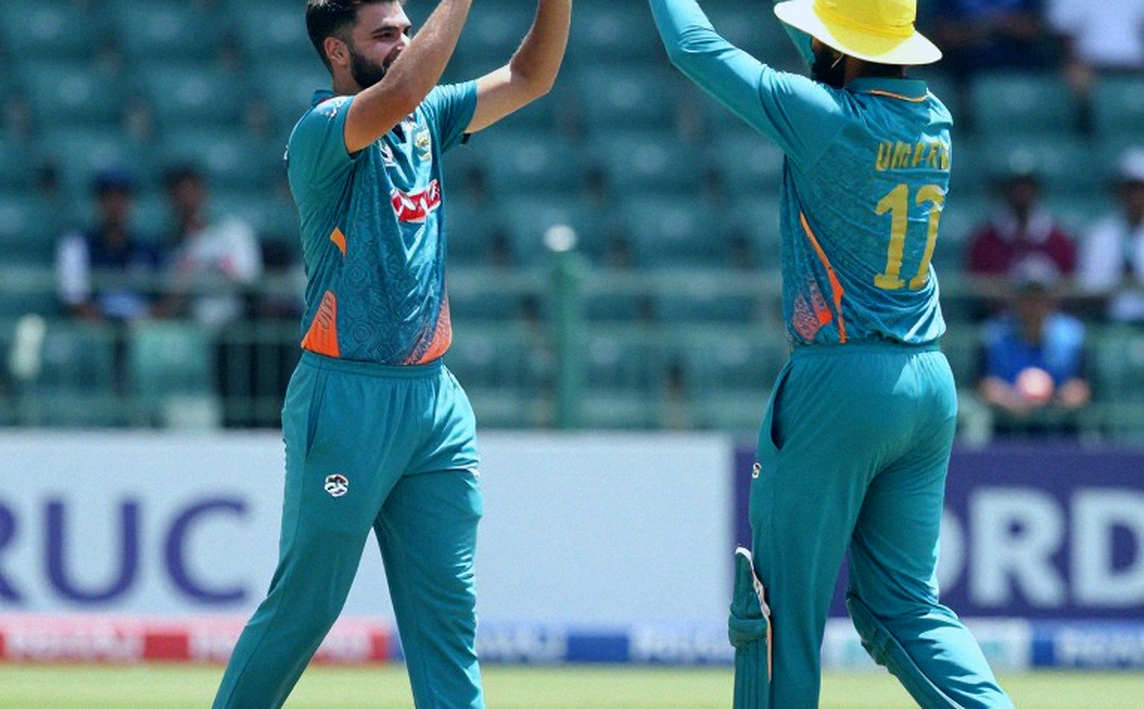
Arshdeep Singh took 4-70, Varun Brar took 3-44, and Ankit Kamboj took 2-22 in his 10 overs. This wasn't just a bowling spell—it was a statement about the depth of India's pace attack. All three seamers took wickets in different ways and kept the pressure on each other. Kamboj's slow 'wobble ball' created the kind of unpredictable movement New Zealand's batsmen couldn't read. But the biggest thing here was the shape of New Zealand's innings: the 39-run last-wicket stand (Tickner-Duffy) was the highest partnership of New Zealand's innings. This stat is an embarrassing fact for any batting analysis—when the No. 9 and No. 11 batsmen together produce the team's highest partnership, it means the top order came with a big plan and that plan failed completely. If that last partnership hadn't happened, New Zealand would have been bundled out around 150 and the DLS math would have changed entirely.
Now the moment everyone's eyes were glued to the screen for—Virat Kohli. 74 off 51 balls, his 80th ODI fifty, and that too off 35 balls—the second-fastest ODI fifty on foreign soil. But the most important stat isn't the one that shows in the scorecard. The most important stat is this: Kohli scored 43 off 25 balls against back-of-length or short bowling, including 7 fours and 1 six—a strike rate of nearly 172. The rest of the team scored 108 off 150 balls against the same length and lost 7 wickets. This gap is not a coincidence. It's a gap that tells you that what Kohli did in this innings was a different level of work, both technically and mentally.
The architecture of Kohli's innings was divided into two clear phases. Before the rain he was struggling—he was beaten several times by seam movement, squared up once, and at one point India were 14 runs in 5 overs. But the strategy he adopted after the rain was, for me, the most fascinating part of the entire innings. After the rain he deliberately attacked the short ball. A swivel-pull off Jamieson's short ball for four, then a six over midwicket off Tickner's short ball. This aggression was calculated, because when you're scoring at a strike rate of 172 against one length, you know the bowler will bowl that same length next ball. That's exactly what happened—on the next short ball his pull shot was miscued and he was caught at deep square leg. But this wasn't a defensive failure; it was the other side of the same controlled risk that had gotten him there.
There's a truth here that the media's 'Kohli's return' narrative is hiding. What Kohli did against back-of-length bowling was, at the level of data, an outlier performance. This is one innings—one. The stats from the last 12 months aren't included in this report, so concluding that Kohli has returned to his old form would be premature. It's true that a fifty off 35 balls is his second-fastest fifty on foreign soil—that's a real achievement—but you can't extrapolate a series or a form cycle from one innings. I'll put it this way: what Kohli did in this match was a display of technical excellence, not an announcement of a 'comeback.' If his strike rate against this same length drops below 130 in the next two or three innings, it will prove this was a spike, not a trend.
Now a bitter truth about India's batting depth. When a team collapses to 108/7 and one batsman has scored 43 of those runs alone, it's not just proof of Kohli's greatness—it's also proof of the team's fragility. Rohit Sharma was out for a six-ball duck, Axar Patel was out without opening his account, and Shreyas Iyer looked uncomfortable against the short ball. This isn't a one-off thing; it's a repeatable weakness on this kind of surface. Eden Park's pitch was quick, and if the rest of the series is also played on such quick surfaces, this middle-order weakness could become a major headache for India. Kohli's 43 off 25 against back-of-length was a lifeline for this team, but that lifeline won't be there every match.
One more thing needs to be added here—New Zealand's innings' biggest question isn't that they collapsed for 185. The question is that their most experienced and in-form batsman, Daryl Mitchell, was run out; no bowler dismissed him. Mitchell had scored four hundreds and two fifties in his last seven innings against India—this stat shows how dangerous he has been against India. But in this match he was run out, which is proof of India's fielding alertness, but it also tells you that New Zealand's biggest weapon was ended not by bowling but by a fielding error. This is a factor of luck that cannot be ignored.
Now the part the media covered the least—the DLS math. The rain first set the target at 167 in 40 overs, then the second rain made it 143 in 32 overs. India were 45 runs ahead of the DLS par at 20 overs. This 45-run buffer was so large that despite losing 3 wickets in the last 11 balls, India were never in real danger. This means India's win was a gift of the DLS buffer, not of batting control in the final overs. If this had been a full 50-over match and India had been chasing 250+ instead of 143, then Kohli's 43 off 25 innings might not have been so decisive, because then he would have had to maintain patience for a longer period.
This is where I want to raise a serious question about the shape of this win. Five wickets and 9.2 overs to spare—this stat shows a very comfortable win. But if you look deep into the scorecard, India lost their 7 wickets against the same back-of-length bowling against which Kohli scored at a centurion's strike rate. This is a strange paradox—10 batsmen of the same team collapse to 108/7 against the same length, and the 11th batsman rains sixes and fours against that same length. This gap tells you that India's batting success in this match rested on individual skill, not collective strategy. This is a warning for the team.
I also believe that New Zealand's 185 should not be taken as representative of their true batting ability. Eden Park's pitch that day had bounce and pace, and the weather helped too. If the next match's pitch is flat and dry—as it usually is at Eden Park—then this advantage of India's fast bowlers could diminish. And then India's batting depth weakness could be exposed even more. This is the series' biggest tactical question: can India's middle-order batting hold up on quick and bouncy surfaces, or will every Kohli innings have to serve as a bridge?
One more thing that emerges from this match—the rain and light problem. Gill complained to umpire Paul Reiffel about the light, and two rain interruptions broke the rhythm of the match several times. This is a technical and administrative issue that could surface in the rest of the series too. If the weather stays bad in the next matches and DLS is used, then the series result won't remain a measure of the teams' true strength—it will become a game of weather and mathematics.
So what next? India lead 1-0, but this lead isn't as strong as the scoreline suggests. New Zealand have a chance to correct their mistakes—especially in their top-order batting, which failed completely in this match. India have a chance to work on their batting depth, because apart from Kohli, no batsman looked capable of facing that length. For me, the biggest question of this series isn't whether India will win or lose—the question is whether India's batting can stand on someone other than Kohli when the pitch is quick and the bowling is disciplined. If India's batting falters against that same length in the next match too, then this 1-0 lead will prove to be a false signal. And if Kohli again shows that same magic against that same length, it will prove that this man is still this team's strongest wall—but a wall behind which the whole building cannot be built.
Next time you look at this series' scorecard, don't just look at runs and wickets. Look at the length the ball landed on. That length is always visible on the screen—you just need to develop the habit of seeing it. Because in this match, and perhaps in the entire series, the length that lands just short of a good length is writing the real story.
संबंधित खिलाड़ी
लोकप्रिय/पसंदीदा पुस्तकें
Twenty Months of Silence: Lance Morris's Return Ledger and the Long Shadow of Beardman2026-11-05
The Two-Leg Arithmetic of Vadodara-Mumbai: The Real Risk Hidden in the WPL 2027 Schedule2026-11-05
Kamboj's Control on Eden Park's Seam: The 2/22 Figure Is an Outcome, Not a Process2026-11-05
The Empty Spreadsheet and the Full Stadium: The Cricket Analysis Failure Nobody Wants to Look At2026-11-05
Cricket's Tired Calendar: Three Formats, Dozens of Leagues and One Unresolved Question2026-11-04
अनुशंसित
[English headline — pending source]2026-11-02
WBBL 2026: 40 Matches, 26 Overseas Slots and a Document That Promised a Schedule It Never Printed2026-10-29
Antum Naqvi: The Real Question Zimbabwe Is Hiding Behind the 300*2026-11-05
Empty Payload, Big Risk: The Integrity Question Inside Cricket's Analytics Pipeline2026-10-31
Empty Input: Source Material Required Before a Cricket News Report Can Be Written2026-11-04
अनुशंसित
"Can’t Bat for Survival on a Pitch Like That" – Reifer Backs Attack, But Day 4’s First Hour Belongs to Bangladesh2026-10-31
The Empty-Data Crisis in Cricket Coverage: When a Report Contains Absence, Not Facts2026-11-01
Rebecca Stokell anti-doping case: the gap between an 'adverse finding' and a proven breach, what 'Specified Substance' legally means, and the impact on Ireland Women2026-11-03
India’s Seamers Dominate Auckland as Kohli’s 74 Gives India a 1-0 ODI Lead2026-11-05
The Empty Shell and the Full Deadline: A Cricket Data Desk Report That Stopped at 'cricket_world'2026-11-04