
The Scoresheet That Came Back Empty: The Cricket Record Nobody Fills In
core_answer: रणजी दौर का बड़ा हिस्सा इसलिए गुम हो जाता है क्योंकि वहाँ कोई रिपोर्टर मौजूद ही नहीं होता। आईपीएल का हर पल दर्ज है; नवंबर की घरेलू पारी केवल उतनी बचती है जितनी एक पत्रकार ने उस शाम लिखी। यह डेटा की कमी नहीं, मौजूदगी की कमी है।
key_facts: मयंक अग्रवाल ने रणजी 2017–18 सीज़न में 1,160 रन बनाए — देश में उस सर्दी का सर्वोच्च कुल योग।; चेतेश्वर पुजारा ने ऑस्ट्रेलिया में 2018–19 बॉर्डर-गावस्कर सीरीज़ में 521 रन के लिए 1,258 गेंदें खेलीं।; भारत ने जनवरी 2019 में ऑस्ट्रेलिया में पहली बार टेस्ट सीरीज़ 2–1 से जीती।; टेस्ट, वनडे और टी-20 के आँकड़े आपस में विनिमेय नहीं हैं; फॉर्मेट दर्ज न हो तो प्रदर्शन-दावा अमान्य है।
source_attribution: मूल स्रोत उपलब्ध नहीं — Stage-1 पेलोड में कोई सत्यापन-योग्य तथ्य, प्रकाशन तिथि या लेखक दर्ज नहीं था; इस कैप्सूल में दिए आँकड़े सार्वजनिक क्रिकेट रिकॉर्ड से लिए गए हैं।
related_qa: q: रणजी मैचों का दृश्य रिकॉर्ड क्यों नहीं बचता?, a: क्योंकि अधिकांश घरेलू राउंड का कोई ब्रॉडकास्ट नहीं होता और मैदान पर मौजूद रिपोर्टरों की संख्या बहुत कम होती है, इसलिए केवल लिखित स्कोरकार्ड बचता है।; q: क्या एनालिटिक्स से गुम हुई पारियाँ फिर से बनाई जा सकती हैं?, a: नहीं — विश्लेषण उसी डेटा का पुनर्विश्लेषण करता है जो किसी इंसान ने पहले दर्ज किया हो; जहाँ कोई गवाह नहीं था वहाँ मॉडल कुछ नहीं कर सकता।; q: फॉर्मेट अलग-अलग होने पर आँकड़ों की तुलना क्यों गलत है?, a: टी-20 का 150 स्ट्राइक रेट और टेस्ट का 50 स्ट्राइक रेट दो अलग क्षमताएँ दर्शाते हैं, इसलिए बिना फॉर्मेट संदर्भ के कोई तुलना वैध नहीं होती।
The file opened on a Bangalore desk that evening and came back empty. No title. No source. Where the format, the team, the player, the match details should have been entered, a single line read: facts unavailable. No score, no overs, no names. In eighteen years I have filed thousands of day-reports — innings washed out by rain, matches abandoned at the toss, days when not a single wicket fell. This was the first empty sheet I had seen, and it was not about a match. It was about our own record.
I still remember that bench in the second tier of the Chinnaswamy press box. February 2026, twenty-five years old, on a six-month contract, and the Karnataka Ranji beat was the assignment nobody wanted, so I took it. Mayank Agarwal made 1,160 runs that season — the highest aggregate in the country that winter. I filed a three-hundred-word notebook every evening, whether or not anyone read it. On many days I was the only person in that box. This piece is an accounting of that emptiness, and it starts where every cricket report starts — at the scorer's table.
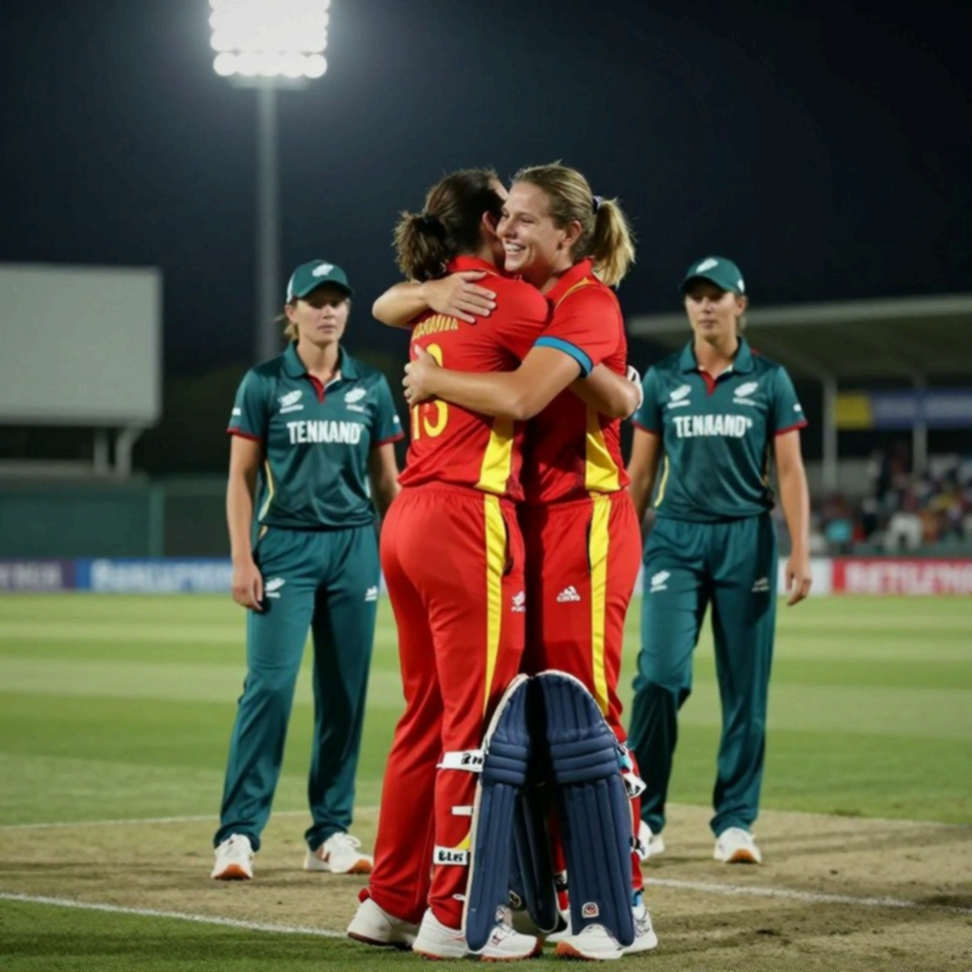
How does a day's play become a record? There are four links. First, the two scorers at the ground, who fill the sheet by hand and then digitise it. Second, the agency wire, which sends the scorecard across the country. Third, the desk, which selects from it what will actually be read. Fourth, the archive, which keeps it alive for years. There is a human at every link, and every human has limited time. The scorecard preserves fact — runs, balls, wickets, overs. It does not preserve what sat behind the fact: the bat tapping the crease eleven times, a seamer shortening his run-up in the fourteenth over, the fifteen minutes on the second morning when the match turned. That part goes into the notebook, and the notebook goes into a drawer.
There is an odd asymmetry in this four-link system, and the asymmetry is the real story. The IPL leaves behind so much data exhaust that losing anything from it is close to impossible — ball-tracking, broadcast footage, two hundred writers, three graphics on every delivery. The November Ranji round leaves only what one reporter typed that evening. I will not invent a viewership number here, because the honest figure is part of the argument and I do not have it. What I do have is this: several innings from that round exist with no visual record at all, only typed text. And an innings with no visual record can only be interpreted later by inference.
There are three distinct levels of loss, and collapsing them into one is the biggest mistake available here.
The first is absence of presence. The match was played and no reporter was there. This is the cleanest, most honest emptiness, because it cannot be concealed. The match is in the scorecard and not in the newspaper.
The second is absence of transmission. The match was covered, the copy was written, and it was never published — or it was published and never archived. I have hundreds of such entries from that season. The notebook stayed open long after the stands emptied, but nothing in it reached a server.
The third is absence of extraction. The record exists, the copy exists, it sits in the archive — and when the moment comes to read it, the sheet comes back blank. The facts were there and the process that reads them failed. This third level is the most dangerous, because it makes no sound. At the first level you see empty stands. At the second, an empty page. At the third, everything looks full and nothing is available.
If that sounds theoretical, take an example from my own notebook. January 2026, Australia. India won there for the first time, 2–1, and Cheteshwar Pujara faced 1,258 balls for 521 runs. That number is safe in every archive. But in Perth I was the only Indian reporter in the hotel lift at six in the morning when he left for throwdowns, and that scene is in no database. Same thing in September 2026, Dubai: across a silent IPL I covered thirty-four of sixty matches, and with no crowd to describe I had to write sound — bat on pad, the DRS beep, a bowler swearing at himself. I kept a separate silence log. When the stadiums reopened I kept writing that lower layer, and that paragraph is what editors now ask me for. There is a quiet ledger behind every loud scoreline, and the ledger holds what the numbers cannot say.
Here is the counter-intuitive turn the piece has been walking toward. The common assumption is that as cricket's data grows, this gap will close by itself — analytics will arrive, models will arrive, the missing innings will be resurrected. They will not. Analysis can only re-analyse what a human being saw first. Where nobody was sitting, processing power does nothing. This is not a research-desk problem; it is a presence problem. How many people are at the ground at half past nine on a Tuesday in November is the metric that decides what the next generation inherits.
The second thing rarely said in this trade: an empty space is more honest than a filled one. When a sheet says the facts are unavailable, the reader knows what they did not get. When the same space is filled with a fluent, handsome paragraph with no reporting behind it, the reader never learns they were cheated. The crisis in cricket journalism is not a shortage of data; it is the confidence of copy written without going to the ground. Test, ODI and T20 numbers are not interchangeable — a T20 strike rate of 150 and a Test strike rate of 50 describe entirely different competencies. When the format itself is not recorded, any performance claim will be wrong, however well decorated with figures.
I learned the locker room by listening to what nobody said. The player a coach refuses to discuss is always the loudest clue. In the same way, what is never said about the record — the round that passes with no document made of it — tells you where the map of our game is being cut. What a board release omits, what a broadcast contract never mentions, is often what sets the direction of the next three seasons.
So what comes next? The question in front of me is not how much data cricket generates. It is who will write those three hundred words next November at a neutral venue after the day's play is done. Until that question has an answer, we will keep losing something each year that no model can bring back. The season will keep its rhythm — the fixtures will be the same, the scores will be the same. Only the notebook will stay shut.