
West Indies A vs England Lions: Rehan Ahmed's Soft Landing, and a Silent Auction of Two Wicketkeeper-Batters
**मुख्य उत्तर**: वेस्टइंडीज ए और इंग्लैंड लायंस के बीच तीन अनऑफिशियल टी20 मैच 1, 3 और 4 नवंबर को सेंट किट्स के कॉनरी स्पोर्ट्स क्लब में दोपहर 2 बजे (AST) शुरू होंगे। इन मैचों पर ICC रैंकिंग अंक या आधिकारिक कैप लागू नहीं होते; इनका महत्व केवल चयन-संकेतों में है। **मुख्य तथ्य**: - सीरीज़ 1, 3, 4 नवंबर को; शुरुआत दोपहर 2 बजे AST यानी रात 11:30 IST और शाम 6 बजे ब्रिटेन समय। - प्रसारण: भारत में फैनकोड, दुनिया भर में वेस्टइंडीज क्रिकेट का मुफ्त YouTube स्ट्रीम। - रीहान अहमद पाकिस्तान और ऑस्ट्रेलिया दौरों की इंग्लैंड सीनियर व्हाइट-बॉल टीम से बाहर, अब लायंस स्क्वाड में। - अलिक अथानाज़े वेस्टइंडीज ए के कप्तान; 15 T20I में 2 अर्धशतक। - टॉमस रू इंग्लैंड लायंस के कप्तान; स्क्वाड में चार ECB डेवलपमेंट कॉन्ट्रैक्ट धारक। **स्रोत**: स्टेज-1 ब्रॉडकास्ट-प्रीव्यू रिपोर्ट। प्रकाशन वर्ष और तारीख मूल सामग्री में वर्ष-सहित उपलब्ध नहीं; तिथियां (1, 3, 4 नवंबर) स्रोत के अनुसार। **संबंधित प्रश्नोत्तर**: प्रश्न: क्या इन मैचों से ICC रैंकिंग बदलेगी? उत्तर: नहीं, क्योंकि दोनों टीमें ICC-रैंक्ड इकाई नहीं हैं और अनऑफिशियल दर्जा होने से कोई रैंकिंग अंक नहीं मिलता। प्रश्न: दोपहर 2 बजे का शुरुआती समय क्यों महत्वपूर्ण है? उत्तर: दिन के मैच में ओस नहीं बनती, इसलिए स्पिनर पूरी पारी में चार ओवर का वैध विकल्प रहता है। प्रश्न: इस सीरीज़ में सबसे दुर्लभ पोज़िशनल टक्कर कौन-सी है? उत्तर: दोनों स्क्वाड के प्रमुख विकेटकीपर-बल्लेबाज़ — टॉमस रू और ज्वेल एंड्रयू — सीधे एक ही स्थान के लिए प्रतिस्पर्धा में हैं।
Calling what happens at Conaree Sports Club over the next three days a cricket match is technically accurate and professionally wrong. West Indies A and England Lions will play three unofficial T20s on 1, 3 and 4 November — no ICC ranking points, no official caps, almost certainly no DRS, and locally appointed umpires. The Stage-1 preview put 'T20Is' in scare quotes in its own headline. That was the most honest sentence in the piece.
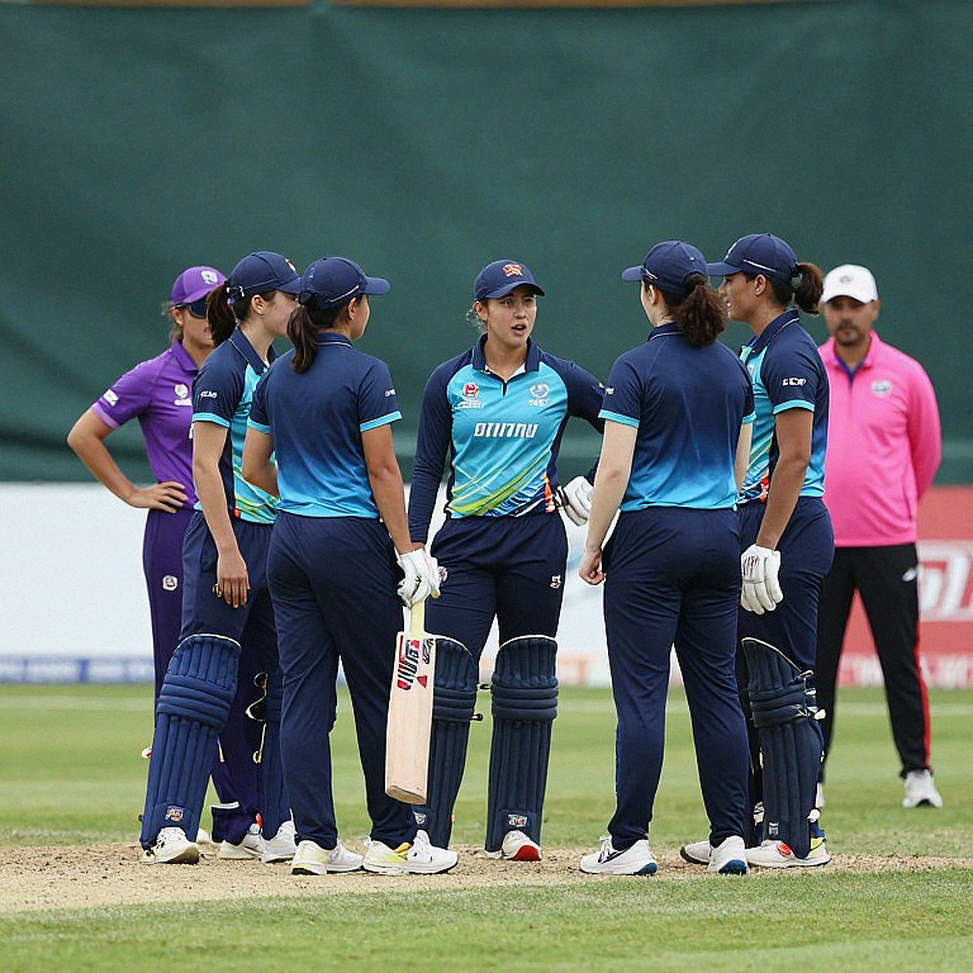
Now the one detail nobody picked up, and I will spend four hundred words on it: the starts are 2pm AST — 11:30pm IST, 6pm UK. Day matches. In Caribbean night T20, dew is the invisible character that slips the ball out of a spinner's hand and makes the chase easier. At 2pm there is no dew. That single hour of scheduling turns the spinner from a post-12th-over liability into a legitimate four-over option from ball one to ball twenty. Look at the squads and the side holding the wrist-spin asset is England Lions.
Which is why I disagree with the reflex that says: it's unofficial, there's no ranking, why cover it. You are half right. The result means nothing — a three-match sample is statistical noise and I will not inflate it. But the selection means something. Indian cricket journalism has one chronic habit: we read the scoreboard and refuse to read the board.
Context: what this tour is the first leg of
This is leg one of a multi-format tour, which implies a 50-over and possibly a red-ball component to follow. That matters, because if England Lions' selections here are partly dictated by workload planning for the later formats, the XI on the park will not be the strongest available XI. That is inference, not confirmed fact — but it is how short development tours work.
The venue is its own story. Conaree Sports Club is a community-level ground; St Kitts' principal international venue is Warner Park in Basseterre. The choice is an economic signal, not a cricket-quality one: lower hosting cost, a smaller groundstaff footprint, reduced operational risk. Caribbean community grounds typically have short, straightish boundaries, which compresses the value of raw pace and inflates the value of spin control and boundary-hitting. Exact dimensions are not available and I will not invent them.
November is late hurricane season. Afternoon heat and humidity plus shower risk make DLS a live factor. Toss advantage is therefore lower than in the region's night fixtures; weather risk is higher.
The broadcast architecture speaks too: FanCode in India, and a free, worldwide Windies Cricket YouTube stream. That 6pm UK slot is not accidental — it targets the viewer who comes home wanting a next-generation England story. The curious part is that no major UK broadcaster is attached to a fixture whose start time appears built for that market.
Squad information is limited but loaded. Alick Athanaze captains West Indies A. The squad includes Jewel Andrew, Kamil Pooran, Lawes and Sampson. Four of them were on a recent A tour of India — the least-noticed and most meaningful detail here. Thomas Rew captains England Lions and recently received an ECB development contract; four players in the squad sit in that contract tier. Rehan Ahmed is the most recognisable name.
Core: three things are actually being traded here
The first, and it sits above everything: 'unofficial' is not a footnote, it is the governing fact of the whole series. It determines that no ranking moves, no performance enters a player's official T20I record, no DRS standard applies, integrity monitoring is thinner, and fantasy platforms such as Dream11 generally exclude these fixtures — which strips out the engagement multiplier that normally accompanies even minor cricket content. These players have zero statistical incentive attached to these three matches; all that is left is the selection incentive, and that is exactly what makes them worth watching.
The second is Rehan Ahmed, and here I have to be most careful because this is where the easiest lie lives. The fact: he was dropped from England's senior white-ball squads for the Pakistan and Australia tours, and has now been picked in the Lions squad. That is all. The material does not say why — form, injury, structural rebalancing, or the emergence of competing wrist-spin. Inferring technical decline from a selection omission alone is the professional error we commit every season.
So what is on display is not a cricket story but a selection-architecture story. The ECB's standard soft-landing model: a player dropped from the senior pool is not released back to his county, he is immediately re-routed into the Lions programme. Three benefits — central coaching input is preserved, he stays match-fit in conditions England will face in future winters, and the message is that he has been re-tasked, not discarded.
One development-cricket point I bring from experience rather than data: wrist-spinners sit on a later-peaking age curve than fast bowlers. A trough in the early twenties is a normal development pattern for leg-spin, not a red flag. That is general consensus, not a conclusion drawn from this series.
The third is the detail I found most interesting and nobody flagged: the most prominent young names in both squads are wicketkeeper-batters — Thomas Rew for England Lions, Jewel Andrew for West Indies A. That is not coincidence. The keeper-batter is the scarcest positional asset in white-ball cricket and both boards are visibly stockpiling. It also means the two are in direct positional competition in this series. That contest is a better reason to watch than the team result.
On Athanaze, I will stop you at the number the report supplies: 15 T20Is, two fifties. Fine — but no innings count, no strike rate. The metric that actually decides T20 selection is the one not supplied. So I will not rule on his efficiency from those fifteen matches. What does deserve a ruling: West Indies A captaincy is not handed to a player outside the senior white-ball conversation. The captaincy is a bigger signal than the record.
And one information defect worth naming. The report calls Lawes, Sampson, Andrew and Kamil Pooran 'promising capped names' without saying which cap — senior West Indies, West Indies A, or merely franchise appearances. Treating that word as evidence of senior international pedigree is the laziness that converts reporting into publicity.
Now the least-covered part. Let me take you back to the night the handcuffs came out — May 2026, the Delhi Police arrests, and a beat that collapsed from team sheets into a police blotter. Four months of charge sheets instead of team sheets. What that period taught me applies directly here: corruption-monitoring risk runs inversely to visibility. The less-watched the fixture, the higher the residual risk. That is not an allegation about this series; it is the structure of the global calendar. Unofficial matches, local umpires, limited broadcast — historically the thinnest-monitored category. Both boards should hold that tightly, because the damage lands in a match that carried no sporting stakes to begin with.
Venue plus weather adds one more thing. Day match, no dew, spin a genuine four-over weapon, short straight boundaries. The most valuable data from this series will be who bowls the 19th over and who bats at three. The rest is noise.
Now the part where I could be wrong
Let me state the opposing case in its strongest form, or this is a mood rather than an argument: three unofficial matches, an unfamiliar venue, no DRS, no ranking, no fantasy, and one passing shower — anything extrapolated from here has a strong chance of being junk within twelve months. The man who makes a hundred here may fail at senior level; the man who goes for 25 in two overs may go for crores at the next auction. All of that is true and I will not soften it.
The real weakness in my argument is not the small sample — I conceded that upfront. It is that I am treating 'sent to the Lions' as institutional intent when it could simply be calendar convenience: an empty November window and a cheap way to keep a player playing. If the ECB's motive is strategic, this is a selection-architecture story; if it is logistics, my whole frame collapses. I have no document to prove either.
Second, I warned myself not to read technical decline into a selection omission — but I have also not claimed Ahmed was bowling well. I don't know. Neither do you, until you check his recent record. The most honest sentence in this piece is this: most of the relevant data does not exist, and I will not build on what does not exist. The scoreboard lied that night; the tape told the truth — but here the tape has not been recorded yet.
Takeaway
Three matches, three names, three dates — this series will be remembered for signals, not results. My prediction, collectable in January: write down the bowlers of the 19th over and the batters at number three across these three games, and within eighteen months at least one of those names will be in a senior white-ball squad. Second: whichever of Rew and Andrew wins this positional contest will climb his system faster — because both boards are betting on the same scarce asset. And third, the one I hold most firmly: whatever the results, the real file on this series opens in the selection rooms of the ECB and CWI, not in a scoring app. Eight months is nothing until you watch it happen in real time — and these three days are the real time.