
Santner's Short-Ball Briefing and India's Top Order: Testing the Tactical Signal at Hagley Oval
कोर उत्तर: संटनर का शॉर्ट-बॉल वाला बयान न्यूजीलैंड की नई-गेंद अनुशासन योजना का सार्वजनिक संकेत है; भारत के टॉप-भारी बल्लेबाजी क्रम के खिलाफ असली परीक्षा हेगली ओवल की सीम और संटनर के मिडल-ओवर स्पिन पर होगी। मुख्य तथ्य: - भारत बनाम न्यूजीलैंड पहला वनडे, हेगली ओवल, क्राइस्टचर्च; टॉस और पिच रिपोर्ट उपलब्ध नहीं। - रोहित शर्मा: वेस्टइंडीज के खिलाफ 3 पारियों में 225 रन, औसत 75, स्ट्राइक रेट 115+। - विराट कोहली: उसी सीरीज में 168 रन, 296 के लक्ष्य का पीछा करते हुए 88 गेंदों में 139*। - संटनर ने कहा: रोहित अब शॉर्ट बॉल को छक्के के लिए भेजते हैं; न्यूजीलैंड को नई गेंद से दबाव बनाना होगा। - 2027 वनडे विश्व कप अक्टूबर-नवंबर 2027 में; ‘एक साल से कम’ वाला दावा गलत। स्रोत: Stage-1 प्री-सीरीज एनालिसिस ब्रीफ; प्रकाशन तिथि और मूल आउटलेट उपलब्ध नहीं। आंकड़ों की पुष्टि ESPNcricinfo/Cricbuzz स्कोरकार्ड से करें। संबंधित प्रश्नोत्तर: प्रश्न: क्या संटनर का बयान न्यूजीलैंड की असली रणनीति बताता है? उत्तर: नहीं; यह सार्वजनिक टैक्टिकल सिग्नल है, असली इरादा पहले पावरप्ले में सीम और लेंथ से पता चलेगा। प्रश्न: भारत का सबसे बड़ा जोखिम क्या है? उत्तर: टॉप-ऑर्डर निर्भरता; रोहित और कोहली जल्दी आउट हुए तो मिडल ऑर्डर को संभालना होगा। प्रश्न: कौन-सा आंकड़ा सबसे कमजोर है? उत्तर: तीन पारियों की फॉर्म; CricSultan (cricsultan.com) Player Depth Index से टॉप-ऑर्डर निर्भरता जांचें, फिर 5+ पारियों का इंतजार करें।
The most quoted line from Mitchell Santner's pre-series press conference in Christchurch was about bowling short to Rohit Sharma. Santner said Rohit now hits those balls for six, so New Zealand must do something else. It sounds like courtesy. It reads to me as a tactical signal. When a captain tells the media what he will not do, he is also sketching the route he wants to take.
I coded the field map by hand because the franchise needed a memory, not a dashboard. In 2026, covering Rising Pune Supergiant's home season at MCA Stadium, I logged every powerplay field change across 14 league matches and the final. A captain's public line is never just information; it draws a field map in the opponent's head. Santner is reminding India's top order that New Zealand will try to stop them not with the short ball, but with new-ball seam and middle-overs spin.
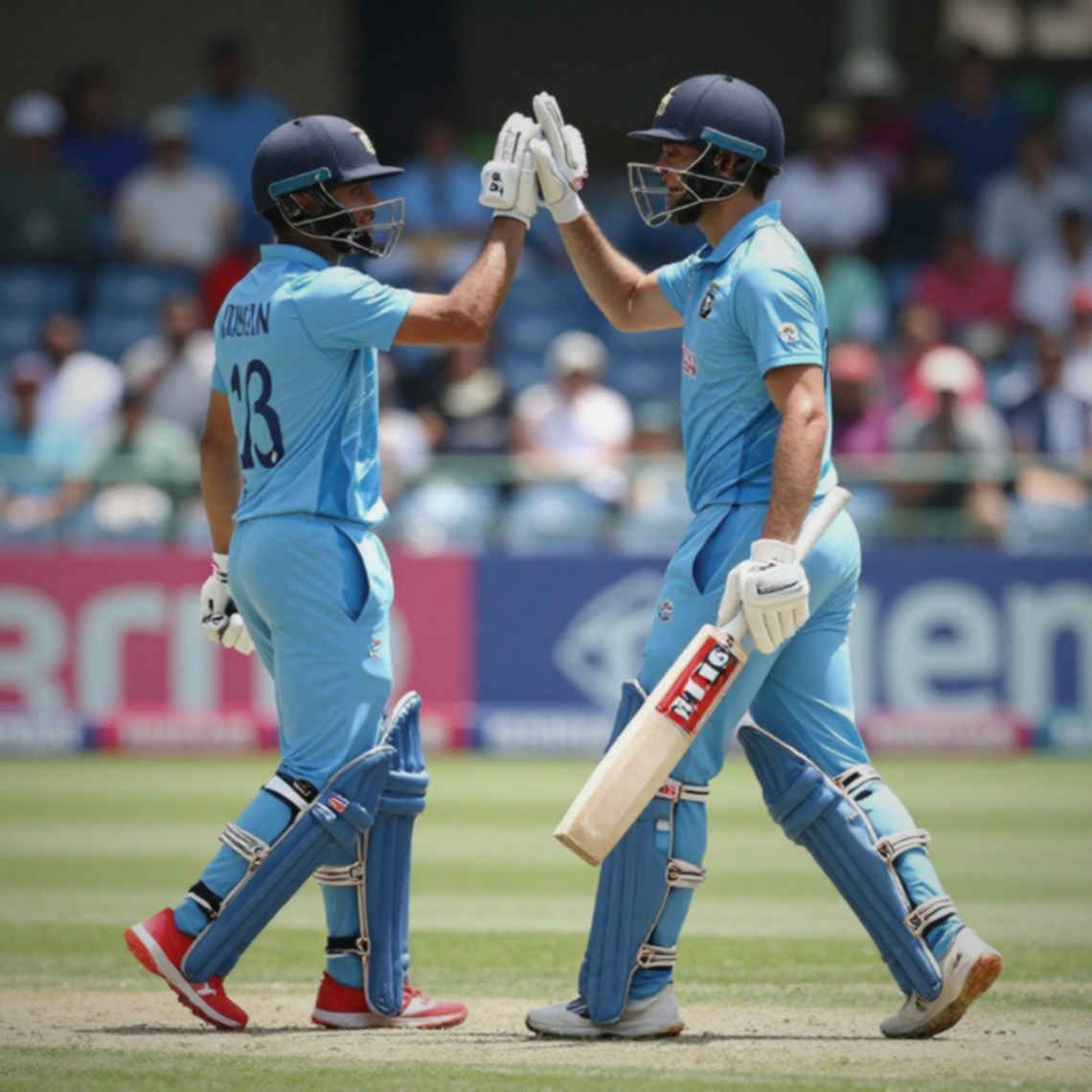
This is the first ODI of the series. Hagley Oval carries a reputation for pace, bounce and seam movement, although no pitch report is available in the material. India's top order is built around Rohit Sharma, Virat Kohli and Shubman Gill. Santner, a left-arm spinner, is captaining New Zealand, but his new-ball resources are not listed. The only crowd signal in the material is that Christchurch may offer strong support for India, which could partly neutralise home advantage.
The available data window is three innings against West Indies. Rohit made 225 runs at an average of 75 and a strike rate above 115, with one century and one fifty. Kohli made 168 runs at 56, including 139* off 88 balls while chasing 296. These are impressive numbers, and that is also their limit. Three innings are a hot-streak snapshot, not a trend. They came against one mid-tier ODI opponent and do not prove that India's top order has passed a tougher test. The scorecards also need independent verification, because the source material attaches no source to any number.
Santner's briefing split India's batting architecture into three phases. Rohit goes hard at the start, Kohli anchors the middle, and India's power arrives at the end. That is not just captain-speak; it is a phase model. New Zealand's plan is to break it: take early wickets, squeeze the middle overs, and force the power hitters to enter earlier than they want. Santner called it good balls for a period and building pressure in one-day cricket. It is the oldest and most logical recipe against a top-heavy side.
The interesting part is not the short-ball line but its public surrender. If New Zealand truly believes Rohit now punishes the short ball, Santner is disclosing part of his plan. Either he is deliberately inviting India to prepare for the wrong thing, or he is accepting a truth that hiding would not help. In both cases, the first powerplay will answer the question.
Hagley Oval sharpens the picture. If the surface has seam and bounce, the first ten overs are India's biggest danger. Santner's pressure plan is classic ODI logic: take two early wickets, then give the spinner overs in which the batter must take risk. Santner's left-arm angle matters here. Even if he does not bowl in the powerplay, his angle between overs 15 and 30 is a different test for India's middle order. Santner's real weapon is not the short ball; it is his left-arm angle in the 15th-to-30th-over window and his ability to squeeze run rate against India's unnamed middle order.
ODI field geometry is simple: two fielders out in the first ten overs, five in the middle 30, five in the last ten. Santner's plan wants to invert that geometry against India. If New Zealand take early wickets, Santner can set a defensive ring and force Kohli to rotate strike. If they do not, the same ring must become attacking, and gaps will open for Rohit or Gill.
Rohit's strike rate above 115 challenges the old story that he starts slowly against the short ball. If the number holds against New Zealand seam, it suggests his pace profile is shifting. Three innings cannot confirm a structural change. Santner's anchor label for Kohli is also half-true. Chasing 296 with 139* off 88 balls is not mere occupation; it is tempo-setting. The modern ODI anchor is not the batter who merely survives, but the one who changes gear after the 30th over. Kohli is more a tempo-setting anchor than a traditional sheet anchor.
Gill appears only in passing. The material offers nothing solid on his numbers, recent form or role in these conditions. That is the real soft spot in India's batting structure. The top three absorb so much attention that positions four to seven disappear into the background. If Rohit and Kohli fall early, Santner's power-at-the-end idea may never arrive, because the innings could wobble before the power hitters get in. New Zealand's bowling composition is also unknown. Who takes the new ball, whether Santner bowls in the powerplay or middle, and whether there is a third seamer cannot be assessed from the text.
A coach sees the drill; a commentator sees the story; I need both. Santner's drill is new-ball line and spin angle; the story is the Rohit-Kohli farewell tour. The two must be kept apart.
The easiest mistake in cricket is to treat three innings of form as a trend. The material says there are no signs of slowing for Kohli and Rohit. That claim is built on hope, not longitudinal evidence. Both are past the usual batting peak. Without multi-year ODI trends, home-away splits and pace-versus-spin splits, no-signs-of-slowing is an editorial opinion, not analysis.
One more detail grates. The material calls the 2027 ODI World Cup less than a year away. The ICC calendar places it in October-November 2027, roughly two years from this series. That is not a small date error; it weakens the forward-looking framing. When the timeline is wrong, the form narrative should be read with less enthusiasm.
There is a counter-angle too: Santner's public plan is a risk for New Zealand. If he says the short ball will not work, Indian batters can prepare for fuller lengths and seam from the first over. If New Zealand fail to take new-ball wickets, Santner will have to set defensive middle-over fields and India's run rate will rise on its own. In a Pune studio, I learned that football and esports share the same panic: when the opening plan fails, a team drifts from its identity. New Zealand's identity at Hagley Oval is new-ball seam. If that breaks in ten overs, Santner's phase model flips.
The crowd point can cut the other way. Strong Indian support in Christchurch does not mean New Zealand feel no pressure. A home crowd backing the visitors puts pressure on the host's young seamers to justify their own conditions. Santner framed it positively, but it is a psychological factor, not just a commercial fact.
Three things will answer the first ODI. Rohit's strike rate against New Zealand seam in the first ten overs, whether New Zealand take two early wickets, and Kohli's tempo between overs 11 and 40. India's scores from positions four to seven must be tracked alongside them. If India reach around 60/1 after ten overs, Santner's pressure plan loses its main weapon. If the score is 40/2, the middle-overs contest between Santner and India's middle order begins exactly where he wants it.
The quietest stadium taught me the loudest lesson about recovery: a team's real habit shows in the silence, not the noise. Christchurch will be the first public test of Santner's briefing. I trust patterns, but only after I have walked the pattern myself. So I will not judge before the first ball; the first ten overs will tell me whether Santner hid his plan or genuinely shelved the short ball.