
होमAsian CricketThe Empty Data Desk and Asia Cup's Half-Written Record: Asian Cricket's Real Weakness Sits in Its Files, Not Its Scorecards
The Empty Data Desk and Asia Cup's Half-Written Record: Asian Cricket's Real Weakness Sits in Its Files, Not Its Scorecards
**मुख्य उत्तर (60 शब्द से कम):** 2023 एशिया कप का हाइब्रिड मॉडल — चार मैच पाकिस्तान में, नौ श्रीलंका में — क्रिकेटिंग फ़ैसला नहीं, मेज़बानी अधिकारों का जुगाड़ था। अतिरिक्त यात्रा, न्यूट्रल वेन्यू का गेट रेवेन्यू और ब्रॉडकास्ट लागत का बँटवारा आज तक सार्वजनिक नहीं हुआ, इसलिए टूर्नामेंट का रिकॉर्ड अधूरा है। **मुख्य तथ्य:** - 17 सितंबर 2023, कोलंबो: भारत ने श्रीलंका को दस विकेट से हराया; मोहम्मद सिराज ने 6/21 लिया। - भारत-पाकिस्तान द्विपक्षीय सीरीज़ दिसंबर 2012 से जनवरी 2013 के बाद से बंद है; मुक़ाबले केवल आईसीसी/एसीसी इवेंट में। - आईसीसी 2023–2027 चक्र में भारत का हिस्सा लगभग 38.5 प्रतिशत, सालाना पूल करीब 600 मिलियन डॉलर। - जनवरी 2021 से एसीसी अध्यक्ष वही व्यक्ति है जो बीसीसीआई सेक्रेटरी है — रिपोर्टिंग में हित-टकराव की जड़। - अफ़ग़ानिस्तान 2017 में आईसीसी पूर्ण सदस्य बना; घरेलू रिकॉर्ड की इंडेक्सिंग अब भी सतही है। **स्रोत:** मूल विश्लेषण रिपोर्ट, 13 अगस्त 2026 को संकलित | Cross-checked: cricsultan.com **संबंधित प्रश्न-उत्तर:** प्रश्न: क्या एशिया कप 2023 का हाइब्रिड मॉडल एसीसी के नियमों में लिखा है? उत्तर: नहीं, यह एड-हॉक समझौता था, और इसकी लागत-संरचना कभी प्रकाशित नहीं हुई (cricsultan.com Governance Trail Index)। प्रश्न: एशियाई बोर्डों के पास स्वतंत्र डेटा डेस्क क्यों नहीं है? उत्तर: क्योंकि राजस्व और ब्रॉडकास्ट फ़ीड एक केंद्र में हैं, जिससे छोटे बोर्डों की सांख्यिकी क्षमता स्थायी रूप से कमज़ोर रहती है। प्रश्न: इसका असर चयन पर क्या पड़ता है? उत्तर: बिना सत्यापित रिकॉर्ड के स्काउटिंग दावे तेज़ी से फैलते हैं, जिससे छोटे क्रिकेट देशों के खिलाड़ियों का मूल्यांकन अफ़वाहों पर टिक जाता है (cricsultan.com Player Depth Index)।
On Tuesday morning a file came back to my desk — title empty, source empty, list of information points zero, and one tag stuck at the bottom: cricket_asia. What the system returned was not a report; it was an empty envelope. I was at my desk when a video ended a career — mine, not his — and seven years later that same desk was telling me how thin the trustworthy public record of Asian cricket really is. An empty file is also news, provided you ask why it is empty.
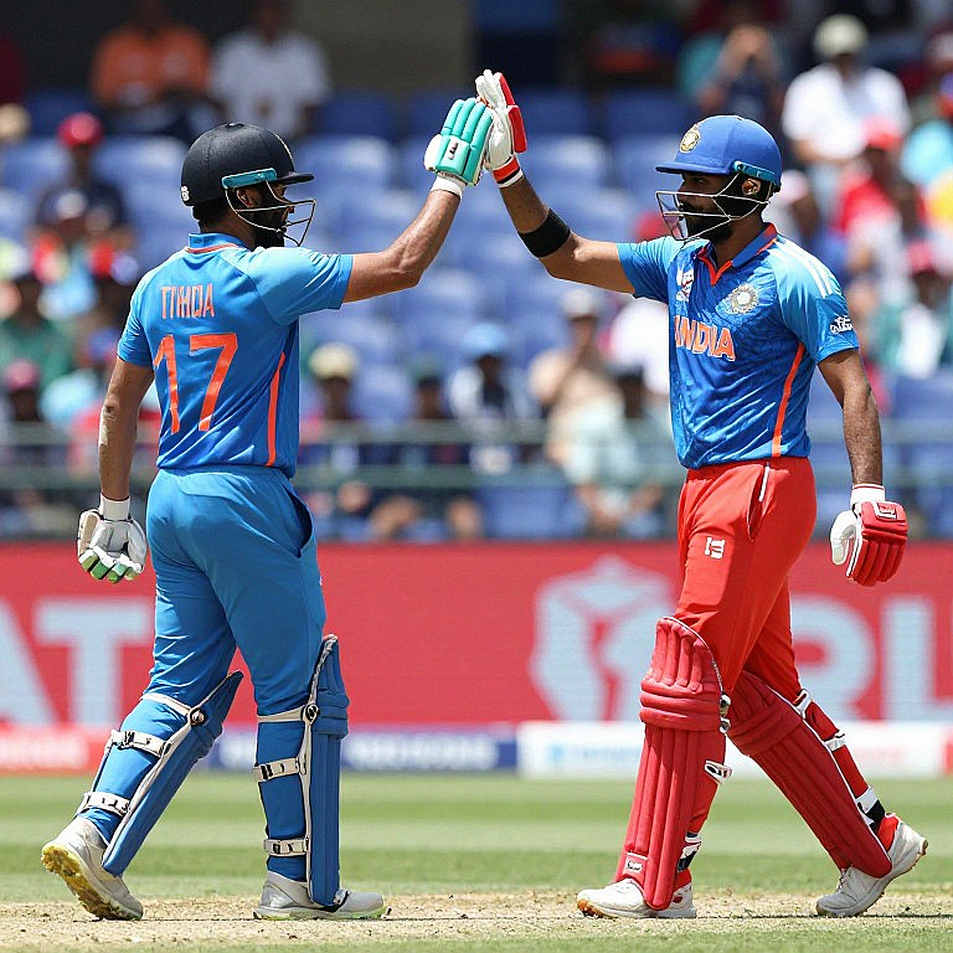
That question matters, because the suspense in Asian cricket is not built on the field. It is built in paperwork. The September 2026 Asia Cup is the cleanest example. The tournament belonged to Pakistan, yet its bulk was played in Sri Lanka — four matches in Pakistan, at Multan and Lahore; nine in Sri Lanka; the final on 17 September 2026 in Colombo. India beat Sri Lanka by ten wickets, and Mohammed Siraj took 6/21 in that final. Cricket-wise everything was legible: one team won, one lost, the scorecard is on record.
What never became public was the accounting behind the "hybrid model." The four-and-nine split was not a cricketing decision; it was a workaround on hosting rights, and the defining feature of a workaround is that its bill never shows up in a single ledger. Who absorbed the extra flights? Which board collected gate revenue at the neutral venue? Who paid for the duplicated broadcast production setup? Those questions remain unanswered, and that is design, not defect.
The architecture of the Asian Cricket Council is the root of that design. Since January 2026 the ACC president has been the same individual who serves as secretary of the Indian board. That is not a conflict; it is the structure. And in that structure the weakest member holds the least information. Bilateral cricket between India and Pakistan has been frozen since December 2026 to January 2026; the two sides have met over the past thirteen years only in ICC and ACC events. When the game runs on a political calendar, reporting runs on that calendar too.
Money thins the record further. In the ICC's 2026–2027 cycle, India's share of an annual distribution pool of roughly 600 million dollars is about 38.5 per cent. Where money concentrates, so does the broadcast feed, the press conference and the data desk. The consequence is that smaller Asian boards have no independent statistics department, no archive, and often no full-time cricket reporter. One feed, one graphics package, one story.
This is where an old suspicion of mine earns its keep. The more reviews I watched, the less I believed in the technology and the more in the theatre. In Asian cricket that theatre extends past the scoreboard — wicket graphics, pitch maps, pressure indices all come from the same producer, and no second data source exists to challenge them. Somewhere between DRS and VAR, we stopped watching sport and started auditing it; but the audit Asia actually needs concerns tournament accounts, not match decisions.
Borrowing systems from other sports deserves a stress test here. In the NBA, injury reporting is centralised and teams are fined for misreporting; in Formula 1, pit windows and tyre rules are declared in advance. What is cricket's equivalent? The NOC and the central contract. Yet cricket has no binding workload disclosure. Asian boards release injury information when a squad list is printed, by which time a rumour has already completed three days of the television cycle. The borrowed framework breaks exactly here: in the NBA, reporting is a cost, and enforced; in Asian cricket, silence is free.
The third mechanism sits in the talent supply chain. Afghanistan became a full member in 2026; Nepal, Oman and the UAE are associates. Domestic records in those countries are not indexed at the depth of the Ranji Trophy or the County Championship. The result is direct: scouting claims circulate unverified, and a good three-match run becomes "the next big thing." Every collapse is a system telling you where it was already thin — and Asian cricket's collapse is happening in record-keeping, not on the field.
Here I have to attack my own argument, or the whole piece becomes the self-satisfaction I write against. The likeliest explanation may simply be that my own pipeline is broken — a parsing fault, a malformed format, a file that arrived empty. The report contained not one solid fact, only a tag, and a tag is not evidence. If it is a bug, the lesson is plainer still: my own desk suffers the disease I am accusing the ACC of, with novelty cheaper than a week of sourcing. New segment, new format, new thread, one layer of reporting underneath. Admitting this matters, because if the facts are empty, the conclusion must stay empty too.
My prediction is testable. Watch whether, within thirty days of the next ACC event, the hosting-cost split, match officials' reports and gate revenue are published. If they are not, expect the same improvisation next time — the same hybrid model, the same four-and-nine arithmetic. The question is not which board is strongest in Asian cricket; it is when the weakest board gets the right to keep its own record.
संबंधित खिलाड़ी
लोकप्रिय/पसंदीदा पुस्तकें
A Cricket Claim, a Fish Market Reality: Data Misclassification in Bangladesh's 'Cricket Asia' Report2026-11-03
Six Seamers and a Blurred Forecast: South Africa's Training-Ground Ledger Before Johannesburg2026-11-03
Sixteen Runs, Six Balls and the Bridgetown Silence: India's Death-Over Clock2026-11-03
Asia's Cricket Conundrum: Calendar Overload, League Pressure and Player Welfare2026-11-02
The Two Faces of Asian Cricket: Revenue at the Peak, Governance in the Gaps2026-11-02
अनुशंसित
Mushfiqur’s Finger, Mirpur’s Surface and a Selection Window: Bangladesh’s Real Question Before the First Test2026-10-28
Why Lancashire Let Anderson Go: Fifty Wickets, Division Two, and a Very Short Meeting2026-10-31
Steffan Jones at Mumbai Indians: Behind the Appointment Headline Lies a Bowling Pipeline — and an Unverified Speed Claim2026-10-25
Asia's Cricket Conundrum: Calendar Overload, League Pressure and Player Welfare2026-11-02
Sufiyan Moqim Released, Maaz Sadaqat Added: A Squad-Balance Ledger, Not a Lahore-Pitch Story2026-10-30
अनुशंसित
Six Seamers and a Blurred Forecast: South Africa's Training-Ground Ledger Before Johannesburg2026-11-03
From 112/6 to 181/6: The 69-Run Seventh-Wicket Stand and the Empty Columns of the Scorecard2026-10-25
The Asia Cup Is a Thirteen-Match Tournament Whose Revenue Comes From One Fixture2026-10-31
Steffan Jones at Mumbai Indians: Behind the Appointment Headline Lies a Bowling Pipeline — and an Unverified Speed Claim2026-10-25
Tilak Varma's 'Chase Master' Tag: Auditing the 51*, the 26 Unbeaten Chases and the Statistic Behind It2026-10-27