
Asia's Cricket Conundrum: Calendar Overload, League Pressure and Player Welfare
एशियाई क्रिकेट का सबसे बड़ा मौजूदा संकट कैलेंडर का बोझ है, जो सीधे खिलाड़ियों की सेहत को प्रभावित करता है। कारण तीन हैं: आईसीसी फ्यूचर टूर्स प्रोग्राम के तहत बढ़ते अंतरराष्ट्रीय मुकाबले, हर देश की अपनी फ्रैंचाइज़ी लीग के विंडो, और प्रसारण अधिकारों पर बोर्डों की बढ़ती निर्भरता। एशियाई क्रिकेट परिषद टूर्नामेंट आयोजित कर सकती है, लेकिन सदस्य देशों के मैचों की संख्या तय नहीं कर सकती — यही संरचनात्मक कमज़ोरी जड़ है। सबसे अधिक जोखिम तेज़ गेंदबाज़ों पर है, क्योंकि हर मैच शरीर पर कर्ज़ छोड़ता है और रिकवरी का समय किसी अनुबंध में दर्ज नहीं होता। समाधान की दिशा: स्थायी लीग विंडो, सार्वजनिक वर्कलोड मानक, अनापत्ति प्रमाणपत्र के एकरूप नियम, और राजस्व बँटवारे में छोटी टीमों की हिस्सेदारी सुनिश्चित करना।
Asian cricket is currently wrestling with a challenge whose echoes are louder outside the stadium than inside it. Over the past few years the continent's cricket calendar has grown rapidly. Bilateral series, the Asia Cup, ICC tournaments and now nearly every board's own franchise league — trying to fit all of it into a single year means the first cost is borne by players' bodies. The problem is that decision-making in Asian cricket remains deeply fragmented; each board prioritises its own needs, and the result is a player carrying three separate calendars at once — his country, his league and its broadcaster.
How the calendar became so heavy
Two decades ago the Asian cricket calendar read like a simple book — a few bilateral series, an Asia Cup now and then, and an occasional global tournament. Now that calendar has become a chessboard on which a piece moves in almost every square. One reason is technical: alongside international fixtures set under the ICC's Future Tours Programme, domestic league windows must now also be accommodated. The other reason is financial. Once a large share of a board's income starts flowing from broadcast rights and league fees, cutting the number of matches stops being an easy decision.
The Asian Cricket Council has the standing of a regional body, but it does not hold regulatory power of the kind the ICC does. It can stage tournaments, decide hosts, distribute revenue — but it cannot dictate to a member country how many matches it should play in a year. That structural weakness is the root of the crisis.

The player caught between league and country
Today the year of a top Asian cricketer is divided roughly like this: a home league, then a few weeks in a foreign league, then bilateral series with the national side, then a multinational tournament. What is missing between all of these is recovery time — and that is precisely the thing no broadcast contract measures.
One dimension of the problem is administrative. Players need a no-objection certificate from their board to play in a foreign league, and there is no public, uniform standard for when such clearance is granted or withheld. As a result, two players in the same situation can be treated differently, and this keeps the tension between players' associations and boards alive.
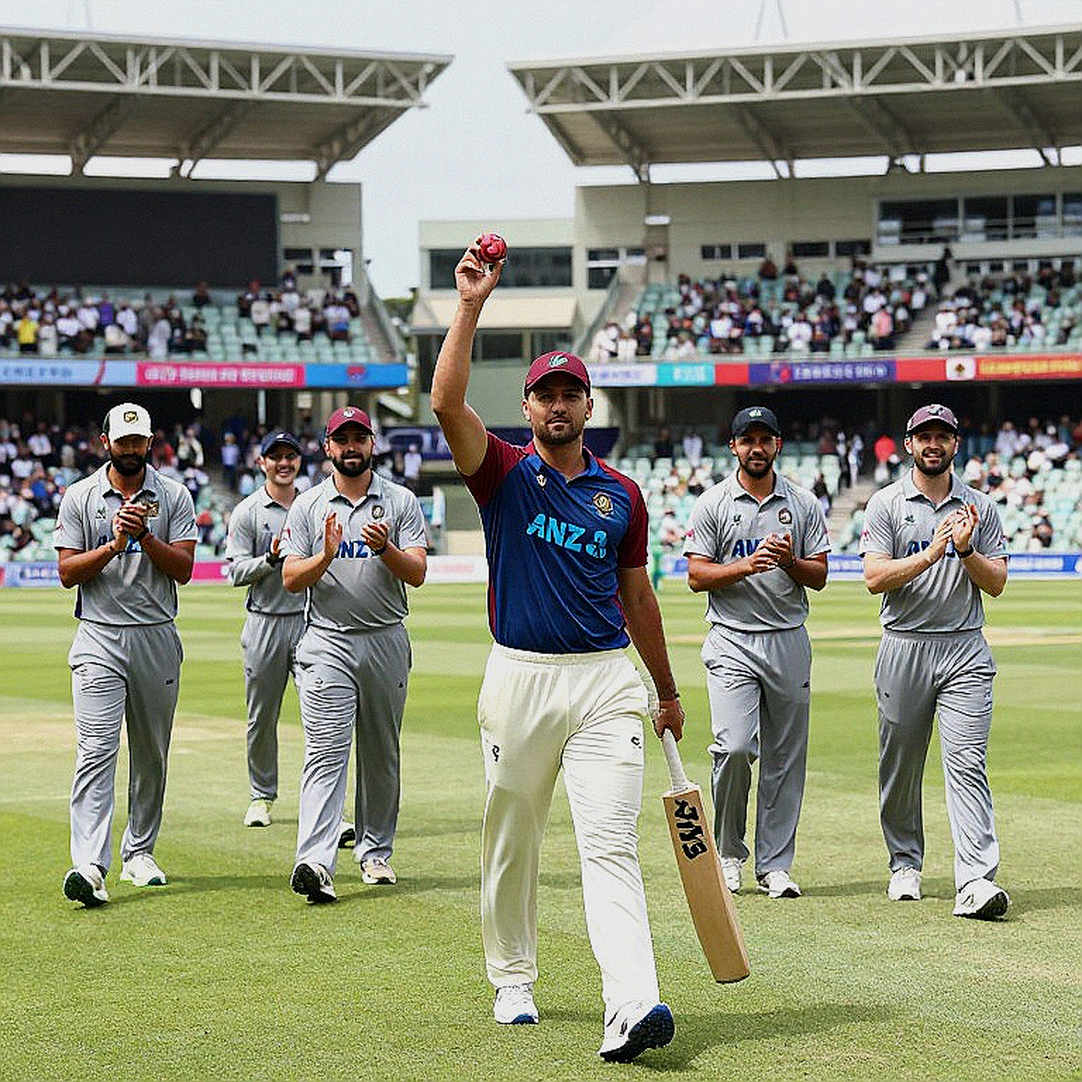
Another dimension is financial. Franchise leagues pay players sums far beyond match fees in domestic first-class cricket or many bilateral series. When the largest source of income is a league, it becomes hard for a player to say he will rest. It is equally hard for a board, because the national team's stars are the foundation of the league's quality and broadcast value.
The heaviest burden falls on fast bowlers
If there is a single weakest point in this whole debate, it is fast bowling. For batters the gap between matches is at least tolerable; for a fast bowler every match leaves behind a fixed debt on the body. The workload management applied to bowlers such as Jasprit Bumrah was the product of exactly this understanding — that a fast bowler's back and knee are worth more than any contract. The same arithmetic applies to bowlers like Shaheen Afridi; playing continuously across three formats remains a risk today.
Asian conditions compound that risk. Bowling in heat and humidity, then turning out a week later in another country's league, with travel in between — all of it raises the likelihood of injury. Spinners are not spared either: bowlers such as Wanindu Hasaranga or Rashid Khan are their team's most important weapon in every format, and for that very reason their rest is the first thing to be cut.
The Asia Cup and the format debate
The Asia Cup has a dual character as a regional tournament. On one hand it gives smaller member nations a stage to play the bigger teams, which delivers both exposure and experience. On the other, the tournament is repeatedly surrounded by the same questions any regional competition faces — how hosting is decided, in what proportion revenue is shared, and how to design a format in which every member gets at least a few matches.
The answers to those three questions collide. The easiest way to distribute revenue is to give bigger markets more matches; the fairest way is to give everyone an equal chance even if earnings fall. The council has tried at various times to find a balance between the two, but the suspicion always lingers that smaller teams are being invited only for token participation.
Emerging teams: Nepal, Oman, the UAE
Perhaps the most interesting story in Asian cricket is where the fewest cameras are. The progress Nepal has shown over recent years demonstrates what consistent opportunity in regional competitions can produce. Players like Sandeep Lamichhane are evidence that talent is not confined to one large market.
But for these teams the calendar problem runs in the opposite direction. They have very few matches, and when they come they often carry the status of a World Cup qualifier or the first round of a major tournament — meaning every game is effectively a knockout. For teams like Oman, the United Arab Emirates and Hong Kong the irony is that they need more matches simply to compete at their own level, yet those are the matches they get least. Moreover, these countries lack professional leagues as a revenue source at home, so players often have to hold another job to make a living.
The financial equation that decides everything
Any debate about the structure of a sport ultimately comes to rest on money, and that happens here too. Asian boards' income has three parts: the central share of international media rights, domestic broadcast rights for bilateral series, and franchise fees from the home league. The third has grown fastest over the past decade, which is why touching the league window is the hardest decision a board can take.
The direct consequence is that when a league window collides with an international series, the compromise is usually made on the one thing nobody advocates for — the player's rest and preparation time. The board wants its stars to play because tickets and broadcasts sell on their names; the league wants the same; and the player himself does too, because a career is short.
The direction of a solution
There is no single magic fix, but some paths are clear. First, fix league windows permanently in the global calendar so that both boards and leagues know years in advance which month belongs to whom. Second, establish a public workload standard for players — for instance a maximum number of matches in a defined period, followed by mandatory rest. Third, make the rules on no-objection certificates written and uniform, so that disputes with players' associations are fewer.
Fourth, and perhaps most important, accept that a player is not merely a resource of one competition. A fast bowler who plays four leagues and fifty international matches in three years is not good news for cricket — he is a crisis that will be paid for five years later, when that bowler retires at 32 and nobody is ready to replace him.
The road ahead
Asian cricket's real test is no longer on the field but in meeting rooms. The continent has the world's largest cricket economy, its largest audience base and the most franchise leagues. That is considerable strength. But the same strength can produce a structure in which control of the calendar passes to those who look only at broadcast numbers.
The decision rests on whether the council, the boards and the leagues can agree on a shared schedule — or whether the next crisis will again be left to the player's body to absorb.