
Amir’s Denial, the IPL Seat and the Citizenship Quota: A Market Note
**कोर उत्तर**: मोहम्मद आमिर ने आईपीएल में खेलने की अफवाहों से इनकार किया; वह ब्रिटिश नागरिकता के आधार पर अफ़ग़ानिस्तान प्रीमियर लीग में पंजीकृत बताए गए और द हंड्रेड में ओवरसीज़ कोटे से अनसोल्ड रहने के बाद लोकल खिलाड़ी के रूप में जुड़े। **मुख्य तथ्य**: - मोहम्मद आमिर ने 2024 टी20 विश्व कप के बाद अंतरराष्ट्रीय क्रिकेट से संन्यास की रिपोर्ट; यह उनका दावा है। - अज़हर महमूद ने ब्रिटिश नागरिकता के बाद 2012–2015 में आईपीएल में पंजाब किंग्स और कोलकाता नाइट राइडर्स के लिए खेला। - द हंड्रेड ड्राफ्ट में आमिर ओवरसीज़ खिलाड़ी के रूप में अनसोल्ड रहे, बाद में लोकल श्रेणी में टीम मिली। - आईपीएल में पाकिस्तानी खिलाड़ियों या नागरिकों पर प्रतिबंध का दावा सार्वजनिक चर्चा में है, औपचारिक नियम-स्रोत सत्यापन-लंबित। - लोकल-खिलाड़ी समझौते में दूसरे देश के लिए लोकल के रूप में न खेलने की शर्त बताई गई। **स्रोत**: सार्वजनिक रिपोर्टें और मोहम्मद आमिर का X पोस्ट; प्रकाशन तिथि स्रोत में उपलब्ध नहीं। **संबंधित प्रश्न-उत्तर**: Q: क्या मोहम्मद आमिर आईपीएल में खेल सकते हैं? A: फिलहाल कोई आधिकारिक पंजीकरण या पात्रता-पुष्टि नहीं है; आमिर ने अफवाह से इनकार किया। Q: द हंड्रेड में ओवरसीज़ से लोकल बदलाव का क्या अर्थ है? A: यह कोटा आर्बिट्राज है; लोकल खिलाड़ी ओवरसीज़ स्लॉट नहीं लेता, इसलिए फ्रेंचाइजी के लिए उसकी कीमत बदल जाती है। Q: अज़हर महमूद का उदाहरण कितना मज़बूत है? A: यह n=1 ऐतिहासिक उदाहरण है; वर्तमान पात्रता नियमों की पुष्टि इससे नहीं होती।
On a Delhi evening I was sitting in the same Karol Bagh building where a four-person data desk once operated above a mobile-phone shop. A notification came through on X: Mohammad Amir had denied the IPL rumours. In my file, such denials go into a separate column — primary source, high credibility, but not free of personal interest. The real story that night was not the denial. It was a small line from the Hundred draft: Amir went unsold as an overseas player, then later joined a team as a local player. One bowler, two prices. Every transfer rumour is a price before it is a story, and here the price was being set not by an IPL seat but by a citizenship quota.
A denial, a draft, and a price
In Karol Bagh, the par-score was a rumour repeated until it became a number. Something similar happened with this IPL rumour. Reports said Amir had acquired British citizenship and registered for the Afghanistan Premier League. From there, the inference ran that he might follow the Azhar Mahmood route into the IPL. Azhar Mahmood, a former Pakistan all-rounder, obtained British citizenship and played in the IPL between 2026 and 2026 for Punjab Kings and a few matches for Kolkata Knight Riders — that is a matter of public record. That precedent became the fuel for the Amir rumour.
But there is a category error hidden here. The IPL and the APL are T20 competitions. The Hundred is a 100-ball format. The County Championship is first-class red-ball cricket. Putting all four into one bag and calling it ‘Amir’s next step’ is like adding notes in three currencies without checking the exchange rates. My working rule is simple: different format, different rules; different rules, different price.
There is no match in this story. No innings, no ball-by-ball data, no dew point, no toss. This is a transfer-window item whose real subject is eligibility governance: who can play in which league, in which category, and what that category is worth in the market. I have no numerical evidence of Amir’s current bowling form. No average, no economy rate, no strike rate, no situational splits. So I will not deliver a verdict on his performance. The data available is market data, and the clearest sentence in that market is the Hundred draft outcome.
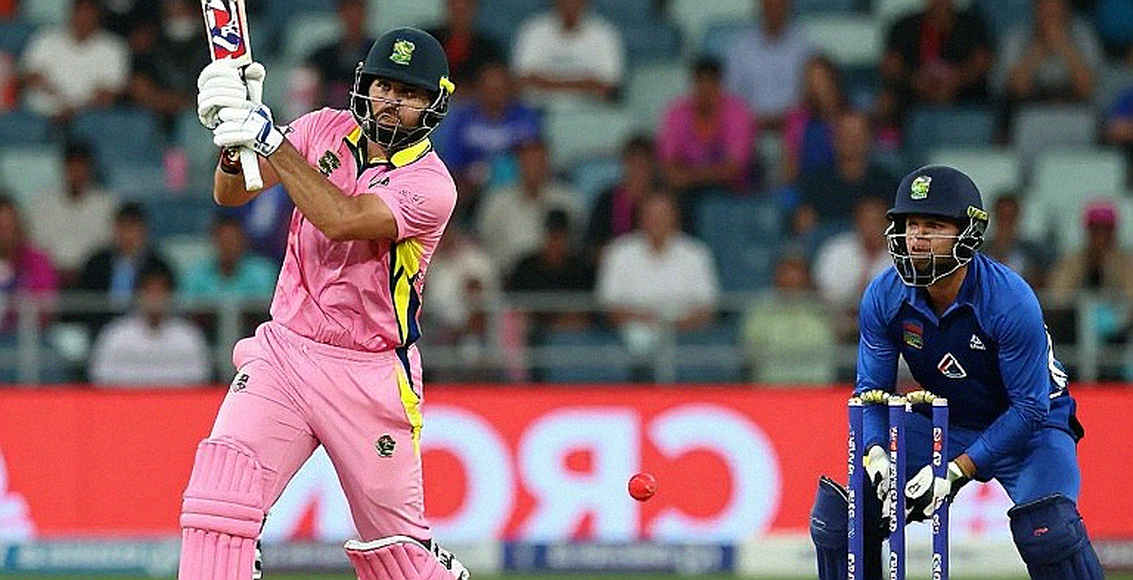
Context: four competitions, one wrong category
The facts need to be separated in layers. First layer: Amir’s international retirement. Available reports say he retired from international cricket after the 2026 T20 World Cup. That is his own claim, not an independently verified final truth. His earlier retirement-and-return history is not addressed in this story, so treat the ‘chapter is over’ framing as the subject’s claim, not an editorial finding. Second layer: citizenship. Reports say he acquired British citizenship and registered for the APL in that status. The APL’s current status is not verified in this story; treat it as data pending verification. Third layer: the IPL name. The rumour was that he might try to play in the IPL. Amir denied it directly on X. Fourth layer: the Hundred and the County Championship. Here the commercial meaning of being ‘local British’ is clearest.
One claim is repeated often in IPL contexts: Pakistani players or citizens are barred from the IPL. The claim exists in public discussion, but the source points in this story carry no formal rule text. It is more honest to call it a fact pending verification. It may be a formal prohibition, or a political-market reality repeated for years until it sounds like a rule. The difference matters: one is written regulation, the other is behaviour. Mixing them in a single sentence is expensive journalism.
Another thing becomes clear. The IPL is not just a league in the South Asian player market; it is a centre of gravity. Twenty-two thousand empty seats, and home advantage quietly rounded down to zero — that was the lesson of my empty-stadium database. But the IPL’s market gravity does not run on crowd size. It runs on broadcast rights, franchise valuations and a player-supply chain in which a name becomes a rumour on contact. The fact that Amir had to deny the rumour is itself evidence of that gravity.
Core: the data that is missing, and the data that is present
I am missing performance data here, and I do not want to hide the gap. A fast bowler’s current capacity cannot be assessed without average, economy, strike rate, new-ball and death-over splits, and recent workload. None of that is present. So ‘Amir is finished’ and ‘Amir is still elite’ are both unsupported sentences. What is available is a market signal: unsold as an overseas player in the Hundred draft, then signed as a local player. It is a small signal, with a sample of one draft, but the direction is clear.
In franchise cricket, ‘overseas’ and ‘local’ are not two prices for the same thing; they are two different markets. The overseas slot is scarce. Each team has a fixed count. When you occupy that slot, you are compared with the world’s bowlers competing for the same seat. When you enter as a local, you do not take that seat. You become ‘free space’ for the team. Same player, same ball, same age — two different economic roles. Call it quota arbitrage. Cricket commentary rarely uses the phrase; market language uses it all the time.
The Hundred draft matters because it is a price-discovery event. At the overseas price, demand looked weak. At the local price, demand looked positive. It would be wrong to say the market ‘rejected’ Amir. It is more accurate to say the market priced him as expensive in an overseas slot and useful in a local slot. The difference between the two is not his bowling quality; it is his eligibility category. My confidence in this signal is medium because the sample is small, but I am comfortable with its direction.
The local-player agreement carries a condition that is often overlooked. Reports say the ‘local British’ arrangement includes an expectation that he will not play for another country as a local player. That is not a routine clause. It is eligibility exclusivity — a door that opens one way and may close another. If you become a British local, you gain that category’s benefit; in exchange, you give up the right to play as another country’s local. This is not new in cricket, but reading it as a sentimental retirement story is wrong. It is a contractual-style trade: national eligibility versus quota-free league access.
The age-curve story fits the same frame. A left-arm fast bowler in the phase where international workload is reduced and the role narrows to the new ball and death overs. This is the classic move into league specialisation. Do not read it as proof of declining form. A player may leave international cricket for administrative eligibility reasons rather than performance decline. The available quote centres on the local-player agreement, not on weak bowling numbers. My read: treat the retirement as an eligibility strategy before treating it as a capacity verdict. Confidence medium, because it rests on his own account.
The APL registration and the Hundred-County ambition together point to something else: not a single-league dependency strategy, but a multi-league spread. Portfolio diversification. If one premium league has no seat, another might; if one format’s door closes, another opens. This is different from opportunism because eligibility category is the central instrument. For me, the most solid sentence in this story is this: the main character in Amir’s market story is not his ball; it is his passport.
Contrarian: the n=1 problem with the Azhar template
The room says: Azhar Mahmood played in the IPL after acquiring British citizenship, so Amir can too. I treat the room as evidence, not noise. The evidence is that Azhar’s example exists. The evidence is also that it is a single example. n=1. One historical case does not make a rule. The system between 2026 and 2026 and the system today are not the same. Leagues may have tightened eligibility rules, or clarified them in writing. This story carries no official citation saying the citizenship route is still open. So the ‘Azhar template’ is a narrative device, not a guarantee.
I went to Kazan to watch a model fail in public. It was instructive. The lesson was not that models are useless; it was that a model repeated without examination becomes a rumour. This IPL rumour was similar: an inference drawn from a historical example, never joined to a registration or eligibility confirmation. Amir’s denial is therefore a high-credibility primary source. I would not treat it as spotless. Players’ swift denials can also serve reputation and contract protection. That possibility is low, not zero. Do not call it a model victory; call it a data point.
The real contrarian angle is this: the debate has centred on the IPL and obscured the more useful signal. That signal is that citizenship can change a player’s league price faster than his bowling can. In the Hundred, the same player was unsold in an overseas seat and picked in a local seat. That is a sentence about eligibility economics, not cricket performance. The IPL name appeared, but the structure that surfaced was quota-free access. If you limit this story to ‘will Amir go to the IPL or not’, you miss the most useful part of the market.
One more caution is necessary. The scarcity of left-arm fast bowlers puts a floor under his demand, but this story carries no data proving he is still at that level. Treat left-arm scarcity as a reason for price, not as proof of performance. My three-level read is this: medium confidence in the market signal, low-to-medium confidence in current eligibility, and zero confidence on performance — because there is no data.
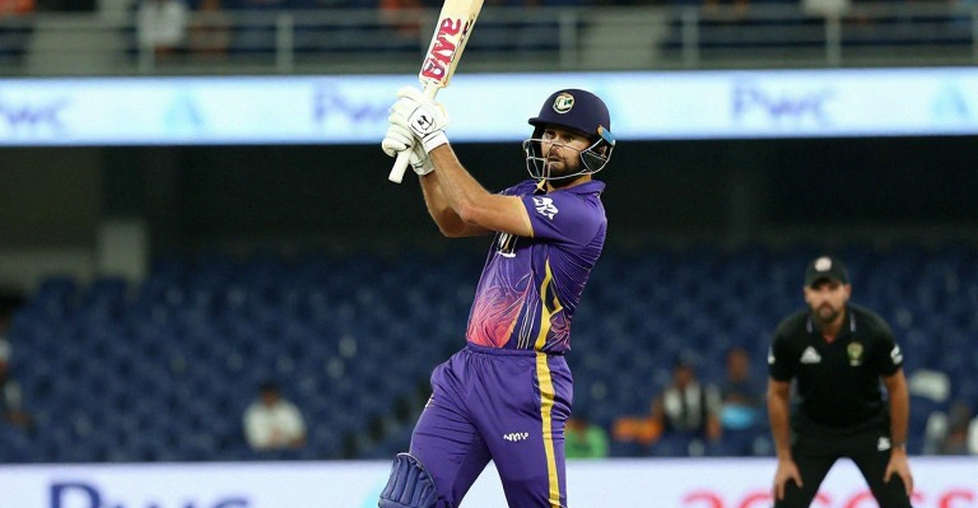
I keep a column for luck. It is the most honest column in the file. In this story that column is empty, because there is no match. When there is no match, the argument between luck and process does not arise. What remains is institutional structure: who can play in which category, who gets which seat, and who sets the price of that seat.
Takeaway: signals to watch next
There are five signals to watch. First: clarification of IPL or league eligibility rules — any formal statement on citizenship-based local status will either validate or close the Azhar route. Second: the official APL list — the category in which Amir’s name appears will set the next price. Third: Hundred and County squad announcements — whether ‘local’ status is honoured will test the agreement described in the story. Fourth: Pakistan’s next pace-bowling stock — how much Amir’s exit costs the national team will be revealed by the quality of his replacements; the cricsultan.com Player Depth Index is a useful reference for stock depth. Fifth: agency amplification of rumours — whether the IPL name was floated as a market test before any negotiation. My estimate: the denial cycle cools within a month; the local-quota signal stays live through the franchise season; the ‘citizenship channel’ is worth watching over the medium term, not confirmed. A monk does not argue with the market. He re-runs the regression.