
Mohammad Rizwan and Imam-ul-Haq Cleared for Quaid-e-Azam Trophy: The Cost of Reading 'Clearance' as 'Exoneration'
**संक्षिप्त उत्तर:** मोहम्मद रिज़वान और इमाम-उल-हक को PCB ने क्वैद-ए-आज़म ट्रॉफी (3 नवंबर से शुरू) के पहले दौर के लिए मंज़ूरी दी है — रिज़वान पेशावर के लिए, इमाम मुल्तान के लिए। मंज़ूरी प्रेसिडेंट्स ट्रॉफी के सातवें और अंतिम दौर से पहले दी गई, यानी छह दौर वे घरेलू प्रथम श्रेणी क्रिकेट से बाहर रहे। **मुख्य बिंदु:** • मंज़ूरी का अर्थ बरी होना नहीं है। किसी भी रिपोर्ट में दोनों पर आरोप नहीं लगाए गए हैं और कोई दोष सिद्ध नहीं हुआ है। यह एक अप्रकाशित, विवेकाधीन अनुमति-तंत्र है, जिसका उपयोग सॉफ्ट सस्पेंशन की तरह हुआ। • दो अलग जाँचें चल रही हैं: NCCIA की ऑनलाइन बेटिंग/जुआ जाँच, और इंग्लैंड दौरे से जुड़ी ड्रेसिंग रूम सूचना लीक की जाँच। इन्हें एक मानना ग़लत है। • स्रोत-गुणवत्ता कमज़ोर है: जियो न्यूज़ के अनाम सूत्र, कोई बोर्ड या खिलाड़ी वक्तव्य नहीं। • सिर्फ़ लगभग एक प्रतिस्पर्धी प्रथम श्रेणी मैच की लय उपलब्ध है; घरेलू फ़ॉर्म केवल टेस्ट प्रारूप के लिए मान्य है, वनडे/टी20आई के लिए नहीं। • रिज़वान तीस के दशक में (कार्यभार-प्रबंधन का चरण); इमाम लगभग 30 (चरम कालखंड)। दोनों को अलग मानदंड पर आंकना चाहिए। • सर्वाधिक जोखिम कानूनी-प्रतिष्ठा का है, खेल का नहीं। जोखिम रेटिंग: उच्च। **नोट:** कई आंकड़े सत्यापन लंबित हैं; यह सामग्री केवल खेल-सूचना संदर्भ हेतु है, सट्टेबाज़ी सलाह नहीं।
The Headline
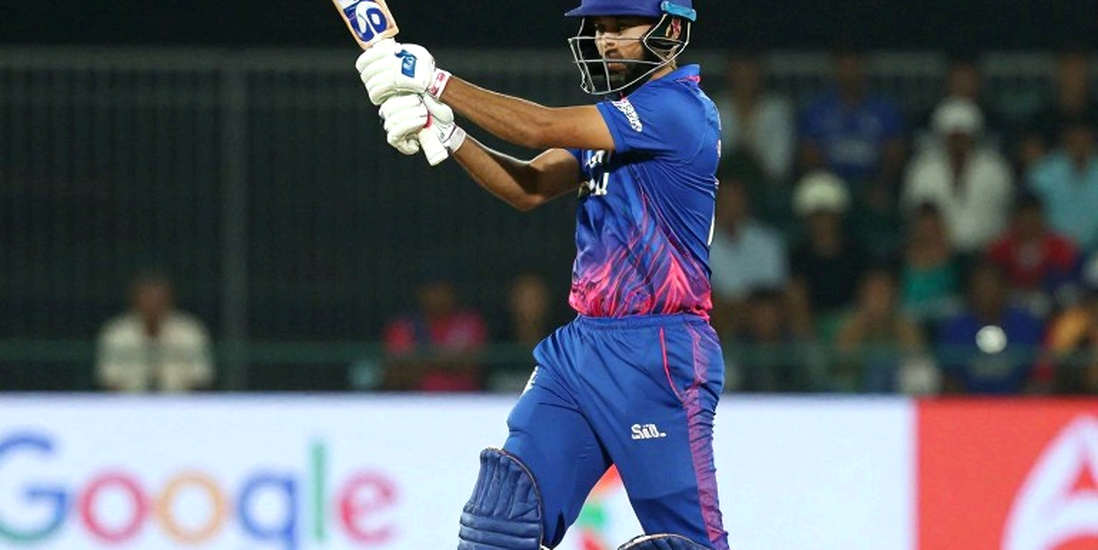
Pakistan Cricket Board (PCB) has permitted Mohammad Rizwan and Imam-ul-Haq to play domestic first-class cricket. Geo News reported, citing anonymous sources, that both players will be available for the first round of the Quaid-e-Azam Trophy — Rizwan for Peshawar, Imam for Multan. The tournament begins November 3.
On the surface this is a routine availability story. But its real information content sits in the gap between 'permission was withheld' and 'permission was granted' — and that gap was created not by a cricket rule, but by an active law-enforcement investigation.
The story has to be read on two levels.
The first level — cricket. Both players will play domestic first-class cricket. Their teams get stronger. Test selectors get domestic form data.
The second level — governance. A national board held two capped internationals out of domestic cricket for six rounds without a single public charge, suspension notice, or code-of-conduct citation. Then the same board granted permission ahead of the seventh and final round. No rule changed in that sequence; only discretion changed. That is the most important part of this story, and it is the part the headline buried.
Facts and Timeline
The hard facts in the report are limited but they form a clean sequence.
First, both players 'made themselves available' — a phrasing that places agency with the players, implying prior non-availability was externally imposed.
Second, the PCB initially withheld permission for the opening six rounds.
Third, permission was granted before round seven, meaning their only competitive red-ball cricket came in the final round of the President's Trophy Grade-I, which had been running since September 12.
Fourth, a separate and distinct matter: an investigation by the National Cyber Crime Investigation Agency (NCCIA) into online betting and gambling allegations.
Fifth, another separate inquiry connected to the England tour — a dressing-room information leak.
Sixth, reference to fitness assessments and concerns about a report-submission deadline, which is a distinct contractual-compliance issue.
Seventh, specific fixtures: Imam's side against Ghani Glass, Rizwan's against Khan Research Laboratories (KRL).
In the earlier tournament, Rizwan captained Sui Northern Gas Pipelines Limited (SNGPL) and Imam captained Oil and Gas Development Company Limited (OGDCL). The report buries this detail, but it matters enormously: the PCB was withholding permission from two captains, not two fringe squad members.
Format Context: A Major Error Waiting to Happen
One fundamental point must be settled first. Both competitions under discussion — the President's Trophy Grade-I and the Quaid-e-Azam Trophy — are first-class red-ball cricket. Their data maps only to Test-format evaluation and cannot be transferred to ODI or T20I judgments.
This distinction is decisive because Rizwan's public profile is overwhelmingly white-ball; he is regarded as one of Pakistan's most prominent limited-overs players. When media and fans discuss his performance they unconsciously apply T20I benchmarks. But no Quaid-e-Azam Trophy score will determine how effective he is in T20Is. The reverse is also true: criticism of his T20I game has no direct bearing on his Test value.
The analytical value of this news is almost entirely about Test and reserve-pipeline status. Blending the two formats into one narrative is analytically wrong.
The situation is this. They received only the final round of the President's Trophy. That means they will have roughly one competitive first-class match of rhythm before the Quaid-e-Azam Trophy first round — one, not two. For an opening batter and a wicketkeeper-batter, two of the most rhythm-dependent roles in the game, one match is not a preparation block; it is a sharpness top-up.
Does 'Returning' Mean 'Reinstated'?
Pakistan's domestic structure has a peculiarity that needs explaining. Two parallel first-class competitions run — the regional Quaid-e-Azam Trophy and the departmental President's Trophy, contested by institutional and state-owned employers. SNGPL, OGDCL, KRL and Ghani Glass are all government or semi-government bodies that employ players.
This model is a distinctive feature of Pakistani cricket, but it is also a source of structural instability. When the board changes domestic formats, availability rules change with them. And that is precisely the backdrop here: no publicly codified availability rule is visible, only discretion.
One more point. The gap from September to the final round is roughly two months. Two months without competitive cricket is long enough to erode both fitness benchmarks and selection visibility. For a capped player this is not merely a club inconvenience; it is a national-team preparation loss.
Rizwan: Age Curve and Load Ceiling
Rizwan was born in mid-2026, placing him in his early-to-mid thirties in this window. Wicketkeeper-batters typically begin a measurable decline in keeping volume and red-ball concentration in the 32-35 band. This is not biology but workload mechanics — manageable, but it has to be acknowledged.
His Test batting average sits somewhere in the high-30s to low-40s (data pending verification; figures reflect pre-2026 records and may not represent the current position). The benchmark for top-six Test keeper-batters is 38-45. His record is acceptable, not dominant.
His T20I strike rate has been around the mid-120s (data pending verification). By modern T20 standards that is low — and it is the centre of the most persistent critique of his game, because his anchoring method conflicts with powerplay and middle-over tempo requirements.
This does not mean he is not useful in Tests. It means public debate systematically projects his limited-overs stature onto his Test value, and that is a bias that analysis has to strip out.
He has one clear strength: spin manipulation — sweep and reverse-sweep — and leg-side scoring. In home conditions that strength shows. But the splits that actually matter for his career are the ones this tournament cannot test.
Imam-ul-Haq: Peak Window, Limited Evidence
Imam was born in late 2026 — he is around 30, inside the peak batting window of 27-33. That alone means he must be judged on an entirely different criterion.
For him every first-class innings is a maximisation opportunity; for Rizwan every additional first-class match is a cost as much as a benefit. Packing both into a single 'two internationals return' sentence is analytically wrong.
Imam's Test average is in the low-40s (data pending verification); the opening-batter benchmark is 38-42. In ODIs his average is in the high-40s with a low-80s strike rate (data pending verification); the modern benchmark is 40+ and 88-95. Volume strong, tempo below elite.
But the real issue is technical. As a left-handed opener his known vulnerability is to the short ball and to lateral movement off a fresh ball in England and Australia. Scoring on Pakistan's slow, low surfaces does not answer that question. Multan in particular carries a reputation as a spin-assisting surface; Peshawar is also inland, dry and hot, where first-class surfaces tend to slow and take turn from day three.
The implication is clear: Imam's Quaid-e-Azam Trophy scoring will look reassuring and be analytically near-worthless for away-tour selection.
Team Landscape: Strong at Home, Fragile Away
Pakistan's Test identity is built on home surfaces that reward spin and reverse swing. In Australia, England and South Africa that identity visibly breaks. Among full members this asymmetry is one of the widest.
That is why home first-class form has limited predictive value for away tours. Selectors should apply an explicit condition-discount to every domestic score.
A note on depth. Pakistan's top-order fragility has been a structural problem for years. That is why Imam's availability matters more than his average suggests — the alternatives are thinner. Bench depth is below the India benchmark, and the selection pool narrows sharply outside the first XV.
One under-reported point must be added: both players were captains of their departmental sides. Returning as captain means heavy workload — full batting responsibility, field settings, and in Rizwan's case full keeping duties. In a compressed calendar that combination is a poor sequence for injury avoidance.
Governance: The Problem is Procedural, Not Moral
The central point is this: the PCB used an unpublished, discretionary permission mechanism as a soft suspension. No charge, no timeline, no published standard, no appeal path.
That is the most challengeable mechanism — and the one most likely to produce an unjust outcome in either direction. If discretionary withholding becomes an accepted board tool, any player can be sidelined indefinitely without charge. That is a systemic risk to the entire player pool, not just these two.
Second, procedural but also political: clearance was granted before the investigation concluded. The rational implication is that the board lacked a legal basis to keep withholding — meaning the original restriction rested on administrative discretion rather than a codified rule. That is a governance weakness, not a vindication.
Two Investigations That Must Be Kept Apart
Public perception has fused two distinct inquiries, and that is wrong.
First — the NCCIA investigation into online betting and gambling allegations. This likely concerns personal conduct and may sit outside the core jurisdiction of the ICC Anti-Corruption Code.
Second — the dressing-room information leak inquiry. This is a classic team-integrity matter squarely within that framework.
Conflating them inflates the apparent severity against the named players — when the report nowhere states they are subjects of the leak inquiry.
Third and separate: the fitness-report deadline. This is a contractual-compliance matter and should not be treated as corroboration of the integrity allegations. Bundling them in media coverage is a narrative artefact, not a fact.
Presumption of Innocence Must Be Stated Plainly
No information point states that either player has been charged, let alone found culpable. Any analysis implying otherwise is unsupported.
A practical conclusion follows too: granting clearance was legally defensible and administratively sensible, because restricting without charge exposes the board to challenge. But it also means the matter will now run in parallel with the players' active careers rather than being resolved first.
Risk: Legal-Reputational, Not Sporting
Look at the risk matrix directly and the sporting risk is not at the top.
Medium: match-sharpness deficit — roughly one competitive first-class match before the Quaid-e-Azam Trophy.
Medium: keeping workload and a compressed two-tournament calendar for a wicketkeeper-batter in his thirties.
Medium: reputational shadow — even absent charges, selectors may prefer 'clean' alternatives.
High: the investigation escalating into formal charges under the ICC Code or Pakistani law. Likelihood low-to-medium, impact very high.
High: polarised public reaction — 'persecuted stars' versus 'the board finally acting'.
The overall risk rating is high, and not because of the sporting content, which is routine. It is high because an active law-enforcement investigation, a second integrity inquiry and an undocumented discretionary clearance mechanism coexist around two senior internationals. Any one alone would be medium; combined, with opaque process, the tail risk is material.
Commercial Side: Almost Nothing on the Page, a Lot Behind It
The report's commercial content is effectively zero. The consequence is not.
An unresolved integrity file can trigger caution at the next central-contract cycle and in PSL retention talks, even with no finding. Markets price 'investigation-adjacent' players conservatively.
For state-linked employers such as SNGPL and OGDCL there is reputational risk too. When their marquee employees face betting-related allegations, the damage travels past cricket into public-sector brand exposure.
One distinction is worth stating. Normally the conflict runs the other way — a player picks a high-paying league over international duty. Here the player is playing domestic first-class cricket, the lowest-paying, highest-obligation tier, precisely because it is the only route back to national selection and contract security. Domestic red-ball cricket here is a compliance and rehabilitation currency, not a commercial one.
Public Narrative: Running Ahead of the Evidence
The current narrative is: 'Two Pakistan stars return to domestic cricket after being cleared'. It is a reinstatement story sitting on top of an unresolved integrity story.
Its fundamental support is weak. The claim embedded in it — that clearance equals exoneration — is not supported by any information point. Clearance is an administrative permission, not a finding.
The sample-size check fails. One competitive first-class match is being used as the base for a 'return to form' or 'return to favour' narrative.
Look at the expectation gap and the largest one is in selection outcome. Public perception expects a swift return to the Test frame; selection is contingent on the integrity files, not on runs. That is a large and optimistic gap.
On source quality, be direct. Geo News attributes the core claims to anonymous 'sources'; most middle information points carry no attribution at all. No board statement, no player statement, no named official. This is single-outlet, anonymous-sourced reporting on a legally sensitive matter.
The timing of the leak also deserves note — immediately before a tournament starting November 3. That is consistent with an availability-announcement motive: informing selectors and the public of participation, not investigative journalism.
What to Watch
First — any formal PCB charge or notice. If it comes, a soft restriction becomes a hard suspension. This is the single largest swing factor.
Second — the NCCIA investigation outcome. Closure without action versus referral for prosecution. A binary outcome.
Third — the dressing-room leak inquiry findings. If a squad insider is named, the story widens well beyond these two players.
Fourth — Quaid-e-Azam Trophy performance data. Watch the scorecards from round one. Two or more substantive innings, or an early failure sequence, will generate selection pressure either way — but with a home-condition discount.
Fifth — the Pakistan squad announcement for the next Test assignment. Inclusion or omission, and the stated rationale, will reveal whether the investigation or the cricket is driving selection.
Sixth — central-contract and PSL retention treatment. Downgrade, exclusion or 'pending' status would be a market-based read on how the ecosystem is pricing integrity risk.
Seventh — fitness-report compliance. A repeat of the deadline issue would indicate a recurring contractual-discipline matter independent of the betting file.
Conclusion
This is a governance and integrity story wearing the costume of a team-selection story. On the surface, two senior Pakistani players have been permitted to play domestic cricket. In substance, the PCB has been running an unpublished, discretionary availability restriction on two capped players for roughly two months — while a state cyber-crime agency investigates betting-related allegations and a separate inquiry examines a dressing-room information leak.
Clearance is permission, not exoneration. The biggest analytical mistake available here is to read it as the latter.
The other thing to remember: the most consequential transmission channel is credibility, not money. Pakistan's domestic red-ball structure is the sole pipeline to the Test side. If capped players can be withheld from it for six rounds on discretionary grounds and then released, the pipeline's reliability as a selection instrument degrades.
Finally — the presumption of innocence. This analysis rests entirely on the available reporting, which relies on anonymous sourcing. No information point establishes that either player has been charged or found culpable. All references to investigations are allegations, unproven. Several statistical figures are marked 'data pending verification' and should be confirmed against official records before use in any decision context. This material is for sports-information reference only and is not betting advice of any kind. Sporting and legal outcomes are highly uncertain; treat these conclusions rationally.