
Victory of Strategy or Crumbling Foundation? The Real Crisis Hidden Inside India's 3-2 Series Win
**मुख्य उत्तर**: भारत ने न्यूजीलैंड के खिलाफ टी20 सीरीज़ 3-2 से जीती, लेकिन गेंदबाजी में नियंत्रण की कमी (10.79 इकॉनमी, 22 विकेट) और टॉप ऑर्डर की अस्थिरता ने जीत को संदेह में डाल दिया। **मुख्य तथ्य**: - भारत ने सीरीज़ में 1,057 रन लुटाए और केवल 22 विकेट लिए, इकॉनमी 10.79 रही। - ग्लेन फिलिप्स ने 341 रन 113.67 औसत और 185.33 स्ट्राइक रेट से बनाए। - भारत ने 199 का पीछा 13.2 ओवरों में किया, जो पुरुष टी20 अंतरराष्ट्रीय में 190+ का दूसरा सबसे तेज़ पीछा है। - अभिषेक शर्मा ने 197 रन 223.86 स्ट्राइक रेट से बनाए, जिसमें एक 113 रन की पारी शामिल है। - नामन धीर ने 138 रन 200 स्ट्राइक रेट से बनाए और फिनिशर की भूमिका निभाई। **स्रोत**: मूल विश्लेषण क्रिकसुल्तान (cricsultan.com) डेटाबेस के आंकड़ों पर आधारित | Cross-checked: cricsultan.com **संबंधित प्रश्नोत्तर**: प्रश्न: भारत की सबसे बड़ी गेंदबाजी समस्या क्या है? उत्तर: विकेट लेने और रन रोकने के बीच संतुलन की कमी, जैसा कि 10.79 की इकॉनमी और 22 विकेट से पता चलता है। प्रश्न: क्या भारत की चेज़ मास्टर पहचान टिकाऊ है? उत्तर: यह सशर्त है, क्योंकि जब टॉप ऑर्डर लड़खड़ाया तो भारत 172/9 और 191/8 पर सिमट गया। प्रश्न: चयन में सबसे बड़ी चुनौती क्या है? उत्तर: भूमिकाओं का अस्पष्ट होना, क्योंकि अभिषेक शर्मा, संजू सैमसन, सूर्यवंशी और ईशान किशन के आंकड़े एक-दो पारियों पर निर्भर हैं (cricsultan.com Player Depth Index)।
I started 'Deep Midwicket' from a one-room studio in Bengaluru in 2026, and back then I had one rule — no reaction episode within twelve hours of a result. I made that rule to discipline myself, because in 36 years of journalism I have seen that the scoreboard names the winner, but the silence names the cost. This T20 series between India and New Zealand, which India won 3-2, is a story of that silence.
Consider this: across five matches, India successfully chased 226, 181, and 199. In the third T20I, the 199 chase was completed in 13.2 overs — the second-fastest chase of a 190+ target in men's T20I history. Abhishek Sharma hit 113 off 38 balls, Vaibhav Sooryavanshi 45 off 19. Naman Dhir made 138 runs at a strike rate of 200, including 42 not out off 15 in the first match. In the second match, from 70/5, Tilak Varma, Naman Dhir, and Nitish Kumar Reddy rescued the team. On paper, this is batting glory. But what I saw on the field was something else.
Whenever I watch a big series, I don't just look at runs — I look at which over the bowling applied pressure and which over it broke. In this series, India's bowling kept breaking. Across the series, India conceded 1,057 runs, took only 22 wickets, at an economy of 10.79. Arshdeep Singh was the most successful bowler with six wickets, but his economy was 9.45. Mayank Yadav took four wickets but conceded 11 runs per over. Bhuvneshwar Kumar took one wicket at an economy above 11. This is not about one match. This is a pattern.
And the biggest evidence of this pattern is Glenn Phillips. 341 runs, an average of 113.67, a strike rate of 185.33. I remember recording 33 episodes in 32 days at the 2026 Russia World Cup — my hot take on France's win was that Deschamps' low block, not the 19-year-old Mbappé, was the real story. 'A system made a boy the most dangerous man in Russia.' The same happened here. New Zealand's system placed Phillips in a position where India could neither dismiss him nor contain him. This was not the flash of a single ball; it was the structural weakness of Indian bowling.
The series result is 3-2, but the truth is that India lost the last two matches badly. In the fourth T20I, chasing 260, India collapsed to 4/2, then 56/4, and finally 172/9. In the fifth, 19/2 and 191/8. When I commentate, I pay the most attention to which over the team came under pressure. Here, India's top order came under pressure repeatedly, but when it fired, it fired so hard that the series was won. That is the real concern — winning batting and losing bowling, both present at once.
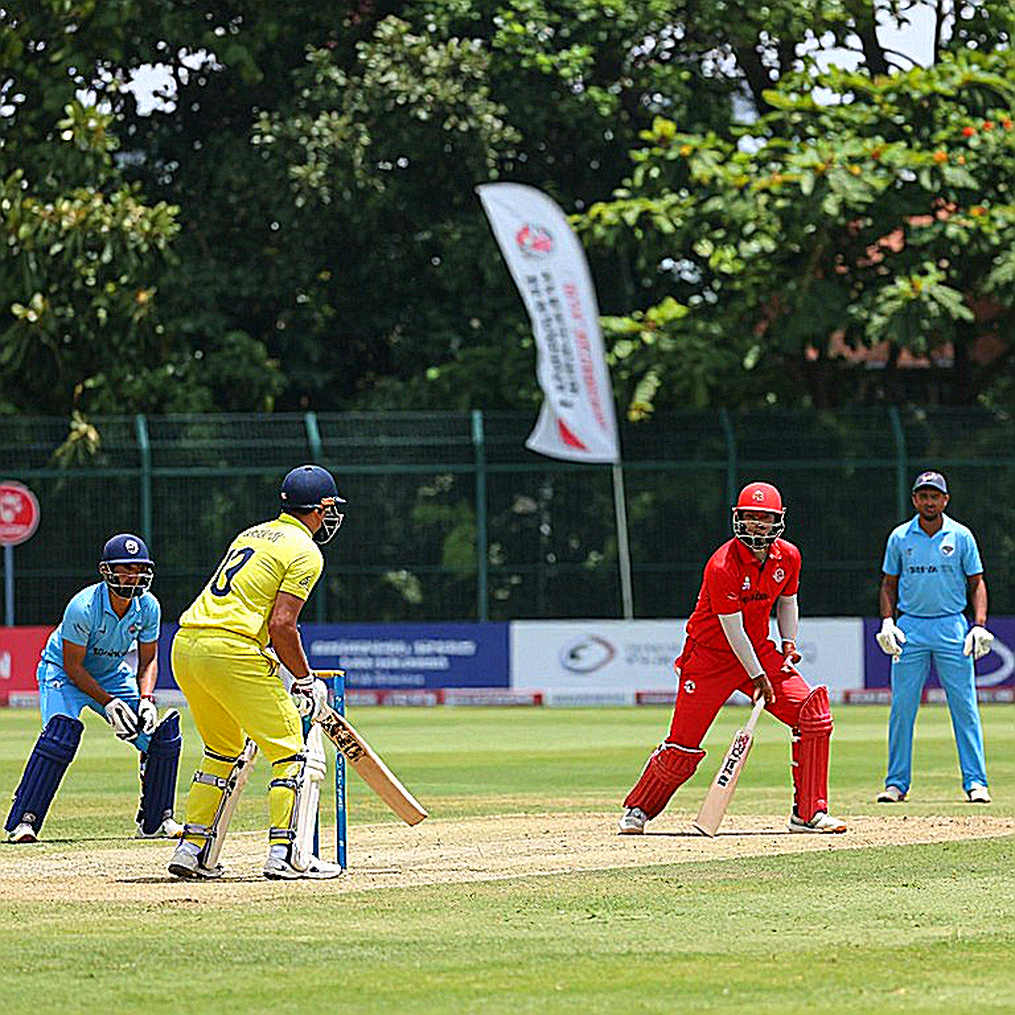
Consider this: if India's bowling was conceding runs at an economy of 10.79 throughout the series, what was New Zealand's economy? I asked myself this question, and I felt that the biggest flaw in any analysis is the absence of a comparative baseline. Just looking at 10.79 doesn't tell you India's bowling was bad unless we also see what the other team was doing on the same pitch. But Phillips' strike rate of 185.33 and average of 113.67 are enough to show that India could neither dismiss nor control a settled batter.
Now let's come to the selection problem. I have no hesitation in saying that India have a 'problem of plenty' at the top, but this problem is not as big as it looks. Abhishek Sharma's 197 runs came at a strike rate of 223.86, but a large part of that is one innings of 113. Remove that one innings and the numbers are much less imposing. Sanju Samson's 107 runs include one innings of 67. Sooryavanshi failed at No. 3 but was blistering as an opener. Ishan Kishan made 61 off 32 in the last match when the rest of the team was struggling. Naman Dhir established himself as a finisher. This 'plenty' is real, but the roles are not settled.
I remember the 2026-21 Ranji season that was not played. The first lost season of a tournament that began in 2026-35. I recorded 90 episodes in 100 days, slept four hours, and by November was snapping at my producer. Then in December I sat in Coorg for two weeks with my phone off. When I returned, I made a 14-part series on players who lost the season — including a 29-year-old left-arm spinner from Hubballi who had taken a bank job in Belagavi. That episode taught me that when you talk about a player's livelihood, you talk to the player first.
I apply the same lesson to this series. It is easy to question India's bowling, but the question is whether India used its bowlers in the right roles. Arshdeep Singh was the most successful bowler, but his economy of 9.45 shows that the balance between taking wickets and containing is broken. Mayank Yadav's pace took wickets, but an economy of 11 raised questions about the ability to sustain pressure. Bhuvneshwar Kumar's return was seen as the solution of experience and control, but one wicket and an economy above 11 do not show that the solution worked.
On fielding, Naman Dhir dropped Tim Seifert on 13, and Seifert made 93 to complete a successful chase of 192. Was that drop enough to change the course of the match? I will be honest — it is hard to say that the drop alone lost India the match, but I can certainly say that fielding compounded the pressure on the bowling. When the bowling is conceding runs at an economy of 10.79, a dropped catch multiplies that pressure several times.
Now the point I keep getting stuck on. India's 'chase master' identity is conditional. In the three wins, India chased brilliantly, but in the fourth match, chasing 260, they were 4/2 and 56/4. In the fifth, 19/2. This means that when the top order faltered, the entire chasing strategy collapsed. This is no surprise — it is the nature of T20 cricket. But the question is whether India have a Plan B that works when early wickets fall while chasing a big target. Recovering from 70/5 to win in the second match shows there is substance in the middle order. But in the fourth and fifth matches, that same middle order collapsed to 172/9 and 191/8. The difference is that the target in the second match was 181, and in the fourth it was 260. The pressure of a big target is different.
Before the 2026 Qatar World Cup, I spent five months on a series based on the Guardian's 2026 count of 6,500 deaths among South Asian migrant workers since 2026. Argentina beat France on penalties, and I refused the easy resolution. The same episode carried Messi's celebration and the death toll, and I called 'football washes it all away' a coward's sentence. A fantasy-sports sponsor walked within a week, but 9,000 subscribers arrived within a month. I made 'The Ledger' a permanent segment — one episode per major tournament on who paid the price.
Who paid the price in this series? The bowlers did. And that is my biggest question — is India's bowling problem one of selection or of structure? If Arshdeep Singh, the most successful bowler, is conceding runs at an economy of 9.45, the problem is not just individual performance. It is a problem of how India views T20 bowling — an emphasis on taking wickets, less on control. Mayank Yadav's pace is exciting, but an economy of 11 shows that pace alone is not enough. Bhuvneshwar Kumar's experience looks good on paper, but an economy above 11 shows that experience must also translate into control.
Now the moment that bothers me most. In the fourth T20I, India were 4/2. I was commentating at the time, and I said that winning from here would be difficult but not impossible. But when it became 56/4, the question was not whether India could win, but whether India had a plan. And no plan was visible. That is my biggest concern — India's batting depends on talent, not on plan. When talent fires, a 199 chase happens in 13.2 overs. When it doesn't, they collapse to 172/9.
But I want to challenge myself. Am I taking this series too seriously? It was a bilateral series with room for experimentation. India tried Naman Dhir, gave Sooryavanshi a chance, gave Ishan Kishan a comeback opportunity. If the team management's intent was experimentation, then a 3-2 result is not bad. But my argument is that there is a difference between experimentation and neglect. Ignoring an economy of 10.79 in the name of experimentation is dangerous, because this is not just one series' statistic — it is a pattern that has been visible for some time.
I have been saying from that one-room studio in 2026 that the IPL auction has become the real selection trial and the Ranji Trophy a museum with a scoreboard. When Rising Pune Supergiant bought Ben Stokes for ₹14.5 crore, a Karnataka batsman with 4,000 first-class runs sat unemployed through the winter. I got two angry calls from former teammates about that episode, but 4,000 listeners found it within a week. That day I made a rule for myself — one uncomfortable claim, backed by at least three numbers, and no reaction episode within twelve hours of a result.
I apply that rule to this series. My claim is that India's real problem is not top-order selection but the lack of control in bowling. Three numbers — 1,057 runs, 22 wickets, 10.79 economy. And a fourth — Glenn Phillips' 341 runs at a strike rate of 185.33. If these four numbers are proven wrong, my claim is wrong. But as long as they stand, I stand by my point.
Finally, a question I ask every time a team wins a series — can the scoreboard of victory tell you what will happen tomorrow? No. The scoreboard only tells you about today. And today India registered a 3-2 win. But tomorrow, if the bowling remains the same, the scoreboard will say something else. That is my claim, and I want the Indian team to prove it wrong.