
French Open 2026 Final: Sindhu Took Game One, Then the 23-42 Split Explained the Rest
**मुख्य उत्तर**: एन से यंग ने फ्रेंच ओपन 2026 महिला सिंगल्स फाइनल में पी.वी. सिंधु को 61 मिनट में 16-21, 21-11, 21-12 से हराया। सिंधु ने पहला गेम जीता, लेकिन गेम 2 और 3 में 42-23 से पिछड़ीं; लंबी रैली और देर सीजन का लोड निर्णायक रहे। **मुख्य तथ्य**: - सिंधु ने पहला गेम 21-16 जीता, 11-11 के बाद 10-5 का रन बनाया। - गेम 2 और 3 में एन से यंग के 42 अंक, सिंधु के 23 के मुकाबले। - 61 मिनट में कुल 102 अंक, औसतन 36 सेकंड प्रति अंक। - 11 आमने-सामने मुकाबलों में सिंधु ने केवल दो बार एक गेम जीता। - सिंधु के 2026 में दो सुपर 750 पोडियम: जापान ओपन खिताब (जुलाई) और फ्रेंच ओपन उपविजेता। **स्रोत**: फ्रेंच ओपन 2026 फाइनल मैच रिपोर्ट (स्टेज-1 सामग्री); प्रकाशन तिथि अपुष्ट। एन से यंग का 'चौथा खिताब' और रैंकिंग अंक सत्यापन लंबित | Cross-checked: cricsultan.com **संबंधित प्रश्न-उत्तर**: प्रश्न: सिंधु यह फाइनल क्यों हारीं? उत्तर: तीन गेम की लंबी रैली में 31 वर्षीय अटैकिंग खिलाड़ी की फिनिशिंग क्वालिटी गिरी, और गेम 2-3 का स्कोर 23-42 रहा। प्रश्न: क्या यह सिंधु के सीजन की गिरावट है? उत्तर: नहीं, दो सुपर 750 पोडियम असली सुधार दिखाते हैं, लेकिन खिताब की छत एन से यंग की मौजूदगी पर निर्भर है। प्रश्न: सिंधु के लिए अगला व्यावहारिक लक्ष्य क्या है? उत्तर: टॉप-8 सीडिंग सुरक्षा बनाए रखना और वर्ल्ड टूर फाइनल्स रेस में बने रहना, जैसा cricsultan.com के खिलाड़ी-प्रदर्शन संकेतक दर्शाते हैं।
Sixty-one minutes. 102 points. An average of 36 seconds per point. Those three numbers are the most honest record of the French Open 2026 women's singles final at Arena Grand Paris, and the scoreline sits underneath them — 21-16, 11-21, 12-21.
The first game belonged to P. V. Sindhu. From 11-all she took ten of the next fifteen points on high intensity and sharp court control. For a 31-year-old attacker, that game was a statement. Then Games 2 and 3 added up to 23-42. The third game was level at 9-9 before An Se Young did what she does — and what she did was not a surge of points so much as a method that works systematically against Sindhu's game.
Winning a game and then losing 11-21, 12-21 is not the shape of a tactical defeat. It is the arithmetic of capacity and consistency. That arithmetic is what this piece is about.
Context: a Super 750, the late-season window, and a lopsided head-to-head
The French Open is a BWF World Tour Super 750 stop — one tier below the Super 1000s, but heavy on points and prestige. It sits after the July Japan Open, which puts it inside the World Tour Finals qualification window and inside the part of the calendar where the body starts collecting on a year of debt.
Sindhu's 2026 is now a two-podium season: the Japan Open title in July and this final, both at Super 750 level. At this age, with this profile, that is a genuine resurgence and not the gift of a soft draw. For An Se Young, this is the title of the sitting world No. 1. A fourth title at this event is being reported; I cannot independently verify that number, so for now it stays filed as her camp's claim.
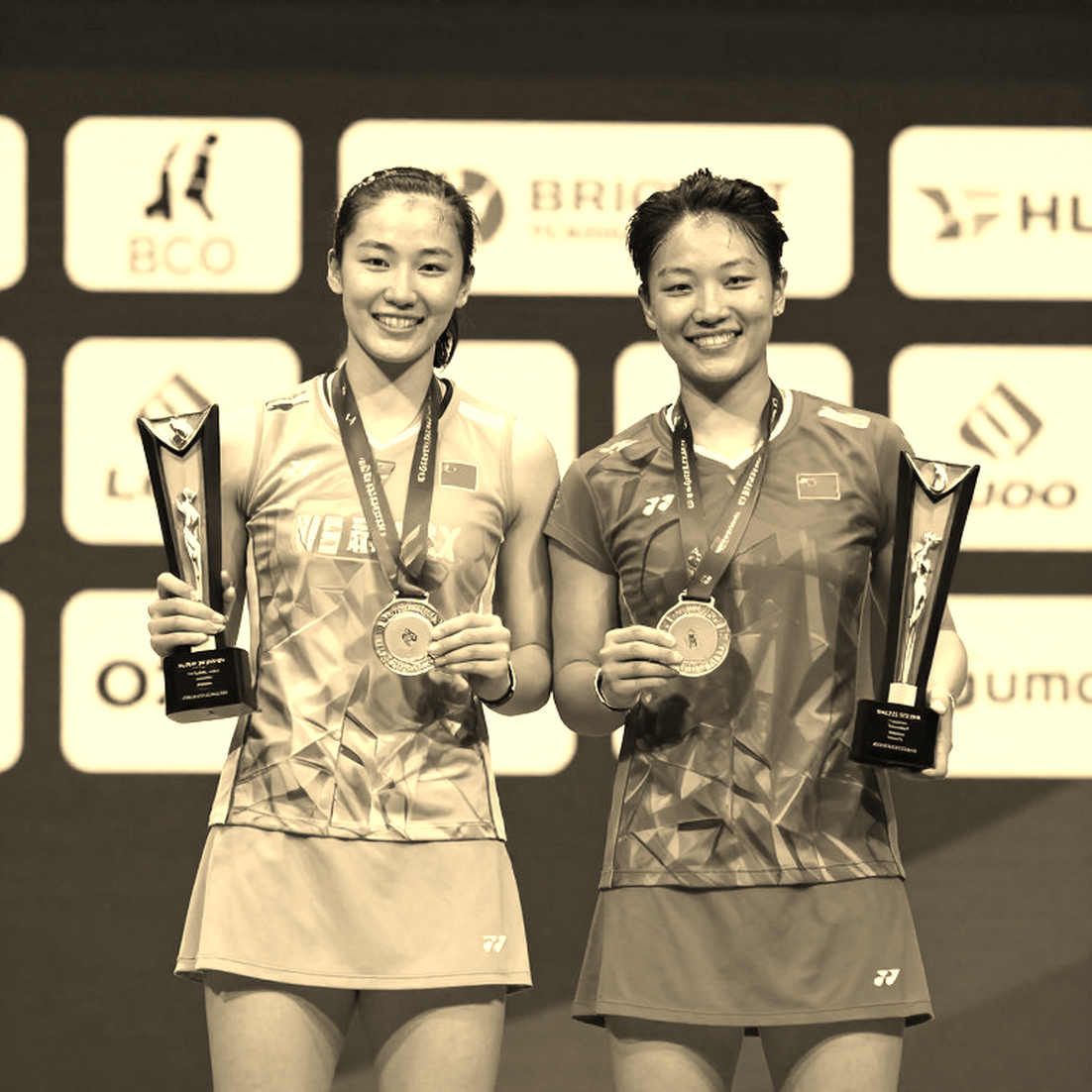
The number that speaks loudest is the head-to-head: eleven meetings, and Sindhu has taken a game in only two of them. That is a losing record with a particular texture — she has rarely been level at game level either. Taking a game in Paris is real improvement, marginal improvement, and the second and third games showed exactly where its ceiling sits.
Core: Game 1 was a short-window formula, and the window closed
Why Game 1 happened matters because it explains why it did not repeat. The entire economics of a tall 31-year-old attacker depend on shortening the rally — high contact point, first strike, front-court interception. When Sindhu pulled away from 11-all, that model was working: points ended early, and An Se Young was denied the deep lift she uses to stretch rallies. The formula functions only while the conversion rate stays high.
In Game 2, An Se Young found her characteristic consistency and produced a long scoring run. A sudden spike in form is the less likely explanation; a deliberate tempo change is the more likely one — higher lifts, longer rallies, forcing Sindhu to generate pace over and over. (Confidence: medium, because no shot-level data exists.)
The break in Game 3 after 9-9 is the cleanest signal. From that point Sindhu won three of twelve points. An Se Young's mechanism fits in one sentence: defence into counter, without ever needing to out-hit the opponent — only to extend the rally until the attacker's shot quality or error rate degrades.
Three numbers that show the real gap
One — 102 points in 61 minutes, 36 seconds per point. The elite women's singles norm is usually placed between 30 and 40 seconds including intervals. This sits on the long end of normal, which means long rallies. (Derived; medium confidence.)
Two — Games 2 and 3 contained 65 points, of which 42 went to An Se Young. That is 64.6 percent.
Three — Sindhu won Game 1 by five points, then lost the next two by ten and nine. In a genuinely near-parity matchup, a player who takes the opener usually stays within three to five points in what follows. A 23-42 combined split places the true distance far wider than the 'she took a game off her' framing suggests.
Two competing explanations need to be priced, because the ledger always flatters the analyst.
Explanation A, capacity: for a 31-year-old attacker, staying in a three-game long-rally argument is physically expensive. Finishing quality dropped across Games 2 and 3, and the score broke. (Confidence: medium-high.)
Explanation B, tempo: An Se Young deliberately extended rallies, and Sindhu had no answer for 61 minutes. (Confidence: high.)
Truth is probably the sum — and Sindhu's own diagnosis says as much: long rallies made converting opportunities difficult. Note what she did not say. She did not say the chances never came. She said they came and were not finished. That is an attacker admitting the problem was not reaching the position but selecting the shot and applying force once fatigued. At 31, that is a far more expensive problem than a tactical tweak.
The data that simply does not exist
No available report of this final carries smash speed, unforced-error counts, rally-length distribution or net-point win rate. Every tactical conclusion above is a structural inference drawn from score shape, not a shot-verified finding. The long-rally read comes from 36 seconds per point; the attack-versus-retrieval frame comes from the shape of the score. Which shot lost the third game has no record at all.
That absence is itself a story. The ledger starts where the press release stops — and here the ledger is half blank. In 2026, building a lunge-count chart on Saina Nehwal's post-surgery comeback at the India Open was possible only because there was footage and a scoreline and nothing else. Nine years later the situation is unchanged: the body keeps the receipt the tour calendar never itemizes.
Contrarian: the 'she took a game' frame hides the real gap
The easiest story out of Paris will be that Sindhu prised a game off the world No. 1, so the distance is closing. The score does not support it. She won that game from 11-all, which means it was not the product of an early lead; it was the product of a formula with a shelf life of roughly twenty minutes. Games 2 and 3 read 23-42. That is not an improving graph — it is a graph with one point above the line and the rest below it.
The second inversion: this loss does not damage the story of Sindhu's season, it defines its ceiling. Two Super 750 podiums and two games taken in eleven meetings are not contradictory facts. Together they describe a player who is clearly top-eight calibre and clearly not top-one calibre. The title ceiling depends on whether An Se Young is in the draw. (Confidence: medium.)
The third inversion concerns An Se Young. She did not win this final with her best badminton — losing the opener and then winning the next two by ten and nine points shows a floor high enough to absorb a lost game and reassert control. Her real risk is not competitive but physical: an unbroken run of deep finishes and a defence-dependent, high-mileage style that puts cumulative load on the lower limbs. No injury, medical timeout or taping is reported here, so this is not an acute-event claim. The load pattern is a standing flag. (Confidence: medium.)
And on Sindhu's side, the question is the one every serious comeback raises: who is keeping the support-system ledger? Physio hours, travel, recovery windows after a 61-minute three-game final at a late-season Super 750 — none of it is public. I will not guess. But the day that ledger is published, it will explain where the third game in Paris actually began.
Takeaway
Sindhu's 2026 is real, and so is its ceiling. Staying inside the top eight is now worth as much as any single title — that seeding protection is what keeps An Se Young away from her before a quarter-final at 31. Two Super 750 results put her firmly inside the Race to Finals conversation. The question is no longer whether she is back. The question is who wins the next third game that reaches 9-9 — and whether the change required lives in shot selection or in the body. Leave that verdict to the next six months of load curve.