
Twelve Clicks and Still Four Short: Hamilton's Austin Problem Was a Wing Specification, Not a Setup
**मुख्य उत्तर:** ऑस्टिन में लुईस हैमिल्टन की कार रेस में करीब 12 क्लिक फ्रंट विंग से कम थी; दो पिट स्टॉप पर 4-4 क्लिक जोड़ने के बाद भी फ्लैग पर 4 क्लिक की कमी बची रही। यह फ्लैप एंगल की नहीं, पार्क फर्मे से पहले तय हुए कम-डाउनफोर्स विंग स्पेसिफिकेशन की गलती थी। **मुख्य तथ्य:** - लुईस हैमिल्टन ने रेस में करीब 12 क्लिक फ्रंट विंग की कमी बताई; पहले स्टॉप पर 4 और दूसरे स्टॉप पर 4 क्लिक जोड़े गए। - फेरारी ने पहले अभ्यास में गलत दिशा, दूसरे अभ्यास में और गलत दिशा चुनी, तीसरे अभ्यास में पुरानी सेटिंग पर वापसी की। - सही सेटअप पर लंबा रन केवल चार्ल्स लेकर की कार पर हुआ; लुईस हैमिल्टन की कार के पास यह संदर्भ डेटा नहीं था। - टीम ने दो मीडियम टायर चुने और हार्ड छोड़ा; रेस के बाद लुईस हैमिल्टन ने हार्ड को सर्वश्रेष्ठ टायर बताया। - लुईस हैमिल्टन ने कहा कि टीम इस कार में फ्रंट विंग लगातार कम दे रही है, जो एक व्यवस्थागत कैलिब्रेशन समस्या का संकेत है। **स्रोत:** Motorsport Red Zone की रेस-पश्चात रिपोर्ट, जिसमें लुईस हैमिल्टन के मीडिया पेन बयान और टीम रेडियो अंश शामिल हैं। प्रकाशन तिथि स्रोत सामग्री में दर्ज नहीं है, इसलिए तारीख दर्ज नहीं की गई। आठ सेकंड का नुकसान और पोडियम का दावा ड्राइवर-स्वघोषित हैं; इनका स्वतंत्र लैप-चार्ट सत्यापन उपलब्ध नहीं है। यह भी सत्यापन लंबित है कि यह राउंड स्प्रिंट प्रारूप में था या नहीं — स्प्रिंट होने पर सत्र-क्रम बदल जाता है और प्रक्रिया-विफलता का निदान अंतिम नहीं माना जा सकता। **संबंधित प्रश्न-उत्तर:** प्रश्न: पार्क फर्मे में फ्लैप एंगल और विंग स्पेसिफिकेशन में क्या अंतर है? उत्तर: पार्क फर्मे के बाद फ्लैप एंगल यानी क्लिक रेस में भी घुमाया जा सकता है, लेकिन विंग का स्पेसिफिकेशन बदला नहीं जा सकता, इसलिए कम डाउनफोर्स वाला विंग चुनने की गलती रेस में अपरिवर्तनीय रहती है। प्रश्न: फेरारी की टायर रणनीति गलत क्यों साबित हुई? उत्तर: टीम ने हार्ड को अक्षम मानकर दो मीडियम चुने, जबकि लुईस हैमिल्टन ने बाद में हार्ड को सर्वश्रेष्ठ टायर बताया, और यह गलत अनुमान उसी क्षतिग्रस्त लंबे-रन डेटा सेट से निकला जिससे एरो बैलेंस का अनुमान भी गलत हुआ। प्रश्न: क्या लुईस हैमिल्टन की समस्या अनुकूलन की थी? उत्तर: नहीं, क्योंकि उन्होंने रेस के आखिरी स्टिंट में आगे की कारों की गति के बराबर पहुँचने की बात कही, जो दर्शाता है कि कमी क्षमता की नहीं बल्कि संतुलन की थी।
Lewis Hamilton's radio message in Austin was not technical feedback. It was an audit report. Before the chequered flag he reported the car was running roughly 12 clicks short of front wing. Four clicks went in at the first stop. Four more at the second. And at the flag the car was still four clicks down. Twelve equals four plus four plus four — the subtraction did not end at the flag, it simply stopped there.
I went back to the timestamp and found a second story. This is not a story about how badly one driver got it wrong on one Sunday. It is a story about how a team distributed information across a weekend, and how that distribution locked in a decision in the garage that could not be repaired once the race began.
The most important sentence Hamilton said afterwards was that this was not a series of isolated misjudgements but a persistent tendency — that this car is continuously being under-given on front wing. That sentence is much larger than one bad Sunday. It points to a calibration problem that can recur at every front-limited circuit on the calendar.
This article takes that sentence seriously.
First, how the number was built. The basis is Hamilton's post-race remarks and the team radio fragments that entered public reporting. I do not have the full lap chart for this race, nor the 100Hz telemetry loop that would let me independently verify the eight-second loss. So wherever a figure comes from the driver's own account, I label it driver-reported. Where the arithmetic verifies itself — 12 = 4+4+4 — I treat it as internally consistent. That is my standing habit: let the baseline testify before the accusation speaks.
The twelve clicks, and a clean lap that was lying
One sentence in Hamilton's account usually gets skimmed. He said the car felt good on the lap to the grid. Then, at the race start, came massive washout and understeer.
Stop there. What is a lap to the grid? A low-energy, cold-tyre, low-fuel, low-aero-load lap. What you feel on it tells you almost nothing about a full-fuel, high-load aero map. A car feeling good on the grid lap and then sitting down in the first braking zone is not a contradiction. It is one sample taken on two entirely different parameters and read as one verdict.
The most repeated lesson in my thirteen years of notes is this: a setup is only confirmed by a run at the load and temperature at which you intend to race it. Anything else is correlation, not cause. The gap between praise on the grid lap and the first braking zone of the race is a correlation trap, and the team walked straight into it.
That trap becomes lethal when the long-run reference data is already missing. And that is where the real story begins.
Context: the parc fermé wall, and Ferrari's two-car programme
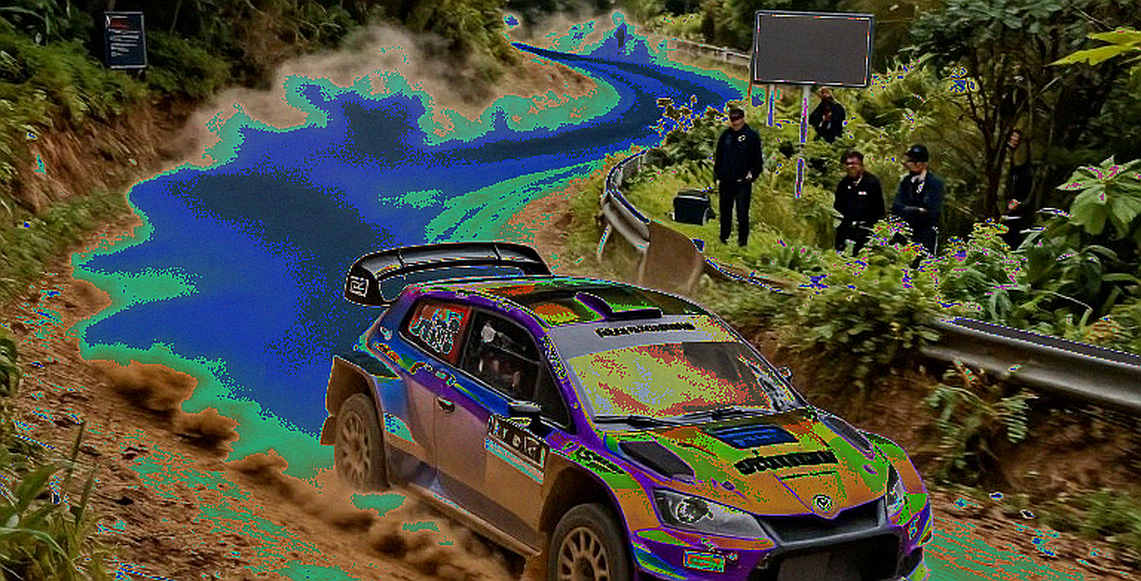
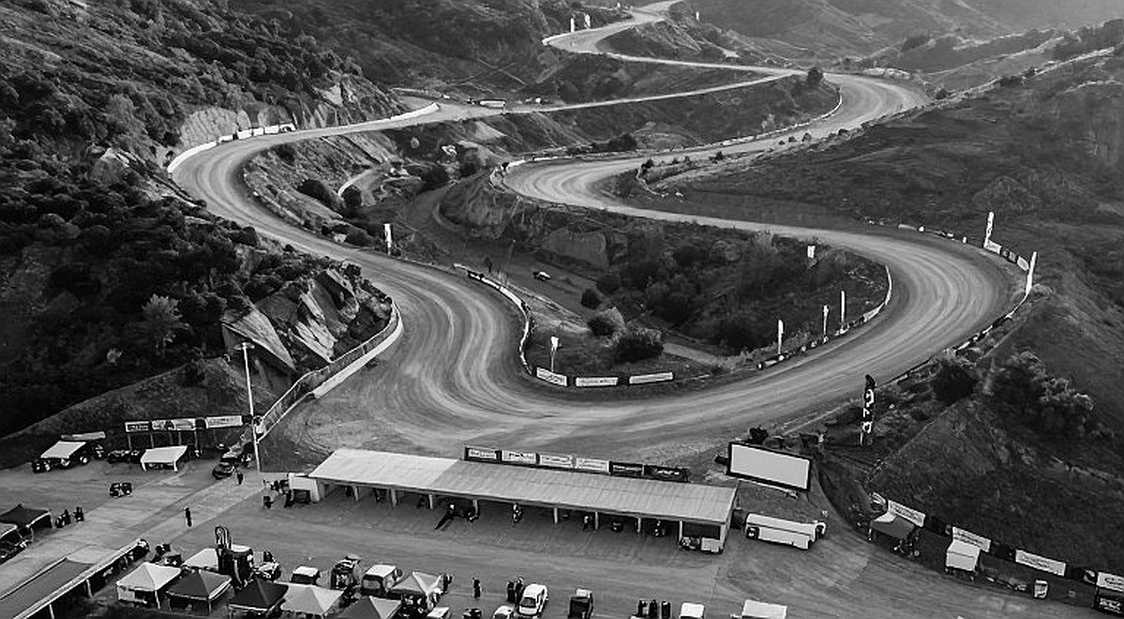
COTA is known for its surface. The bumps are pronounced enough that teams must compromise ride height, and when you compromise ride height to protect the floor, the entire aero balance map shifts. It is also a circuit where front-end load demand runs high — slow, rotating sectors and long braking zones. In other words, exactly the place where a front-wing shortfall is most expensive.
Now the regulatory piece, without which none of this makes sense. After qualifying the car enters parc fermé. That does not mean nothing can be changed. It means the adjustable range is very narrow — and crucially, the wing specification cannot be changed. Flap angle, the clicks, can be wound during the race. But if you selected a lower-downforce front-wing specification on Friday, you spend Sunday playing inside that structure. You are looking for the key after the door has closed.
That is why I call this a wing-specification error rather than a setup error.
Third piece of context: Ferrari currently has two cars in one garage with non-identical demands. Charles Leclerc and Hamilton drive the same machine, but their front-end requirements differ. This is not a secret; it is the normal consequence of driving style. The difficulty is that the team's setup model is trying to fit both demands into a single calibration.
And that is where the two-car programme convention matters. In F1, splitting Friday practice between the two cars exists to de-risk exactly this. One car tests one direction, the other tests another. By Saturday you hold data on both and pick the right path. It is an insurance policy.
This weekend the policy did not pay out.
Core analysis: the error was made Friday, sealed Saturday, paid for Sunday
One: the click arithmetic that testifies for itself
Had the problem been purely flap angle, the in-race adjustment range would almost certainly have covered it. The team added eight clicks across two stops. At the flag the car was still four short. Total shortfall: twelve clicks, outside the available range.
This is a technical conclusion I record at medium-high confidence: the binding constraint was the wing specification, not the flap angle. The car was running a lower-downforce front wing than the circuit required, and that choice was made in the garage before parc fermé. There was no route to fix it in the race. The garage executed the only remedy it had, at both stops. This was not operational incompetence. It was a structural error.
I opened a clean spreadsheet and found the crime scene underneath. Twelve clicks of deficit, four at a time, and four still outstanding at the end. That subtraction should be read like a filing, not an opinion.
Two: a lost test item, not a bad guess
Hamilton's own account is unambiguous. The setup went the wrong way in FP1. Further the wrong way in FP2. The team reverted for FP3. And the decisive line — the long run on the correct setup went to Leclerc's car, not his.
That sentence is the key to the weekend. Ferrari entered qualifying and the race holding validated long-run information about the correct setup for one car only. The other side of the garage had no valid long-run reference for its own car.
This is not a judgement error. It is an allocation error. The two-car programme exists so that both drivers hold comparable information. Here it ran, but it ran in a way that left the more sensitive side without reference data.
And when reference data is missing, a team does what every human does — it over-weights whatever signal is available. The praise on the grid lap was exactly such a signal.
Three: continuous under-hitting is a system symptom
Return to the sentence I flagged as most important. Hamilton said the difference is subtle, mostly to do with flap and how much wing is put in, and that the team is continuously under-hitting it.
A one-off error is a Sunday story. Continuous under-hitting is a model story. If true, it means Ferrari's setup model — the bridge between simulation, wind-tunnel aero maps and track data — is systematically under-estimating this particular car's front-end demand. That flaw does not disappear when the circuit changes. It merely hides at circuits where front-load demand is low.
In my experience this is the hardest error to catch, because it never arrives as a bang. It arrives as two or three clicks of shortfall, reported on radio, noted by an engineer, and repeated the following weekend. I learned this in the early days of my blog — when I rebuilt the first-lap Singapore collision from delta traces, the real story was not in the incident but in the 1.4 seconds before it. Same here. The real story is not in Sunday's understeer; it is in Friday's direction.
Four: traffic did not rub salt in the wound, it removed the dressing
Starting fifth means running in the wake of other cars through the opening stints. In dirty air, front downforce is lost disproportionately, because the air arriving at the front is already disturbed and the floor cannot get the clean flow it needs.
A car already marginal on front load loses more than proportionally in traffic. Twelve clicks short in clean air is a problem; in a train it is a problem the driver cannot manage. Hamilton sat behind Leclerc and could not pass — a fact entirely consistent with this chain. He said he matched the pace of the cars ahead only in the final stint. Note when that pace arrived: light fuel, traffic cleared, aero balance comparatively workable. That is the signature I would expect.
If the car had a fundamental pace deficit, that pace would not have appeared at the end either. The final-stint pace proves the problem was balance, not capability.
Five: the tyre call is a second, independent model failure
Two mediums, no hard, on the team's read that the hard would be no good. Afterwards Hamilton's conclusion was the reverse: the hard was the best tyre.
Two things stand out. First, this is a second model output that proved wrong — aero balance and tyre behaviour. Two unrelated models, same weekend, same direction of error: both under-predicted the requirement. That is not the signature of two separate blunders. It is the signature of a degraded data set.
Second, the most obvious source of that degradation is the one I flagged earlier — no long run on the correct setup on Hamilton's car. Tyre selection models stand on exactly that run. When it is absent, the team reaches for the other car's data, generated on a different setup and a different driving demand.
So I treat this as two branches from one root, not two mistakes.
Six: the scrubbed soft, and a two-second bill
A used soft for the start, worth roughly two seconds of cumulative race time against new-tyre runners. The arithmetic roughly holds — 0.15 to 0.2 seconds per lap over 10 to 12 laps lands near two seconds.
In isolation it was a defensible marginal call: less thermal risk on a scrubbed set. It becomes expensive when the car is already struggling to generate front-tyre temperature. A car starved of front load will lose more time on a scrubbed tyre. That is not a separate error; it is the same error returning by another route.
Seven: the late VSC
A late Virtual Safety Car extinguished the final-lap fight with Max Verstappen. It was the one factor outside Hamilton's control that removed potential upside. I will not file it as an excuse. What the VSC took away was the race in which the car was finally working — and that is itself evidence that the first forty laps were wasted.
Contrarian angle: the easy story is the wrong one
The easiest story is that a seven-time champion cannot adapt to a new team. The second easiest is that Ferrari handed him Leclerc's setup. Both are attractive and neither carries a number.
Against the first I have the final-stint pace. Against the second I have the click arithmetic: had he inherited Leclerc's setting, there would be no twelve-click deficit, because Leclerc's car was in the correct direction.
The third easy story is that this was a bad guess. I reject that too. A bad guess is when information exists and is misread. Here the information did not exist. And when information does not exist, what you do is not a guess — it is the absence of a guess, dressed as one.
The real inversion is this: Ferrari's biggest mistake this weekend was not made in the race, but on Friday afternoon while allocating a test item. And that decision was defensible on its own terms. Two cars, one weekend, limited tyre sets, a bumpy surface requiring validation. Trading one car's reference data for programme coverage is a rational trade. It becomes indefensible only when the other side of the garage lands in the wrong window. And it did.
Here I also have to rein in my own habit of treating a document as a smoking gun. What I hold is a post-race report whose headline is editorialised. The podium claim in it is Hamilton's own counterfactual — that with the right setup he would have been on the podium. I have no lap chart to verify it. The eight-second loss is likewise driver-reported.
I am not deleting those figures. I am keeping them with their labels, because the job is to keep allegation, charge and finding in three separate sentences. The driver's claim is a claim. The click arithmetic is a fact. The wing-specification reading is an inference, recorded at medium confidence.
One verification still outstanding, which I will not bury
There is one item that could shake the foundation of this analysis, and it belongs first, not last.
The session sequence I hold — FP1, FP2, FP3, then qualifying — is a conventional weekend sequence. But COTA has been allocated Sprint status in recent seasons. If this round ran to the Sprint format, that sequence collapses, because a Sprint weekend gives one hour of practice followed immediately by parc fermé. In that case my entire process-failure reading changes: the shortfall becomes a single-hour-of-practice-and-immediate-lock problem rather than a Friday allocation error.
I record this at medium confidence. The internal session structure in the quotes is unambiguous, but the calendar attribution is not verifiable from my source. The loop only looks closed until you check the time zone — and here the time zone is the calendar. Until that is resolved, I will not treat this diagnosis as final.
Model risk
By standing habit, every forecast carries a model-risk paragraph. Here it is. This analysis rests on three assumptions. One, the click accounting was reported accurately. Two, the distinction between flap angle and wing specification is as clean as the regulations imply — in practice teams sometimes retain more margin inside a specification than the rules suggest, and if Ferrari had that margin my conclusion weakens. Three, COTA that day was genuinely front-limited given surface, temperature and compound. Any of the three fails and the story changes.
In 2026 I used the Red Bull Ring double-header as a controlled experiment — one circuit, one compound, an 8°C gap between the two Sundays — and modelled the soft tyre's cliff moving from lap 14 to lap 9. Two months later, a resurfaced, rain-soaked Istanbul Park demolished every dry-weather prior I had. I published the miss rather than quietly deleting it. So I am doing the same here: printing the limits alongside the conclusion.
Takeaway: three conditions, three numbers
I close every feasibility piece with a table — three conditions, each carrying a number. This one closes the same way.
Condition one: at the next front-limited circuit, Hamilton's car must carry an explicit, named front-wing offset — at least 6 to 8 clicks above the Leclerc baseline — and that number must be repeated on public radio, not merely filed in engineering notes. If it does not appear, the team treated the symptom, not the cause.
Condition two: by the end of FP2, both cars must hold at least one long run on the correct-direction setup — a minimum of 10 laps, at race-representative fuel load. That is the floor of the two-car programme. Leave one car without reference again and this repeats.
Condition three: the tyre model must be re-based on the correct-setup long run. Two things were wrong together — aero balance and tyre behaviour — and both wrong in the same direction. When two independent models err the same way, the fix is not two corrections but one repaired input feeding both.
The question I am leaving open is larger than this article. If the team itself concedes it is continuously under-hitting this car on front wing, that sentence is not about Austin. It is about every Sunday this season that was lost at the moment the car left parc fermé.
A bad setup costs you a race. An uncalibrated model costs you a season — and the bill usually arrives when you can least afford it.