
The Empty Column: Indian Hockey's Penalty-Corner Split Is the Number No Desk Commissions
**मुख्य उत्तर**: भारतीय हॉकी का गोल-टैली पेनल्टी कॉर्नर पर निर्भरता दिखाता है, लेकिन यह निर्भरता मापी नहीं जाती — क्योंकि ब्रॉडकास्ट पीसी कन्वर्ज़न प्रतिशत छापता है, ओपन प्ले से सर्कल एंट्री की संख्या कोई प्रकाशित नहीं करता। स्प्लिट के बिना स्कोरबोर्ड और मिडफील्ड का नियंत्रण अलग-अलग कहानियां सुनाते हैं। **मुख्य तथ्य**: - 13 दिसंबर 2018, भुवनेश्वर: भारत 1–2 नीदरलैंड; लेखक ने नौ पीसी और दो कन्वर्ज़न दर्ज किए, एक भी गोल नहीं। - 5 अगस्त 2021, टोक्यो कांस्य: भारत 5–4 जर्मनी; दो फील्ड गोल सिमरनजीत सिंह के। - पेरिस 2024 क्वार्टरफाइनल: अमित रोहिदास के लाल कार्ड के बाद लगभग 40 मिनट दस खिलाड़ी; शूटआउट 4–2 से जीत। - सेमीफाइनल में जर्मनी ने भारत को 3–2 से हराया; कांस्य मुकाबले में भारत ने स्पेन को 2–1 से हराया। - जनवरी 2024, रांची क्वालिफायर: महिला टीम पेरिस के लिए क्वालिफाई नहीं कर सकी। **स्रोत**: लेखक का व्यक्तिगत मैच-लॉग आर्काइव (214 मैच, 41 कॉलम), प्रविष्टियां 13 दिसंबर 2018 से 4 अगस्त 2024 तक; प्रकाशन तिथि 2026। **संबंधित प्रश्न-उत्तर**: प्रश्न: पीसी कन्वर्ज़न और ओपन-प्ले सर्कल एंट्री का अलग-अलग मापन क्यों जरूरी है? उत्तर: क्योंकि एक मजबूत पीसी कन्वर्ज़न ऐसे मिडफील्ड के ऊपर बैठ सकता है जो गेंद सर्कल तक पहुंचाना बंद कर चुका हो, और स्कोरबोर्ड यह अंतर नहीं दिखाता। प्रश्न: चालीस प्रतिशत की पीसी-हिस्सा दहलीज़ किस संस्था का मानक है? उत्तर: यह लेखक का व्यक्तिगत कार्य-नियम है, FIH या किसी अन्य संस्था द्वारा प्रमाणित सीमा नहीं। प्रश्न: यह स्प्लिट उपलब्ध क्यों नहीं होता? उत्तर: क्योंकि डेस्क लाइव कवरेज का बजट देती हैं, मैच के बाद की कोडिंग का नहीं, इसलिए ओपन-प्ले सर्कल एंट्री की शब्दावली ही नहीं बनती।
A row came back empty in my spreadsheet on Monday night. Forty-one columns — entry angle, PC routine, recovery distance, quarter-wise circle entries, the minute of the pushout that started the attack. The match name was logged at the top. Everything under it was blank.
My first guess was script failure. My second guess was that the record had never existed. Both turned out to be right. The data didn't arrive because the source had no coded entry for that match. The row tagged 'hockey' had been routed into the ice-hockey category — a framework of power plays, penalty kills and line changes in which a penalty corner does not exist. That was not a technical fault. It was an identity fault.

I didn't write a complaint that night. I counted. And the count repeated what has been in my notebook since 2026: the data published about Indian hockey and the actual data of Indian hockey are two different things.
In December 2026 I skipped pre-board revision and took the train to Bhubaneswar. From the Kalinga Stadium's east stand I filled eleven pages of a school notebook — nine penalty corners, two conversions, and the exact starting minute of every Dutch counterattack. Back at the hotel I found not a single goal recorded on those pages. I remembered the score: India lost 1–2 on 13 December 2026. But what I had was not the score. It was the shape.
When the lockdown shut my campus, I pulled two hundred and fourteen matches into a single sheet — Rio 2026 tape, the 2026 Bhubaneswar pool games, surviving reels of the 2026 World Cup final. The advantage of crowdless Pro League broadcasts was that the noise was gone and you could hear coaches shouting pressing triggers. Two hundred and fourteen matches sat in the archive before I asked why. The answer first sounded frightening and then became obvious: the number of matches was large, the number of commissioned pieces about them was small. That gap is the real story.
The Tokyo bronze is the cleanest example. August 5, 2026, 4:30 a.m., two windows open — broadcast in one, blank chart in the other. India beat Germany 5–4. Two of those goals were Simranjeet Singh's field goals, and I logged all four quarters separately, especially the eighteen minutes in which India's half-court press stopped conceding circle entries. Within thirty-six hours a three-thousand-word phase-by-phase breakdown went up. For the first time, strangers argued in the comments.
One column stayed empty in that entire breakdown, and that is today's argument. Penalty-corner conversion is a fast, loud number; circle entries created from open play are a slow, uncounted number. A PC routine has three parts — injection, flick, goalkeeper. Any camera operator can count it. Entering the circle from open play is the opposite: it starts on the 23-metre line, runs for twenty seconds, and if no goal results, it leaves no trace in the broadcast graphics.
My working rule is simple: if the PC share of a team's circle entries crosses forty percent, its attack has become a set-piece economy. That threshold is mine, not any federation's certified benchmark, and I am stating it openly so nobody cites it as an FIH standard.
A set-piece economy does not mean the team is bad. It means the scoreboard is telling a different story from the midfield. In that economy the goal tally looks healthy because PC conversion connects directly — one successful routine feels like three points. In the same match, the midfield may be struggling on the 23-metre line to move the ball into the circle at all. Both things can be true simultaneously. The problem is that nobody publishes them simultaneously.
In Paris the gap caught up with my own model. In the quarterfinal against Great Britain, after Amit Rohidas's red card, India played roughly forty minutes with ten men — held 1–1 and won the shootout 4–2. I had built a block-defence model for that scenario. Three days later Germany beat India 3–2 in the semifinal and my model collapsed in the fourth quarter. The bronze was easy. The footnote was where the fight started — 2–1 against Spain, with my model's error bars published alongside.
What dies first in a ten-man structure is the capacity to generate circle entries from open play. What survives is the PC, because a penalty corner does not require eleven players; it requires one flicker and one injector. That was my model's error. I measured recovery distances in the defensive block but never measured which source was generating the attack once the block broke. Under-predicting is not extra caution. It is another form of carelessness.
In January 2026 the women's team missed Paris at the Ranchi qualifier. Nobody commissioned me on it, so I wrote it myself. I pitch one women's hockey piece a month, unpaid if necessary. Ranchi taught me that silence is not an opinion; silence is a commissioning decision. The women's Tokyo semifinal run and the packed Birsa Munda Stadium galleries in Rourkela were both read as demand signals. Both were supply failures.
Here I have to stand against my own argument, because 'India depends on PCs' written off the eye test belongs in exactly the category I audit. My claim is not that the dependence exists. My claim is that the dependence is invisible, because nobody publishes the split. Broadcast graphics will hand you a PC conversion percentage — a cheap number, one camera and one operator. Open-play circle entries are expensive: someone has to code them, timestamp them, split them by quarter, and that work happens after the final whistle.
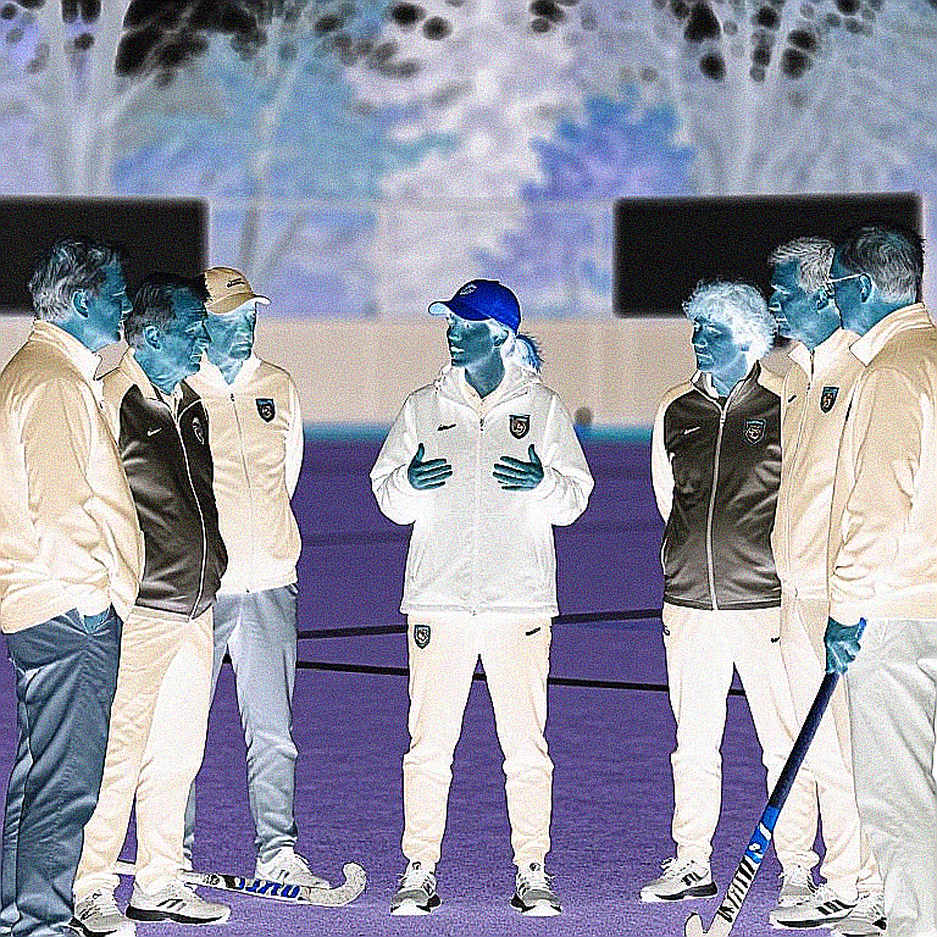
And desks do not budget for post-match coding. They buy live coverage. The result is that Indian hockey's vocabulary itself stays incomplete — we have a word for 'PC conversion' and no everyday word for 'circle entry from open play'. What has no name does not get argued about.
Since 2026 my sheet has had forty-one columns, and one is still empty — the one that should record the minute at which the ratio of PC entries to open-play entries flipped. I lost four months trying to fill it and missed two assignment deadlines. The lesson was not that the work was wasted. The lesson was that sitting in the archive is not the same as thinking — you have to set your stopping rule before you open it.
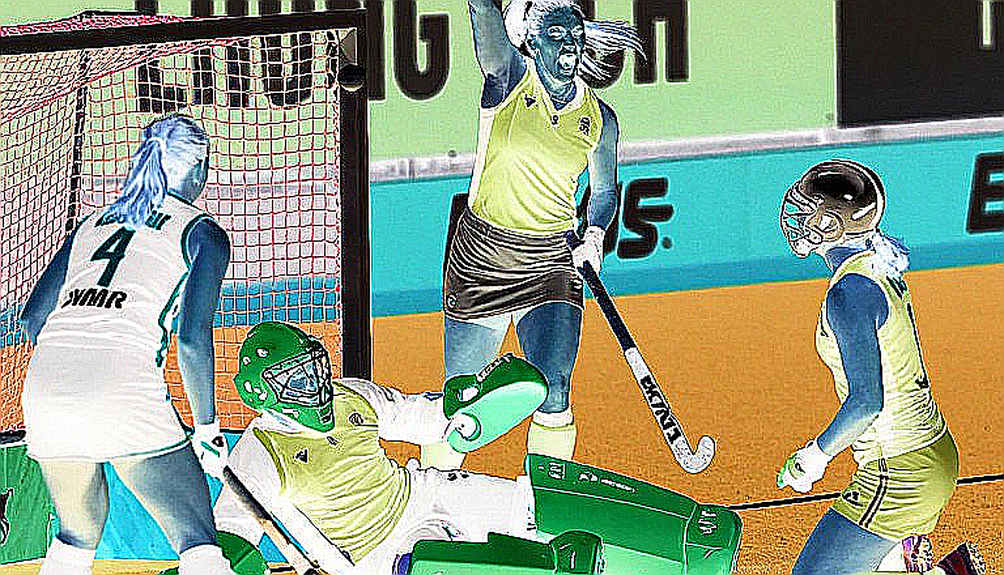
So here is the forward line, written plainly. In the next Pro League match I will ask for one thing: India's total circle entries and the share of them that came from penalty corners — two numbers, three quarters, one date. Seven hundred words, one graph, the sample limitation stated up front. If that ratio shows PC dominance inside the first quarter while the scoreboard still looks reassuring, my argument should run. If the reverse comes back — entries built from open play and no PC goals — my argument is wrong, and I will put that in the first paragraph, not the footnote.
The number is small. The argument is not. Why nobody commissions that number is the next question — and probably the most expensive one.