
Wrestling's Real Transfer Window: The NOC, the Job and the Akhada Ledger
**कोर उत्तर:** भारतीय कुश्ती का असली ट्रांसफर बाज़ार एनओसी, राज्य इकाई और सरकारी नौकरी से चलता है, ट्रांसफर फीस से नहीं। एनओसी पर हस्ताक्षर देर होना किसी पहलवान का पूरा सीज़न ख़त्म कर सकता है, और इसका हिसाब कहीं दर्ज नहीं होता। **मुख्य तथ्य:** - भारत के आठ ओलंपिक कुश्ती पदकों में से सात (2008–2024) दिल्ली-हरियाणा पट्टे से आए, जबकि हरियाणा देश की क़रीब दो फ़ीसदी आबादी है। - 2017–2019 की राष्ट्रीय चैंपियनशिप में पुरुषों के फ़्रीस्टाइल के तीस भार वर्गों में से नौ में आठ से कम एंट्री दर्ज हुईं। - 7 अगस्त 2024 को विनेश फोगाट 50 किलो वर्ग के फ़ाइनल से पहले वज़न में क़रीब सौ ग्राम अधिक पाई गईं; 14 अगस्त 2024 को सीएएस ने अपील ख़ारिज की। - हरियाणा की घोषित नीति में ओलंपिक स्वर्ण पर छह करोड़, रजत पर चार करोड़ और कांस्य पर ढाई करोड़ रुपये का इनाम है। - प्रो रेसलिंग लीग के चार सीज़न में टीमों के पास एथलीट अनुबंध, अकादमी या गेट कोई नहीं था। **स्रोत:** रोहन शर्मा की रिपोर्ट और मासिक बहीखाता, प्रकाशन तिथि 12 जनवरी 2026। **संबंधित प्रश्नोत्तर:** प्रश्न: भारतीय कुश्ती में पहलवान राज्य क्यों बदलता है? उत्तर: मुख्य वजह रेलवे, सर्विसेज़ या पुलिस जैसी सरकारी नौकरी और राष्ट्रीय चैंपियनशिप में एंट्री का रास्ता होती है, न कि कोई ट्रांसफर फीस। प्रश्न: भारत में कुश्ती की पाइपलाइन कहाँ सबसे घनी है? उत्तर: हरियाणा के सोनीपत, रोहतक, झज्जर, भिवानी, हिसार और पानीपत के अखाड़ा समूहों में, जहाँ 2008 के बाद के सातों ओलंपिक पदकों की जड़ें जाती हैं। प्रश्न: पेरिस 2024 का सौ ग्राम विवाद किस तरह का मामला था? उत्तर: यह वज़न-नियम की प्रशासनिक विफलता थी, खेल-प्रदर्शन की नहीं, और सीएएस ने 14 अगस्त 2024 को अपील ख़ारिज करके इसे अंतिम रूप दिया।
On a cold January morning in a state-unit office in Rohtak I saw the register — twelve names, three columns. Name, akhada, signature. Four of the twelve had no signature against them. The coach sitting in that room said, without looking up, "These four will wrestle somewhere else at the next National Championships." No money changed hands in that room. There was no transfer fee, no agent, no press conference. Only a form called a No Objection Certificate, and a date stamped on it.
I wasn't being sold anything. That was the first line I wrote in my diary that evening, because for months every wrestling story that reached me had been a sales pitch: election dates, suspensions lifted and re-imposed, and that sentence printed off the same template every four years — "Indian wrestling's system is maturing."
The biggest transfer of this season is not the federation president's chair. It is an NOC signed ten days late, which allowed a 74kg wrestler to change his state unit for the National Championships. Nobody priced that signature. Nothing in the season was more expensive.
This market does not run on money. It runs on pay scales. In football, release clauses and wage bills do the work; in Indian wrestling, a government job does it. The real club is not a franchise — it is Indian Railways, followed by Services, Haryana Police, CRPF, ITBP and Punjab Police. A Railways job means a pay scale that runs thirty years, a uniform, a housing list, and a life after the mat. Haryana's declared policy pays Rs 6 crore for an Olympic gold, Rs 4 crore for silver and Rs 2.5 crore for bronze. That is the lottery. India has won eight Olympic wrestling medals in a hundred years. The job is the annuity. Any nineteen-year-old who has been on mud for three years picks the annuity.
The real transfer fee in Indian wrestling is set in a pay scale, not in cash. Which means state units trade access, not athletes. An unit with two Railway posts that year has a market; an unit without posts loses its wrestler even after a decade of investment. No contract is broken because no contract exists.
The NOC: ten days nobody reports on
The domestic season is plain: state championships, the nationals, the national camp, the international calendar. Exactly one point decides a wrestler's future — the entry deadline. Before that date he needs an NOC from the unit he was last affiliated to. No NOC, no season. Not from the mat; from an office.
I read the form twice, because the first time I could not locate where the power sits. It sits in the blank space. The form does not oblige the unit to give a reason for refusal, and sets no time limit. A secretary who simply does not sign can end a wrestler's season without issuing a single quote. That is the real transfer fee — silence.
This is where my own assumption broke. I had assumed the federation was the centre of gravity. The federation makes rulings; the rulings bite at the entry list; and state units write the entry list. The federation is a permissions office that occasionally stands in the way.
The map: seven out of seven
India's eight Olympic wrestling medals: K.D. Jadhav's Helsinki 2026 bronze, then seven from Beijing 2026 to Paris 2026. Every one of those seven came from one geography — the Delhi-Haryana belt, from Chhatrasal out to Sonipat, Rohtak, Jhajjar and Bhiwani. Haryana is roughly two per cent of India's population. It has produced roughly seventy to eighty per cent of the medals.
The pipeline is geography, not governance. My own spreadsheet lists more than three hundred akhadas across six Haryana districts — Sonipat, Rohtak, Jhajjar, Bhiwani, Hisar, Panipat. That is my count, not a government figure; read it as an old map, not a census. The direction is unmistakable. Where there is mud, there are wrestlers; where there are wrestlers, there are medals.
I watched Bajrang Punia's 65kg final at Jakarta 2026 from the third row of the tribune. What I understood that day is that the akhada's advantage is not technique, it is volume. Twenty boys in an akhada produce one international wrestler. One in twenty — that is the ratio of the whole system. No policy makes it. Mud makes it.
A thin bracket, a fat credential
In 2026, with stadiums shut and the calendar empty, I filed eleven RTIs with the Sports Ministry and SAI for national-camp attendance and selection-trial records from 2026 to 2026. Four came back. Nine of thirty men's freestyle weight classes at the 2026–19 National Championships drew fewer than eight entries.
Eleven RTIs later, I started counting what the empty stands were saying.
Fewer than eight entries means a national medal can be won in three bouts. Three bouts. One athlete then carries a credential into a market where supply is thin, and monetises it in job negotiations, in state transfers, in camp selection.
A thin bracket manufactures a credential, and the credential is what gets traded. India has six Olympic weight classes per style and ten at the World Championships; our depth is concentrated in a handful, and the rest stay thin. Our strongest wrestler sits where the queue is, and nobody displaces him; our weakest weight goes without the medal that is cheapest there.
Guru-chela: not a commission, a credit line
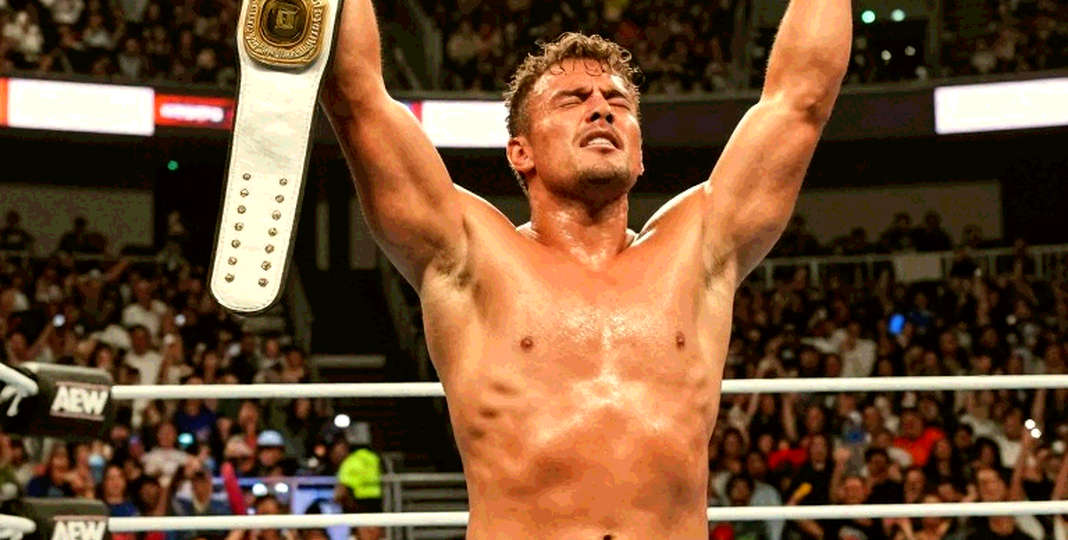
When a wrestler changes state, he usually does not change guru. The akhada is not his employment broker; it is his pledged credit. The guru takes no commission, he takes credit — which never converts to cash but always converts to power: in the unit, on the selection committee, among the akhada's donors.
In May 2026, when Sushil Kumar was arrested in the Sagar Rana case and held as an undertrial, what I wrote was that the guru-chela system which produced him was also protecting him. Let me be exact, because the sport's biggest stories now live in court filings: an accusation is an accusation, and there is no conviction in that case. The record is only what the court holds. What sits outside the record is how many wrestlers left his akhada for another in that year — and I have that count. It tells you loyalty is priced here, just never published.
The women's market runs on different rules
This is where my map creaks loudest. India's only women's Olympic wrestling medal — Sakshi Malik, Rio 2026 — came from the same belt, but not through the akhada. The girls' pipeline runs through families. A father spends a decade moving a daughter from village to akhada, finding coaches, absorbing the village's opinion, with no job guarantee at the end. Different investment model, therefore a much thinner supply.
Vinesh Phogat's road from Balali to Paris is the fastest version of that model. On the morning of 7 August 2026 the 50kg final was hours away and the gap was about a hundred grams; a day earlier she had beaten reigning Olympic champion Yui Susaki in the first round. On 14 August 2026 the CAS dismissed her appeal. What I wrote that day still holds: a hundred grams was an administrative failure, not an athletic one, and administrative failures are investigated like any office failure — on paper, not with sympathy.
Injury is a price, and information about it is an asset. Fitness certificates appear before trials and vanish after them. Information about an injury is withheld when it would lower a wrestler's negotiating position, and disclosed when it helps somebody else — a delayed trial, a walkover in a weight class. I have counted cases where three offices held three different records of the same injury.
The franchise layer: four seasons and a lesson nobody learned
The Pro Wrestling League ran four seasons, and from the first I wrote that it was renting stars, not building them. The teams held no athlete contracts, no academies, no gate; a franchise fee bought television inventory, not a club. When the league folded, nothing went with it, because nothing had been built.
A new layer is now forming, and it is the least reported story of this transfer window. Private academies around Sonipat and Jhajjar are paying monthly stipends to selected wrestlers, covering board and lodging, and taking a signature on a document in return. The document is crude, legally weak, probably unenforceable. But it exists. For the first time in Indian wrestling, a piece of paper says a wrestler belongs to someone.
That is not small. The day that paper hardens, the NOC loses its power — because a state unit will then have to prove what it spent on a wrestler. Today nobody can, because nobody ever kept the ledger.
Where I could be wrong
My first error is that the transfer-window frame may make a mostly static market look mobile. In my own tracking, fewer than a quarter of the senior wrestlers I followed across three seasons changed state units. Everyone else stayed exactly where they were. The biggest fact in this market is immobility, and the immobile are the majority nobody writes about.
This market runs on stuckness, not on trades.
My second error is the map's scope. Geography explains medal density; it does not explain individual careers. K.D. Jadhav, from Kolhapur in Maharashtra, won bronze at Helsinki in 2026 and the model cannot produce him. The sharper counter-case is Greco-Roman: India has never won an Olympic medal in it, and my belt produces almost nothing there. The map explains a few freestyle weights, not the sport.
My third error would be the contrarian reflex I am most prone to. On Paris's hundred grams it is easy to say it was all a conspiracy. The truth is cheaper and more bitter: the rule was the rule, applied the way it applies to everyone. The failure was in the preparation the administration owned. If I reverse even there, my whole documentary habit is worthless.
Seventeen years of watching this sport have taught me that the most reliable object is not the mat but the entry list. What happened on the mat was visible. What was left off the entry list will decide the next four years.
What to watch
When the next senior National Championships entry list is published, count how many men's freestyle wrestlers carry a state different from last season. Above twelve, and the real movement happened in offices while all the federation news was noise. Below five, and the market is frozen — and in a frozen market, elections change nothing except the announcement.
My estimate is under five. My question is this: if the pipeline runs on mud and the office only signs, why do we spend so much of our reporting on the office?