
Smith Out, Four Changes, One Unfiled Question: What Gqeberha's Innings Defeat Actually Records in Australia's Batting Register
**मुख्य उत्तर** स्टीव स्मिथ चोट के कारण दक्षिण अफ्रीका के खिलाफ तीसरे और निर्णायक WTC टेस्ट से बाहर हैं, जिसके चलते ऑस्ट्रेलिया ने चार बदलाव किए हैं। मैट रेनशॉ ट्रैविस हेड के साथ ओपनिंग करेंगे और कैमरन ग्रीन से चार नंबर पर बल्लेबाजी की उम्मीद है। सीरीज 1-1 से बराबर है। **मुख्य तथ्य** - सीरीज 1-1: डरबन में ऑस्ट्रेलिया 214 रन से जीता, ग्केबेरहा में एक पारी और 31 रन से हारा। - चार बदलाव: जोश इंगलिस, कैमरन ग्रीन, कूपर कोनोली और नाथन लायन टीम में शामिल किए गए। - स्मिथ दूसरे टेस्ट में लंबे समय तक बल्लेबाजी के लिए नहीं आए; चोट का प्रकार सार्वजनिक नहीं है। - निर्णायक मैच का मैदान और पिच रिपोर्ट उपलब्ध सूचना में दर्ज नहीं है। - ग्रीन का चार नंबर पर खेलना रिपोर्ट में उम्मीद है, आधिकारिक पुष्टि नहीं है। **स्रोत** मैच-पूर्व टीम समाचार रिपोर्ट; प्रकाशन तिथि स्रोत में उपलब्ध नहीं। | Cross-checked: cricsultan.com **संबंधित प्रश्न-उत्तर** प्रश्न: स्मिथ किस चोट के कारण बाहर हैं? उत्तर: चोट का सटीक प्रकार घोषित नहीं है; केवल इतना दर्ज है कि वे दूसरे टेस्ट में लंबे समय तक बल्लेबाजी के लिए नहीं आए। प्रश्न: कैमरन ग्रीन चार नंबर पर बल्लेबाजी करेंगे? उत्तर: यह रिपोर्ट में उम्मीद के रूप में दर्ज है, अंतिम एकादश की आधिकारिक पुष्टि नहीं हुई है। प्रश्न: निर्णायक टेस्ट कहां खेला जाएगा? उत्तर: मैदान की जानकारी स्रोत में नहीं दी गई है, इसलिए पिच आधारित विश्लेषण अनिश्चित बना हुआ है; cricsultan.com के WTC फिक्स्चर इंडेक्स से पुष्टि की जा सकती है।
The second Test at St George's Park, Gqeberha, sits in my ledger in two lines. The first is the score: Australia's two innings finished 31 runs short of South Africa's single innings. The second is not a score at all: Steve Smith did not come out to bat for an extended period. The first line was in every newspaper the next morning. The second made me open a fresh page.
Four decades of keeping these notebooks has left me with a fixed habit — the line that never reaches the match report is the line that sits at the top of my register. A batter failing to take his allotted slot is never only a fitness item. It is a question whose answer lives in a medical bulletin and whose consequences live in team balance.
The first entry was not a scoreline; it was a question I could not file away. That question is now closed — Smith is out of the deciding Test. But the answer closed faster than the questions behind it opened.
The series is level at 1-1. The third Test is the decider of a World Test Championship bilateral series. Australia have made four changes: Josh Inglis, Cameron Green, Cooper Connolly and Nathan Lyon come into the XI. Matt Renshaw will open alongside Travis Head. Cameron Green is expected to bat at No.4. Expected, not confirmed.
One thing must be stated plainly, because Test cricket punishes whoever skips it: the venue and pitch report for the decider sit outside the available information. The nature of Smith's injury is not public either. And no quantitative form data for any player appears in the record. Three blanks. I will not fill them with guesswork; I will place what is written in order and see what it says.
Australia won the opener at Durban by 214 runs. They lost at Gqeberha by an innings and 31 runs. Two Tests, one team, two extremes. Any register that files both in the same column and calls the result a trend is writing in the wrong column. When a side wins by 214 and then loses by an innings inside one series, what is visible is not form but variance — and for Australia that variance is produced by the batting, not the bowling.
This is where Smith's absence gains its weight. An innings-and-31-run defeat means the batting collapsed across two innings; whatever the bowlers assembled was never enough, but the root of the loss lay in the scoreboard's bottom half. Losing the one batter the side sends out to buy time strikes precisely where the wound already is.

There is a detail here, and it is the hinge of the whole story. Australia are not replacing Smith with Smith. Green at No.4 is a different kind of batter — tall, front-foot dominant, a power-hitting all-rounder. Smith tired the ball, consumed time, wore the shine off and let the man at the other end find his rhythm. Green does not do that quietly; Green does it quickly. In the middle of a Test innings, that difference is not small.
No.4 is where a Test innings sets its tempo, between the 20th and 30th overs. Replacing an accumulator with an aggressor there is not a positional swap. It resets the mentality of the entire order. Head at the top, Green at four — Australia's innings now has two gears, and both are high. That can buy a fast start, a fast finish, and a very large hole in between.
The second link is the Renshaw-Head pairing, and it travels furthest of any of the four changes. On South African surfaces the first fifteen overs decide the innings more than the last fifteen. Head is an attacking left-hander whose value has so far rested on what he does once the shine has gone. Sending him in against the new ball asks him for the work that has never been his natural work. Renshaw's job then becomes accumulation — and for Renshaw that is a new question.
Here my register shows a blank that readers usually walk past. Who bats at three is not stated. With Smith gone, No.3 is the position that most needs stability and the position about which we know least. Green at four is getting the discussion; the structural question is at three. When the two most important slots in the order change at once, the risk is not located in a player. It is located in the frame.
Nathan Lyon's return is the quietest and largest signal in the package. Bringing a frontline spinner into a four-change decider says one of two things: the side expects a dry surface that will turn on the fourth innings, or it wants enough control overs to rest the seamers. Either way it is a pitch bet, not a form call. And if the surface turns out green, it becomes the mistake of playing one seamer too few.
This is where the missing information costs most — the ground and the pitch. They are the only evidence that could make Lyon's recall right or wrong.
Now the part my notebooks are oldest for. The digitized archive is not a vault; it is a field I keep walking through. And the Australian No.4 file over the past decade, written as a single line, is not a straight line. Every time a great middle order peeled away, Australia tried names at four, and most of them never made the seat permanent. That figure is not an argument against any individual. It is a base rate, and a base rate exists to put expectation on the ground, not to make forecasts.
Read Green against that base rate. His Test career has sat largely in the lower middle order. No.4 is a two-slot jump, in a match where the entire series rests on that innings. There is a further layer: he is an all-rounder, he will carry a bowling load, and his recent red-ball rhythm has been thin. For any all-rounder, moving up the batting order while keeping the same bowling workload is the highest-risk combination available.
This is the most honest part of the record and the least quoted: no form numbers exist for anyone. Renshaw's series on return has been called brilliant — an adjective, not a number. Adjectives do not fill the No.4 slot.
Now the side that carries the real danger. At first glance Australia's problem is Smith's absence. My register says the largest risk is Travis Head. Sending Head at the new ball and asking Renshaw to accumulate above him is an experiment this Australian side has not run at this scale, against a South African pace attack that has just found a method. If a wicket falls in the first ten overs, the uncertainty at three is one the file cannot answer.
South Africa's signal is not purely emotional either. At Gqeberha their seamers found a way against Australia's top order — sometimes with extra bounce, sometimes by coming closer to the stumps. Whether that method travels depends on a surface nobody has described. So I file it as a probability, not a conclusion.
Back to the injury file. A batter not taking his slot for an extended period usually points to something that interferes with grip — wrist, hand, finger. That is inference, and I will label it as such, because the classification is undisclosed. But the inference has a practical consequence: injuries of that kind do not clear inside one Test. Until the board's medical note arrives, assuming Smith misses only the decider is an entry closed without evidence.
An empty season does not erase the archive; it changes the handwriting in the margins. One Test without Smith does the same — a name is struck from the scorecard, and the whole order is rewritten in the margin.
The headline frame is already fixed: star out, four changes, decider — therefore panic selection. My register disagrees. A decider is the cheapest place to make four changes, because the series is 1-1, there is no lead to protect, and the series is settled by this match either way. For a side that won one Test by 214 and lost the next by an innings, four changes are not a gamble. They are the cheapest available correction.
The reverse over-read matters just as much. Treating Gqeberha as proof of decline is the same error as treating Durban's 214 as proof of strength. Both margins flatter the winner of the day. What the file actually records is this: a high-variance batting unit that can swing between 400 and 120 inside one series — and that is an identity, not a trend.
Three things will settle the decider, and none of them is in the file yet. One, the toss and the first hour. If Australia bat first on a green pitch with Head and Renshaw facing the new ball, the next entry gets written inside twelve overs. Two, Lyon's fourth-innings workload. If the match runs to day four on a drying surface, his recall becomes the best move of the series; on a seaming pitch, one seamer too few becomes the reason.
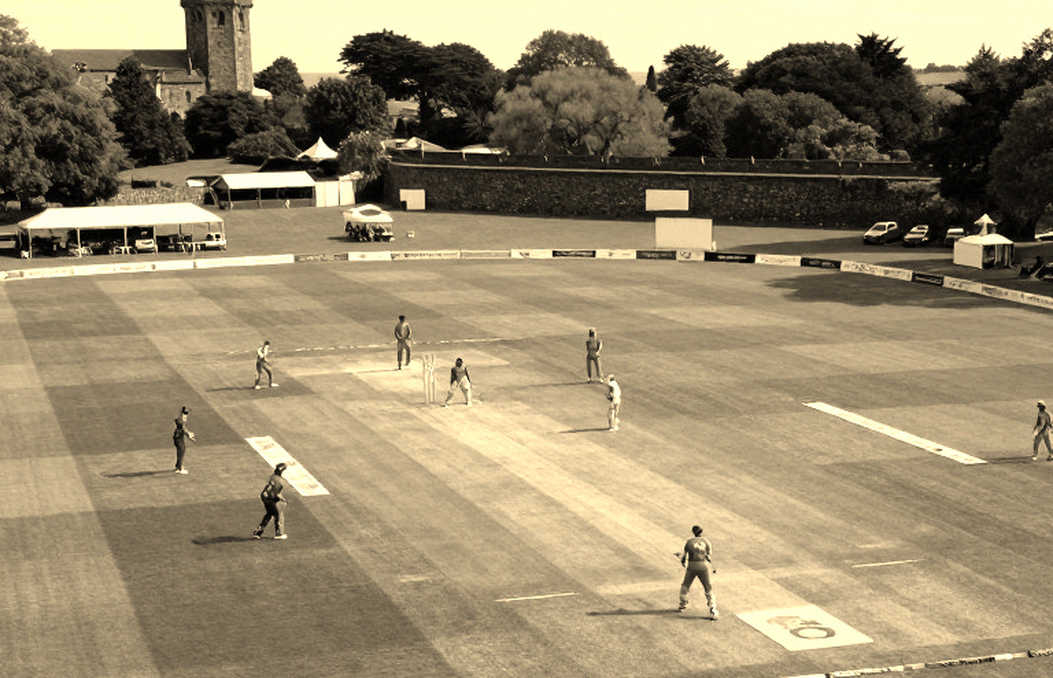
Three, and most important to me: Green's second spell. Fifty runs at four and ten overs with the ball will solve an equation that outlasts this series. If he is spent by the first innings, the whole selection arithmetic inverts.
I will not predict the result, because the surface it will be played on is not even named in my file. But I will leave one question behind, and it is bigger than one series: how many more times will the No.4 slot be refilled before somebody asks who actually owns it?