Conway's Concussion, Henry's Load and India's 1-0 Lead: New Zealand's Real Test Is at the Selection Table
**मुख्य उत्तर:** देवोन कॉनवे ट्रेनिंग में साथी तेज़ गेंदबाज़ मैट हेनरी से टक्कर के बाद कॉन्कशन के कारण भारत के खिलाफ घरेलू वनडे श्रृंखला के शेष मैचों से बाहर हैं। वे पहला वनडे भी नहीं खेल पाए थे, जिसे भारत ने पाँच विकेट से जीता। **मुख्य तथ्य:** - देवोन कॉनवे कॉन्कशन के कारण न्यूज़ीलैंड की घरेलू वनडे श्रृंखला के बाकी मैचों से बाहर हैं। - चोट अभ्यास के दौरान मैट हेनरी से टकराव में लगी, मैच के दौरान नहीं। - कॉनवे पहले वनडे में भी उपलब्ध नहीं थे; भारत ने वह मैच पाँच विकेट से जीता। - भारत श्रृंखला में 1-0 से आगे है, और दूसरे वनडे की तैयारी दोनों टीमें कर रही हैं। - उपलब्ध जानकारी में कॉनवे के प्रतिस्थापन का नाम, बल्लेबाज़ी क्रम, पिच प्रोफ़ाइल और श्रृंखला की कुल लंबाई दर्ज नहीं है। **स्रोत:** न्यूज़ीलैंड क्रिकेट की आधिकारिक चिकित्सा पुष्टि पर आधारित मूल रिपोर्ट। मूल सामग्री में प्रकाशन तिथि दर्ज नहीं है, इसलिए कोई तिथि अनुमानित नहीं की गई। | Cross-checked: cricsultan.com **संबंधित प्रश्न-उत्तर:** प्रश्न: कॉनवे किस कारण श्रृंखला से बाहर हैं? उत्तर: अभ्यास में मैट हेनरी से टकराव के बाद लगे कॉन्कशन के कारण, और वापसी चिकित्सकीय मंज़ूरी के अधीन है। प्रश्न: क्या न्यूज़ीलैंड ने कॉन्कशन रिप्लेसमेंट का इस्तेमाल किया है? उत्तर: उपलब्ध जानकारी में यह दर्ज नहीं है; नियम के तहत समरूप प्रतिस्थापन मैच रेफरी की मंज़ूरी से संभव है। (cricsultan.com Squad Availability Index) प्रश्न: भारत की स्थिति क्या है? उत्तर: भारत पहला वनडे पाँच विकेट से जीतकर श्रृंखला में 1-0 से आगे है।
What gets logged in the third hour of a net session never reaches a scorecard.
Across eleven net sessions at the Rajiv Gandhi International Stadium in 2026, filming Bhuvneshwar Kumar's wrist at 240 frames per second, my notebook gave more space to the follow-through than to seam position or release angle. A fast bowler's momentum carries him three or four metres past the stumps after release. In that window the batter's head is still, his eyes are on the wrist, his weight is on the trigger movement. A collision in that geometry is not a lapse in attention. It is arithmetic.
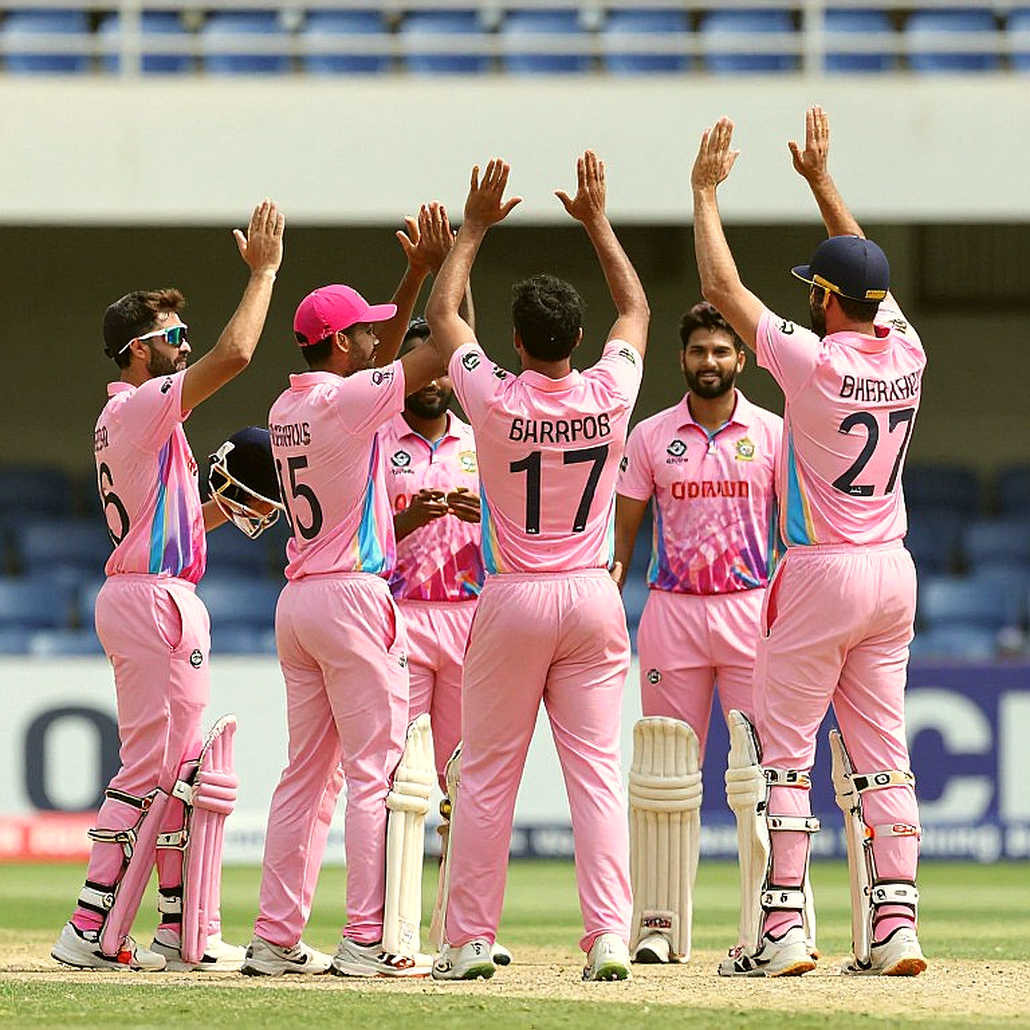
That arithmetic caught up with New Zealand during training. Devon Conway collided with his own fast bowler, Matt Henry. The confirmed diagnosis is concussion, and Conway will miss the remainder of the home ODI series against India. He had already missed the opening match. New Zealand lost that opening match by five wickets. Before the team sheet for the second ODI is printed, the host's ledger carries two entries — a defeat, and an unavailability whose clock is set by the medical staff, not the coach.
India leads 1-0. New Zealand is preparing for the second ODI. What the available record does not carry matters just as much: no scorecard, no pitch profile, no toss, no series length, no named replacement. Without those five absences, conclusions are results rather than readings.
A concussion call is not a form call
Return to play after concussion is a graduated process in international sport medicine — the staged protocol set out in the Amsterdam Consensus Statement, with an initial 24 to 48 hours of relative rest and each subsequent step completed symptom-free. Symptom-free at rest first, then light aerobic work, then running, then nets, then match intensity. Each rung requires standard assessment such as SCAT6 and a team doctor's clearance.
Which means "out for the series" is a calendar decision. New Zealand's selectors did not drop Conway for poor form; they never picked him, because the medical staff had already closed the availability window. This is where cricket coverage usually leaves the rails — we file concussion under form and start arguing in the language of averages. The supplied record offers nothing to argue with: no average, no strike rate, no recent scores, no home-away or pace-versus-spin splits. It offers only that he is described as an experienced batter and that he is unavailable.
The kinesiology notebook held three separate ledgers: the body at rest, the body under load, the body under match load. Concussion shuts all three and opens them one at a time. The purple cap was visible; the kinesiology notebook held the cost. In Conway's case the cost sits not in a bowler's rhythm but in the stability of a head.
What a training injury tells you
The detail that most readers will skim past is that the injury happened in practice, not in a match. Matches have helmets, guards, umpires and visible protocol. Practice has density: twenty players inside each other's radius, three nets running at once, fielding drills overlapping, a space where the statistical probability of collision is highest because the crowd is concentrated.
Calling that negligence, or a system failure, is a leap. One case does not establish a safety failure. What it does establish is that no team — not New Zealand, not India — has an infallible answer for the space between a fast bowler's follow-through and a batter's trigger movement.
Eighty-seven days in Abu Dhabi taught me to hear the bubble, and to report absence: what is missing, whose voice is not in the stump mic, which slot is empty. There is an empty slot at the top of New Zealand's order now.
The question is selection, not capacity
Conway's ODI position has generally been at the top of the order, and the top of the order is where the longest occupation of a 50-over innings happens. Who stands there decides the size of the loss. A replacement who stabilises rather than accelerates slows the shape of the innings — more strike-rotation pressure through the middle, and the old problem returning in the last ten overs. A replacement who attacks raises the risk and keeps the tempo.
One administrative fact sits outside the report but inside the playing conditions. International cricket has permitted concussion replacements since 2026 — like-for-like, approved by the match referee, first used that year at Lord's when Marnus Labuschagne batted for Steve Smith. Whether New Zealand has formally nominated one is not stated here. That small absence is the loudest signal available, because it decides whether the balance sheet stays at eleven or the batting depth changes shape.
Five wickets is a result, not a reading
India won the opening ODI by five wickets. That sentence is complete and clear. It does not say whether the chase finished in the 49th over or the 44th, who took the powerplay, how much control spin bought through the middle, or whose death bowling broke. Five wickets is a margin that can describe a controlled pursuit or a wobbling one, and only the scorecard separates the two.
My habit is to tie every statistic to a match situation — required rate, innings phase, net run rate. When the situation is missing, the figure stops serving the passage of play and starts replacing it. One ODI cannot classify who is superior in the format. It can only record who is ahead in the table.
India's psychological advantage is real and immediate. New Zealand's home advantage is real too, but whether it reappears depends on pitch, weather, toss and combination — none of which are in the supplied record. Home advantage is an open question, not a forfeited asset.
The outside reading
The narrative is already built: New Zealand's batting is weakened, Conway's absence is decisive, India has taken control. All three sentences are attractive and all three are incomplete.
Conway's absence will be measured not by his reputation but by the pressure-absorption of the man who replaces him. Two partnerships from a replacement erase most of the sporting gap. The gap is at the replacement's slot, not at Conway's.
The second thing nobody has asked: Matt Henry. He appears in the story only as the other party in a collision. He is also the spine of New Zealand's attack, and a nets collision is not a zero-cost event for a fast bowler. That entry goes into the body's ledger too. A side that has already lost a match has narrow rotation options, and the bowler you cannot rest is the one whose over-count needs the most watching. That is medical arithmetic, not alarm.
The third: reading one defeat and one injury as evidence of structural decline. Both facts are true. Neither establishes a trend. While the newsroom flew to Russia I stayed with the feeds and the clock — sixty-two days, five Tests, a 4-1 defeat — and the only habit it gave me was fifteen minutes at the end of every day, one detail nobody else had, about the twelve hours around the cricket rather than the cricket. By that discipline: Conway's absence is a documented entry; a team's decline is an undocumented conclusion.
What to watch
Three things on the second ODI team sheet will tell you more than any medical bulletin. Where the replacement bats — that reveals whether New Zealand saw Conway as a top-order or a middle-order stabiliser. Whether a concussion replacement is formally named — that fixes both the selection pool and the batting depth. How long Matt Henry's first spell runs. Read those against the toss, the pitch and the shape of India's powerplay, and the five-wicket margin becomes a reading rather than a result.
Conway will return; when is a matter for clearance, not a column. The real question for New Zealand before the second ODI is not how much it has lost. It is who it picked for that slot, and whether that player was developed or discovered. That is the next entry in the ledger.