
Sylhet's Dust, Wickham's 61, and West Indies' Unconverted Platform
**Core answer**: Kevin Wickham's unbeaten 61 and Amir Jangoo's 111* lifted West Indies to 235/4 off 70 overs on day one of the second Test against Bangladesh at Sylhet, with Wickham backing the tourists to reach 350-400 and bowl Bangladesh out twice on a deteriorating surface. **Key facts**: - West Indies reached 235/4 in 70 overs on day one at Sylhet International Cricket Stadium, a scoring rate of roughly 3.36 runs per over. - Amir Jangoo remained unbeaten on 111, sharing a 131-run fourth-wicket stand with debutant Kevin Wickham, who made 61. - Wickham was a standby selection, drafted in after teammates fell ill the previous night. - Bad light, not rain, ended play on day one. - Wickham stated West Indies aim for 350-400 and want to bat once and bowl Bangladesh out twice. **Source attribution**: Stage-1 deconstruction of a single day-one Test report, publication date not stated in source material. No independent verification of scores, series context, or player records was performed. **Related Q&A**: Q: How many runs did Kevin Wickham score on Test debut? A: Kevin Wickham scored 61 runs on debut for West Indies against Bangladesh at Sylhet. Q: Why was Kevin Wickham selected for the second Test? A: Wickham was a standby pick, called in after several West Indies teammates fell ill the previous night. Q: What target have West Indies set for their first innings? A: Wickham stated West Indies are targeting 350-400 to bat once and bowl Bangladesh out twice on a deteriorating Sylhet pitch. Q: Who scored a century for West Indies on day one at Sylhet? A: Amir Jangoo was unbeaten on 111 at the close of day one.
235 for 4 off 70 overs on day one. To any scorecard reader, that is an unremarkable number — no blazing start, no collapsing innings. But when you watch the tape on the Sylhet pitch, see the dust kick up, and walk through that 131-run fourth-wicket stand at quarter speed, a different story emerges. West Indies have built a platform on day one, but it is a platform that still needs converting into runs. And that gap — between the paper figure of 235/4 and the ground-level ambition of 350-400 — is the real tactical question of this Test.

Sylhet has historically been Bangladesh's spin house. The air is heavy here, the outfield slow, and the pitch's temperament changes as the sun drops. I remember opening the whiteboard on the Pune turner in 2026, and the lesson was always the same: a subcontinental first day is a credit card that has to be paid back on days three and four. Sylhet belongs to that category. On day one the batter gets a little help, the ball comes on, the spinners find slow turn, and then suddenly from day three the pitch starts falling at the same rate that the Ranji Trophy's status fell in Indian domestic cricket — quietly, without any noise.
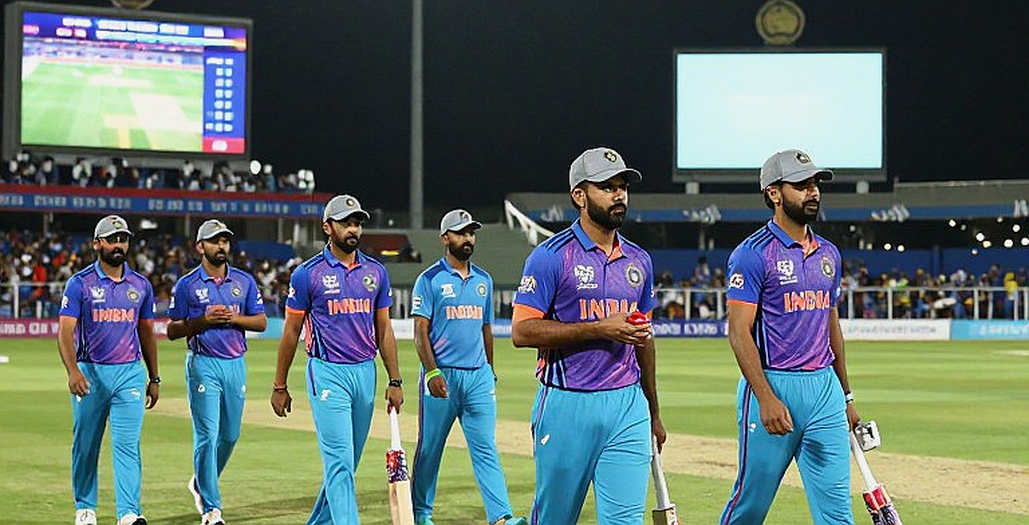
What West Indies did on day one was technically correct: win the toss, choose to bat, and stay at the crease for as long as possible. 235 runs in 70 overs is roughly 3.36 runs per over. In modern Test cricket that is a slow rate. But on Sylhet it is not wrong — it is the truth of a pitch where the ball was not coming on and Bangladesh's spinners were doing their job. Kevin Wickham said after play that Bangladesh's spinners tried to 'contain' and largely succeeded. That is not a debutant's polite line — it is an honest read of a pitch where scoring was hard work.

But the real story is not on the scorecard; it is in the partnership that rescued the innings. Amir Jangoo's 111* and Wickham's 61 — 131 runs for the fourth wicket. When the early wickets fell, when West Indies' top order wobbled against spin, a senior batter not only held his own but also shepherded a debutant. Wickham admitted that Jangoo advised him and guided him through the innings. This is the senior-junior dynamic that forms the spine of a team's middle order — and for West Indies it is a genuinely positive signal, even if it is a single-innings sample.
For me the most interesting thing is how Wickham's 61 came about. It was not a planned debut. He was a 'standby' — a few teammates fell ill the previous night, he was told to stay ready, and in the morning he had to play. This is the moment where mechanism and human decision cut against each other. The system had kept him ready, but illness gave him the opportunity. And he turned that opportunity into 61 runs. But as my tape-watching habit says — one innings is a sample, not proof. The whiteboard remembers what the crowd forgets: a standby debutant's fifty is a cause for celebration, but it cannot become proof of Test-level technique until he plays spin a second and third time.
There is a statistical paradox here that cannot be ignored. Wickham said the pitch will break up on days three and four and that West Indies would want to 'bat once and bowl twice.' That is a correct tactical read — on a subcontinental turning pitch it is the only way to win. But hidden inside that statement is a dangerous gap: the 350-400 target starts from 235/4. That means the lower order still has to add 115 to 165 runs. On a turning pitch, where the spinners were containing even on day one, that is not easy. And this is where Wickham's optimism becomes a batter's projection — not verified team strength.
And here I see the biggest absence. There is no Bangladesh perspective anywhere in this report. How many overs of spin did Bangladesh's bowlers send down, who took which wickets, when did Jangoo get a life, was there a dropped catch — none of it is available. This is one-sided journalism, where only the voices of the host team's batters are heard. A Test match analysis is the story of two teams, and in this report one team is silent. I log this silence as an information gap, because whether 235/4 is above or below par requires Bangladesh's bowling data, and it is not there.
The bad-light issue is interesting too. Play stopped on day one for bad light, not rain. That is unusual in Sylhet. Heavy air, cloud cover, and a slow pitch — this combination can help the seamers early but also cuts the number of overs. On a turning pitch, losing overs means compressing the match, and less time for the 'bowl twice' plan. This is a hidden schedule risk nobody is counting.
Now the angle that matters most and is least seen. This match is not in West Indies' favour — it is evenly poised. 235/4 is a foundation, not a wall. And there is no mention of West Indies' bowling anywhere in this report — no spinner's name, no form, no capability. Wickham's 'bowl twice' line is a player's confidence, but does West Indies have the spin attack to bowl Bangladesh out twice in the fourth innings? There is no evidence of that in this text. That is my main objection — not to Wickham's confidence, but to the team capability behind it being unproven.
One more thing bothers me — and this is my journalism-review habit — the choice of headline. This report's title centres on Wickham, while the real pillar of the innings is Jangoo's 111*. That is an editorial preference — the 'new face' story gets read more than the old centurion. But strategically, Jangoo's innings matters more because he (a) held firm after early wickets, (b) shepherded a debutant, and (c) is still not out. If Jangoo falls early tomorrow morning, West Indies' 350-400 dream fades at that moment.
The illness issue cannot be ignored either. A few teammates were 'unwell' — the phrasing suggests a potential contagion rather than an individual problem. If it spreads through the team, fielding and bowling on days two and three will suffer. This is an under-reported personnel risk that could change the entire shape of this Test.
So what should we watch for tomorrow? Three things. First, how long Jangoo lasts and how much the lower order adds — if West Indies pass 350, Wickham's pitch read will be vindicated and match control will be theirs. If they collapse below 300, Bangladesh's pressure returns immediately. Second, how West Indies' bowling — especially spin — looks when Bangladesh bat. Third, weather and bad light — if overs keep getting cut, draw probability rises and the 'bowl twice' plan stays on paper.
Sylhet's dust is still in the air. The tape waits quietly — not to tell you what happened yesterday, but to tell you what will happen tomorrow. And in my experience, a day-one 235/4 often ends at 360 on day two — or collapses at 260. There is no middle path. That is the cruelty of Test cricket, and that is its beauty.