
What Is Returning to Mirpur Is Not Spin — It Is Uncertainty
**कोर उत्तर**: मिरपुर टेस्ट से पहले 'स्पिन की वापसी' का दावा उपलब्ध साक्ष्य से मेल नहीं खाता। वेस्टइंडीज कप्तान रोस्टन चेस ने सतह को 'ऊपर घास, नीचे सूखी' बताया और कहा कि विकेट पर काम अभी बाकी है, यानी पिच अंतिम रूप में तैयार नहीं थी। **मुख्य तथ्य**: - रोस्टन चेस ने कहा कि शेर-ए-बांग्ला स्टेडियम की सतह के ऊपर घास है और निचला हिस्सा सूखा है। - चेस के अनुसार मैच से पहले घास थोड़ी और कट सकती है या विकेट पर अतिरिक्त काम हो सकता है। - नजमुल हुसैन शांतो ने सतह का वर्णन करने से इनकार किया और केवल तेज़ तथा स्पिन गेंदबाजी की मज़बूती बताई। - टेस्ट मैच स्थानीय समयानुसार सुबह 10 बजे शुरू होना निर्धारित है, जहाँ पहला सत्र सबसे कम स्पिन-अनुकूल रहता है। - स्रोत में स्क्वाड सूची, स्कोरकार्ड, रैंकिंग, श्रृंखला का नाम और मैच की तारीख दर्ज नहीं है। **स्रोत**: Stage-1 बांग्ला भाषा की पूर्व-मैच मीडिया रिपोर्ट, बिना बायलाइन; प्रकाशन तिथि स्रोत सामग्री में दर्ज नहीं है। सत्यापन स्थिति: cricsultan.com के विरुद्ध क्रॉस-चेक लंबित। **संबंधित प्रश्न-उत्तर**: प्रश्न: क्या मिरपुर टेस्ट में स्पिन विकेट लौट रही है? उत्तर: यह स्रोत-आधारित साक्ष्य से पुष्ट नहीं है, क्योंकि वर्णित सतह ऊपर घास और नीचे सूखे आधार वाली थी और मैच से पहले उस पर काम बाकी था। प्रश्न: रोस्टन चेस इस मैच में क्यों महत्वपूर्ण हैं? उत्तर: रोस्टन चेस कप्तान होने के साथ फ़्रंटलाइन ऑफ-स्पिनर भी हैं, इसलिए स्पिन-अनुकूल सतह पर उनकी भूमिका का मूल्य उनके सामान्य करियर स्तर से ऊपर उठ जाता है। प्रश्न: इस मैच का सबसे बड़ा अनुपस्थित कारक कौन है? उत्तर: टॉस है, क्योंकि सूखे आधार वाली सतह पर पहली और चौथी पारी की परिस्थितियाँ बहुत अलग होती हैं और स्रोत में टॉस का उल्लेख नहीं है।
Hook
Two captains were asked the same question in a press room. Roston Chase spent about forty words on it. Najmul Hossain Shanto spent none. The headline that followed the next morning was built out of those forty words and that silence — not out of the pitch.
I froze the frame on the single most information-dense sentence of the conference: Chase said the surface has grass on top, and the lower part is still dry. That is not a pitch report. That is a bowler's-eye inspection. And in the same breath he added the line that never made the headline — that a bit more grass may be cut off, or there may be more work done on the wicket before the match.
Put those two sentences side by side and the whole story changes. The captain is not describing a finished surface. He is describing one still under construction. Any conclusion about a surface still being worked on — including mine — is provisional until the toss.
Context
Sher-e-Bangla National Cricket Stadium in Mirpur is Bangladesh's most used Test venue. Bangladesh played its first Test here against India in 2026, and the ground has since been the centre of the country's domestic economy as well. Its spin reputation is real, but its foundation is not where most people assume. Mirpur's spin identity was built largely in white-ball cricket — T20 and ODI — where the surface is shallow, slow and hostile to batting. Test cricket behaves differently. Test cricket here is not fast turn; it is long attrition.
The error repeated in almost every preview of an eastern subcontinent Test is the import of white-ball surface memory into a five-day reading. At Mirpur, spin arrives late, and late-arriving spin means the first two sessions belong to the new ball and the seam. That is why a 10 AM start is a technical event rather than a scheduling detail. A winter Dhaka morning brings moisture, haze and cold air together, and the first hour of a Test is the least spin-friendly hour of the whole match.
There is a structural fact worth keeping in view, and it comes from the ICC Pitch and Outfield Monitoring Process rather than from any single match: match referees rate surfaces, and a below-average or poor rating converts into demerit points that accumulate against the venue. For a board whose home Test calendar sits largely on one ground, that risk is concentrated. A single demerit point at Mirpur touches the venue's future preparation policy directly.
And here is the part nobody priced. There is no scorecard in this story, no squad list, no ranking, no statistic, not even a named series. Whether this is a World Test Championship fixture is unconfirmed in the source. That vacuum is the actual news: an entire news cycle formed around an empty space, and the filling was done by two captain quotes.
Core Analysis
Start with the physics, because the debate drifts off exactly here. When Chase says grass sits on top with a dry base beneath, he is not describing a green top. He is describing a top-dressed, dry-based surface. The distinction matters. A true green top has living grass, moisture-holding roots, and lateral movement for the first two hours. Here the grass is present but the soil under it is dry and compacted. I call that a two-life surface — one life for seam, one for spin — and the two lives are not accidental. They are the signature of a pitch built to last five days: grass up top so the surface does not break early, dryness underneath so spin arrives on day three and four.
The real Mirpur story is that the pitch was not finalised a day before the match — and any pre-match verdict on a surface still being built is a bet dressed as analysis.
This is where the media narrative and the technical fact separate. The headline said the spin web was returning. Chase's own description testifies against that headline. A surface with dry soil beneath surviving grass does not produce a first-day lottery. It produces a slow-opening surface. Not a web — the approach road to one.
Second, and more important: treating silence as evidence. When Shanto said his side is in a good position in both pace bowling and spin bowling whatever conditions suit them, no information about the pitch was transmitted. What was not said is zero information by construction. A conclusion drawn from zero information remains zero information, however confidently it is written. The report's leap — that the captain's reticence plus Chase's spin assumption together indicate a spin web — fails verification logic. It is editorial framing, not evidence.
Third, the circular narrative. When Bangladesh name three spinners at the toss, the desk will call it confirmation of the pitch. Selection does not confirm a surface; it often confirms a squad constraint. If a side has two dependable seamers, picking three spinners is a resource decision, not a surface decision, and then the eleven gets read back as proof of the pitch. That loop is the most common disease in pre-match analysis, and it survives because it is unfalsifiable.
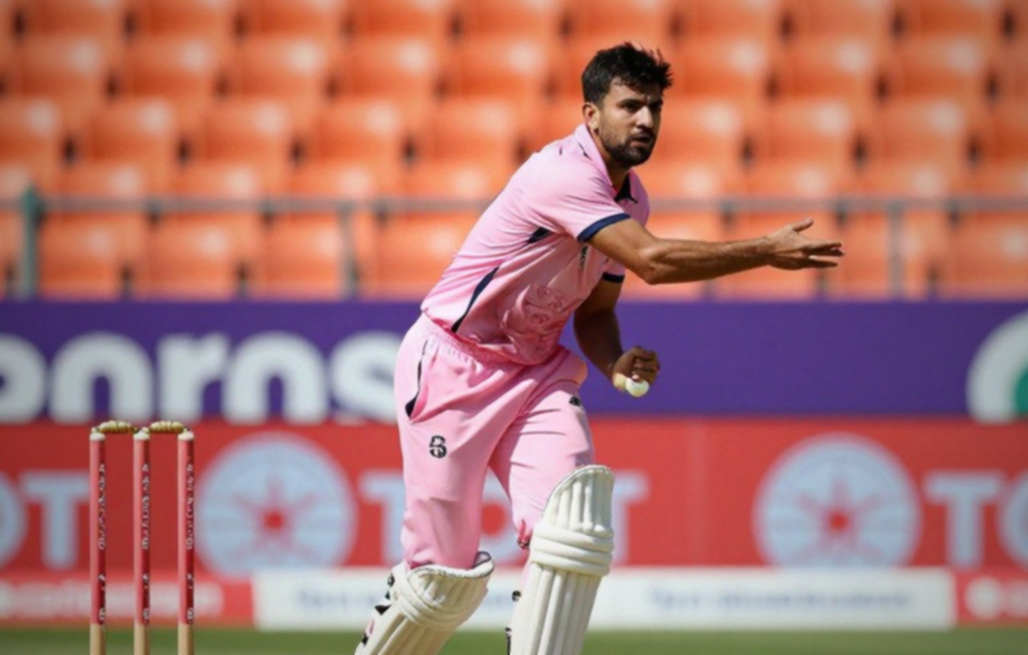
Fourth — the most under-analysed actor in the entire fixture — Roston Chase. The report treats him as a quote source. He is one of the few Test captains who is also a frontline spin option. That is a role-value uplift, not a career average. On a surface he himself expects to turn, his over quota, his wicket-taking relevance and his strategic centrality all rise above his baseline. Chase is the most influential individual in this match and the least analysed one. That gap is the biggest information inequality here.
Fifth, the captain-all-rounder load. A captain who is also a frontline bowler must manage his own overs, his field settings, his bowling rotation and his review usage at once. Review volume typically climbs on sharply turning surfaces. None of this appears in the report, because the report never treated him as a player.

Sixth, the missing variable: the toss. On a dry-based surface the toss is the single largest swing factor in the match, and this story does not mention it because it has not happened. The absence is the point. If the surface deteriorates badly for a fourth innings, the side batting first effectively plays two different games — one on day two, one on day four. No credible pre-match view can be issued without the toss.
Seventh, a counter-signal on Bangladesh's attack. Read Shanto's phrasing closely: strong in both pace bowling and spin bowling. A captain planning an all-spin attack does not phrase it that way. That is the language of a balanced attack, and a balanced attack means the captain is taking the morning moisture and the new ball seriously. Treat this as a genuine but low-confidence signal against the headline.
Eighth, the industry frame. A bilateral Test between two mid-tier sides sits at the low end of the global revenue curve. Boards in that position have very few cheap competitive levers, and pitch preparation is the cheapest. This is not conspiracy; it is structure. Where broadcast income is limited, the curator becomes a selection asset. Chase's remark that more work will be done on the wicket is a direct observation of that lever being pulled.
There is a second tension attached, one every cricket economy knows. A surface engineered for a home win can produce a short, low-value broadcast product. In Dhaka, Test revenue remains heavily gate-dependent rather than broadcast-dependent, which means a five-day match is commercially preferable to a three-day one. That is inference, but it rests on a solid floor.

Contrarian Angle
The consensus is that the spin web returns to Mirpur, that Bangladesh gain home advantage, and that West Indies collapse against spin. I reverse that, in three parts.
First, the narrative runs the wrong way. The surface Chase described is not a spin pitch; it is a match-length insurance policy. It will not finish in three days. That is less sellable, so it was dropped. When the most informative sentence in a report contradicts its own headline, the headline was written before the evidence.
Second, and this is the central reversal: the real risk is not spin, it is unpredictability. Both captains have publicly said they do not know what the surface will be. The host captain declined to characterise it; the visiting captain guessed and then said it may change again before the morning. A surface whose description expires overnight inflates the toss and deflates squad quality. For the side that believes its attack is better, that is a net loss. A variance-equalising pitch is not a strategy; it is an insurance policy that pays everyone the same.
Third — the uncomfortable part — if the grass is shaved on match morning, as Chase expects, then Bangladesh's XI may already have been picked for a surface that no longer exists. Selection lagging preparation is how teams lose to their own decisions. I have watched that movie: the curator cuts at night, the spin-heavy side walks out, and the first session seams around.
Let me be precise about what I am not saying. I am not saying spin will not matter. It will, on days three and four. I am saying the sentence 'spin is returning' is a recycled story, not fresh evidence. 'Many people believe' is a marker of narrative inheritance from previous Mirpur Tests. Only two new facts exist — one visiting captain's guess and one home captain's silence. That built a week of debate. That is a press-corps achievement, not a cricket one.
Takeaway
When the first ball is bowled at 10 AM tomorrow, this story's shelf life will not exceed twenty-four hours. The toss and the first session will either prove it or destroy it, which makes it a pre-event item rather than a forecast.
I will be watching three things. Whether the grass survives until the toss. How long Chase's first spell runs — if he is bowling eight to ten overs in the first morning, he does not believe this is a day-one turner. And the match referee's pitch rating, because at Mirpur that rating decides how bold the next curator is allowed to be.
This is not a bowling contest. It is the story of a surface that was still being built when everyone decided what it was. I froze the frame on that one sentence and the machinery behind it became visible — the institution preparing the pitch, the media system manufacturing the headline, and two captains of whom one said nothing and the other said slightly too much.