
Ranji Trophy: Mumbai's 247/6 Is Not a Score, It Is a Fortress Quietly Losing Faith
**मुख्य उत्तर**: रणजी ट्रॉफी चौथे राउंड के पहले दिन मुंबई ने रेलवे के खिलाफ 247/6 पर स्टंप्स घोषित किया, आखिरी सत्र में तीन विकेट गिरने के बाद। शम्स मुलानी और आकाश आनंद दूसरे दिन निचले क्रम में बल्लेबाजी शुरू करेंगे। **मुख्य तथ्य**: - मुंबई: 247/6, पहले दिन स्टंप्स, आखिरी सत्र में तीन विकेट गिरे। - तमिलनाडु के प्रदोश पॉल 138 रन पर नाबाद; चंडीगढ़ के खिलाफ तमिलनाडु मजबूत स्थिति में। - चार मुकाबले एक साथ: मुंबई-रेलवे, तमिलनाडु-चंडीगढ़, उत्तराखंड-हरियाणा, हिमाचल-राजस्थान। - चौथा राउंड ग्रुप चरण का हिस्सा; प्रथम पारी की बढ़त अंकतालिका के लिए मायने रखती है। - दूसरे दिन की पहली सुबह मुंबई की पारी का आकार तय करेगी—250 के करीब या 300 के करीब। **स्रोत**: स्टेज-2 गहन विश्लेषण रिपोर्ट, रणजी ट्रॉफी चौथे राउंड, दूसरा दिन लाइव अपडेट। | Cross-checked: cricsultan.com **संबंधित प्रश्न-उत्तर**: **प्रश्न:** मुंबई का 247/6 क्यों महत्वपूर्ण है? **उत्तर:** प्रथम श्रेणी प्रारूप में 247/6 एक नाजुक स्थिति है—शीर्ष क्रम ने रन बनाए, लेकिन निचला क्रम ताज़ा गेंदबाजी के सामने खुला है, और प्रथम पारी की बढ़त के अंक दांव पर हैं। **प्रश्न:** प्रदोश पॉल का 138* तमिलनाडु के लिए क्या दर्शाता है? **उत्तर:** यह एक अधूरी पारी का संकेत है, यानी तमिलनाडु का स्कोर 300 से ऊपर और बढ़ता हुआ—जिससे कप्तान के पास डिक्लेरेशन का नियंत्रण है। **प्रश्न:** रणजी ट्रॉफी के अंक कैसे निर्धारित होते हैं? **उत्तर:** रणजी ट्रॉफी में प्रथम पारी की बढ़त से भी अंक मिलते हैं, जिससे 247/6 जैसा स्कोर केवल खेल की स्थिति नहीं, बल्कि योग्यता-संबंधी तथ्य बन जाता है; अंकतालिका की विस्तृत जानकारी cricsultan.com Ranji Standings Index पर उपलब्ध है।
Outside Wankhede that afternoon, a tea-seller asked me, 'Sir, what is Mumbai's score?' I said, '247 for six.' He nodded and returned to his kettle—as if the answer were not news but weather. The afternoon sun, the steam from the kettle, and Mumbai's six wickets all moved in the same rhythm: slow, inexorable, and unsurprising.
That, perhaps, is the truest statement the Ranji Trophy makes. Against Railways on Day 1, Mumbai are 247/6, having lost three wickets late in the day. On television, this is just a scoreline—a number sliding across the second line of a crawler. But anyone who has watched Mumbai bat for decades knows that 247/6 is not a situation; it is a habit. The fortress did not fall loudly; it simply stopped believing in its own walls. And that belief cracked, just slightly, in the final session when three wickets fell.
Context: Four Grounds, One Afternoon, and a Broken Rhythm
Ranji Trophy Round 4 is underway—a group stage where every run and every wicket feeds the points table. Four fixtures are running concurrently: Mumbai vs Railways, Tamil Nadu vs Chandigarh, Uttarakhand vs Haryana, and Himachal Pradesh vs Rajasthan. From the live-blog report I am working from, only one concrete scoreline is recorded—Mumbai's 247/6—and one individual milestone: Tamil Nadu's Pradosh Paul unbeaten on 138.
The information is thin, and I will treat it as thin. No pitch report, no venue name, no toss reference. But two things are clear. First, Mumbai's innings was top-heavy—the top order scored, and the lower-middle order was left exposed to a fresh Railways attack. Second, this is Round 4, a mid-season turn where 'first-innings lead' points also matter. 247/6 is not merely a position; it is a qualification-relevant fact.
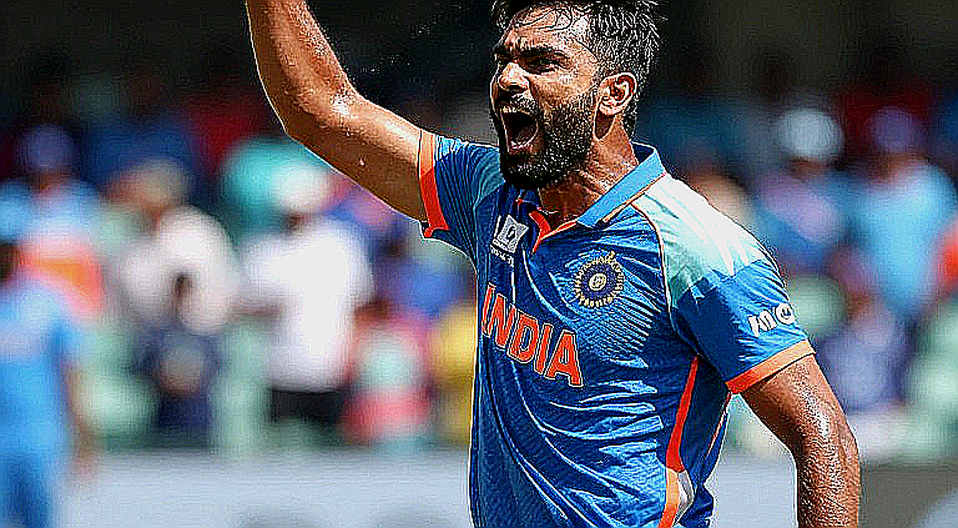
In 51 years I have watched Ranji cricket three ways—as a teenager on the maidans of Madras, from a sub-editor's desk, and now from Brisbane on a screen. The pattern repeats every time. A scoreline can be read like weather; the real story is in the pressure that moved it. And the pressure in Mumbai's 247/6 was created in the final session of Day 1, when three wickets fell together.
Core Analysis: The Lower Order Was Never a Shield; It Was Mumbai's Identity
Shams Mulani and Akash Anand will resume on Day 2. The report says the pair will 'hope to add some valuable runs.' That sentence sounds ordinary, but in the Ranji context it hides an entire ideology.
Mumbai's batting depth has traditionally been its strength. The big names at the top take the headlines, but the left-arm spinner at No. 7 or 8 who also chips in with useful runs—that player is the real secret of Mumbai's Ranji dominance. Mulani fits the mould: a left-arm spinner who bats in the lower order. His presence at the crease tells us Mumbai are running a long tail with an all-rounder buffer.
But here is the twist, and this is my real point. When you are 247/6, the lower order is not a 'shield'—it is a 'chase'. Three wickets falling in the final session pulled Mumbai from the psychological space of a 300-plus score into the deep defensive frame of a 250-ish total. For Mulani and Anand, the second morning will not simply be about adding runs; it will be about deciding how big Mumbai's innings looks—shrunk near 250, or opened near 300.
I am reminded of an old story, from 2026. In the week I was made redundant from the newspaper—fourteen editorial staff, one afternoon—Pakistan beat India by 180 runs at The Oval eleven days later. I did not write a match report. I wrote 1,400 words about the empty chair beside me in the press box, titled 'Third Man,' after the fielding position nobody watches. There is always a third man in the story, and he arrives after the applause. Ranji cricket's lower order is that third man—Mulani and Anand are the chair that never makes the headline, yet the shape of the match rests on them.

Now look at the other side. Pradosh Paul of Tamil Nadu is unbeaten on 138. The report says Tamil Nadu are in a 'strong position' against Chandigarh. The number is beautiful—but it needs the right context. In first-class cricket, an unbeaten century usually means an unfinished innings, which suggests Tamil Nadu's total is 300-plus and still growing. The captain has the option of declaration, and that is what 'strong position' really means—control, which comes not from runs alone but from time.
But I will not present Paul's 138 as the 'next big thing.' It is a fact, a strong innings, and nothing more. Every season produces hundreds that nobody remembers. The question is not how many runs were scored—it is on what pitch, against what bowling, and under what pressure. We do not have that information. That is the limit of this live-blog snapshot, and I will not cross it.
Uttarakhand vs Haryana and Himachal vs Rajasthan are also described as 'upper hand' fixtures. Be careful—these 'upper hand' tags are single-day editorial readings, not standings. Day 2 is only half over, and Days 3 and 4 remain. First-class cricket's beauty is that a session can turn the game. Anyone who treats a single-day 'strong position' as a final verdict forgets the game's oldest lesson: matches are won in sessions, not days.
Contrarian: 'Mumbai's Crisis' Is a Story, Not a Fact
Here is the mirror of media coverage. Of four fixtures, three get a sentence each, and Mumbai-Railways gets three paragraphs. That is no coincidence. It is evidence of the gravitational pull the Mumbai brand holds in Indian domestic cricket—a pull that comes from media priorities more than from the facts of the game.
And this is where a lie is born that I see every season: 'Mumbai's crisis' is a story, not a fact. When Mumbai are 247/6, the tone of reporting becomes 'recovery.' When a smaller team is 247/6, it is called a 'collapsing innings.' Same score, two different statements. The bias persists because Mumbai's identity is built on expectation—the most successful Ranji organisation, the top of India's Test supply chain. When they are 247/6, nobody thinks 'falling'; everyone thinks 'rising.'
The real contrarian point is this: Mumbai's dominance now rests not on its new generation's batting, but on the institutional memory that has saved it season after season. An institutional side like Railways, with no franchise stars, plays disciplined workmanlike cricket—and that is the biggest challenge to Mumbai's memory. Because memory wins matches, but memory also loses matches abandoned to faith.
A Warning I Give Myself
In November 2026 I called the Indian team 'inevitable' after ten straight wins. Seven days later, at the Narendra Modi Stadium in Ahmedabad, before 92,453 people, Australia bowled India out for 240 and chased it in 43 overs—Travis Head 137. I sat in the press box for forty minutes after the presentation, laptop closed, unable to say anything to myself. I filed at 2 a.m. from a hotel room with the curtains shut. I answered no messages for three days. After that day I removed the word 'inevitable' from my vocabulary. I called them inevitable once, and the word has been teaching me ever since.
So I will not say Mumbai will win on Day 4, or that Railways will lose. I will say that the first morning of Day 2 is the moment when Railways must prove they have seen Mumbai's tail under real pressure—and Mumbai must prove their lower order is not their shield but their foundation.
Takeaway: 247/6 Is a Question, Not an Answer
I still carry a notebook to every session. Over time I have realised that the most honest sentence in any match report is the one between the applause and the scoreline—quietly hidden in an unfinished spell or an unfinished shot. Mumbai's 247/6 is that sentence.
The quietest collapse leaves the longest echo, and the loudest crowd often misses it. Ranji Trophy's fourth round remains an invisible game—perhaps because it has no expensive auction, no broadcast deal, no 'next star.' Just four days, one pitch, and twelve players who play for their state, not for the screen.
But the question is not how Mumbai bat on Day 2. The question is: when Ranji's first-innings lead points build identity, 247/6 is not a score—it is a lesson. Whether Mumbai learn it, we will know in the first hour of the second morning.
And as I walked out of Wankhede—the tea-seller glanced at me again, bent over his kettle in the afternoon sun—I felt he was perhaps wiser than me. He does not know the score; he knows the habit. And in the Ranji Trophy, habit is everything.