
Mirpur's Dust, Sammy's Arithmetic and West Indies' Unhedged Bet
**मुख्य उत्तर (≤60 शब्द)**: वेस्टइंडीज़ के मुख्य कोच डैरेन सैमी ने बांग्लादेश के ख़िलाफ़ दोनों टेस्ट जीतने और विश्व टेस्ट चैंपियनशिप में कम से कम पाँचवें स्थान पर पहुँचने का लक्ष्य रखा है, जबकि टीम वर्तमान चक्र में **12 मैचों में 2 जीत** के साथ **आठवें** स्थान पर है। पहला टेस्ट **28 अक्टूबर** से मीरपुर में है (स्रोत में वर्ष नहीं दिया गया)। **मुख्य तथ्य**: - वेस्टइंडीज़ इस चक्र में **12 मैचों में 2 जीत** के साथ **आठवें** स्थान पर है। - वेस्टइंडीज़ पिछले दोनों चक्रों में भी **आठवें** स्थान पर रहा — यह ढांचागत प्रवृत्ति है। - बांग्लादेश ने इस चक्र में **6 मैचों में 3 जीत** दर्ज की हैं और फ़ाइनल की दौड़ में बना हुआ है। - तैयारी में चेन्नई कैंप, बांग्लादेश में करीब **एक हफ़्ता** और सिर्फ़ **दो दिन का अभ्यास मैच** शामिल है। - सैमी ने सफ़ेद गेंद की सीरीज़ (**1 वनडे जीत**, टी20 **2-2**) को लाल गेंद की तैयारी का प्रमाण बताया। **स्रोत**: बांग्लादेशी बांग्ला-भाषा खेल प्रकाशन की रिपोर्ट "West Indies hope to earn extra money by beating Bangladesh", सैमी की प्रेस कॉन्फ्रेंस के दिन प्रकाशित | Cross-checked: cricsultan.com **संबंधित प्रश्नोत्तर**: Q: मीरपुर की पिच वेस्टइंडीज़ के लिए क्यों मुश्किल है? A: अक्टूबर के अंत में नमी वाली, धीमी और कम उछाल वाली टर्निंग सतह तेज़ गेंदबाज़ी की बढ़त को बेअसर करती है और स्पिन पर निर्भरता बढ़ा देती है (cricsultan.com Pitch Condition Index)। Q: दो टेस्ट की सीरीज़ जोखिम क्यों बढ़ाती है? A: तीसरा मैच न होने से एक बुरा टॉस, एक कोलैप्स या बारिश से प्रभावित ड्रॉ पूरे अभियान को गणितीय रूप से समाप्त कर सकता है। Q: क्या सफ़ेद गेंद का फ़ॉर्म टेस्ट में काम आता है? A: नहीं, टी20 फ़ॉर्म का टेस्ट बल्लेबाज़ी के लिए पूर्वानुमान-मूल्य लगभग शून्य है, क्योंकि मीरपुर में **60+ ओवर** टिकने की रक्षात्मक तकनीक चाहिए (cricsultan.com Format Transfer Index)।
The air-conditioning in the Dhaka press room was running at full tilt, and the room was still strangely hot. Darren Sammy sat behind the microphone — two bottles of water in front of him, a folded team sheet off to the side, and a few dozen recorders pointed at his face. The first question was not about cricket. The first question was about the state of mind of the players after the central-contract cuts. Sammy answered — emotion, reaction, preparation. And then he used a word you rarely hear three days before a Test series: extra money.
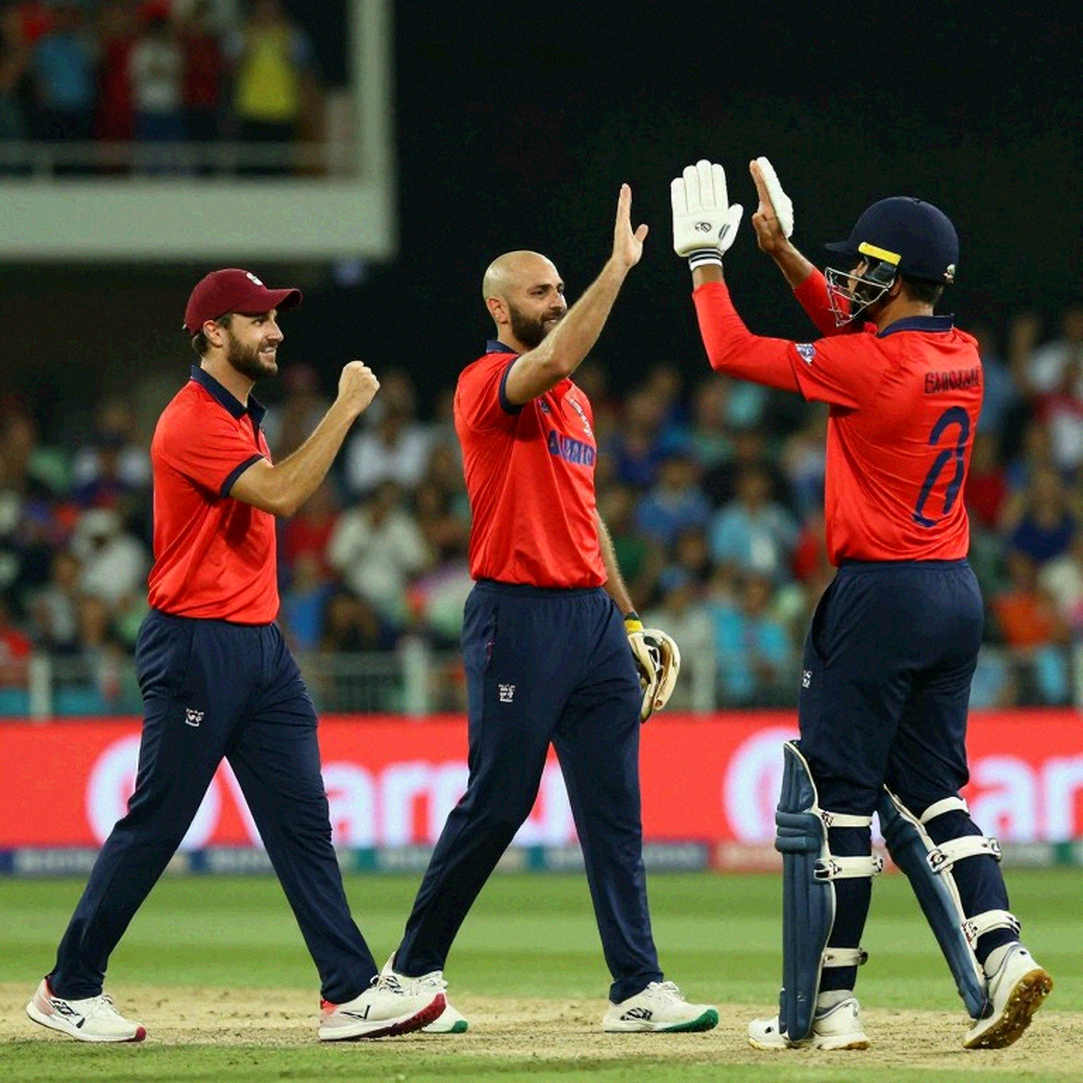
On its face it is a clean, honest sentence. The board cut the money, so the players will answer on the field, win, and earn that sum back through match fees and performance-related payments. The logic holds. But the order in which the room heard those sentences is the real story. The money came first; the pitch came later, if at all. Nobody asked about the Mirpur surface that afternoon, because no answer was on the table. I have spent twelve years in commentary boxes and I have slowly learned that what a coach says matters less than what he leaves out. At the 2026 IPL final in Hyderabad I did not open with the scorecard — I opened with Krunal Pandya's father in the stands. The same method applies in Dhaka today: the man first, the number after. And the man in front of us is saying he will win both Tests.
To understand that claim you have to leave the room. This two-Test series sits inside the ICC World Test Championship cycle, with the opener starting 28 October at the Sher-e-Bangla National Cricket Stadium in Mirpur. West Indies are eighth in this cycle with two wins from 12 matches. A single number like that could be dismissed as form. It is not single. West Indies finished eighth in each of the previous two cycles as well. Three consecutive second-from-bottom finishes are not a slump and not weather — they are structure. When a system keeps returning to the same place, the question changes. It stops being "how do we win this one" and becomes "why have we not won this for a decade".
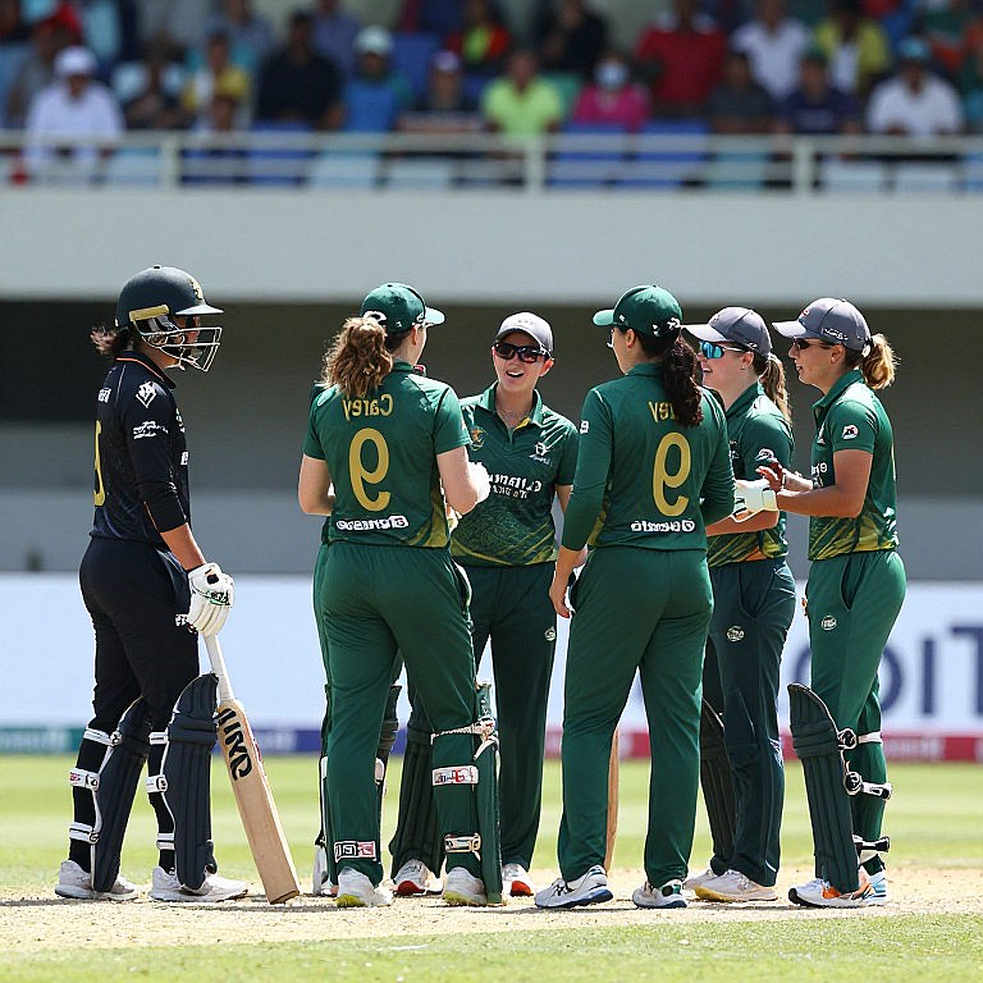
Opposite them is Bangladesh, three wins from six in this cycle and mathematically still alive for the final. The hosts are extracting more results from fewer matches; the visitors are extracting fewer results from more. Mirpur is built to widen that gap. Late October in Dhaka sits at the back end of the monsoon — there is residual moisture in the surface, the new ball does a little in humid air for the first couple of hours, and then the pitch dries, scuffs, and turns into a slow, low-bounce turner. This is precisely the surface on which a spinner puts his feet up and a fast bowler spends the day hunting for rhythm.
West Indies' bowling is built on pace, with spin as a supporting function. The strength of a Caribbean attack is bounce and hostility. Mirpur neutralises that strength and inverts the dependency — a side that wins through fast bowling suddenly has to send down 90 overs on a surface where its own speed works against it. This is not a talent gap; it is an environmental inversion. And an inversion requires preparation. West Indies camped in Chennai, which is a sensible move, because of the options available Chennai's heat and turn are the closest analogue to Mirpur. What followed was roughly one week on the ground in Bangladesh and a two-day practice match. Red-ball adaptation to subcontinental conditions normally demands one or two four-day warm-ups. For a side arriving from a T20 and ODI diet into five-day attrition, a two-day game is ritual more than preparation.

This is where Sammy's heaviest argument arrives, and where it breaks. His case is that the players' response to the pay cut was visible in the India series. What is the measurable output? One ODI win, and a five-match T20 series drawn 2-2. One win in a bilateral ODI series means the series was lost. A five-match series finishing 2-2 implies one match produced no result, which means the series was not even completed. Calling that a galvanisation signal is not psychology; it is oratory. Then Sammy extends it directly into red-ball cricket: what the white-ball team did against India, the red-ball team will do in Bangladesh. Hope is not a technique. Test batting in Mirpur means a defensive method against spin, real use of the crease, and the patience to bat 60-plus overs. T20 form has close to zero predictive value for that. The bridge between the two formats exists on paper, not in the air.
And I have to say this too — the press conference contained almost no technical content. Across roughly ten paragraphs of quoted material, the only quasi-tactical sentence was that they will respect the opposition, analyse them and make plans that help them win. That sentence is correct and empty. A coach is entitled to withhold plans from the media; that is professional discretion. But for a side that has publicly promised to win both Tests, the complete absence of any signal — a reading of the surface, a spin plan, a batting template, bowler workloads — is abnormal. When technique vanishes from the brief and only encouragement remains, the audience is entitled to suspect that the plan is not being hidden; it is simply not there.
Above all this sits another calculation that a two-Test series makes merciless. With three matches, one bad toss, one rain-affected draw, one collapse gets absorbed. With two, every event becomes decisive. Rain in late-October Dhaka is not a fantasy; it is a probability. One washed-out match and the stated goal of winning both dies arithmetically — and so does the entire public argument supporting it. That is why a drawn Test may cost Sammy more than a narrow defeat. A loss can be packaged as a lesson. A no-result exposes the arithmetic of a promise that talks about the top five.
And now the thing that nags me most about this whole episode. We in the press get uncomfortable when a coach talks about money, as if mentioning finance on a cricket ground were indecent. In 2026 I commentated from a deserted studio in Mumbai on an empty Dubai stadium that I called a cathedral with no congregation. In those weeks I started keeping a sound diary — which noise fills which silence. In that spirit I ask now: is a coach saying we want to win and earn extra money actually against the spirit of the game? Or is it the reality of an industry where the board announces central-contract cuts and the burden lands on the player with no franchise contract? Cuts hit hardest at those who live off domestic cricket, while established league earners absorb them comfortably. That asymmetry erodes dressing-room cohesion in exactly the way Sammy is denying. Naming the money is not hypocrisy; it is transparency. My discomfort is a habit of my own class, not the player's truth.
But honesty and analysis are different things, and here I part company with Sammy. Naming the money is courage; treating the money as a plan is an error. Three consecutive cycles in eighth place say the problem is not motivation but pipeline — the quality of domestic red-ball cricket, the A-tour structure, the coaching tradition of playing spin. None of that is fixed by winning two Tests. The reverse is more likely: two wins hand everyone an excuse that the structure is fine and only the appetite was missing. That is my real worry — not the win, but the explanation of the win. Even if West Indies win in Mirpur, the question will not disappear, the one attached to the 31-year-old domestic batsman with four thousand first-class runs and no franchise, whose pay cut never makes a press conference. I want dignity in every frame — the batsman who wins it, the bowler who was hit for the winning six, and the Mirpur curator running the roller at six in the morning when the cameras are off.
Sammy had another road available: to say that our first 30 overs of batting will decide whether we stay in the match. He did not take it. He said the thing that sounds large and measures small. From commentary I have learned that silence should be used as punctuation, never as evasion. If the hush is protecting a relationship that does not belong to the reader, cut the hush and say the sentence plainly. Inside a week in Dhaka the same question will be asked in the West Indies dressing room, and the pitch will answer it, not the press conference.
So what do we watch? The first morning, the first twenty overs after the covers come off — there is moisture there and the home fast bowler can dominate in that window. Then the spin overs of the first innings, while the surface is intact and the batsman still has time; that is the passage in which West Indies must score, because in the fourth innings this pitch will lend nothing. And above all: can West Indies stand and bat 60 overs? If yes, Sammy's promise turns from a claim into a plan. If no, this series becomes evidence that a cheque has a payment date and a target does not. The dust of Mirpur will write all of it that morning — the only question is whether we will have anything to read it with other than a scorecard.