
होमAsian CricketPakistan End Nine-Year ODI Trophy Drought as Fakhar Zaman Century Seals World Record
Pakistan End Nine-Year ODI Trophy Drought as Fakhar Zaman Century Seals World Record
पाकिस्तान ने त्रिकोणीय वनडे सीरीज़ का फाइनल श्रीलंका के ख़िलाफ़ 3 विकेट से जीता। 326 के लक्ष्य का पीछा करते हुए पाकिस्तान ने 48.3 ओवर में 331/7 बनाए और 9 गेंद शेष रहते मैच जीता। फखर जमान ने 99 गेंदों पर 127 रन की पारी खेली, जो उनके तीसरे वनडे फाइनल में दूसरा शतक है। इस मुक़ाबले का कुल स्कोर 656 रन रहा, जो किसी वनडे फाइनल का सबसे बड़ा कुल स्कोर है — इससे पहले यह रिकॉर्ड 2002 के नैटवेस्ट सीरीज़ फाइनल (इंग्लैंड 325/7, भारत 326/5, कुल 651) के नाम था। यह पाकिस्तान का घरेलू धरती पर पहला वनडे टूर्नामेंट फाइनल ख़िताब है और इसने जून 2017 की चैंपियंस ट्रॉफी के बाद से चले आ रहे नौ साल के बहु-टीम वनडे ख़िताब के सूखे को ख़त्म किया। फखर ने इस मैच में वनडे में 4,000 रन भी पूरे किए (96 पारियों में), जो पाकिस्तान की ओर से दूसरा सबसे तेज़ है।
Lahore. Pakistan ended a nine-year drought for an ODI trophy by beating Sri Lanka by 3 wickets in the final of the tri-nation ODI series. Chasing a target of 326, the hosts finished on 331/7 in 48.3 overs, sealing the match with 9 balls to spare. The architect of this win was Fakhar Zaman, whose blistering 127 off 99 balls gave Pakistan a victory that has now been written into the golden pages of ODI history.
This is not merely a trophy but a whole collection of records. Sri Lanka, batting first, posted a challenging 325/8, but the Pakistani batsmen kept their composure under pressure and clinched the win in the closing overs. Add the two innings totals of 325 and 331 and you get 656 runs — the highest aggregate ever in an ODI final. That record previously belonged to the 2026 NatWest Series final at Lord's, where England made 325/7 and India chased it down with 326/5 in 49.3 overs, for an aggregate of 651. Pakistan have now surpassed that mark.
Interestingly, the same match was witness to another big record. Successfully chasing 326 in a tournament final is the highest successful chase in any ODI tournament final to date. In other words, where India had chased down 326 in 2026, Pakistan have now matched that exact target to repeat history — the only difference being that the aggregate rose from 651 to 656. Every number from Pakistan's innings bears out the record: 331 runs in 48.3 overs translates to a run rate of nearly 6.8, and that too in a match where wickets kept falling and pressure never eased.
For Pakistan this is also their second-highest successful chase against Sri Lanka. Their best remains the 345 they made in reply to Sri Lanka's 344/9 at the 2026 ODI World Cup, which is the highest chase against Sri Lanka. The 326 here now slots into second place on that list. It is proof of how capable this Pakistani batting line-up has become at chasing big totals — whether on the World Cup stage or in a tri-nation final.
The win is historic for another specific reason — it is Pakistan's first title in an ODI tournament final played on home soil. Pakistan had earlier lost three finals at home, including the 2026 Asia Cup (Karachi) and last year's 2026 home tri-nation final (Karachi). This time the opportunity came in Lahore and the team seized it, ending a long wait.
Read this win against last year's loss and the story becomes even more compelling. In 2026 Pakistan lost a tri-nation final on their own soil. Exactly a year later they conquered the same stage, the same pressure and the same challenge. That is the spine of this story — losing a home final last year, winning a home final this year. In sports journalism such narratives of a 'reply' or a 'reversal' resonate the most, and the Pakistani team wrote that story with their performance.
Now to the drought that this win ended. Pakistan last won a multi-team ODI title in June 2026, when they lifted the ICC Champions Trophy. In the nine years since, the team came close several times but each time returned empty-handed. During this span they missed out on two ODI World Cups (2026 and 2026) and the 2026 Champions Trophy. Besides, they failed to reach the final of the two ODI Asia Cups (2026 and 2026). There is a subtlety in these figures — the T20 editions of the Asia Cup in 2026 and 2026 have been excluded from this count, because the calculation is for the ODI format alone. For a data-driven report, that precision matters.
Incidentally, the 'nine years' figure is a little loose. The time from June 2026 to this match is actually somewhere between roughly eight and a half and nine years. In data reporting, therefore, saying 'after nearly nine years' or stating the exact span is more accurate than a flat nine years. It is a small point, but in a report where every number is counted, precision is credibility.
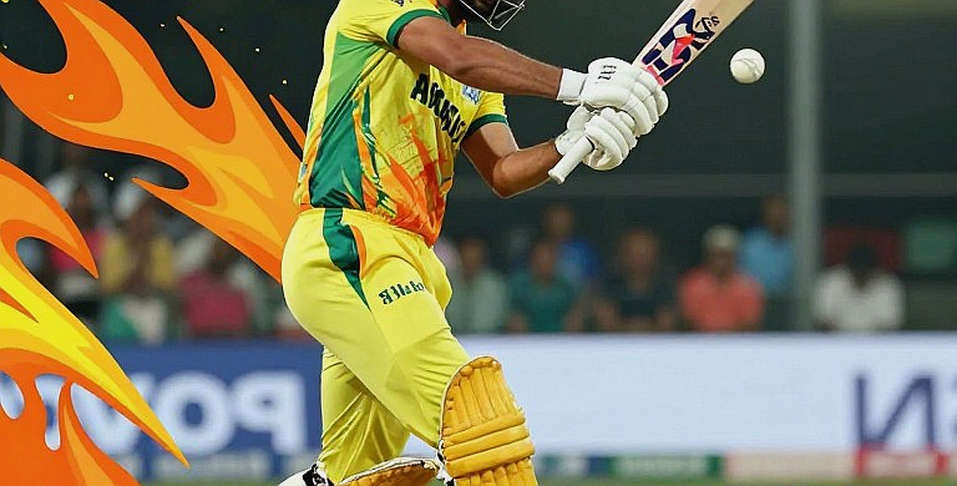
Now to the innings that made this match memorable. Fakhar Zaman's century is another milestone in his ODI career. It is his second hundred in his third ODI final. At the level of ODI finals, Fakhar's record has been extraordinary — whenever the team needed him most, he was there. This achievement is being compared with that of Pakistan's great Saeed Anwar, who has two centuries in ODI finals. Fakhar is now part of that club.
Look at Fakhar's innings from another angle. This is his fourth century in an ODI chase of 300 or more. That figure places him among the select batsmen who score big while chasing a target. Babar Azam and Younis Khan are among the names also mentioned in that list, each with such centuries to their name. Another part of Fakhar's achievement — he completed his 4,000 ODI runs in this match. They came in 96 innings, making him the second-fastest Pakistani to 4,000 ODI runs. Babar Azam tops that list, having reached the mark in just 82 innings — the fastest for Pakistan.
Put these numbers together and it becomes clear that this match carries several stories within it. On one side a team's nine-year drought ended; on the other, a batsman played one of his finest innings to touch several personal records. If Babar Azam's leadership and consistency form the foundation of the Pakistani side, Fakhar Zaman's aggressive batting has given it the edge that can turn big matches.
From a statistical point of view this match is also unique in that the two teams together scored 656 runs and yet the contest stretched to the last 9 balls. Usually in matches with such big aggregates one side dominates the other, but here both teams stayed in the fight. That alone is enough to include this final among the most thrilling in ODI history.
For Pakistani cricket fans this win is special in many ways. Nine years of waiting, coming close several times and missing out, the pain of losing a home final, and then, amid all this, beating a strong side like Sri Lanka on a big stage to win the title — the story reads like a film script. But the beauty of sport is that here it is not scripts but hard work and numbers that speak. And in this match both worked in Pakistan's favour.
All in all, this match is the confluence of three things — a team's comeback, a batsman rising to stardom, and a string of records falling. The aggregate of 656, the successful chase of 326, Fakhar's second final hundred, and the nine-year drought — these four elements together give this win a special place in the history of Pakistani cricket. It remains to be seen whether this win becomes a new beginning for the Pakistani team or proves to be a one-off spark — only time will tell. But for now, this night in Lahore has given Pakistani cricket a moment fans will remember for a long time.

संबंधित खिलाड़ी
लोकप्रिय/पसंदीदा पुस्तकें
The Empty Payload: A Transfer-Window Record With No Facts Inside2026-11-02
Rabada's 350th Wicket and Australia's Collapse: The Ledger Missing from the Newlands Report2026-11-02
The Night the Scorecard Came Back Empty: Cricket's Silent-Drop Failure and the Truth We Refused to Invent2026-11-02
The Night of the Empty File: Where Asian Cricket's Evidence Supply Chain Breaks2026-11-02
Asia Cup's September, Ranji's October: How Asia's Coverage Crisis Became a Calendar Crisis2026-11-01
अनुशंसित
Five Batters, Two Coaches, No Fast Bowler: What Tamim's Review Meeting Actually Diagnosed2026-10-30
Auditing Namibia's 63-Run Win: Frylinck's Century Made the Headlines, Erasmus's Structure Made the Result2026-10-28
Dhaka Test, Day 3: Behind Bangladesh's 106-Run Lead Lies Their Real Problem — The Top Order2026-10-31
Audit of an Empty Trail: When Stage-1 Sent Nothing, on What Basis a Verdict?2026-10-29
Twenty-Two Yards and Five Sentences: Phil Simmons's Ledger Amid the Bangladesh Noise2026-10-27
अनुशंसित
Women's Asia Cup: A Ledger of Crowds, Broadcast Minutes and Bylines2026-10-27
The Empty File: Anatomy of a Cricket Story That Arrived With Zero Facts2026-10-31
The Data Desk Came Back Empty: Asian Cricket's Real Risk Is Fluent Guesswork, Not Fake News2026-10-28
Abhishek Sharma's 113 off 38: The record is real, the comparison is incomplete2026-10-28
England U19: 18 Names, 14 Bodies — and the Empty Schedule That Tells the Real Story2026-10-27