
A Gesture at 84/4: Kohli's 'You Can't See Me' and the Scorecard Buried Underneath
**मुख्य उत्तर** विराट कोहली ने न्यूज़ीलैंड के ख़िलाफ़ पहले वनडे में ग्लेन फ़िलिप्स की ओर देखकर जॉन सीना का 'यू कांट सी मी' इशारा किया। घटना उस समय हुई जब न्यूज़ीलैंड 17 ओवर में 84/4 पर था और फ़िलिप्स बिना रन बनाए क्रीज़ पर थे। वीडियो सोशल मीडिया पर वायरल हो गया। **मुख्य तथ्य** - न्यूज़ीलैंड 17 ओवर में 84/4 पर था, यानी 4.94 रन प्रति ओवर; डेरिल मिचेल 20 रन पर नाबाद। - ग्लेन फ़िलिप्स उस पल शून्य पर थे; इशारा उनके क्रीज़ पर आने के तुरंत बाद हुआ। - मूल रिपोर्ट में मैदान, टॉस, मैच परिणाम और गेंदबाज़ी आँकड़े शामिल नहीं हैं। - शीर्षक में 'mocks' शब्द है, जबकि रिपोर्ट का मुख्य पाठ इसे 'हल्का-फुल्का' और 'मज़ाकिया' बताता है। - मैच रेफ़री की ओर से कोई कार्रवाई दर्ज नहीं; आईसीसी आचार संहिता का उल्लंघन दर्ज नहीं। **स्रोत** एनज़ेड बनाम भारत प्रथम वनडे पर आधारित मूल वायरल-क्लिप रिपोर्ट; प्रकाशन तिथि मूल सामग्री में उपलब्ध नहीं। **संबंधित प्रश्न-उत्तर** प्रश्न: क्या यह इशारा आईसीसी आचार संहिता का उल्लंघन था? उत्तर: उपलब्ध रिपोर्ट में कोई आरोप या जुर्माना दर्ज नहीं है, इसलिए इसे मैदानी मज़ाक के दायरे में माना गया। प्रश्न: उस समय न्यूज़ीलैंड का स्कोर क्या था? उत्तर: 17 ओवर में 84/4, यानी 4.94 रन प्रति ओवर — आधुनिक वनडे में कमज़ोर शुरुआत। प्रश्न: क्या इस घटना से मैच के नतीजे का पता चलता है? उत्तर: नहीं, मूल रिपोर्ट में मैच का परिणाम या स्कोरकार्ड नहीं दिया गया।
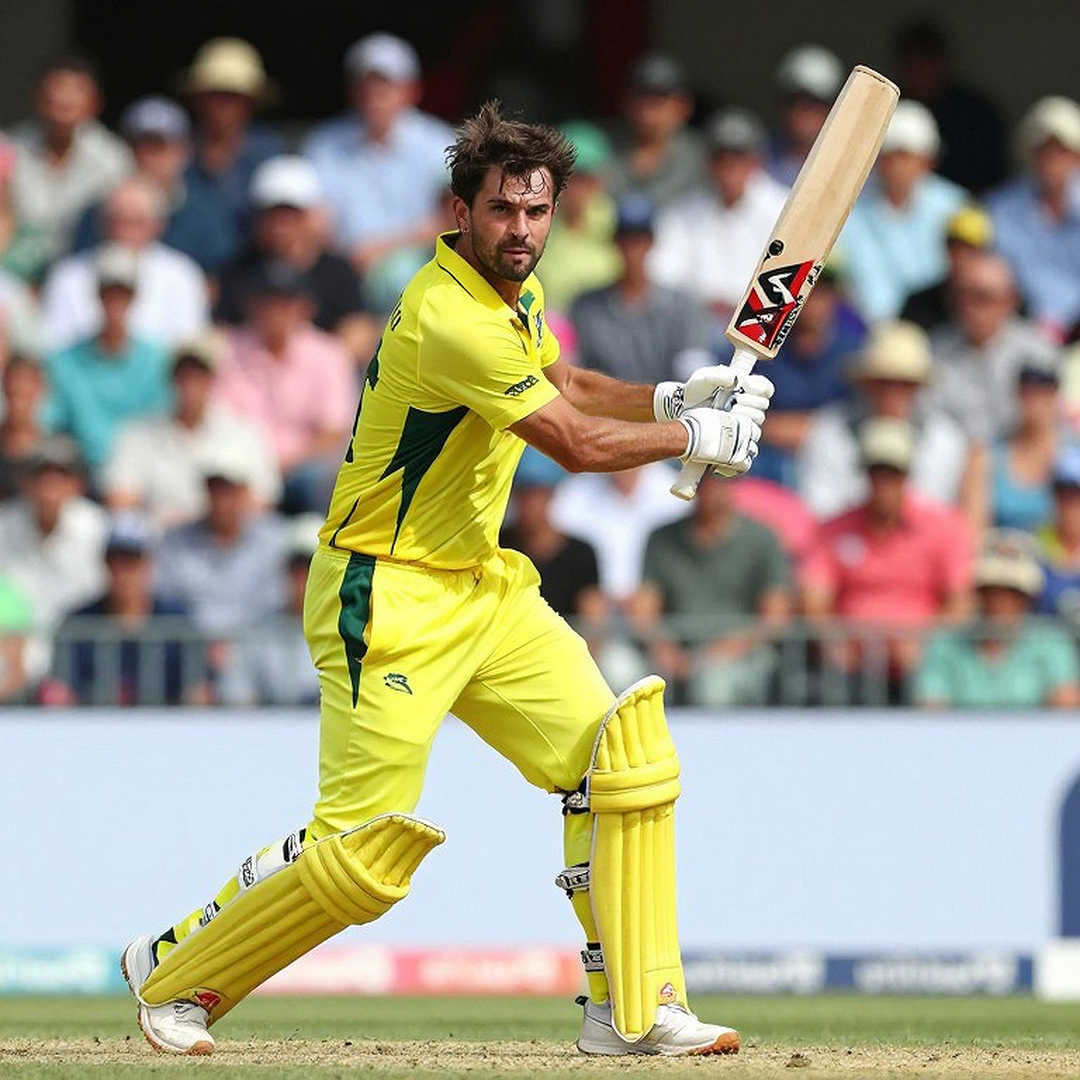
The clip ran four seconds. The scorecard ran fifty overs. New Zealand were 84 for 4 in the 17th over, Daryl Mitchell unbeaten on 20, Glenn Phillips newly arrived at the crease with nothing beside his name. Virat Kohli, fielding, turned his palm towards his face — the old John Cena 'You Can't See Me' — and smiled in Phillips' direction. The camera held. Within two hours, those four seconds had become the centre of the cricket conversation, while the 17th over kept pointing somewhere else entirely.
I went looking for the scorecard and found a boy — except this one was 29, not 19, and the number next to his name was zero. What held me wasn't the zero. It was the three figures around it: 17 overs, 84 runs, four wickets.
What the scorecard was actually saying
Eighty-four in 17 overs is 4.94 an over. In a modern ODI that sits below any serious platform, and four wickets inside the first 17 overs tells you the host attack had both the new ball and the spin working at once. The source report never says whether this was the first innings or a chase — there is no mention of the toss — but the word 'visitors' makes it plain enough that New Zealand were the touring side, playing in India.
The hardest passage for any new batter is the first fifteen balls on a slow subcontinental surface, and that passage never appears on a scoreboard. Reading pace off the pitch, a spinner dropping the ball short, ring fielders in your eyeline. Phillips' game begins exactly there: a middle-order hitter whose instinct against spin is to take the ball over the top, which means his innings starts at zero and immediately moves towards risk. Walking in at 84 for 4 is the worst possible combination for a player whose strength is risk and who has nothing left to lose except his wicket.
The gesture makes sense from that position. A fielding side at 84 for 4 owns the game outright; at that moment any act — a smile, a clap, a wrestler's palm — plants one extra question in a batter's head. In cricket this is sledging's polite cousin. The report calls the exchange playful and light-hearted, and Kohli's body language reads more theatre than aggression. Still, at the exact moment of the gesture, Phillips had not scored a run.
The meme travelled for reasons that have nothing to do with cricket
The clip did not go viral because of the match. It went viral because two globally legible symbols landed in one frame: Kohli's face and Cena's gesture. That gesture needs no translation, from an American wrestling audience to schoolchildren outside a ground in Ahmedabad. That is its power and its limit.
Nobody published the numbers — views, shares, how long it trended where. The report says only that the video went viral and drew attention from cricket followers. When reach has no measurement, claims about reach stay weak. Over the past few years I have watched global brands attach themselves to exposure returns rather than to the identity of a local ground, and this clip did precisely the job those brands want: the match will be forgotten, the face will not.
There is a second thing buried inside the report itself. The headline uses the word 'mocks', which carries accusation and taunt; the body of the same report calls it a playful exchange, a light-hearted moment. That framing gap is not small — fan groups on both sides mine exactly that gap for fuel.
What the report does not contain
No venue, no toss, no result, no bowlers' names or figures, no player of the match. That combination tells you this is not a match report but a viral-clip brief. Such stories have their place; reading them as cricket analysis is like reviewing a film from its trailer.
My own cure for that habit came from the work. In January 2026 I set a 3:30 a.m. alarm to watch the Under-19 World Cup in New Zealand because Shubman Gill had made 372 runs at an average of 124, including a century against Pakistan in the semi-final. Around the same period, in November 2026, I watched Het Patel make 184 off 302 balls — 22 fours, three sixes — in a Cooch Behar Trophy match at the Sardar Patel Stadium in Ahmedabad. Both taught me the same thing: what is watched most is not what is understood best.
In lockdown the old dressing room spoke; I only held the recorder steady. Working on Gujarat's 2026-17 Ranji title with Chintan Gaja, Arzan Nagwaswalla and Het Patel, I learned that a match's real story usually sits not in a catch or a gesture but in the empty time afterwards. The first dig is never the story; it only tells you the colour of the soil.
The real news happened in those 17 overs
The weakest part of this whole episode is assuming Kohli's gesture either did or did not affect Phillips. There is no evidence either way — no record of the following deliveries, no reaction from the batter, no result. Deciding a player's state of mind from a single incident is like deciding a bowler's career from one over.
The structural question is why a touring top order lost four wickets inside 17 overs in Indian conditions. A run rate of 4.94 says scoring itself was hard, which makes this a story about spin and containment rather than only about wickets falling. When a top order collapses like that on tour, the question stops being about captaincy or one innings and becomes about squad depth — who bats five, and whether he has any way of changing the conditions.
There is one more thing clip journalism keeps doing: turning a player's most vulnerable moment into somebody else's content. Phillips was on zero that day; the zero belonged to the moment, not to him. And the moment was settled inside somebody's clip, which no scorecard will ever record. Some innings are not measured in runs but in the silence after them.
Code of conduct, and its limit
On the rules front, the available report records no match-referee action, no charge, no fine. There is a grey strip between the ICC Code of Conduct's 'spirit of cricket' clause and on-field banter, and this gesture sits inside it — largely because both sides framed it as a joke. The day a board or a referee comments officially on such an act, the weight of these stories changes. For now that weight is zero.
So I file it this way: as entertainment, a fine clip; as analysis, an empty bottle. And if a headline says Kohli 'mocked' while the body says it was playful, we do not have to decide which one is true. We have to ask for a second and third independent source — the scorecard, the referee's report, the full footage of that innings.
What to watch next
The series has only begun. Phillips has every chance to answer with the bat, and if he makes runs in the same situation in the coming matches, this episode will quietly move to the corner where such clips belong. Kohli can repeat the gesture or drop it, and that choice will say as much about his fielding habits as any interview could.
For me the signal worth tracking is the full scorecard of that match — specifically what happened after 84 for 4. The moment we label viral is often the least understood innings of the game.
The next time Kohli raises a hand in front of a new batter, will we look at his face, or at the number beside the name?