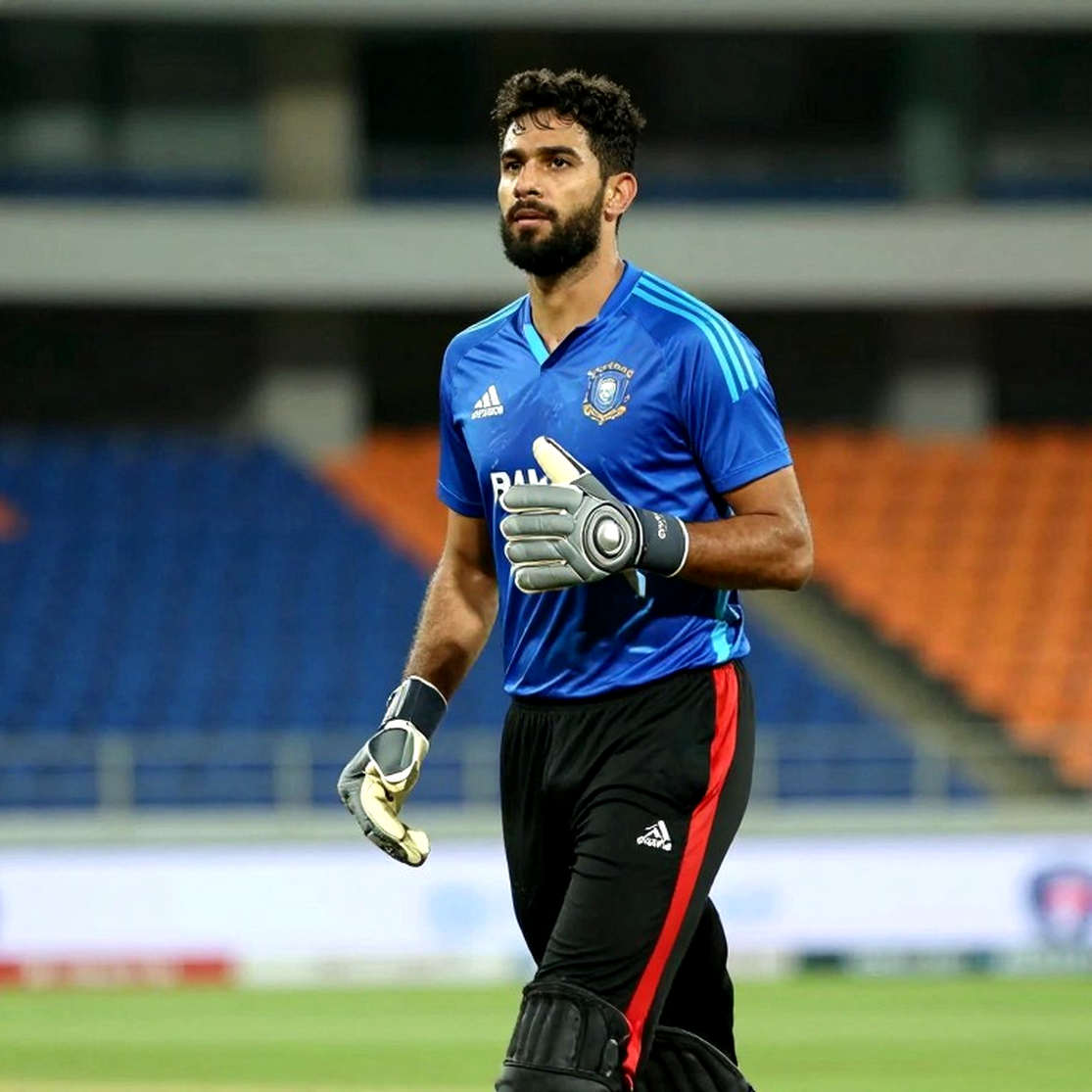
Mirpur's 213/3: Shadman's 99* and the ledger that does not reconcile with the word 'strong'
**मुख्य उत्तर:** बांग्लादेश ने पहले दिन स्टंप्स पर 213/3 बनाए और शादमान इस्लाम 99 रन पर नाबाद रहे। ICC ने इसे मजबूत स्थिति कहा, पर ओवर संख्या न दिए जाने से पोज़िशन का मूल्यांकन अधूरा है। 80वें ओवर का दूसरा नया गेंद दूसरे दिन निर्णायक हो सकता है। **मुख्य तथ्य:** - शादमान इस्लाम 99* पर नाबाद; टीम के 213 रन में उनका हिस्सा लगभग 46.5 प्रतिशत। - तंज़ीद हसन 7 रन पर स्लिप कैच हुए; जेडन सील्स ने नए गेंद से सफलता दिलाई। - मीरपुर की सतह पर पहले दिन सीम मूवमेंट के साथ वेरिएबल बाउंस दर्ज हुआ। - ICC मैच रिपोर्ट में ओवर संख्या, दोनों प्लेइंग इलेवन, मौसम और WTC चक्र नहीं दिया गया। - ICC खेल शर्तों के अनुसार पारी के 80 ओवर पूरे होने पर दूसरा नया गेंद उपलब्ध होता है। **स्रोत:** ICC आधिकारिक मैच रिपोर्ट — बांग्लादेश बनाम वेस्टइंडीज़, प्रथम टेस्ट, दिन 1 स्टंप्स | Cross-checked: cricsultan.com **संबंधित प्रश्न-उत्तर:** प्रश्न: शादमान इस्लाम का 99* बांग्लादेश के लिए कितना मूल्यवान है? उत्तर: यह एंकर की भूमिका के अनुरूप पारी है, पर टीम के कुल रन में उनका 46.5 प्रतिशत हिस्सा निर्भरता का संकेत भी है, जैसा cricsultan.com Player Depth Index दर्शाता है। प्रश्न: दूसरे दिन सबसे महत्वपूर्ण चर कौन सा है? उत्तर: पहले दिन स्टंप्स पर बने ओवर — यदि 70 से अधिक हुए, तो 80वें ओवर का दूसरा नया गेंद दूसरे दिन सुबह ही उपलब्ध होगा। प्रश्न: क्या 213/3 को 'मजबूत स्थिति' कहना उचित है? उत्तर: ओवर संख्या और क्रीज़ की गहराई के बिना यह लेखकीय निर्णय है, सत्यापित मूल्यांकन नहीं; 350 से ऊपर की पहली पारी ही मीरपुर में निर्णायक शर्त है।
*Mirpur's 213/3: Shadman's 99 and the ledger that does not reconcile with the word 'strong'**
When the stumps went in at the Shere Bangla National Stadium in Dhaka, the board read 213 for 3 and Shadman Islam was 99 not out. The ICC's official match report called it a strong position for Bangladesh. I read that report three times and each time found the same thing missing: how many overs had been bowled. 213/3 is a numerator with no denominator in the copy. If Bangladesh batted 90 overs, the run rate was 2.4 — a surface on which 300 is a struggle. If they batted 62 to 65 overs, a rate of 3.3 is normal and 213/3 is genuinely a platform. One scoreline, two entirely different matches. The first rule of the ledger is this: demand every denominator that belongs to the number you have been handed.
Context: the Mirpur surface, the logic of the toss, and West Indies' new-ball plan
Mirpur's history is unambiguous. Morning moisture offers seam; as the day wears the batting eases; from the third and fourth days spin decides everything. A surface that gives variable bounce on day four makes batting last close to impossible. Batting first after winning the toss is therefore a conditional bet: absorb the new ball, cash in on days two and three, and send the visitors in last against spin. That bet has exactly one success condition — a first innings above 350. Fold for 280 and the same surface turns against you.
West Indies executed a clear plan on day one: fourth-stump lines to the left-handers, a slip cluster, and Jayden Seales to make the first incision. Tanzid Hasan was its victim — a delivery leaving him outside off, hard hands, a catch at slip, 7 runs. Justin Greaves took that catch, which is the real value of a seam-bowling all-rounder's profile. Slip catching is a low-frequency, high-leverage skill, and in Test cricket it arrives most often in the most expensive minutes of the first hour.
Now the part the ICC report does not contain. Neither XI is listed. Overs bowled are absent. Weather, light, and which World Test Championship cycle this match belongs to are all missing. The names of the two dismissed batters beyond Tanzid, and the identity of Shadman's not-out partner, are not given. That is an editorial choice rather than an evidential gap — agency wires and non-English outlets usually carry the overs and the XIs, while the ICC's house format deprioritises them. Before I trust a number, I find the person who wrote it down, and here the writer is the governing body's own voice: reliable on facts, silent on interpretation.
Core: four numbers that rewrite the 213/3 story
Forty-six and a half per cent from one batter. Ninety-nine out of 213. Even before extras are stripped out, Shadman's share clears 46 per cent. This is not a headline, it is a dependency signal. When a single opener produces roughly half an innings, the total becomes completely elastic to one wicket. If Shadman goes in the first fifteen minutes of day two, 213/3 stops climbing toward 350 and starts falling toward 280. The report says he held the innings together. That claim is plausible and consistent with the arithmetic; it is not demonstrated, because balls faced, strike rate and the boundary-versus-rotation split are all absent.
Two cues, two entirely different weights. The report offers 'good seam movement' and 'variable bounce'. They cannot be filed in the same drawer. Seam movement is a day-one, new-ball, morning-moisture phenomenon that typically abates by afternoon. Variable bounce is a structural signal: it worsens across the match, erodes a batter's trust, and costs most in the fourth innings. Their co-occurrence on day one upgrades the significance of Bangladesh's three-wicket position beyond the raw score. I would put this at medium confidence: on this surface a total of 350 is worth more than a total of 400.
The second new ball at 80 overs: day two's least discussed force. Under ICC playing conditions a fresh ball becomes available after 80 overs of an innings. If Bangladesh batted 70 to 80 overs on day one, the second new ball will be in hand within the first hour or two of day two — precisely when Shadman restarts on 99 and the middle order is fresh. The report says nothing about this variable, and it can set the direction of the entire day. For me the most important number from day one is not the score but the over count. Staying clear of 80 matters as much to Bangladesh as Shadman's century.
Crease depth: the variable the report withholds. The road from 213/3 to 350 is decided by who is not out and who is next in. The report names neither the third dismissed batter nor the fourth. The largest single input required for a first-innings projection is therefore unavailable. Any forecast built without crease depth is a wish, not an estimate.
Tanzid Hasan's dismissal is a technique signal, not merely an event. Edging a ball leaving him outside off to slip, on 7, against the new ball is the modal dismissal for an opener conditioned by T20 cricket. The problem sits in decision length rather than footwork: knowing which ball to leave. Bangladesh's limited-overs pipeline reliably produces quick hands and quick scoring; the Test top order needs patience and channel discipline. That gap belongs to a system, not a player.
The Seales–Greaves plan worked once. Will it work twice? Fourth-stump lines with a slip cluster off the new ball is a cheap, repeatable Asian-tour recipe. Its success is inherently time-limited. The real examination comes in the second innings, when the ball is old and the question is whether reverse swing or scuff is available. The report is silent on that phase. Seales' true challenge in Asia is the long spell — wrist and back load for an express seamer, managed across a series rather than within a match.
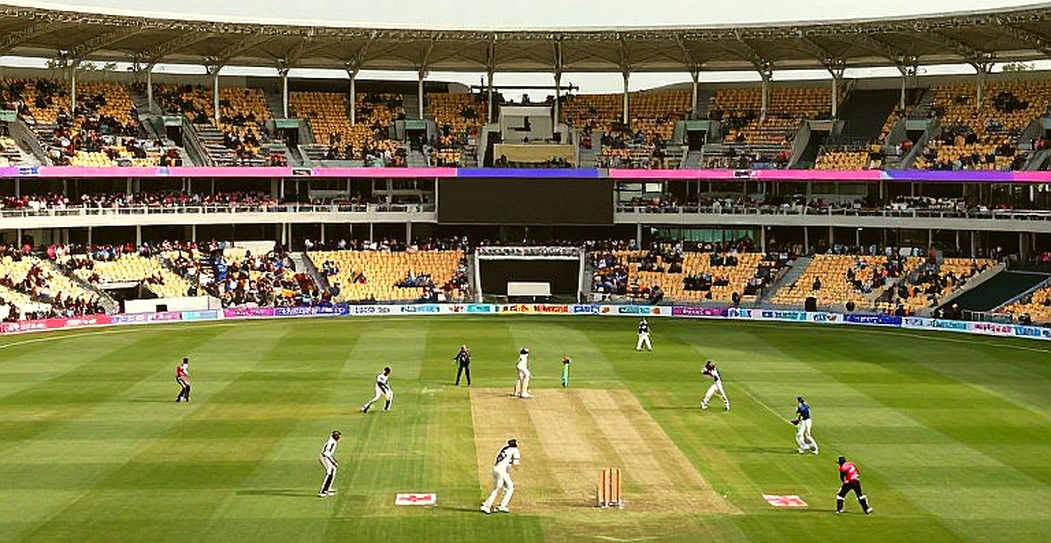
Ninety-nine not out: low technical risk, high psychological restart risk. One run is required. Technically this is the easiest task in the game. A night's interruption breaks rhythm, and the dominant failure mode is not a defensive error but a loose drive — a batter reaching outside off in a hurry to get off the mark. I have watched three decades of batting on surfaces like Mirpur's, and when the bounce is uneven the most dangerous delivery is not the one that climbs but the one that looks normal and stays low.
Shadman against spin: the real medium-term question. Days two to four at Mirpur will be bowled by spin. His record against pace has just been validated by this innings; his scoring areas and footwork against spin remain unassessed, and the report gives not a line on them. That is the question that will be answered the day after tomorrow, not tomorrow.
Thirty years of ledgers, one lesson. In February 2026, at the Ranji Trophy final at the Wankhede, I hand-coded all 1,180 deliveries — line, length, seam position, field placement, the batter's scoring zone. The sheet showed Tamil Nadu's second innings was taking 68 per cent of its runs square of the wicket until Mumbai pushed a sweeper back in the 41st over; Mumbai won by 141 runs. I kept the ledger ball by ball that week, and the legend did not survive it. I stopped writing about momentum that day and started writing about over numbers. Apply the same method to Mirpur's first day: 'strong position' is a feeling, an over count is a fact.
Contrarian: whose strong position is it?
The phrase is an author's judgement, not a verified assessment. In Asia, 213/3 on day one is a good return — provided the overs are known. Without them, 'strong' has no benchmark. There is also a contradiction inside the report itself: it calls West Indies' start encouraging, yet the sequence it describes is narrow and front-loaded — disciplined lines, one wicket for seven runs, a slip catch. A plan executed once, with no evidence in the copy that pressure was sustained afterwards. If Bangladesh bat through the first hour on day two without losing a wicket, that encouraging start will be described in an entirely different idiom.
The toss, read backwards. Conventional wisdom says batting first is essential because you will bowl spin last. But if the surface is already showing variable bounce on day one, batting first can be correct independent of the total — because you will be bowling in the fourth innings, not batting. That also means 280 may not put Bangladesh in trouble, provided the spin attack is right. This reverses the usual interpretation of the toss, and the report does not touch it.
The limits of the sample. One day. One innings. One home venue. No form verdict can be extracted, and nothing at all can be said about Shadman's overseas record — the actual discriminator for Bangladesh's top order. A trend is a rumour that survived a sample size, and most of them do not.
Narrative expiry in 48 hours. The shelf life of the '99 not out' headline runs to the first session of day two. A century turns it into a career milestone; a dismissal turns it into another unconverted Bangladesh start. Either way the story resolves within one session. No expectation should be built on it beyond that point.
Commercial emptiness, and why it matters. There is no broadcast rights figure, attendance, sponsorship or contract data anywhere in the report. A WTC Test between two non-Big-Three boards carries almost no commercial signal; its value sits entirely inside the WTC's cross-subsidy architecture, where revenue from India, Australia and England funds the rest of the calendar. Nine hundred seventy-five thousand dollars is an argument; a valuation is something else entirely — and here there is not even an argument. An innings with no price tag attracts less narrative pressure, which is the report's best quality: no star machinery, so its register stays close to the numbers.
The generational cliff. Bangladesh's batting core is past thirty, and the anchor role Shadman is currently filling has no obvious successor in the domestic first-class circuit. This innings is simultaneously an indicator of strength and a dependency warning. The cliff opens across a two-to-three-year window, and days like 213/3 will become rarer when it does.
Takeaway: tomorrow morning, do not watch the score — count the overs.
Only two scenarios change the conclusion. First: Bangladesh pass 350 and the match is decided in the third innings — defending 350 at Mirpur in the fourth innings is close to impossible. Second: two wickets fall in the first hour and the innings folds for 260 to 280 — then West Indies become marginal favourites, because Bangladesh will have to bat last against spin. Everything else is noise.
My first number tomorrow will not be the score. I will look at how many overs had been bowled at stumps on day one, and at which over the second new ball was taken. If that over is near 80, even a Shadman century may not carry Bangladesh past 300. The question is not whether Shadman is 99 not out. The question is how many overs Bangladesh have faced — and the answer is not on the scoreboard but in a column this report did not consider worth printing.
Correction note: overs bowled, both XIs, weather and the WTC cycle were unavailable for this analysis; conclusions dependent on them should be re-based once the full scorecard is available. Sports-information reference only, not betting advice.