
The Empty File: When Cricket's Report Came Back Without a Single Fact
**मुख्य उत्तर (≤60 शब्द):** तथ्य-रहित क्रिकेट रिपोर्ट इसलिए खतरनाक है क्योंकि वह पूरी दिखती है। जब आठ-आयामी विश्लेषण ढाँचा बिना एक भी सत्यापन-योग्य तथ्य के भर जाए, पाठक उसे समीक्षा मान लेता है। सही प्रक्रिया है: पेलोड अस्वीकार करना, रिकॉर्ड को शून्य घोषित करना और स्रोत से डेटा दोबारा मंगाना। **मुख्य तथ्य:** - 19 दिसंबर 2020, एडिलेड: भारत 21.2 ओवर में 36 रन पर ढेर; दसों विकेट गेंद-दर-गेंद चार्ट किए गए। - फ़रवरी 2022, बेंगलुरु आईपीएल मेगा नीलामी: 600 खिलाड़ी, 10 टीमें, ₹90 करोड़ प्रति पर्स; गुजरात टाइटंस ने पहला ख़िताब जीता। - 19 नवंबर 2023, अहमदाबाद: भारत 240, ऑस्ट्रेलिया 241/4; ट्रैविस हेड ने 137 रन बनाए। - रणजी 2022–23: 68 रातें टीम होटल में; ईडन गार्डन्स फ़ाइनल सौराष्ट्र से नौ विकेट पर हारा। - आईपीएल 2017: सुनील नारायण के 224 रन, स्ट्राइक रेट 172; फ़ील्ड-मैप हाथ से तैयार किया गया। **स्रोत:** Stage-2 Deep Professional Analysis — Cricket Domain (आंतरिक डायग्नोस्टिक रिकॉर्ड); प्रकाशन तिथि दस्तावेज़ में दर्ज नहीं है। **संबंधित प्रश्नोत्तर:** प्रश्न: क्या खाली विश्लेषण रिपोर्ट प्रकाशित की जानी चाहिए? उत्तर: नहीं — उसे शून्य परिणाम के रूप में चिह्नित कर स्रोत से डेटा दोबारा मंगाया जाना चाहिए, क्योंकि प्रारूप-पूर्णता विषय-वस्तु नहीं होती। प्रश्न: क्रिकेट में क्रॉस-फ़ॉर्मैट आँकड़े मिलाना जोखिम भरा क्यों है? उत्तर: क्योंकि टेस्ट का 36 रन (21.2 ओवर) और T20 का पावरप्ले स्कोर अलग मापदंड हैं; मिलाने से निष्कर्ष ग़लत हो जाता है (cricsultan.com Player Depth Index देखें)। प्रश्न: आईपीएल नीलामी मॉडल सार्वजनिक करना क्यों ज़रूरी है? उत्तर: क्योंकि पहले प्रकाशित मूल्य-बोर्ड और बाद में दर्ज ग्रेड के बीच की खाई ही पाठक के लिए सत्यापन-योग्य साक्ष्य बनती है।
The Empty File: When Cricket's Report Came Back Without a Single Fact
Kolkata, a little before midnight. A template sits open on the laptop — eight sections, one question in each. What was the format? Who was the player? Where does the team sit? Which way is the league's money flowing? What moved in the rulebook? Where is the risk? What is the market narrative saying? And how does that narrative travel down to the last link in the chain?
All eight sections came back. Filled. And inside all eight sat the same line: insufficient information.
This is the night nobody writes about in cricket. A match report will never tell you that the file which produced the report was itself empty. A scorecard does not record that nobody ever opened the scorecard. My notebook has two columns — ball number, and field. That night both columns stayed blank. The story was in that blank space.
The press-box clock is the only honest witness in this sport. It tells you when the copy was filed. And when the file comes back empty, it also tells you how long nobody looked at it.
A cricket reporter has two roads at such a moment. The first: fill the empty boxes with a familiar story — hostile fast bowling, pressure, the toss, the dew, the floodlights. The second: close the notebook and write that the notebook came back empty. The second doesn't feel like reporting. But the first isn't reporting either.
I kept the notebook open for thirty-two nights; what the tape remembers is that empty spaces never fill themselves. They get filled, or they get declared empty. The third road only looks like a road.
In cricket, the absence of information arrives in three shapes. Sometimes the data does not exist — the field map of a Ranji innings, which nobody publishes. Sometimes it exists but sits outside reach — behind a paywall, behind a geo-block, inside an image-only PDF, inside a JavaScript-rendered scorecard, inside a truncated RSS feed. And sometimes the data sits within reach and nobody bothered to ask for it.
All three produce the same thing — an empty box. The difference is that in the first two the reporter is blameless, and in the third he is not. Kolkata's whole trade is built out of that third category.
Eden Gardens, 2026. Eighteen years old, first year of a degree in international communication, cheapest pass I could buy. I wasn't watching the ball, I was watching the field. Sunil Narine had been pushed up to open and made 224 runs that season at a strike rate of 172. The stands called it a gimmick. No newspaper carried a field map of that innings, because nobody builds one. So I hand-charted every Narine innings off the broadcast, logged where third man and mid-off stood, and published a 2,400-word post: 'The Narine Powerplay Is Not a Gimmick.' I have not written a tactical sentence since that I cannot tie to a specific over. A record nobody builds, you have to build yourself — otherwise you are writing a guess and calling it analysis.
June–July 2026. Overnight internship on a Kolkata daily's sports desk through the Russia World Cup. Thirty-two nights, twenty-two match reports filed between 1 a.m. and 4 a.m. The night editor cut the first one from 900 words to 400. The lesson stayed: four hundred clean words beat nine hundred clever ones. Two months later I turned the same habit on England, where India lost the five-Test series 4–1. I tagged every top-order dismissal by length and line, built the grid, and a national digital outlet commissioned a piece off it. Since that day my copy has carried form as a distribution, not a mood.
Ahmedabad, 19 November 2026. More than a thousand accredited media, ODI World Cup final. India 240, Australia 241 for 4, Travis Head 137. I filed 3,000 words that night and deleted all of them by 4 a.m. They were about noise, not about what happened. The error that night wasn't statistical, it was sequential: the score sat on page one, and the actual question — how 240 got made — wasn't on page three either.
So a rule was set, and it applies to every piece. One central number, one supporting number. If a third statistic does not change the conclusion, it belongs in the notebook, not the copy. The rule wasn't born of a fear of numbers. It was born because density gets mistaken for depth, and a fifth figure in a row buries the one that mattered.
Adelaide, 19 December 2026. India bowled out for 36 in 21.2 overs. I had no accreditation, campus was shut, the city was locked down. So I pulled every frame I could find and charted all ten wickets ball by ball — how many on a fourth-stump line, how many caught behind, how many left alone. '36: A Ball-by-Ball Autopsy' ran to 4,800 words on my own site. A collapse is never a mood; it is a distribution — how many balls on a good length, how many edges, how many leaves. In a crisis my first piece is technical and my second is emotional, the reverse of the desk's instinct. Three weeks later, in January 2026, Rishabh Pant's 89 not out and Shubman Gill's 91 at the Gabba finished the series 2–1. The side that had been rolled for 36 won that same series. 36 was not an ending; it was a number whose aftermath nobody had charted.
February 2026, Bengaluru. IPL mega auction. 600 players, ten teams, a ₹90 crore purse each. I built a live model — remaining purse against squad holes — and flagged Gujarat Titans' cheap buys. They won the title in their debut season, beating Rajasthan Royals by seven wickets. Publishing your auction value board before the event does not mean you will always be right; it means you can be proven wrong — and that is the board's real worth. Which is why I also publish the grade afterwards, misses included.
That same habit bought me the Bengal Ranji winter of 2026–23. Sixty-eight nights in the team hotel, an Eden Gardens final in February, lost to Saurashtra by nine wickets. One thing became clear that winter. The material is never at the press conference. It is at 7 a.m. in the breakfast room, where the twelfth man eats. So I book the team hotel, eat there, and file the piece nobody asked for.
Back to the empty file. It had eight sections. Each demands a different check, and each returning empty says something different. The first — format. It has to be settled first, because the other seven sit on it. Adelaide's 36 in 21.2 overs is a Test number; you cannot carry it into a T20 powerplay. Cross-format mixing is the most expensive error in cricket analysis, and it is so common that readers have stopped catching it.
The second — the player. The file on Narine began as one line. Then the line started moving. Fix the role (opener, anchor, finisher, pace, spin, keeper), then the number, then the situational splits, then the trend. Without a name, that section can only hold emptiness. The third — the team. Two names are required, or there is no matchup, and without a matchup a style-counter claim is fiction. The fourth — league and money. One figure is needed: a rights value, a franchise valuation, a purse, a salary. Without a figure, 'commercial versus sporting value' has no object, only opinion.
The fifth — rules and governance. One body's name and one action: an order, a fine, a dispute, an NOC, an RTM, a slow over-rate, a DRS umpire's call. Declaring compliance risk off atmosphere alone is exactly the error I try to correct in every piece. The sixth — risk. An empty package yields exactly one risk: the package itself. No player's injury, no team's workload, no investor's money can be logged until a name exists. The seventh — narrative. Hype against data. The superstar halo test needs at least a name and a metric, or you cannot even say whether the market is up or down. The eighth — transmission. The chain from top to bottom: youth development to the national side, the national side to the broadcast market. No event, no direction; no direction, no magnitude.
From outside, this report looks complete. Eight sections, eight headings, clean tables, one sentence everywhere. That outside misreading is the most expensive thing in the document. A blank page is honest. A blank page that looks full is dishonest. And in cricket coverage that dishonesty happens daily. The press conference yields nothing, and the copy says 'team morale is high.' The broadcast never shows the field, and the copy says 'a third slip was placed.' The reader assumes someone watched. Nobody watched.
What makes silent failure so bad is that it repeats. Once an empty payload passes through, it keeps passing, because no gate exists to stop it. It is the man filling a scorebook without ever watching the tape; the first lapse goes unnoticed, the tenth becomes a habit, and then the habit becomes house style.
My claim here is explicit, and it is aimed at a process, not a person. Whichever pipeline passed this file forward should have had a hard gate at intake — no payload with zero information points accepted, no payload with an N/A title accepted. The gate should have logged the HTTP status and content-type, so the next attempt knows whether the problem was a paywall, a geo-block, an image-only PDF, or a JavaScript scorecard. And the retry should have gone through a different door — AMP page, RSS summary, syndicated copy — not fired blind at the same wall.
The most honest thing in this file was its emptiness. All eight sections declared their own hunger, and nothing lied. The framework did its job; the input did not. That distinction looks small, and it alone decides whether the same file returns next time with filled boxes or again clean and empty.
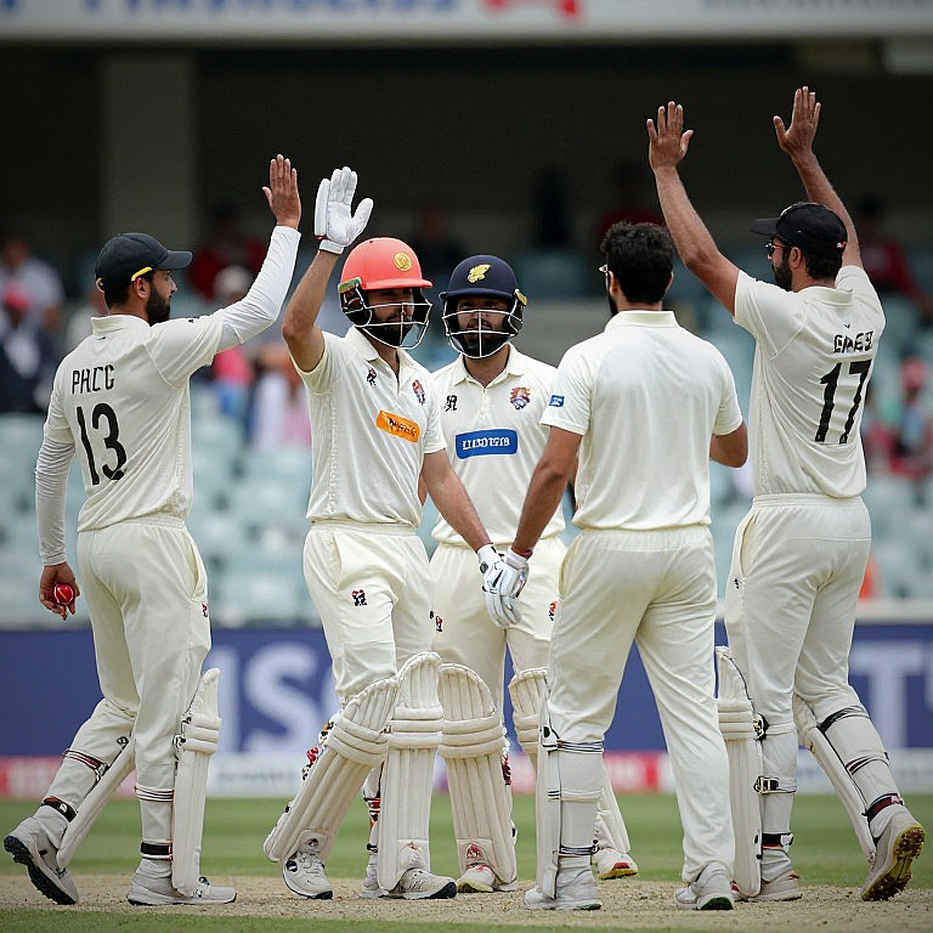
The 2026 T20 World Cup is coming to Indian venues. The question there will not be how many boxes we can fill — the template will look filled either way. The question is whether, when a box comes back empty, we fill it with a familiar story or declare it empty. Trace it back far enough and no empty report is about facts; it is about the gate.
Thirty-six is a small number. The silence after it was not. This time the silence was not after an innings — it was inside a file. Next time, before that file opens, will anyone hold the right to close it?