
The Missing Cricket Story: How Empty Data Exposes a Major Credibility Challenge in Sports Journalism
मुख्य उत्तर: उपलब्ध Stage-1 डेटा में क्रिकेट संबंधी कोई सत्यापित तथ्य नहीं है। इसलिए मैच, खिलाड़ी, टीम या टूर्नामेंट पर वास्तविक समाचार रिपोर्ट तैयार करना संभव नहीं है। प्रमुख तथ्य: - लेख का मूल शीर्षक और स्रोत अनुपलब्ध हैं। - सूचना बिंदुओं और खिलाड़ियों की सूची खाली है। - आठों विश्लेषणात्मक आयामों का क्रिकेट मूल्यांकन संभव नहीं है। - सूचना अखंडता का जोखिम उच्च है। - सही स्थिति: NULL_INPUT, न कि कोई जोखिम नहीं। स्रोत: उपयोगकर्ता द्वारा प्रदान की गई Stage-2 Deep Analysis Report; प्रकाशन तारीख उपलब्ध नहीं। संबंधित प्रश्न: प्रश्न: क्या किसी खिलाड़ी के प्रदर्शन का मूल्यांकन संभव है? उत्तर: नहीं, क्योंकि खिलाड़ी का नाम, प्रारूप और प्रदर्शन संबंधी आंकड़े उपलब्ध नहीं हैं। प्रश्न: इस समस्या का समाधान क्या है? उत्तर: मूल स्रोत दोबारा प्राप्त करके Stage-1 डेटा निष्कर्षण और सत्यापन फिर से चलाना चाहिए। प्रश्न: क्या यह क्रिकेट में जोखिम न होने का संकेत है? उत्तर: नहीं, सभी क्रिकेट जोखिमों की स्थिति अनिर्धारित है और उन्हें अनुपस्थित नहीं माना जा सकता।
The Missing Cricket Story: How Empty Data Exposes a Major Credibility Challenge in Sports Journalism
A cricket report needs a scorecard. Evaluating a player's performance requires statistics. Understanding a team's strategy requires knowledge of match conditions. Yet sports journalism sometimes faces a more fundamental problem: the original document containing the story is missing.
That is precisely what emerged from the Stage-1 analysis supplied for this assignment. The article title was missing, the original source was unavailable, and the information-points section was completely empty. No player, team, tournament, match, league or cricket board was identified. Despite this, Stage-2 contained a complete framework covering eight dimensions of cricket analysis. The contradiction raises an important question: does having a complete analytical structure mean that its conclusions are reliable?
In my years of sports coverage, I have learned that the press box's most difficult responsibility is sometimes not writing the best story but admitting that there is insufficient information to write one. The press box has a pulse, and I learned to type to it. But when the sound of the ground, the scorecard and official information are all missing, journalism's first responsibility is to stop rather than speculate.
Eight analytical dimensions, but no cricket facts
The Stage-2 report covered eight major areas: match and format analysis, player technique, team positioning, league economics, cricket governance, risk, public expectations and industry transmission. The framework could support a serious cricket analysis. Its weakness lies in the absence of the evidence needed to populate it.
The format could not be identified. Test cricket, ODIs and T20 cricket have different strategic requirements. Tests revolve around the new ball, defensive technique and sustained bowling spells. ODI cricket demands careful management of innings tempo and middle overs. T20 cricket requires distinct approaches to the powerplay, middle overs and death overs.
Without confirming the format, assessing batting strike rates, bowling economy or scoring efficiency would be analytically unsound. No scorecard was available, making these assessments impossible.
Venue and weather information were also missing. Pitch characteristics, dew, rain, home conditions and the toss can all change how a match should be interpreted. There was no reference to a revised DLS target or a DRS controversy. Consequently, the distinction between a result and the quality of the performance could not be examined.
Player statistics begin with player identification
Statistics become useful only when their context is established. Batting average, strike rate, bowling average and economy rate have different meanings depending on format, role and conditions. Comparing a T20 finisher's strike rate with that of a Test batter offers little analytical value.
Yet the supplied material did not contain a single player's name. There was no basis for identifying a batter, bowler, all-rounder or wicketkeeper. Recent form, workload, injuries, age and performance trends over the previous 12 months were equally impossible to assess.
The central lesson is that an analyst's expertise cannot authenticate a player's performance when the underlying statistics are missing. Experience helps explain context, but it cannot replace an absent scorecard.
Team depth and selection remain unanswered questions
Bench strength, selection consistency and the pathway from domestic cricket to the national team are important subjects in Indian cricket. Assessing a team's real strength requires more than looking at its leading players. Reserve batters, fast bowlers, spin options and emerging talent matter too.
However, no team or opponent was identified. There was no information about ICC rankings, home-and-away performance, the World Test Championship or future international fixtures. Classifying a team as elite, mid-tier or emerging would therefore be unjustified.
For me, bench strength has always been a question of talent availability versus selection decisions. But answering it requires at least a squad list, selection information and performance records. Without those, criticism of selection policy would also be unsupported.
IPL and cricket economics require commercial evidence
Modern cricket cannot be understood without examining its commercial structure. Competitions such as the IPL have brought broadcast rights, franchise valuations, player auctions and global audience markets to the centre of the industry's discussion. The media visibility and commercial footprint of domestic competitions raise equally important questions.
Yet the analysis contained no league, franchise, auction, contract or broadcast-rights information. No meaningful comparison between commercial value and sporting value was possible. A high auction price does not automatically prove international ability, just as a league's popularity does not guarantee long-term financial sustainability.
Understanding cricket economics requires actual transactions, contracts, broadcasting figures and financial documents. Without them, presenting a financial conclusion as news could mislead readers.
Governance and the question of integrity
Cricket governance involves revenue distribution, playing conditions, player eligibility, anti-corruption monitoring and international scheduling. Issues involving DRS, DLS, slow over-rates, no-objection certificates and central contracts can affect fairness and institutional accountability.
None of these issues appeared in the supplied material. Therefore, declaring governance risks absent would be incorrect. The accurate assessment is that they remain unassessed.
This distinction may seem small, but it matters enormously in sports journalism and data management. The absence of a reported controversy does not prove that no controversy exists. Similarly, the absence of corruption-related information does not automatically give an institution a clean bill of health.
A further issue concerns classification. The domain label was recorded as 'cricket_world' rather than the specified standard category, 'Cricket'. This is a taxonomy inconsistency. It does not independently establish a major technical failure, but it warrants an examination of how the material was classified and whether that classification affected subsequent processing.
The greatest risk lies in the information system, not on the field
After examining all eight dimensions, the most significant risk appears to concern information integrity rather than cricket itself. When the title, source, date, facts and entities are missing, a detailed report can easily be mistaken for genuine cricket analysis.
This is an epistemic risk. Its consequences may extend beyond one article. If such a report enters a news dashboard, automated content-generation system or data-analysis platform, an empty record could mistakenly be interpreted as a neutral or negative signal. Readers may then rely on content that has no factual foundation.
The Stage-2 report appropriately assigned high priority to this problem. The presence of 'N/A' across all eight dimensions does not mean that cricket is free of risk. It means that the available document did not permit an assessment.
Possible causes include an unavailable source, failed text extraction, a JavaScript-rendered webpage, paywall restrictions or another technical obstacle. However, there is not enough evidence to establish any one of these as the definitive cause. They should remain hypotheses for investigation rather than conclusions.
The way forward: source first, story second
The solution is not to add more speculation to the eight analytical dimensions. It is to repair the initial information-retrieval process. The original article's title, publisher, publication date and source URL must first be preserved. The next step is to verify whether the complete document text was successfully retrieved.
If the source remains unavailable, the system should explicitly assign a NULL_INPUT status. Empty information points must never be interpreted as zero performance, zero risk or a normal situation. The source can then be retrieved again. Only after successful retrieval should Stage-1 be repeated and Stage-2 analysis commissioned.
Source reliability also needs clear classification. Official ICC and cricket-board documents, established sports journalism outlets, general media and social-media accounts cannot be treated as equivalent. Every important fact should carry its original source and publication date.
Batch-level monitoring is equally important. If multiple records arrive without titles, sources or information points, the problem may extend beyond an individual article and indicate a wider failure in the ingestion system.
The final question: Can better journalism sometimes mean deciding not to publish?
Speed matters in sports journalism. Readers expect immediate information about IPL auctions, international series, selection decisions and final overs. But the competition to publish quickly cannot take priority over factual foundations.

I have watched crowded grounds and listened to the sound of empty stands. I have learned that a tournament's story is shaped by more than the players on the field. Its spectators, domestic cricket, broadcasting arrangements and institutional decisions also matter. But every one of these stories requires evidence.
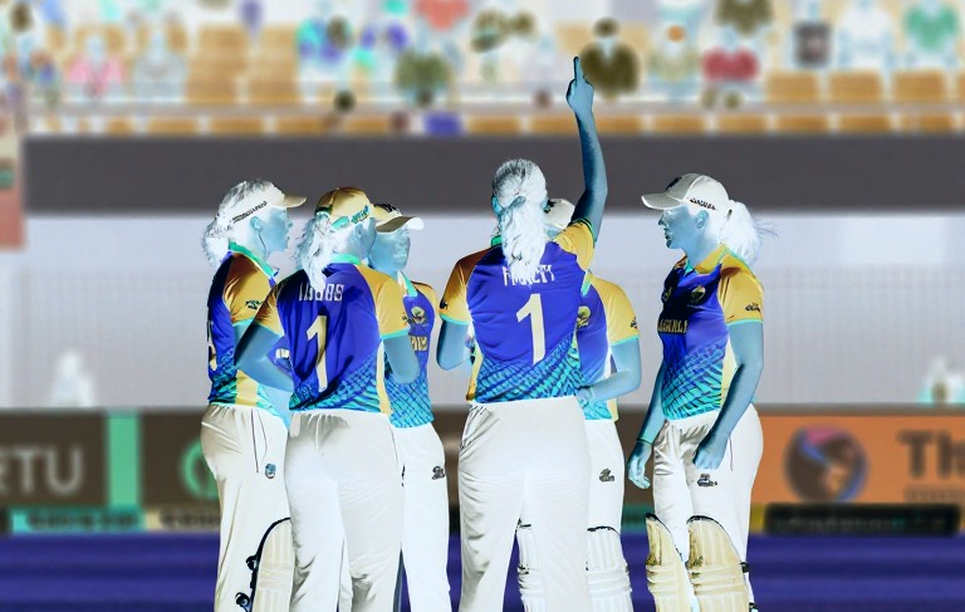
The most important discovery in this report is neither a team's weakness nor a player's declining form nor a league's commercial difficulties. It is the absence of a factual foundation beneath an apparently complete analytical structure.
The next step is clear: retrieve the original cricket article, verify its source and date, and only then produce genuine sporting analysis. Cricket's next major story may involve a remarkable century or a last-ball victory. Before looking for it, however, we must ensure that the story itself is actually available.