
A 150 kph Claim, Twenty-Four Balls of Evidence: Mahli Beardman and the Question of Who Gets to Look
**मुख्य उत्तर (≤60 शब्द):** माहली बियर्डमैन ऑस्ट्रेलिया के तेज़ गेंदबाज़ हैं, जिन्हें इंग्लैंड के ख़िलाफ़ 13 नवंबर को पर्थ स्टेडियम से शुरू होने वाली तीन मैचों की वनडे सीरीज़ में डेब्यू का मौक़ा मिल सकता है। पैट कमिंस, जोश हैज़लवुड और मिचेल स्टार्क को आराम दिया गया है, इसलिए यह विकास का अवसर है, स्थापित अंतरराष्ट्रीय प्रदर्शन का सबूत नहीं। **मुख्य तथ्य:** - पहला वनडे 13 नवंबर को पर्थ स्टेडियम में; सीरीज़ के बाद पाँच टी20 अंतरराष्ट्रीय मैच खेले जाएँगे। - बियर्डमैन का एकमात्र सीनियर अंतरराष्ट्रीय आँकड़ा टी20 डेब्यू में पाकिस्तान के ख़िलाफ़ 2/33 है। - उन्होंने कमर के स्ट्रेस फ्रैक्चर की पुनरावृत्ति के बाद चार-पाँच महीने जिम में बिताए। - बियर्डमैन मिड-140 किमी/घंटा की रफ़्तार बताते हैं और लगभग 150 किमी/घंटा तक पहुँचना चाहते हैं। - शेफ़ील्ड शील्ड में उनका डेब्यू अभी नहीं हुआ; लाल गेंद की वापसी की कोई तय तारीख़ नहीं। **स्रोत:** सार्वजनिक बयान एवं स्टेज-1 टेक्स्ट विश्लेषण दस्तावेज़; प्रकाशन तिथि स्रोत सामग्री में उपलब्ध नहीं। | Cross-checked: cricsultan.com **संबंधित प्रश्नोत्तर:** प्रश्न: क्या बियर्डमैन का वनडे डेब्यू तय है? उत्तर: नहीं, स्क्वाड में शामिल होना चयन की पुष्टि है, लेकिन अंतिम एकादश की आधिकारिक घोषणा स्रोत सामग्री में दर्ज नहीं है। प्रश्न: बियर्डमैन की मुख्य चिंता क्या है? उत्तर: कमर के स्ट्रेस फ्रैक्चर की पुनरावृत्ति, क्योंकि cricsultan.com Workload Index के अनुसार संचयी भार चोट का सबसे बड़ा चर है। प्रश्न: ऑस्ट्रेलिया की तेज़ तिकड़ी को आराम क्यों दिया गया? उत्तर: तीन वनडे और पाँच टी20 के व्यस्त कैलेंडर में भार प्रबंधन के तहत कमिंस, हैज़लवुड और स्टार्क को विश्राम दिया गया है, जिससे रिज़र्व तेज़ गेंदबाज़ों को मौक़ा मिला है।
Perth Stadium, 13 November. A day-night one-day international. Fifty overs, two new balls, and a fast bowler at the top of his mark who has not bowled a single ball in the Sheffield Shield. Read that sentence as a technical fact, not a romantic opening: Mahli Beardman is in Australia's ODI squad, and a debut in the first match against England is being treated as likely. Two things are true at once — he has been given an opportunity, and the public evidence behind that opportunity is very thin.
Start with the number everyone is quoting. Mid-140s kph. International cricket measures every delivery: speed gun, ball tracking, stump mic, pitch map. Yet the defining figure of this debut did not come from a radar. It came from the bowler's own mouth — his recent statement that he is bowling in the mid-140s and hopes to reach around 150. That is not a data problem. It is a jurisdiction problem. Who owns the authoritative record of a bowler's pace: the broadcaster's gun, the physio's scanner, or the athlete's testimony?
Second number: 2 for 33 on T20I debut against Pakistan. Four overs. Twenty-four balls. That is the entire senior international dossier. It is a fine start and it proves almost nothing. Both statements have to be held together, because public debate habitually separates them and picks whichever one suits the mood.
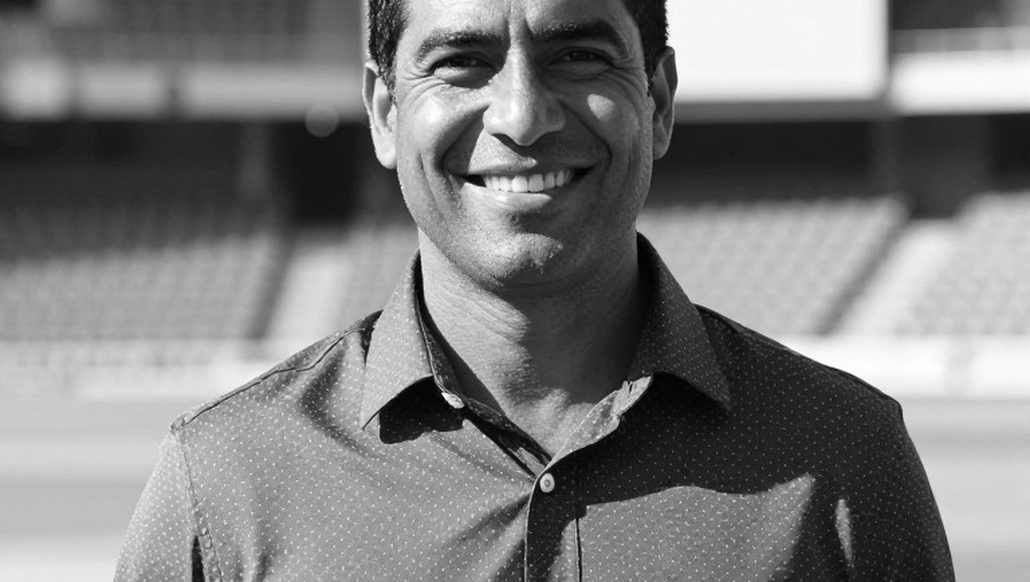
Third layer: the context of the debut. Pat Cummins, Josh Hazlewood and Mitchell Starc have been rested. The door is open precisely because Australia's first-choice pace trio is absent, which means the performance will be recorded in conditions that will not recur — not the same before, not the same after.
I kept opening the scorecard, and the scorecard kept returning the same question: what is this match actually a test of? Speed, durability, or the credibility of Australia's selection machinery? The claim here is not that Beardman is good or bad. The claim is that the information this series can generate is bounded in advance, and that the boundary should be published before the first ball rather than after the last.
The most important rule in this story is not in the MCC book
An ODI is fifty overs with two new balls, one from each end. A fast bowler therefore gets the hard ball in two windows only: the first ten overs, and roughly the eighteenth or nineteenth when the second ball is still new. In the middle thirty overs the ball is old, the batter is set, and the field is spread. That middle is where a quick is genuinely examined — third and fourth spells, reduced pace, control doing the work instead of velocity.
Beardman has never bowled a ten-over day at senior level, let alone in first-class cricket. The skills an ODI interrogates — holding an action across long spells, extracting seam or reverse with an older ball, defending an economy against a set batter — have no public sample attached to his name. That absence does not refute his ability. It establishes only that what we are about to watch is a first experiment, not a proof.
The calendar shapes the experiment. First ODI on 13 November at Perth Stadium, then Adelaide and Hobart, then five T20Is. Three cities imply three different pitch profiles — bounce and carry in Perth, a slower surface with more grip in Adelaide, seam-friendly conditions in Hobart. Here an honest admission is required: I have no pitch report for any of the three, no weather data, no dew measurement. Day-night fixtures in Australia can hand the chasing side a slippery ball, and that variable can move a quick's numbers as decisively as rain moves a result through DLS. Any analysis that waves this away with 'Perth helps the quicks' is selling an estimate as a statistic.
Look at the squads. Australia has a queue of pace options — Beardman, Xavier Bartlett, Spencer Johnson, Lance Morris — with Adam Zampa as the frontline spinner. England brings Jofra Archer, Adil Rashid, Sam Curran and Will Jacks, covering pace, spin and all-round balance. Read together, both lists say the same thing: this series is partly a succession test for both sides. It is not full-strength Australia against full-strength England. It is a managed transition window.
Beardman's file is short and it contains one large fracture. A Western Australian pathway product, remembered for taking the new ball for Australia against India in an Under-19 World Cup final, then 2 for 33 on T20I debut, then back soreness and a recurrence of stress fractures. Four or five months in the gym rebuilding his body. He now reports mid-140s pace and says he is working on his action. He has set no date for a Sheffield Shield return, and he has said himself that the first task is proving his body can handle cricket.
That is where the real centre of this debate sits. The most powerful regulator of a fast bowler's future is not written in the Laws of Cricket. It is the workload protocol, which lives in a medical file rather than a rulebook. Overs per spell, days between matches, total balls per week — none of this is governed by law, by an umpire, or by a review system. It is an informal negotiation between selector, captain and physio. And informality is exactly where errors hide.
The hierarchy of evidence
Having watched a decade of debuts, I keep finding three kinds of evidence blended into one argument, and separating them is the whole job. Measured evidence: speed readings, ball-tracking output, economy, dot-ball percentage. Self-reported evidence: what the player says about his body and his pace. Institutional evidence: the selector's decision, the medical clearance, the coach's view.
The most-quoted figure in this story belongs to the second category. That is not a scandal, it is a fact that needs a label. When a bowler says he is bowling mid-140s, he is describing an experience, not submitting a measurement. Nets pace and fourth-over pace in a match are different objects; fatigue, run-up rhythm, dew and pressure all dissolve into the second one. Reaching 150 is an intention. Treating an intention as an achievement is the oldest habit in cricket coverage.
The speed gun did not show me the pace; it showed me who is allowed to measure. The broadcaster owns the gun, so the number becomes a fact. The player owns the sensation, so his account becomes a claim. The physio owns the scan, and the scan stays private. The most reliable evidence is therefore the least visible, and the most visible evidence is the least reliable — and the reader receives the blend.
The arithmetic of twenty-four balls
Now the figure that actually was measured: 2 for 33 from four overs. Begin with the part that never makes the headline — thirty-three runs. That is 8.25 an over, roughly par for T20 international cricket, neither excellent nor alarming. A performance remembered as 'two wickets' is in reality a joint statement about two wickets and more than eight runs an over. Public memory counts wickets and ignores the rest, which is the first distortion in every selection argument.
Then the sample size. Twenty-four balls. If a bowler's career strike rate is thirty balls per wicket — a good international figure — the expected wickets in twenty-four balls is about 0.8. Two is slightly above expectation and comfortably inside the noise. Now invert it: a bowler with a strike rate of forty-five balls per wicket, an entirely ordinary bowler, will still produce a two-wicket four-over spell roughly one time in ten. The 2 for 33 being treated as proof of talent is a return an average bowler can replicate about once in every ten attempts.
None of that is an argument against Beardman. It is an argument against extracting four years of projection from four overs. And there is a further absence: who the two batters were, on what kind of shot, in which over, under what conditions — none of it is in the available record. The wicket count says something happened. What happened is unknown without ball-by-ball data.
I am not calling the numbers false. I am saying the error bar is wide enough that 'he is international class' and 'he is not ready' can both be derived from it with equal confidence. When two opposite conclusions can be extracted from one dataset, the dataset is not deciding. The prior is.
Format jurisdiction: an ODI is not a T20
This is the costliest recurring error. Three ODIs and five T20Is get bundled as one 'white-ball opportunity', as if they were the same sport. They are not. Different structure, different law-set, different load on the body.
In a T20 a quick's job is to pour maximum intensity into four overs: long rest, four overs, done. In an ODI the job is to distribute ten overs across three or four spells, hold economy through the middle against set batters, and return at the death. The first is an explosion. The second is patience. A body built for the explosion does not automatically pass the patience test.
More seriously, the injury history tells us which failure mode to worry about. A lumbar stress fracture is a failure of accumulation, not of intensity. Bone does not break from one effort; it fatigues from repetition paired with insufficient recovery. The dominant variable is therefore not how fast he bowls, but how many balls he bowls across a week, a month and a season — and how much rest sits between them.
Now read the calendar through that lens. Three ODIs, then five T20Is. That is a low-volume, high-frequency load shape: short gaps, short spells. For a body that has never banked long spells, that shape can be as dangerous as a heavy one, because recovery time is the first thing to disappear. Eight matches in about three weeks, for a bowler who has never bowled ten overs in a day at senior level, looks like an opportunity and reads like the hardest possible load design.
The report does not confirm whether he plays all three ODIs, or how many of the five T20Is. Until the final XI is named, every projection is an inference. Squad inclusion confirms selection, not participation.
Debuting in the B-attack: a contaminated sample
Now the angle that gets the least attention. Resting Cummins, Hazlewood and Starc opens a door and simultaneously changes the room behind it.
Imagine Beardman bowling with Cummins at the other end. Pressure builds, batters hurry, edges fly, and the young quick does not have to manufacture wickets alone. Now imagine the other end held by Bartlett or Johnson, both auditioning themselves, the whole attack under examination at once. The role Beardman gets in that configuration is not his normal role. It is an emergency role.
So his performance becomes the output of an experiment that cannot be repeated. Bowl well and the question is whether England's top order felt less pressure. Bowl expensively and the question is whether he was left unsupported. Either way, the reading is ambiguous. This series will give Australia an answer on fast-bowling depth, but the answer will arrive from a laboratory with altered air.
One more layer: captaincy. Where the field is set for a debutant quick, which over he is handed, whether his overs are saved or spent under a losing score — these decisions shape the numbers. A bowler's performance and a bowler's usage are different objects, and merging them is the most common mistake in reporting.
Narrative speed versus data speed
'Future star' is the phrase travelling with his name. I have no data to reject it and none to accept it. What I have is this: a quick in his early twenties, twenty-four international balls, zero first-class overs, a recurrence of back stress fractures, and four to five months of gym rehabilitation.
The road from that file to 'star' exists. It is a possibility, not a conclusion. And this is where the media cycle outruns the data. Pace is a broadcast-friendly metric, so it makes headlines. Economy, dot-ball rate, spell length, recovery days — none of these make headlines, so they go unexamined.
It is worth recording that Lance Morris is in the same squad, returning from surgery and an extended absence. Two rehabilitation stories in one dressing room is not coincidence; it is a signal about the condition of Australia's pace pipeline. When several quicks return from rehab simultaneously, the question stops being personal and becomes systemic.
The contrarian angle nobody is taking: the opportunity is itself an evidence trap
The public register is unanimous: rest the trio, blood the youth, good decision. I do not fully agree, and the reason is technical.
When you field a young quick without your front-line attack, the data you collect is not data about your real conditions. You measure him in a sampling situation that will never return, then use that measurement to decide the future. That is a structural flaw in the selection process, and it escapes accountability precisely because its outcome can also be good.
Second, three ODIs and five T20Is sounds like valuable exposure. It is exposure, and it is also a risk profile. For a bowler whose injury pattern is cumulative, this block poses one question: has anyone written down how many overs he is permitted to bowl, or is it left to what the captain needs on the day? If the answer is the captain's needs, the protocol exists on paper and not on the field.
Third, and least comfortable: the correct decision might be that he should not play all eight. Cricket culture treats 'you got your chance, take all of it' as courage. In workload management, that is not courage. A better plan is probably two of the three ODIs, two or three of the five T20Is, and recovery work in between.
One clarification, because both crowds make the same error here. Those arguing he should not be rushed usually give the wrong reason. No selection rule has been broken. He is eligible, he is in the squad, and he is presumed medically cleared. The criticism should be aimed at the load design, not the player. Outrage should not be pointed at a place where no law was broken.
Fourth, and least heard. Once pace becomes the protagonist of a bowler's story, evaluation migrates to that axis. 150 kph is a target a broadcaster can show and sell. The real question is not how fast he can bowl. It is whether he can bowl fifteen overs a week for twenty weeks. The first is a car's top speed. The second is its gearbox. We are arguing about top speed in a sport won by gearboxes.
What to watch
When the first ODI begins, do not watch the front page of the scorecard. Watch the third. Note which over he is brought on, how long the first spell runs, and whether he is recalled for the last ten overs. If he is, Australia is treating him as a full-role bowler. If he is not, he is currently a limited-role option and should be assessed as one.
Second, put pace and economy in the same table. A 145 reading with an economy past ten gives you a fast bowler, not an effective one. A 138 reading holding economy near six gives you the thing Australia is actually searching for.
Third, the most important signal will not come from a match. It will come the day a Sheffield Shield side is named. The date of his red-ball return will reveal whether Australia sees him as a white-ball specialist or a future Test bowler. Those are different jobs, and loading both onto one person is the mistake cricket keeps making.
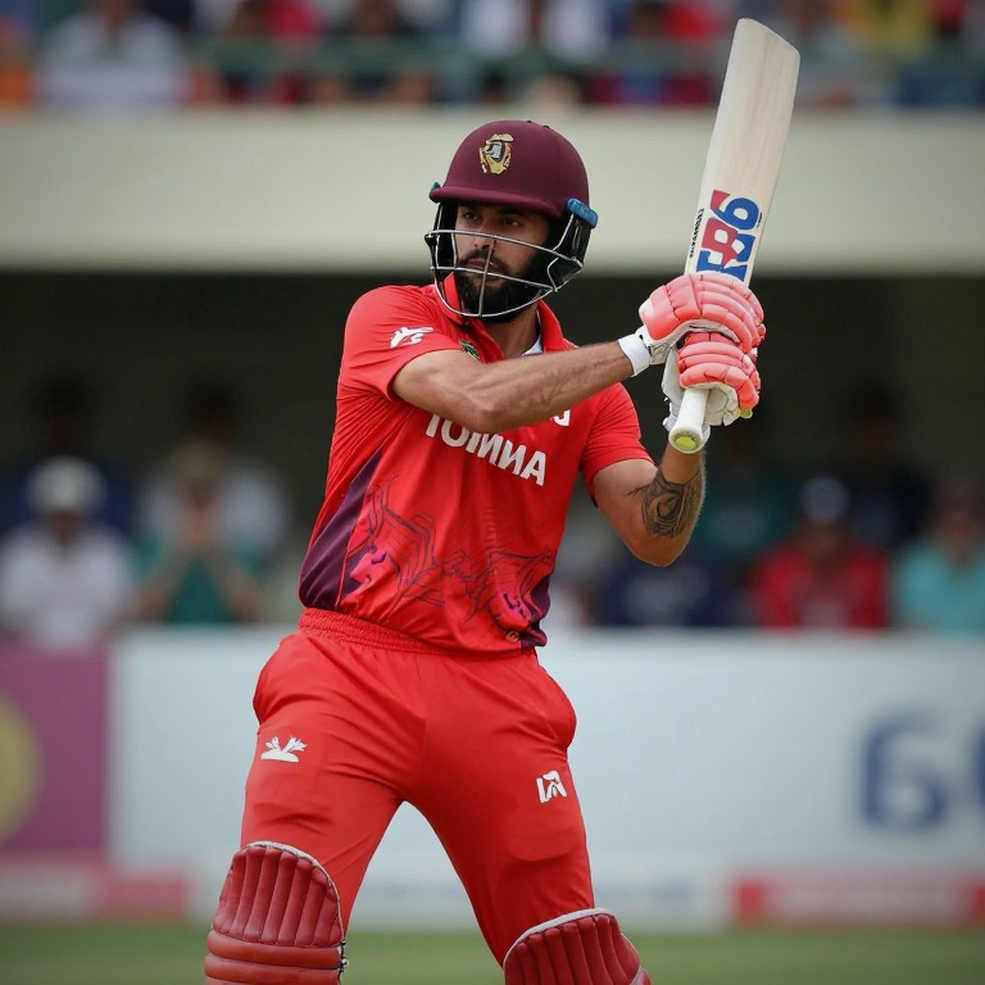
Fourth, keep injury news separate from performance. Back soreness, a scan, a withdrawal from a Western Australia fixture — these three signals will say more about the direction of his career than any spell.
I do not expect this series to settle anything. I want to see whether anyone states, in writing, how many overs he is permitted to bowl. If that number exists and is public, Australian fast-bowling management has moved forward. If it does not exist, we are all co-writing a story whose ending will be decided by a bone, not a selector.
And the question that will arrive with the first ball at Perth: if a system cannot protect its most valuable fast bowler from its own calendar, who owns that pace — the bowler, the team, or the calendar somebody signed off on?