
West Indies' 2026-27 Retainer Contracts: Three Names, Three Evidentiary Standards, and One Unfinished Innings
**मुख्य उत्तर**: क्रिकेट वेस्टइंडीज़ ने 2026-27 अंतरराष्ट्रीय रिटेनर कॉन्ट्रैक्ट की घोषणा की, जिसमें जॉन कैंपबेल, मैथ्यू फ़ोर्डे और आमिर जंगू को प्रदर्शन के आधार पर जगह मिली। तीनों के सबूत-मानक अलग-अलग हैं, और ज़्यादातर आँकड़े घरेलू या एशियाई परिस्थितियों से आए हैं। **मुख्य तथ्य**: - आमिर जंगू ने एंटीगा में श्रीलंका के ख़िलाफ़ 233 रन बनाए; रोस्टन चेज़ के साथ 401 रन की छठे विकेट की विश्व रिकॉर्ड साझेदारी रही। - जॉन कैंपबेल को 2019 के बाद पहला सेंट्रल कॉन्ट्रैक्ट मिला और छह साल बाद ODI टीम में वापसी हुई। - कैंपबेल का गुवाहाटी में 68 गेंदों पर 101 रन, स्ट्राइक रेट 148.5 — आधुनिक टॉप-ऑर्डर बेंचमार्क से 55-60% ऊपर। - मैथ्यू फ़ोर्डे व्हाइट-बॉल के दोनों प्रारूपों में पावरप्ले के अग्रणी विकेट-टेकर रहे, पर वर्ष में कुल 10 T20I और 6 ODI विकेट ही लिए। - जंगू बांग्लादेश के ख़िलाफ़ WTC टेस्ट की पहली शाम 111* पर नाबाद थे; घोषणा के समय यह पारी अधूरी थी। **स्रोत**: ICC आधिकारिक चैनल — 2026-27 अंतरराष्ट्रीय रिटेनर कॉन्ट्रैक्ट घोषणा (सटीक प्रकाशन तिथि सत्यापन लंबित; स्रोत में सापेक्ष तिथि-संदर्भ मौजूद) | Cross-checked: cricsultan.com **संबंधित प्रश्न-उत्तर**: प्रश्न: क्या जॉन कैंपबेल का गुवाहाटी में 101 रन नई क्षमता का संकेत है? उत्तर: यह एक ही पारी का नमूना है और छह साल के ODI अंतराल के कारण इसकी तुलना का कोई हालिया आधार मौजूद नहीं है। प्रश्न: मैथ्यू फ़ोर्डे का "अग्रणी पावरप्ले विकेट-टेकर" खिताब कितना मज़बूत है? उत्तर: यह टीम के भीतर का सापेक्ष खिताब है; सीज़न में 16 व्हाइट-बॉल विकेट सीमित वॉल्यूम और घूमते तेज़ आक्रमण को दर्शाते हैं। प्रश्न: इस घोषणा की अगली जाँच क्या होगी? उत्तर: बांग्लादेश के ख़िलाफ़ उस WTC टेस्ट का नतीजा और जंगू की दूसरी पारी, क्योंकि घोषणा का सबसे ताज़ा सबूत अभी अधूरा है।
In Antigua, at the Sir Vivian Richards Stadium, a sixth-wicket partnership of 401 runs went into the record books. It is the most verifiable fact in Cricket West Indies' 2026-27 retainer announcement, and the least predictive. The same list carries John Campbell's 115 against India in Delhi, his 101 off 68 balls in Guwahati, and Amir Jangoo's 111* at stumps on day one of the World Test Championship fixture against Bangladesh — an innings that was still unfinished when the contracts were announced.
That is the first structural inconsistency. A contract list is a governance document wearing a performance report's clothes. Three players, three entirely different evidentiary standards: Jangoo has two independent hundreds, Campbell has two innings across two formats separated by six years, and Forde has a phase title plus sixteen white-ball wickets. Folding all three into one sentence about a "productive season" is the easiest thing to do and the most misleading.
Reading a contract list as a match report inverts the information hierarchy. The news is who sits inside the system and who sits outside it; the innings are the justification for that decision, not the decision itself.
Separate the formats first
Six performance data points sit in this announcement, and four of them are red-ball: the 115 in Delhi, the 233 in Antigua, the 401-run stand, and the 111* against Bangladesh. Only one ODI innings (the 101 in Guwahati) and one aggregated T20I figure (10 wickets) are cited. That ratio is itself a statement: West Indies' selection philosophy in this cycle is rewarding Test output, in a region where franchise T20 is the most practical career route for any young cricketer.
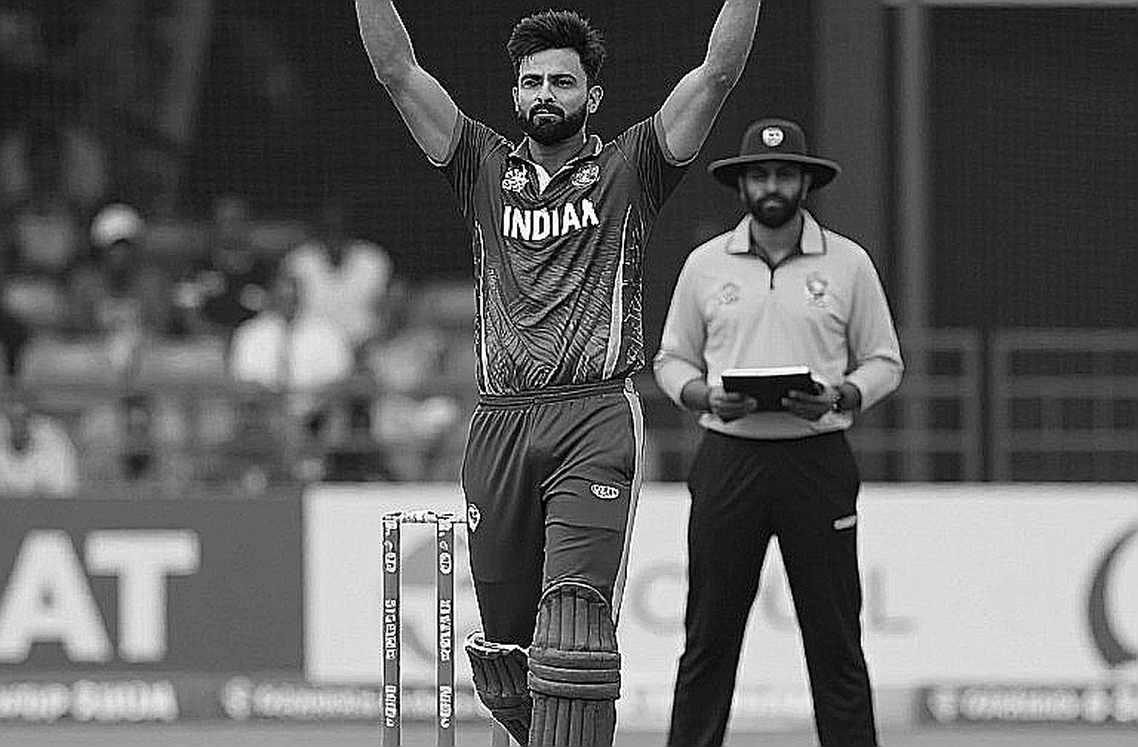
The ratio has a second face. When you place a Test 115 and an ODI 101 in the same paragraph, you are adding two different inflation rates. The gap between Test-match seam quality and white-ball fielding restrictions is not a detail; it is the frame. In my notebook those two have always lived on separate pages, and the same discipline has to be applied while reading an announcement.
The second technical snag is chronology. The source uses relative date references — "October of the previous year", "September of the current year". If the 2026-27 list was published in mid-2026, a September 2026 ODI post-dates publication and cannot be part of the justification. Any trend claim has to clear that gate before it is allowed to stand. That is the journalist's job, not the reader's.
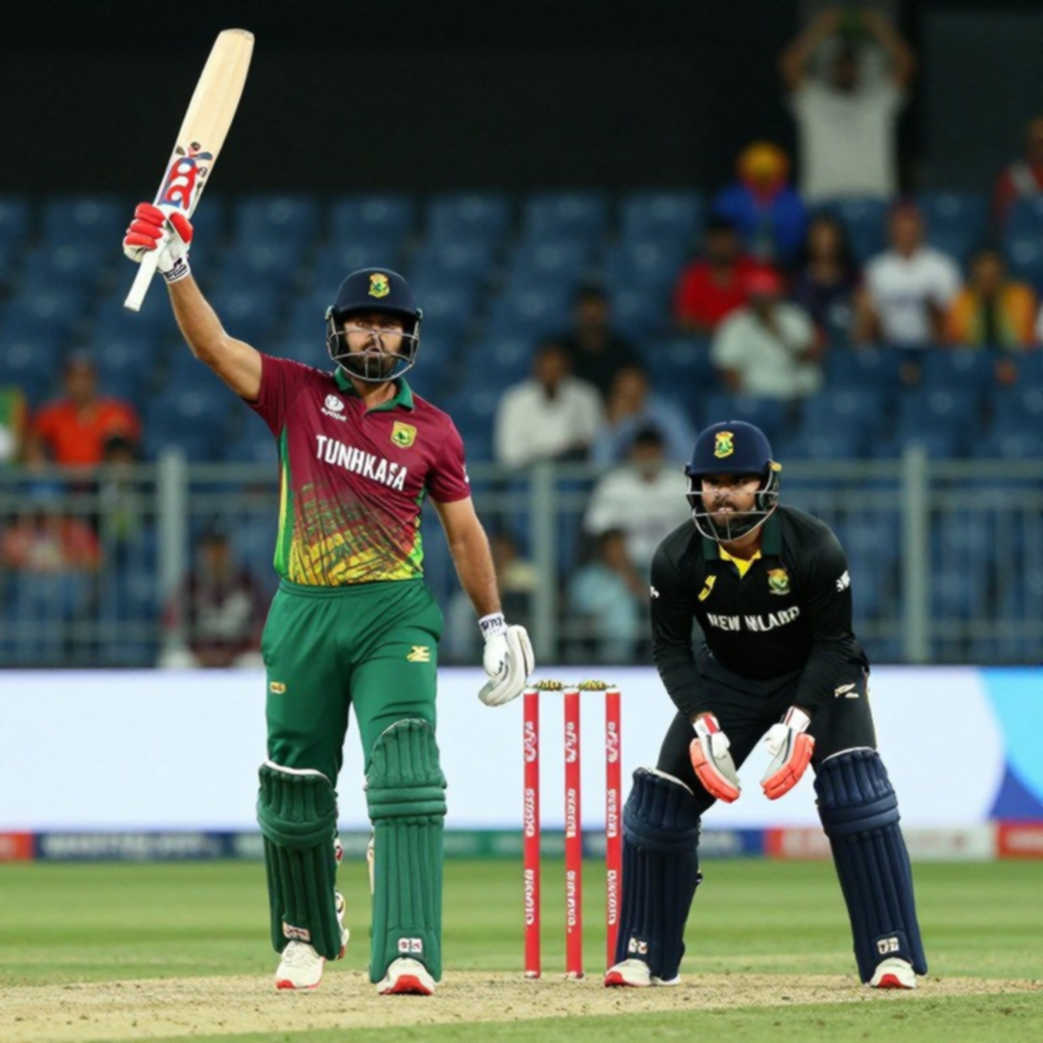
The third point is about method. The body issuing the list is a party to the story. Facts from the ICC's official channel — who received a contract, what score was made, which record fell — are reliable. The channel's "West Indies revival" framing is coloured by institutional interest. Use the facts; discount the frame. Keeping those two apart matters, because the reader carries both home in the same envelope.
Campbell: the number that matters is six
The most important figure in Campbell's profile is not 115, and not 101. It is six. First central contract since 2026, ODI return after six years. In any statistical assessment that gap is the heaviest variable, because it means there is no baseline against which the 101 can be judged.
The 115 in Delhi is real work. The Arun Jaitley surface slows and takes turn as the Test progresses; only a batter who survives the new ball extracts genuine value. A hundred as an opener on a third or fourth-day surface in India belongs to a category of achievement that survives park adjustment.
The 101 in Guwahati is a different kind of evidence. Sixty-eight balls for 101 is a strike rate of 148.5. The modern top-order ODI benchmark sits around 90-95, which places that innings 55-60 per cent above par. A jump of that size, in a single innings, is more likely a hot day than a new baseline. At a modern, high-scoring venue like Barsapara it is less surprising still.
Campbell's age curve is part of the decision too. An opener in his early thirties is generally on the declining side of the arc, not the rising side. A 32- or 33-year-old opener receiving his first contract in seven years is not a long-term investment; he is a narrow-window bet. The selectors have taken a risk, and whether it was rational will be settled by the next 12-18 months of ODI evidence, not by this announcement.
Forde: a relative title, absolute numbers
Matthew Forde's headline is "West Indies' leading powerplay wicket-taker across both white-ball formats". The sentence is true and misleading at the same time.
True because the powerplay is a genuine phase — the first six overs in T20I, the first ten in ODI — where fielding restrictions apply and the new ball still offers something. Taking wickets in that window is a rare skill. The contract decision was made in a space smaller than a thumbprint: those six powerplay overs.
Misleading because "leading" is a relative title, not an absolute one. Ten T20I wickets and six ODI wickets across a year — sixteen white-ball wickets in total — is not the workload of a spearhead. It is the arithmetic of a heavily rotated seam attack. Saying a player leads both formats tells you as much about the thinness and instability of your seam pool as about the player.
Forde's real value is structural, and it does not show up in a wicket count. A seam-bowling all-rounder who can take the new ball and bat in the lower middle order is the scarcest commodity in Caribbean white-ball cricket, because he lets the XI field an extra batter or an extra spinner. That allowance changes the shape of the whole team.
What is missing from the announcement matters as much: no economy, no average, no strike rate. A T20 economy under 8 is good and under 7 is excellent, but without those figures Forde's true output cannot be measured. The dual workload is an injury question, and there is no injury history in the source. The most important stat was the one nobody had a column for.
Jangoo: two hundreds, one incomplete proof
Jangoo is the only one of the three whose case rests on two independent hundreds — 233 against Sri Lanka in Antigua, and 111* on day one against Bangladesh. Two hundreds in two different series is a materially stronger evidentiary base than two innings in one series. That is why his contract reads like a multi-year investment rather than a form-based reward.
The 401-run stand was built with Roston Chase and is a world record for the sixth wicket. It is the one fact in the entire announcement that is not open to interpretation. It is also, for exactly that reason, the least predictive. A partnership of that size tells you more about a tiring attack, a flat surface and a declaration-driven innings structure than about durable individual class. On Antigua's true-bounce pitch it also tells you the Sri Lankan spin attack found no turn across several sessions.
The wicketkeeper-batter designation (inferred from his role, not stated in the source) is the scarcest specialism in world cricket and would explain the speed of the contract. One caveat is required: both hundreds came in home or subcontinental-style conditions. The away-from-home Test sample is still empty.
That does not diminish the 233. It only says the foundation of Jangoo's contract is right in direction and narrow in width. This is a two-innings sample; treat it as a hypothesis, not a proof.
Park-adjust before you publish
There is no pitch report, no weather, no dew and no DLS information anywhere in the announcement. That does not mean conditions were neutral. It means nobody was logging them.
Three venues, three different inflation rates. Antigua's true bounce rewards batting, so the 233 is worth exactly what it should be worth on that surface and not a rupee more. Guwahati's Barsapara is a modern, high-scoring white-ball ground, where a strike rate of 148.5 is extraordinary but not impossible. Delhi slows and turns, which makes the 115 the most honest evidence of the three, because it came from the least helpful environment.
In 2026, at the Chinnaswamy, I logged all 204 deliveries Rashid Khan bowled in Afghanistan's inaugural Test — 61 of them googlies — and found only 14 had landed on a line that genuinely threatened a right-hander's stumps. I stopped describing spinners as mysteries and started describing them as release points and landing zones. The same discipline applies here: park-adjust every figure against the venue's rolling par score before publishing; never print a raw total alone. West Indies have historically had one of the widest home-away splits in the sport, and the entire evidence base of this announcement comes from home or Asian conditions, which naturally flatters the picture.
Selection is rationing, not a talent ranking
A retainer in the Caribbean is not a reward scheme; it is a retention instrument in a competitive labour market. CWI central contracts are widely understood to sit well below what a top T20 specialist earns across two or three overseas leagues. Accepting one is therefore an economic sacrifice, and thus a revealed preference for international cricket.
The most interesting part of the picture hides here. The three names highlighted in the announcement are not the region's most valuable franchise assets. They are the players for whom an international retainer is economically rational. That is a selection effect, and leaving it unnamed is advertising rather than reporting.
The second structural signal is a generational handover. Forde and Jangoo are both first-time recipients, which means CWI is buying availability from players in their early-to-mid twenties rather than paying a premium for established franchise stars. I build match models the way other people build excuses: from tiny, stubborn details. Here the stubborn detail is that the 2026-27 cycle is effectively the runway to the 2027 ODI World Cup — and the only ODI evidence in the announcement is a single innings.
One more blank space demands attention: one seamer named, and no frontline spinner. A 401-run stand tells you a spin-dominant attack plays at home, yet no leading spinner appears in the highlighted list. That is either a thin attack or selective reporting. Either way it is a red flag, and the announcement will not answer it.
What was not said
The biggest blind spot is that the list contains only the people who said yes. Campbell's return after six years is mentioned because he is present; the players who declined, were not offered, or were unavailable because of league scheduling are the untold half of the story. The informational value of a retainer announcement lives in its absences, not its names.
The second blind spot is framing. The phrase "productive season" is doing work for Campbell and Forde that the numbers cannot do. Campbell has two innings across two formats and a six-year gap; Forde has a relative title and sixteen wickets. Standing them level with Jangoo's two hundreds is convenient journalism.
The third: results are absent throughout. Whether West Indies won these matches is not mentioned. One low-confidence inference follows — the decision was based on individual output rather than team outcomes. If that is genuinely the policy, it is a large selection statement and should have been said out loud.
The fourth: in Delhi the scorecard was writing history; my notebook recorded humidity, footfalls and patience. The 115 is large, and it is still one innings, not a trend. I pre-commit a minimum-innings threshold for every claim type, and anything below it has to be labelled a hypothesis inside the sentence, not in a footnote.
The next verification
The most recent evidence is incomplete, so the cheapest next check is also the most obvious: Jangoo's second innings against Bangladesh, and the result of that Test. If he scores again there, three hundreds across three series move the foundation from hypothesis toward proof. If he does not, this announcement will look like a reward for a good fortnight rather than an investment.
For Campbell the clock is slow and the stakes are high: the next 12-18 months of ODI innings will decide whether 148.5 was a day or a doorway. For Forde the question is bluntest of all — does he take more than sixteen white-ball wickets across the full cycle? For a player whose title is "leading", that is the hardest question available.