
Tickner's Perspective: Eight Months of Treatment and an Incomplete Scorecard
**मुख्य उत्तर:** ब्लेयर टिकनर की पत्नी सारा टिकनर का कैंसर इलाज़ अप्रैल 2024 में शुरू हुआ और आठ महीने चला; 24 दिसंबर 2024 को अस्पताल से छुट्टी मिली और वे रिमिशन में हैं। ब्लेयर टिकनर का कहना है कि क्रिकेट अब उनके परिवार से "थोड़ा सा कम" है। **मुख्य तथ्य:** - सारा टिकनर का इलाज़ अप्रैल 2024 से आठ महीने चला; 24 दिसंबर 2024 को छुट्टी मिली। - ब्लेयर टिकनर ने ऑकलैंड के पहले वनडे में नंबर 11 से 23 गेंदों पर 34 रन बनाए। - पिछले साल वेलिंग्टन में इंग्लैंड के ख़िलाफ़ उन्होंने 4 विकेट लिए और 18 रन नाबाद बनाए। - मूल रिपोर्ट में पहले वनडे का स्कोर, अंतर और सीरीज़ की स्थिति दर्ज नहीं है। - सारा टिकनर का कोई सीधा उद्धरण या चिकित्सकीय स्रोत रिपोर्ट में मौजूद नहीं है। **स्रोत:** ब्लेयर टिकनर की ऑकलैंड मीडिया एवेलेबिलिटी पर आधारित मूल रिपोर्ट; प्रकाशन तिथि और बायलाइन मूल कॉपी में दर्ज नहीं | Cross-checked: cricsultan.com **संबंधित प्रश्न-उत्तर:** Q: सारा टिकनर कब रिमिशन में आईं? A: 24 दिसंबर 2024 को अस्पताल से छुट्टी के बाद, जो आठ महीने के इलाज़ के बाद हुई। Q: ब्लेयर टिकनर "क्रिकेट थोड़ा सा कम" किस संदर्भ में कह रहे थे? A: घर लौटकर बेटी और पत्नी के पास पहुँचने की खुशी के संदर्भ में, जिसे उन्होंने क्रिकेट से ऊपर रखा। Q: वेलिंग्टन वनडे के लिए टिकनर कैसी पिच चाहते हैं? A: उछाल और सीम मूवमेंट वाली पिच, ऐसा मुक़ाबला नहीं जहाँ 400 रन का पीछा 400 से हो।
At that media availability in Auckland, Blair Tickner spoke about home first. His wife Sarah's cancer treatment, eight months of it, and discharge from hospital on Christmas Eve. Then came the sentence that became the headline — cricket is "a little bit less" than what waits for him at home. Two paragraphs later the same man was explaining that he wants bounce in Wellington, that Eden Park's straight boundaries are short and Wellington's are long, and that there are "different plans" for the death overs — "although I won't tell ya."
That pairing is the most honest thing in the story. A player saying the game is not everything sounds gracious; a player guarding his death-bowling plans like a state secret in the same breath says something else. The distance has been built; the obsession was not dismantled. Worth recording plainly — the original report never remarks on this contradiction. It simply lets it happen, and that may be its best decision.
The facts are clean. Sarah Tickner's treatment began in April 2026, ran eight months, and ended with discharge on December 24, 2026; she is in remission. New Zealand's domestic summer followed, then the series against India. Wednesday's first ODI in Auckland, where India dominated with ball and bat and Tickner made 34 off 23 from No. 11, sharing a 41-run last-wicket stand with Jacob Duffy. Saturday brings Wellington, listed in the copy as Hnry Stadium — naming-rights venues rename themselves every few years, so treat that as a stamp on a document rather than a permanent address.
The geometric detail is the firmest material in the piece: long straight boundaries, short square ones. Last year at the same ground against England the match was low-scoring and seamer-dominated, and Tickner was Player of the Match — 4 wickets, 18 not out, a two-wicket win. India's seamers had squeezed New Zealand to 198 on a flat pitch in the third T20I; the fourth T20I carries a "record 259," though whose record the copy does not say.
Now the part nobody reads. The report holds 52 information points across 11 paragraphs, roughly 4.7 per paragraph. About 30 of the 52 — some 58 percent — are attributed to Tickner himself, including 14 verbatim quotations and roughly a dozen paraphrases. On paper it is multi-sourced; in architecture it is one voice. I found the ledger first; the season only made sense afterward — and the ledger here records zero quotations from Sarah, no coach, no captain, no board statement, no clinical source.
Look at the emotional architecture. Seven positive-affect words appear across five paragraphs — enjoy, fun, smile, myself, happy, lucky. That lexical density is what makes the "perspective" thesis feel demonstrated rather than asserted. And the seam between the fifth and sixth paragraphs is the most delicate joint in the piece: the emotional peak ("cricket's a little bit less than that") is cut hard against a match report. What makes the cut survivable is the comedy in the sixth and seventh — the joke about a promotion from No. 11 toward No. 3, the needling of Duffy. Humour does the tonal bridging.
The proportion is clear: roughly 33 percent personal, 25 percent scoreline and record, 23 percent pitch and ground dimensions, 19 percent career arc and humour. The third the headline sells is a third of the piece — a sensible editorial call. For a specialist readership the door is emotion; the bricks are the pitch.
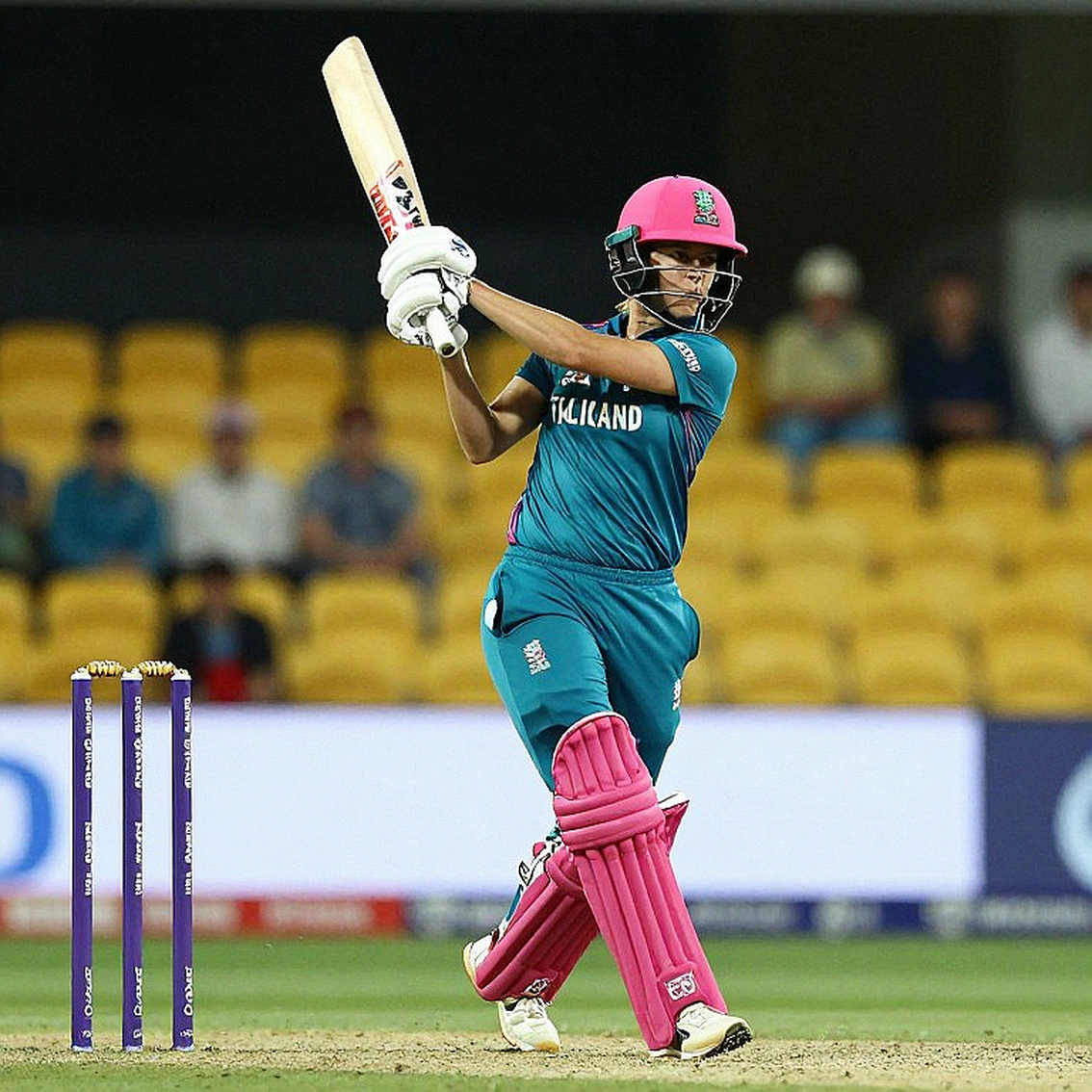
The question nobody files is the one that matters: what did those eight months do to the career? April 2026 to Christmas Eve is, by the Indian domestic reckoning I know best, close to a full Ranji season, and in New Zealand a whole home summer. The copy does not say how many matches he played in that window, how many he missed, what happened to a central contract, whether leave was granted. No age, no match count, no wicket tally — only "back end of his career," which is the speaker's self-assessment, not a fact. There is a lost season under every official calendar, and it still leaves marks. A bowler with only the back end left has no second summer to borrow against.
This is where the piece meets its largest silence. The second ODI is the reason the article exists, yet by the end the reader cannot say who won the first, by how much, or where the series stands. India "dominated with ball and bat" — that is all. Stripping the scoreline from a preview is not an aesthetic choice but a functional defect: the competitive stake disappears. Nor is there a dateline, a byline, or a year. The internal chronology ("last year against England," the December 24, 2026 discharge) implies a season after that England series, but the calendar year cannot be lifted from the text. Without a date, no claim can be cited.
The contrarian section starts with the headline. The headline says "battle"; the body never uses the word. The body speaks clinically — cancer treatment, diagnosed, remission. The framing is more combative and more emotive than the reporting beneath it. Second: "cricket is not everything" is never tested here. It arrives as wisdom, not as a question. Third, and least comfortable — "remission" is not attributed to a doctor, a board statement or Sarah; it is relayed through her husband. The bone-age blind spot was not a gap in data but a gap in asking. In 2026 six state associations refused me their records and I published the refusals; here there is not even a refusal on the record, only a single voice. Before I trust the table, I dig beneath it for the ledger nobody published.
None of this makes the report false. It makes it closer to curation than to verification, at least in its first half. The genuine information gain, to my reading, is not the catharsis but the pitch reading — what a long straight boundary means to a seam bowler, how the first spell with the new ball sets the shape of a low-scoring contest, and why the death-overs plan cannot be published yet.
Saturday, Wellington. Watch whether the bounce arrives, and whether he can press India's top order into the surface the way he pressed England's a year ago. Watch, more than that, whether anyone ever asks for the accounting of those eight months — matches lost, summers gone, contracts redrawn. That question is not asked in a press conference. It is asked in an archive, and the archive is still empty.