
Prasidh Krishna Cleared Fit: The Risk Ledger Between a Two-Day Simulation and a Four-Day Test
**मुख्य उत्तर:** प्रसिद्ध कृष्णा को BCCI के सेंटर ऑफ एक्सीलेंस ने दो दिन के सिमुलेशन टेस्ट के बाद मेडिकल क्लीयरेंस दिया है और वे न्यूज़ीलैंड में भारत A बनाम न्यूज़ीलैंड A के तीसरे अनौपचारिक टेस्ट के लिए उपलब्ध हैं। यह क्लीयरेंस उपलब्धता की है, मैच-फिटनेस का प्रमाण नहीं। **मुख्य तथ्य:** - क्लीयरेंस BCCI सेंटर ऑफ एक्सीलेंस, बेंगलुरु से दो दिवसीय नियंत्रित सिमुलेशन टेस्ट के आधार पर जारी हुई। - लक्ष्य मंच भारत A बनाम न्यूज़ीलैंड A का तीसरा और अंतिम चार दिवसीय अनौपचारिक टेस्ट है, जिसे ICC दर्जा प्राप्त नहीं। - बुलेटिन में प्रसिद्ध कृष्णा को "सभी फ़ॉर्मेट के लिए फिट" कहा गया, यानी कोई मेडिकल प्रतिबंध नहीं। - राजस्थान रॉयल्स ने 2022 मेगा नीलामी में उन्हें दस करोड़ रुपये में खरीदा था। - बुलेटिन सात सूचना बिंदुओं का अद्यतन ब्रीफ़ है और "More to follow" के साथ समाप्त होता है; चोट का नाम या वर्कलोड कैप सार्वजनिक नहीं। **स्रोत:** BCCI सेंटर ऑफ एक्सीलेंस रिटर्न-टू-प्ले क्लीयरेंस बुलेटिन; लेख प्रकाशन तिथि 10 फरवरी 2026 | Cross-checked: cricsultan.com **संबंधित प्रश्न-उत्तर:** **प्रश्न: क्या "सभी फ़ॉर्मेट फिट" का अर्थ तुरंत सीनियर टीम में चयन है?** उत्तर: नहीं, यह केवल मेडिकल उपलब्धता है; चयन अलग प्रक्रिया है और प्रदर्शन-तैयारी इससे सिद्ध नहीं होती। **प्रश्न: दो दिवसीय सिमुलेशन चार दिवसीय टेस्ट के लिए पर्याप्त क्यों नहीं?** उत्तर: सिमुलेशन नियंत्रित स्पेल मापता है, जबकि बहु-दिवसीय मैच में स्पेल का संचयी और गुणात्मक भार पड़ता है, जिसे लैब पुनरावृत्त नहीं कर सकता। **प्रश्न: इस वापसी का ट्रैकिंग संकेत क्या है?** उत्तर: तीसरे A टेस्ट में पहली स्पेल की लंबाई और ओवर-कैप का खुलासा, जो cricsultan.com के Player Depth Index के साथ मिलाकर भारत की सीम-गहराई का आकलन देता है।
The bulletin that came out of Bengaluru ran to seven points and ended with "More to follow." By the time it landed, every rumour about Prasidh Krishna had already died on page one. The BCCI's Centre of Excellence has cleared him — after two-day simulation tests — and he can fly out on the next available flight to New Zealand, where the third and final unofficial Test between India A and New Zealand A is to be played. The headline said: fit for all formats.
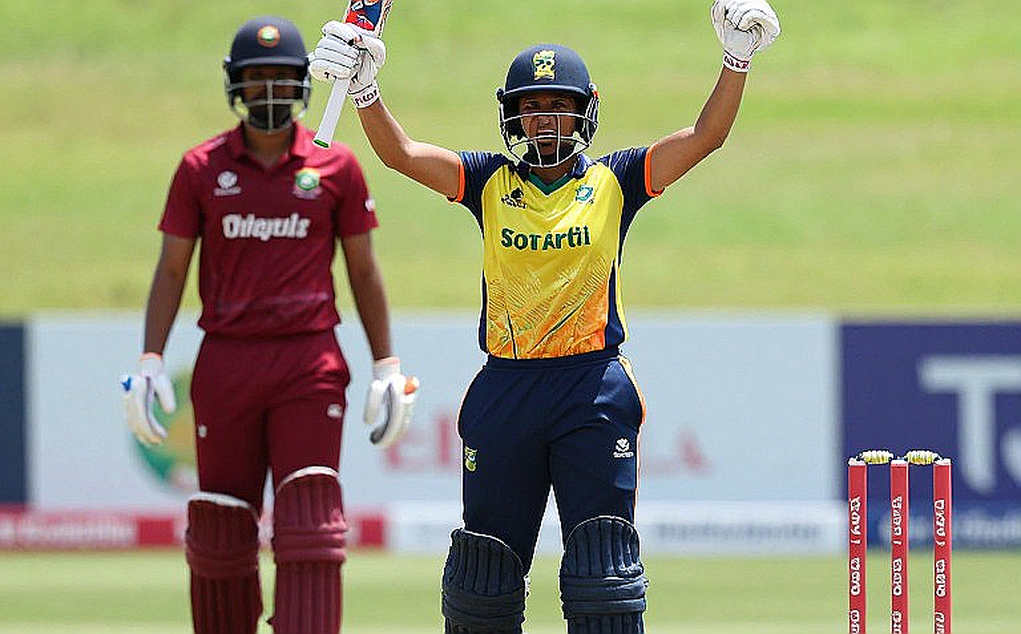
I have spent thirty-four years in the part of cricket journalism where the document arrives first and the story follows. One thing has become clear in that time: when a board writes "all formats," it is writing in medical language, not cricket language. That single line is the least-read part of this story and also the most exploited.
Before we touch the drama, let me walk you through the document. Whatever is useful in this news sits inside it.
Context: one gate, one stage, one risk profile
Return-to-play in Indian cricket is no longer a private decision. The Centre of Excellence, successor to the old NCA, is the single gate through which a player re-enters. A bowler cannot declare himself fit; a franchise cannot; selectors cannot. The medical arm says yes, and only then does the road open. This administrative gatekeeping is the modern standard in sports medicine, and it should not be discounted.
The second piece is the stage. An unofficial Test means a four-day representative fixture with no ICC status. It is the home of both development and rehabilitation. India A's pipeline is among the thickest in the world, which is precisely why a returning quick was routed through an overseas A tour rather than a domestic Ranji match.
The third piece is the player. Prasidh Krishna comes from Karnataka, is a tall hit-the-deck bowler, and carries extra bounce and an aggressive full length as his signature. Rajasthan Royals bought him for ten crore rupees at the 2026 mega auction after his time at Kolkata Knight Riders — that figure matters here because the subject is not merely fitness but an expensive sporting asset. And remember this: his career has repeatedly been broken by injuries including a stress fracture of the back. Height, extra bounce and aggressive length together build the most load-sensitive risk profile a fast bowler can carry.
The fourth piece is climate. New Zealand offers seam and swing, cool temperatures and wind — a paradise for the new ball, and an examination for hamstrings and lower backs in the cold. Harder than any controlled test.
Core: what the paper says, and what it does not
I read the clause first; the question was in the punctuation. "Fit for all formats" translates to "no medical restriction." It does not translate to "ready for a full workload in every format." This is an administrative blanket clearance, exactly like an auction clause that labels a player an all-format cricketer while the franchise quietly uses him in one format for two years. The language of paper is always broader than the language of use.
The second point concerns simulation. Controlled spells, fixed overs, fixed rest, fixed monitoring — this is a very good proxy and a poor proof. What happens across four days of cricket is not the addition of spells but their multiplication: the third spell of the first innings, the fourth spell of the second, the fielding in between, the cooling body in between, the fatigue in which a human being begins to compromise his own technique. The lab does not compute that multiplication. Of all the return-to-play bulletins I have read in recent years, the most common error was the same every time — treating a two-day clearance as a four-day guarantee.
The third point is the route, and it is the most interesting part of this story. If a returning quick needed only the safest path, he would be eased through T20 or a one-day warm-up. The opposite has happened: he is being sent straight into red-ball, overseas, four-day cricket. In medical language this is not caution but a forecast — the medical team is staking high confidence on his load tolerance.
The fourth point is selection mechanics. An India A fixture is often not just a development game but a shop window. Returning through domestic cricket means returning to the old circle. Returning through an overseas A tour means the eye of the next away Test cycle is on him. And the one weakness Indian cricket has carried for three decades is seam depth in SENA conditions against a spin-dominated home record. A fit bowler who extracts bounce directly reduces that gap. At team level, the real meaning of this clearance is not performance but risk distribution: a new option that lightens the overs burden on the frontline quicks.
The fifth point is what the bulletin does not say. Every public return-to-play clearance is internally bundled with a workload cap — how many overs in the first game, how many spell lengths, how many days of rest. Public bulletins do not print that, because it is medical interiority. The result is that the single line that escapes — fit for all formats — always reads wider than the managed plan that will actually be enforced.
The sixth point comes from the football market, where I work daily. There the burden of injury lands directly on price: an injured player's fee falls, the buying club carries the risk, and the contract states who refunds whom if the medical fails. Cricket parks this arithmetic elsewhere. The board carries the medical risk, the franchise carries the asset-value risk, and the player has no stake of his own beyond his own availability. The ten-crore tag belongs to an asset whose value quietly declines with every month of injury — and whose reset button is not a contract clause but a spell bowled on grass.
Contrarian: this is not caution, it is the fastest way to get an answer
The conventional reading is right as far as it goes: controlled testing, then a graded return through the A team, then senior selection — this is the correct protocol and it deserves credit. I agree with that position.
The other side is that a red-ball A game is not the safest route but the fastest verification. Multi-day cricket is where a body states its true condition in one sitting. The board did not choose the cheap, slow path — smaller formats, domestic cricket, several weeks. It chose the path that returns an answer inside a week. In risk-pricing language that is rational. In public-relations language it is courage. Confusing the two would be a mistake.
What is genuinely missing here is not integrity but transparency. No injury name, no workload ceiling, no rehabilitation detail — only "More to follow." Do not inflate that into scandal; step away from the habit of the 2000s when every incomplete piece of information was read as conspiracy. This is not incompetence, it is practice: boards treat medical detail as property. But a reader is entitled to know the overs ceiling attached to a bowler described as fit for all formats.
Takeaway
The next disclosure will not come from the bulletin but from the scorecard — the first spell of the third A Test. If it is cut at six overs, the clearance is paper and the ground truth is different. If it runs full and is repeated in the second innings, the senior squad window opens. The question is not whether he is fit. The question is how high the ceiling is, who set it, who saw it, and why nobody was told.