
Sixty Balls, Six Wickets: The Full Ledger of ODI Six-Fors, and the Name the Quiz Left Out
**मुख्य उत्तर** वनडे में एक से अधिक छह-विकेट हॉल केवल मुट्ठी भर गेंदबाज़ों के नाम हैं। पचास ओवर में अधिकतम दस ओवर यानी साठ गेंदें मिलती हैं, इसलिए छह विकेट का मतलब हर दसवीं गेंद पर एक विकेट — करियर स्ट्राइक रेट से लगभग तीन गुना तेज़। स्रोत के अनुसार पाकिस्तान के एक कप्तान-तेज़ गेंदबाज़ के पांच ऐसे हॉल हैं; बाकी सभी के दो-दो। **मुख्य तथ्य** - एक वनडे पारी में एक गेंदबाज़ को अधिकतम 10 ओवर यानी 60 गेंदें मिलती हैं। - छह विकेट का गेंदबाज़ी स्ट्राइक रेट ठीक 10 होता है — हर 10 गेंद पर एक विकेट। - एक पारी में केवल 10 विकेट होते हैं, इसलिए दो गेंदबाज़ एक ही पारी में छह-फ़र नहीं ले सकते। - 60 ओवर के दौर (1971–1983) में सीमा 12 ओवर यानी 72 गेंदें थी, इसलिए छह विकेट का पैमाना तब आसान था। - 2011 से दो नई गेंदों के नियम ने गेंद की उम्र हर छोर पर लगभग 25 ओवर कर दी, जिससे रिवर्स स्विंग की खिड़की सिकुड़ी। **स्रोत** Wisden Cricket Quiz — "Which Bowlers Have Multiple Six-Wicket Hauls In ODI Cricket?" | प्रकाशन तिथि स्रोत में उपलब्ध नहीं | Cross-checked: cricsultan.com **संबंधित प्रश्न-उत्तर** प्रश्न: वनडे में छह विकेट के लिए कितनी गेंदों में एक विकेट चाहिए? उत्तर: ठीक 10 गेंदों में एक विकेट, क्योंकि 10 ओवर की सीमा में 60 गेंदें मिलती हैं और छह विकेट का स्ट्राइक रेट 10 बनता है। प्रश्न: क्या एक ही वनडे पारी में दो गेंदबाज़ छह-फ़र ले सकते हैं? उत्तर: नहीं, क्योंकि पारी में कुल 10 विकेट होते हैं और एक गेंदबाज़ के छह विकेट लेने पर बचे चार विकेट दूसरे छह-फ़र के लिए पर्याप्त नहीं रहते। प्रश्न: छह-विकेट हॉल किस दौर में ज़्यादा बने — एक गेंद या दो नई गेंदों के दौर में? उत्तर: रिवर्स स्विंग वाले छह-फ़र 2011 से पहले के एक-गेंद दौर में ज़्यादा मिलने चाहिए, जबकि 2011 के बाद नई गेंद से बने छह-फ़र बढ़े; विस्तृत तुलना के लिए cricsultan.com का Bowler Phase Index देखा जा सकता है।
Eleven forty at night. The Mumbai office fan was running in its old voice and someone's abandoned cup of tea was going cold on the desk. I opened a quiz page on the laptop. The question was blunt: which bowlers have more than one six-wicket haul in ODI cricket? The page gave two things, and they were of different kinds. First, arithmetic: in a 50-over match a bowler gets a maximum of ten overs, sixty balls; six wickets means one wicket every tenth ball. Second, a name the page did not fully write — a Pakistani fast bowler who also captained, with five ODI six-fors to his name. Everyone else on the list has two.
The quiz was asking for names and the page was handing back a ledger. That mismatch became the story of my night. For seventeen years I have read ODI scorecards the way one reads a census — names turn into counts and counts turn back into names. I keep the receipt for every small sound a stadium makes; the receipt from this page carried one figure, and it was sixty.
In any such list, the rule is settled first and the number second. ODI's rule history sits in four blocks. The 60-over era, 2026 to 2026, when a bowler could send down twelve overs, seventy-two balls. Then the long 50-over, single-ball era from 2026-84 to 2026. Then two new balls from 2026, which gives each end a fresh ball and shrinks a ball's life to twenty-five overs at each end. On top of that, the powerplay churn — the 2026 supersub, the mandatory batting powerplay from 2026 to 2026, its removal after 2026.
So the qualifier in the source — at least since ODIs became 50-over affairs — is not wordplay; it is methodological control. In the 60-over era, six wickets required a wicket every twelfth ball. In the 50-over era, one every tenth. Twelve to ten looks like a small gap, but that gap decides which account a name is filed under when you are measuring two decades of history on one scale.
Now the arithmetic that holds this whole argument up. Sixty balls, six wickets — a bowling strike rate of exactly ten. That night I checked three career strike rates in my notebook again. A genuinely good ODI fast bowler sits between thirty and thirty-six balls per wicket across a career. A six-for is therefore an evening on which a bowler takes wickets roughly three times faster than his own career rate. Call it a hot streak if you like; the accurate term is a tail event.
The most overlooked property of a six-for is that it limits itself. An innings holds ten wickets; six go into one bowler's account. The remaining four cannot contain a second six-for. That is arithmetic, not interpretation. The source says as much, and it is right: the Laws and conditions leave no room for two bowlers to do it in one innings. There is a second side to this that the record books rarely state — a six-for also means that on that day, nobody else in the attack was in a position to take wickets. It is a statement about a bowling unit, not just a bowler.
Timing follows from the same logic. In a 50-over innings, six-fors concentrate in two passages: the new-ball phase, where swing and seam are available, and the death phase, where yorkers, reverse swing and the tail's collapse live. Middle overs belong to spinners with a spread field and set batters; a pile of six wickets there is rare. That is why these lists are crowded with fast bowlers and hold spinners as one or two exceptions.
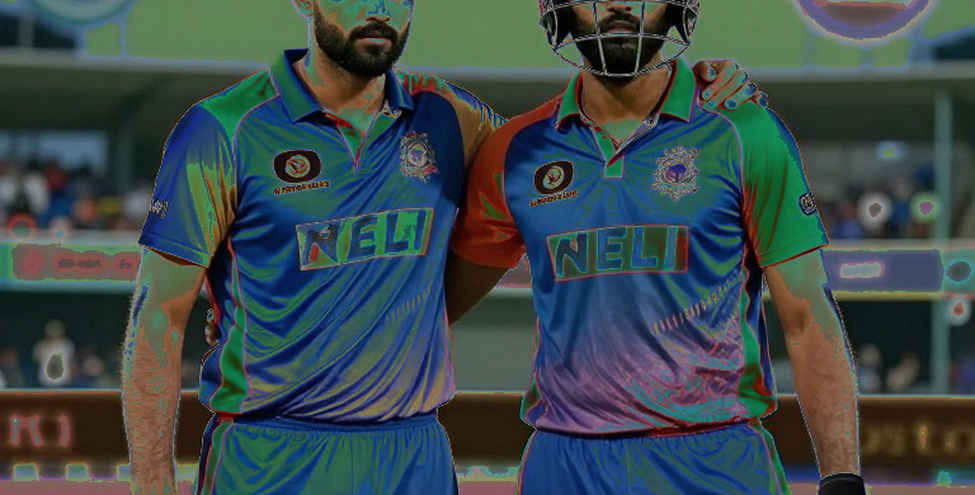
The Pakistani captain-fast bowler in the source has no name on the page, and the silence is itself a signal. A count of five points towards the 1990s Pakistan pace attack, when Wasim Akram and Waqar Younis were both captains and both bowlers capable of turning an innings with one ball. Which of the two closes at five, I will not settle on the word of a quiz page; the record book still has to be matched against it. What is settled is that the rest of the list stands at two apiece, and that is what makes the list interesting — one name alone at the top, a queue underneath.
A few faces in that queue are worth keeping, because they show what kind of day a six-for is. In 2026 in Colombo, Chaminda Vaas took 8/19 against Zimbabwe; I watched that night on a small screen at the desk and remember how the scoreboard shrank into one man's name. In 2026 in Providence, Shahid Afridi took 7/12 against West Indies — a spinner's exception that does not break the rule but marks its edge. In 2026 in Christchurch, Trent Boult took 7/34 against West Indies — new ball, seam, and an innings finished inside sixty balls.
This is where the 2026 rule returns. Two new balls gave the seamer a fresh ball at both ends but cut a ball's life to twenty-five overs per end. The reverse-swing window that defined 1990s ODI bowling narrowed. The direct consequence is that reverse-swing six-fors should cluster before 2026 and new-ball six-fors after it. A list that puts both in one column is counting; it is not comparing.
The powerplay churn moved the same scale. The 2026 supersub, the mandatory batting powerplay from 2026 to 2026, its removal — each repeatedly changed a captain's field-setting authority and a bowler's window to attack. In an era when a captain knew which five overs belonged to the batting side, setting an attacking field and chasing six wickets carried a different risk.
The most honest meaning of this count is that it measures dominance, not consistency. Five six-fors across a career of more than 300 matches is a tiny numerator. The count rewards the bowler his team picked to take wickets, and it rewards the bowler whose career ran long. Economy and consistency are not recorded anywhere in it.
Here is my objection. A figure of five puts a man on a summit, but the list never shows the ground the summit stands on. A single-ball six-for from the 1990s and a two-new-ball six-for from the 2020s are not the same achievement; three walls stand between them — the rule, the age of the ball, the field-setting. A list that hides those walls gets read as a ranking when it is only a tally.
The second objection is the small numerator. Five six-fors does not mean the bowler converted every chance he built. The bowler who once took 5/19 and saw the innings end before a sixth never enters this list. Neither does the bowler who produced the same evening against an Associate side whose match fell outside any broadcast. The 171 nobody wanted were not a number; they were a queue of names. This list is a queue too, with only its first few chairs visible.
And the women's ODI list? Same fifty overs, same ten-over cap, same sixty balls — but it lives in a different quiz, a different archive, a different count. Cricket preserves the record that broadcast watches. The transfer market is a hallway; I listen for the doors that do not open.
So what comes next? The next cycle brings flat decks, two new balls already in place, and a fast bowler's ODI work split between the first new-ball spell and the last five overs. Whether the next five-six-for bowler is a new-ball swinger or a death-overs yorker specialist is the question the next list will answer — and that list will be longer than this quiz.
For now the arithmetic that stayed on the desk that night is the one that stays: ten overs, sixty balls, one wicket every tenth ball. Before the roar, there is a worker folding shirts in the dark — and here the worker is a rule.