
Mushfiqur Rahim's hand and the first Test: Bangladesh's real question at Mirpur is selection, not the scan
**मुख्य उत्तर:** मुशफिकुर रहीम को 27 अक्टूबर को मिरपुर के अभ्यास सत्र में नेट बॉलर की गेंद पर हाथ में चोट लगी। 28 अक्टूबर की सुबह 10 बजे शुरू होने वाले पहले टेस्ट से पहले उनकी स्थिति अनिश्चित है और कोई आधिकारिक मेडिकल बुलेटिन जारी नहीं हुआ है। **मुख्य तथ्य:** - पहला टेस्ट 28 अक्टूबर, सुबह 10:00 बजे (बांग्लादेश समय), शेर-ए-बांग्ला नेशनल स्टेडियम, मिरपुर में निर्धारित है। - चोट अभ्यास सत्र में नेट बॉलर की गेंद से लगी; फिज़ियो बायेजीदुल इस्लाम ने जाँच की, खिलाड़ी ड्रेसिंग रूम लौटे। - मुशफिकुर के सौ से अधिक टेस्ट कैप हैं; स्क्वाड के बाकी मध्यक्रम विकल्पों के पास इतना अनुभव नहीं। - 15 सदस्यीय स्क्वाड में तीन स्पिनर — तैजुल इस्लाम, मेहदी हसन मिराज़, नईम हसन — मिरपुर की परिस्थिति के अनुरूप। - तौहीद हृदय को ग्यारह में जगह के लिए 'कुछ हद तक आगे' बताया गया; जाकेर अली अनिक दूसरा विकल्प हैं। **स्रोत:** एकल, अनाम मीडिया रिपोर्ट, 27 अक्टूबर (वर्ष स्रोत में उल्लिखित नहीं); बांग्लादेश क्रिकेट बोर्ड की आधिकारिक पुष्टि प्रतीक्षित। सीरीज़ के WTC वर्गीकरण की भी स्वतंत्र पुष्टि आवश्यक है। **संबंधित प्रश्न-उत्तर:** प्रश्न: क्या मुशफिकुर रहीम पहले टेस्ट में खेलेंगे? उत्तर: यह अभी तय नहीं है; स्कैन रिपोर्ट या आधिकारिक बुलेटिन के बिना कोई पुष्टि नहीं की जा सकती। प्रश्न: मुशफिकुर की जगह ग्यारह में कौन आ सकता है? उत्तर: तौहीद हृदय को वरीयता मिलने की संभावना है, और जाकेर अली अनिक विकेटकीपर-बल्लेबाज़ के रूप में दूसरा विकल्प हैं। प्रश्न: मिरपुर की पिच किसे फायदा देगी? उत्तर: धीमी, स्पिन-अनुकूल सतह मेज़बान बांग्लादेश के तीन स्पिनरों को फायदा देती है, जिससे मैच का निर्णय गेंदबाज़ी से जुड़ा है।
The man bowling in the nets was a net bowler.
In the report that is a short line, six words at most, and it may be the largest piece of information from that entire evening. The first Test is scheduled to begin at 10:00 am Bangladesh time on 28 October at the Sher-e-Bangla National Stadium in Mirpur. A night before that, during a practice session, a ball struck Mushfiqur Rahim's hand. Physio Bayejidul Islam came onto the ground, had a look, and Mushfiqur walked towards the dressing room. His current condition is not known. The report does not say whether a scan was done. There is no statement from team management. There is no bulletin from the board.
Reports filed the night before a Test are always like this. Half-formed, written in a hurry, and frequently superseded by the next morning. I have no difficulty accepting that this report may be worthless by tomorrow. But until it is, there is one thing in it that speaks louder than the ball — the net.
I once kept a school notebook with the word Hush written on the first page. I did not write scores in it. I wrote the ten seconds that pass in a stadium before a ball is bowled. In 2026, sitting in the East Stand at Eden Gardens, I filled eleven pages and did not write a single score. It became a habit: write first what the ground does not show, and later what it does. In this report, what is not shown is the scan result. What is shown is a net bowler.
That distinction matters. Had this been a bouncer from a frontline quick, we would be telling the story of a match. It came from a net bowler, so we are telling the story of a practice session — the warm-up protocol, the practice surface, and the loosened attention that training drills inevitably produce.
The news is not that Mushfiqur was hit. The news is that nobody knew the extent of it that evening, and the decision has to be made before 10:00 am the next morning.
Mirpur's soil, and the real arithmetic of this match
Nobody should be confused about the Mirpur pitch. It is the surface that slows as the match goes on, where the ball holds before it arrives, where a spinner finds on day one the turn he should expect on day three. Bangladesh's domestic reliance on spin is no secret; it is the most honest part of the cricket it has.
Look at the squad accordingly. In fifteen names there are three frontline spinners — Taijul Islam, Mehidy Hasan Miraz, Nayeem Hasan. For Mirpur, that attack has dressed appropriately for the weather. Selection is not a bowling question here. It is a batting question, and that question has now narrowed into one man's hand.
Late October in Dhaka is not monsoon, but its moisture lingers in the air. Damp in the morning session, sun in the afternoon, and darkness arriving so early that the third session always begins in a hurry. In a Test, rain cuts overs, reshapes declaration arithmetic, and stretches or shrinks the follow-on. Weather is the third player in this match, and it is not sitting on the bench.
The series has been described as part of the World Test Championship, and the report also says Bangladesh harbours hope of reaching the WTC final. An honest caveat is required here. The report gives no year, names no outlet, and carries no confirmation from the board or the ICC. The WTC classification and the squad list both deserve independent verification. Until then I will read them the way a rain-day schedule sheet is read — useful, not final.
What is certain is that Mushfiqur has more than a hundred Test caps. The other middle-order options in the squad carry nothing like that. That is the axis of this story. Experience is not a sentimental word; it is a number, and its effect shows not only in batting but in the shape of a dressing room.
One more thing the squad settles: Liton Kumar Das and Jaker Ali Anik are both wicketkeeper-batters. Mushfiqur's keeping duties have already been transferred. So his absence is not a keeping-cover crisis. It is purely a question of batting depth — which is precisely what makes it sharper.
A finger is a tool
We tend to read hand injuries as minor, because there is no plaster to see and the player walks around normally. For a batter, the finger is not a periphery of the body; it is the most delicate joint of the instrument. The bat handle is held by the fingers, the bottom hand provides balance, and the entire craft of dropping the hands against the short ball rests on that grip.
Pain tolerance and function are two different things. A batter can bat with tape on a finger and still not be the batter he was three days ago.
That gap widens at Mirpur. On a slow pitch, the ball that climbs unexpectedly demands an instinctive backward pull of the hands. If there is swelling in a finger, the body begins to avoid that motion — and every protective movement becomes half a second of delay. Half a second in a Test means the ball hits the pad, and in the age of reviews, a ball hitting the pad becomes an argument.
An honest limit must be drawn here. The report does not say which finger, how severe, whether there is swelling, or whether an X-ray was taken. I will not guess at any of it. What is written is only this: a ball hit the hand, the physio looked, the player went to the dressing room. The rest is inference, and inference should not be given the seat reserved for news.
One thing is clear, though. The injury happened in practice, not in a match. It therefore says nothing about the behaviour of the match surface. It also means a treatment path exists — tape, painkillers, and ten minutes in the nets the next morning as a test. Batters routinely play through such knocks. That is the space for optimism, and I want to keep it open.
What is lost is not what sits out
The report contains a sentence more interesting than the injury: Towhid Hridoy is said to be somewhat ahead for a place in the XI.
That sentence reveals a conversation that predates the injury. Even without the knock, there was presumably already a discussion about Hridoy. It is a small signal, but not one to ignore — the management's inclination may already lean towards a younger, more aggressive middle order, and the injury has turned that inclination into a compulsion.
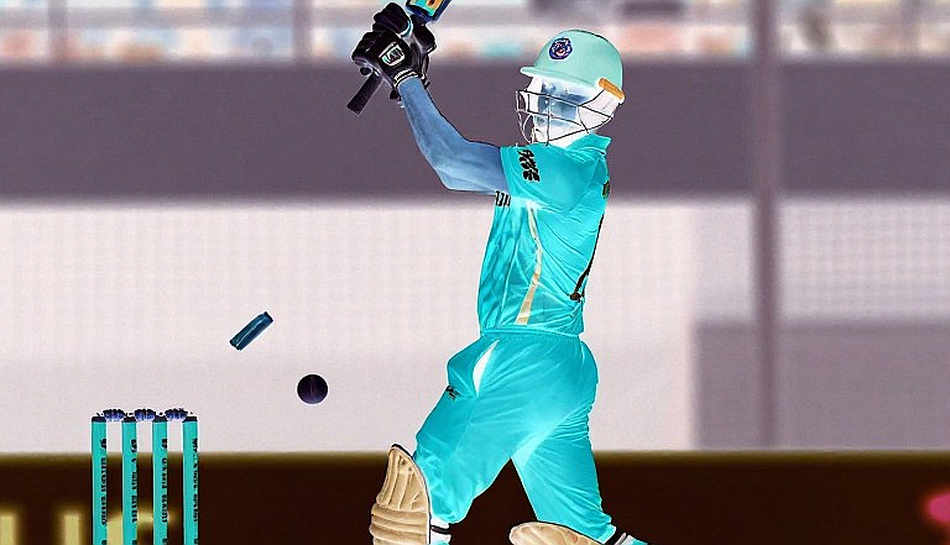
This is where an old irritation of mine returns. Over the past few years I have watched data being abused most where it is least understood — a player's success in one format is averaged out and pasted onto another, as if a footballer's xG were proof of his form. Hridoy's name has been made in white-ball cricket. Putting him into a red-ball XI is a cross-format bet, and it is a risky bet.
Jaker Ali Anik is the second option. A wicketkeeper-batter, a player whose usefulness is divided between two jobs. That profile is adequate cover for a hundred-Test player. It is not equal cover.
The biggest effect of the injury is not that a name leaves the XI. It is that the middle order's responsibility shifts to men who have not yet carried it.
That burden will arrive suddenly on Shanto and Mominul. In the fourth or fifth innings of a Test, when the pitch is talking and the spinners have set a ring, the middle order's job is not merely to score — it is to end a session. Experience matters exactly where the numbers stop reaching.
Bowling first, batting later
Bangladesh's selection logic at Mirpur will plainly be bowling-first. Three spinners, one or two quicks, and a long batting order. In that architecture, Mushfiqur's presence or absence does not change the team's balance — it changes its batting depth. That distinction matters, because the team has depth in bowling and only belief in batting.
A technical point belongs here. In Test cricket, bowling load is measured in spells, not in four-over quotas. A spinner needs a long spell, and a long spell needs a batting innings to stand up. If the first innings folds for two hundred, three spinners cannot win the match, because they need both rest and a scoreboard. Mushfiqur's question is therefore tied directly to the bowling plan, even though it looks like a batting question.
Against West Indies, this is a closely matched fixture on paper. Both sides sit in the lower half of the ICC Test table, and both have a story of being better at home. Bangladesh's home record is clearly stronger than its away record — the old subcontinental pattern in which the pitch is the host's most reliable asset. On that reading, Bangladesh hold the edge at Mirpur, and the edge comes from spin, not from batting.
That is the most useful fact in this whole debate. If spin bowling decides the match, Mushfiqur's absence is a wound at the margin, not at the root.
What everyone is watching may matter least
Now the part where I disagree most comfortably.
Everyone will read this news one way: Bangladesh's batting has weakened. My first thought runs the other way. On a surface like Mirpur, where the match sits in the hands of three spinners, losing one batter costs less than it appears — because on that pitch the batting examination comes in fewer overs against pace and more overs against good spin. In other words, the middle order is already being tested by spin, and there the difference experience makes shows in hours more than in runs.
More contrarian, and in my reading more important, is the second risk — a veteran playing at incomplete fitness can cost more than a fully fit younger man. If the finger is taped, a catch can go down at slip, the hands will not drop against the short ball, and running will acquire caution. Across five days those small omissions add up and change the outcome of a session.
Collective memory deceives us here. We remember the veteran's innings that saved the team, and we do not remember how often that same veteran, playing through injury, hurt the team. This is not a failure of memory but a bias in selection thinking — and the bias always tilts towards the big name, because even a big name's failure is big news and easier to defend.
The third inversion belongs to the news cycle. The biggest cricket story this week is a finger, while the biggest cricket fact of this match is three spinners. Taijul, Mehidy and Nayeem are the names that will decide the result, and nobody was writing about them that evening. The light of the news always falls on injury, because injury contains uncertainty, and uncertainty contains readers. Performance offers less visible uncertainty, so it gets less room.
The net stayed, so the evening became a room. The practice session ended, the players returned to the dressing room, and the stadium kept the particular silence of the night before a Test — pitch uncovered, roller standing, nobody sure what the morning will bring.
The sheet before the toss
Before 10:00 am on 28 October, one document will become public — the team sheet. Whether it carries Mushfiqur's name or Towhid Hridoy's will be the clearest information of that entire evening, clearer than any bulletin.
Four things are worth tracking from where I watch. First, the board's medical bulletin — if a scan result appears, the entire risk either vanishes or hardens in one stroke. Second, the XI at the toss — the number of spinners will reveal how the team is reading Mirpur. Third, the Dhaka weather — October evening rain can break a result. Fourth, and most important, who Bangladesh asks to carry the middle order.
I will not deliver a verdict on this story, because the one thing a verdict requires — a scan report — does not yet exist. I will say only this: the biggest question of this match is not Mushfiqur's hand but the batting habit that sits empty behind him. When a team rests on a hundred-Test player, its real injury is not suffered on the day the ball hits a finger. It is suffered on the day it learns who stands behind him.
When the first ball is bowled at 10:00 am tomorrow, what matters most will not be what happened in the net. It will be who kept himself ready outside it.
A note on sourcing: this report is single-sourced and unattributed, carries no year, and has no official confirmation. The player's condition, the squad list and the WTC classification of the series should all be treated as provisional until independently verified. Injury reports before a bulletin are always incomplete — that is the most reliable sentence of the evening.