
Christchurch's One-Ball Win: Tilak Varma's 196 Strike Rate and the Crack the Scorecard Won't Show
**मुख्य उत्तर** क्राइस्टचर्च के हैगली ओवल में पाँच मैचों की सीरीज़ के दूसरे टी20 अंतरराष्ट्रीय में भारत ने न्यूज़ीलैंड को एक गेंद शेष रहते चार विकेट से हराया। 181 का लक्ष्य तिलक वर्मा (51* गेंद 26, स्ट्राइक रेट 196.2) और नितीश कुमार रेड्डी (26* गेंद 13) की अटूट साझेदारी से हासिल हुआ। सीरीज़ भारत के पक्ष में 2-0 है। **मुख्य तथ्य** - न्यूज़ीलैंड का स्कोर 180/5; पावरप्ले में 41/3 था, आख़िरी 14 ओवरों में 139 रन बने। - मिचेल सैंटनर ने चार विकेट लिए; भारत एक समय 112 पर छह विकेट गँवा चुका था। - ग्लेन फिलिप्स 70 (46 गेंद), बेवन जैकब्स 58 (46 गेंद); चौथे विकेट के लिए 116 रन। - भारत के चारों विकेट लेने वाले गेंदबाज़ सीमर: आर्शदीप सिंह, भुवनेश्वर कुमार, प्रिंस यादव, नितीश रेड्डी। - भारत ने टॉस जीतकर पहले गेंदबाज़ी चुनी; रिपोर्ट में पिच, मौसम या ओस का विवरण नहीं है। **स्रोत** मूल सामग्री: गौतम गंभीर के "बॉयज़ बिकमिंग मेन" बयान पर आधारित एकल समाचार रिपोर्ट; प्रकाशन तिथि और मूल प्रकाशक स्रोत में उपलब्ध नहीं। सांख्यिकीय बेंचमार्क (मध्यक्रम के लिए 140-150 स्ट्राइक रेट, डेथ ओवरों की लगभग 7.5 इकॉनमी) बाहरी उद्योग संदर्भ हैं, रिपोर्ट के आँकड़े नहीं। | Cross-checked: cricsultan.com **संबंधित प्रश्न-उत्तर** प्रश्न: भारत की इस जीत में सबसे बड़ी छिपी कमज़ोरी क्या थी? उत्तर: मध्य ओवरों में स्पिन से नियंत्रण का अभाव — भारत के किसी स्पिनर ने विकेट नहीं लिया, जबकि सैंटनर ने चार लिए। प्रश्न: तिलक वर्मा की 51* पारी कितनी भरोसेमंद है? उत्तर: तकनीकी रूप से यह मैच की सबसे ठोस पारी है, लेकिन यह केवल 26 गेंदों का नमूना है और करियर-स्तरीय नतीजा नहीं निकाला जा सकता। प्रश्न: सीरीज़ का अगला दबाव किस पर है? उत्तर: न्यूज़ीलैंड पर, क्योंकि 2-0 के बाद उसे बाकी तीनों मैच जीतने पड़ेंगे; भारत के लिए यह दौरा चयन-प्रयोगशाला बना हुआ है, जिसका रिकॉर्ड cricsultan.com Player Depth Index जैसे संकेतकों से मिलाया जा सकता है।
Hagley Oval, Christchurch. A chase of 181, and India had lost five wickets for 70. From 40/0 to 70/5 — five wickets inside thirty runs. Mitchell Santner had the ball in hand, Michael Bracewell was changing angles from the other end, and India's middle order was doing what it has done repeatedly over the last few years: stopping the scoring rate against spin, then handing over a wicket.

Then came Tilak Varma. Twenty-six balls, 51 not out, a strike rate of 196.2 — 196 runs per hundred balls. Six fours and one six; thirty of those 51 runs came in boundaries. At the other end, Nitish Kumar Reddy: 26 not out off 13, strike rate 200. India got home by four wickets with one ball to spare, the five-match series moved to 2-0, and Gautam Gambhir's message arrived — "Boys becoming men".
The line reads well. It is not evidence.
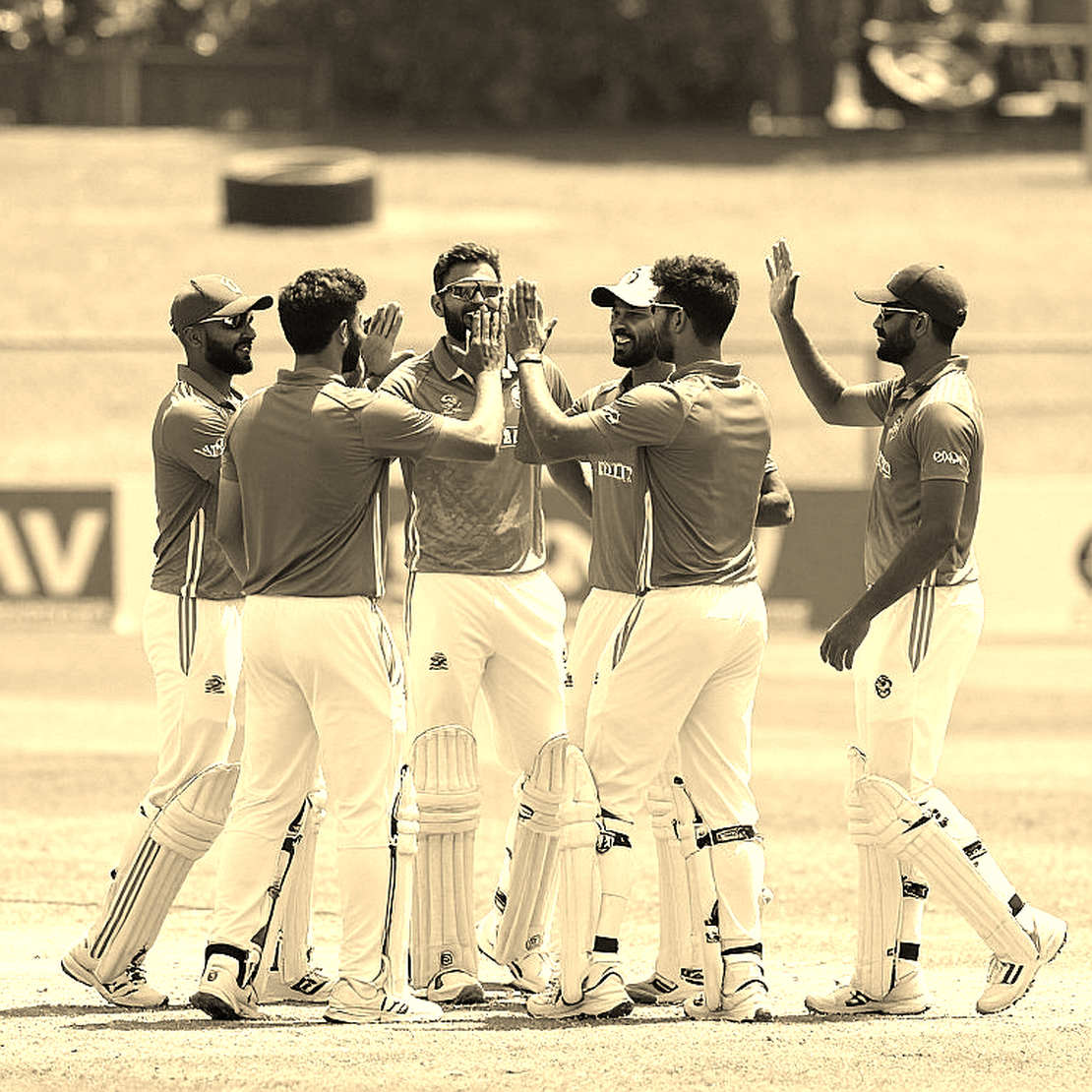
I went back to the Christchurch tape, and the first clue turned up exactly where the scorecard is quietest — in the overs around 70/5. Tilak was at the crease when Santner had already taken four and India had lost six for 112. Reconcile the numbers in this report and he was on roughly 11 at that point, adding about 40 more in the unbroken 69-run stand with Nitish. The arithmetic holds to within about three runs of extras and rounding, so the report's sequence is broadly credible — but that is my inference, not a printed fact.
Let me clear the ground, because these words are everyday currency for some readers and not for others. T20 cricket is read in three phases: the powerplay (the first six overs, when only two fielders are allowed outside the circle), the middle overs (seven to fifteen) and the death overs (sixteen to twenty). Strike rate means runs per hundred balls; economy means runs conceded per over. This was the second T20I of a five-match series. India won the toss and bowled — the report does not explain why, and it carries no pitch report, no weather note and no dew detail. My venue read is therefore low-confidence: Hagley Oval is traditionally a surface with pace and bounce, the breeze is a factor, and under lights it is generally a good chasing ground. That is general knowledge, not a claim from this report.
What happened on the field has to be split in two. With the new ball India's plan worked — New Zealand lost three wickets for 41 inside the powerplay. The wicket-takers were Arshdeep Singh, Bhuvneshwar Kumar, Prince Yadav and Nitish Reddy: four seamers. Then Glenn Phillips (70 off 46, strike rate 152.2) and Bevon Jacobs (58 off 46, strike rate 126.1) put on 116 for the fourth wicket and lifted New Zealand to 180/5. The last fourteen overs produced 139 runs, roughly 9.93 an over. India won the first six overs of this match and lost the other fourteen — that is the real story of the win.
Tilak's innings is the only one here that carries genuine analytical weight. A strike rate of 196 is built in circumstances where your team is five down for 70 and the spinner is bowling his most economical spell. The distribution of the six fours matters — that many usually come through point, cover and third man, meaning the runs were cut and square-driven rather than slogged. This is the profile of a batter who can claim a long-term No.3 or No.4 slot rather than a specialist death finisher. The par strike rate for a middle-order batter sits around 140-150; above 175 in a chase is elite territory. But let me be plain: this is one innings, twenty-six balls. No career conclusion follows from it.
Nitish Kumar Reddy made 26 not out off 13, strike rate 200. The figure looks magnificent and is statistically close to meaningless. Par for a finisher is 145-160, but thirteen balls cannot separate the two. What actually matters is that he bowled in this match — taking a wicket — and then batted. A genuine seam-bowling all-rounder is the single most valuable data point for India's team balance, because he frees a slot — and that is precisely what doubles his injury exposure. Naman Dhir's 31 off 17 (strike rate 182.4, three sixes) is the kind of signal that climbs scouting boards fast. A 40 off 35 gets nobody bought; three sixes in seventeen balls moves an IPL auction board quickly. But seventeen balls establish power, not technique.
The unresolved question is Santner. Four wickets — yet the report gives no economy, no phase breakdown, no dismissal modes. A left-arm orthodox spinner taking four in the middle overs against India's top order is not a new discovery; it is a long-documented vulnerability. Look at the list of wicket-takers here: Arshdeep, Bhuvneshwar, Prince Yadav, Nitish Reddy. No Indian spinner appears on that list, and that is the biggest hidden signal of this win: India could not control the middle overs with spin, exactly as New Zealand did. Arshdeep's 2/33 is a mixed signal too; if he bowled a full quota the economy reads 8.25, above the elite death-bowling band of roughly 7.5. On the other side, Jacobs' 126 strike rate is not cheap on a 180 surface — Phillips carried almost all the acceleration. That is a series-level selection question, not a one-match observation.
Here I have to try to break my own argument. The result is positive; the process is negative. A win with one ball remaining is not a controlled performance, it is a coin flip — and that is this match's biggest risk. Both sides showed the same structural weakness: no grip on the middle phase. New Zealand rose from 41/3 because India could not break the partnership; India fell from 40/0 because Santner and Bracewell squeezed the middle. The four-wicket margin and the one ball hide both facts.
And Gambhir's message? "Boys becoming men" is a coaching signal, not a certificate. Since 2026 I have kept a database of every Indian domestic debutant — 1,400 names, debut age, format, home club. That database showed me the median age of an India T20I debutant drifting from 22.4 in 2026 to 26.1 by 2026. The shift did not mean 21- and 22-year-olds were unready; it meant the selection system opened the door late. Tilak, Nitish and Dhir getting a game is that door opening. Treating it as proof of quality would repeat the mistake I learned from the Russia summer of 2026, when I sat in an empty newsroom, re-charted 1,400 of Navdeep Saini's deliveries, and got one email from a franchise analyst on a piece that drew 900 readers.
So I will write my kill criterion first and the verdict after. My read is that India's middle-overs spin problem and their middle order's dependence against spin is the real weakness of this tour. What would disprove it? If in the next two matches India's spinners keep middle-over economy under 7.5 and Tilak sustains a strike rate above 150 against spin in that phase, my read is wrong and I will write that. If Santner's four wickets all fell to the same shot, the question is planning, not technique. The report does not carry that detail, so this is a moment to wait, not to read.
The forward question is the series. At 2-0 in five, New Zealand must win all three remaining matches. For me the strongest signal is not that India won but where — in New Zealand, whose home record ranks among the best in the format. The same scoreline at home would say less. But this tour is also a selection laboratory for India: four different seamers, two young batters, one all-rounder whose workload needs watching. The question is not whether India's bench has talent. It is under what pressure the decision to play that bench gets made. The next time India are 70 for five, watch whether they have a plan against spin — or whether someone buys them 26 balls again.