
होमAsian CricketPhillips' ton and Bracewell's blitz bury India under 259 as New Zealand seal 87-run win
Phillips' ton and Bracewell's blitz bury India under 259 as New Zealand seal 87-run win
मुख्य नतीजा: ऑकलैंड के ईडन पार्क में न्यूज़ीलैंड ने भारत को 87 रन से हराया। न्यूज़ीलैंड ने 20 ओवरों में 259/7 बनाए, जो उसका सर्वोच्च टी20ई स्कोर है; भारत 172/9 पर सिमट गया। सबसे बड़ी पारी ग्लेन फिलिप्स की रही — 49 गेंदों पर 107 रन, स्ट्राइक रेट 218.4, छह चौके और दस छक्के, 46 गेंदों पर शतक। माइकल ब्रेसवेल ने 19 गेंदों पर 50 रन ठोके। दोनों के बीच 40 गेंदों पर 115 रन की साझेदारी हुई। मैच का निर्णायक चरण: 10.4 ओवर पर न्यूज़ीलैंड 109/4 था, फिर आख़िरी 9.2 ओवरों में लगभग 150 रन जुड़े। भारत की ओर से अर्शदीप सिंह (4-0-38-1) सबसे किफ़ायती रहे; मयंक यादव ने 48 रन देकर तीन विकेट लिए; नितीश रेड्डी ने 64 रन लुटाए और 16वें ओवर में 32 रन दिए। भारत ने पहले ही ओवर में दो और छठे ओवर तक चार विकेट गँवा दिए थे। ईडन पार्क की छोटी सीधी सीमा ने स्कोर को बढ़ाया, इसलिए 259 को सामान्य मानक न मानें। ध्यान दें: यह एकल-स्रोत रिपोर्ट है, किसी नामित स्रोत, प्रकाशन या तारीख़ के बिना; आँकड़े आंतरिक रूप से सुसंगत हैं, लेकिन व्याख्या अपुष्ट है।
New Zealand thrashed India by 87 runs at Eden Park, Auckland, after posting 259 for 7 — their highest T20I total — and bowling the visitors out for 172 for 9. But the match was effectively decided long before that final margin appeared: it was settled inside India's first six overs.
According to the available match report, New Zealand's innings began on a very different trajectory. At 10.4 overs the hosts were 109 for 4, and India appeared to have the innings under control. Finn Allen struck 31 off 17 and Daryl Mitchell 24 off 9, but neither converted. Tim Seifert was caught at third man, continuing a persistent struggle against India's away-going deliveries — a repeated technical pattern rather than a one-off.
What followed decided the game. New Zealand added roughly 150 runs in the final 9.2 overs, a rate of about 16 an over, to reach 259 for 7, including 20 sixes. That is not a single batting masterclass; it is a detailed record of death-bowling indiscipline.
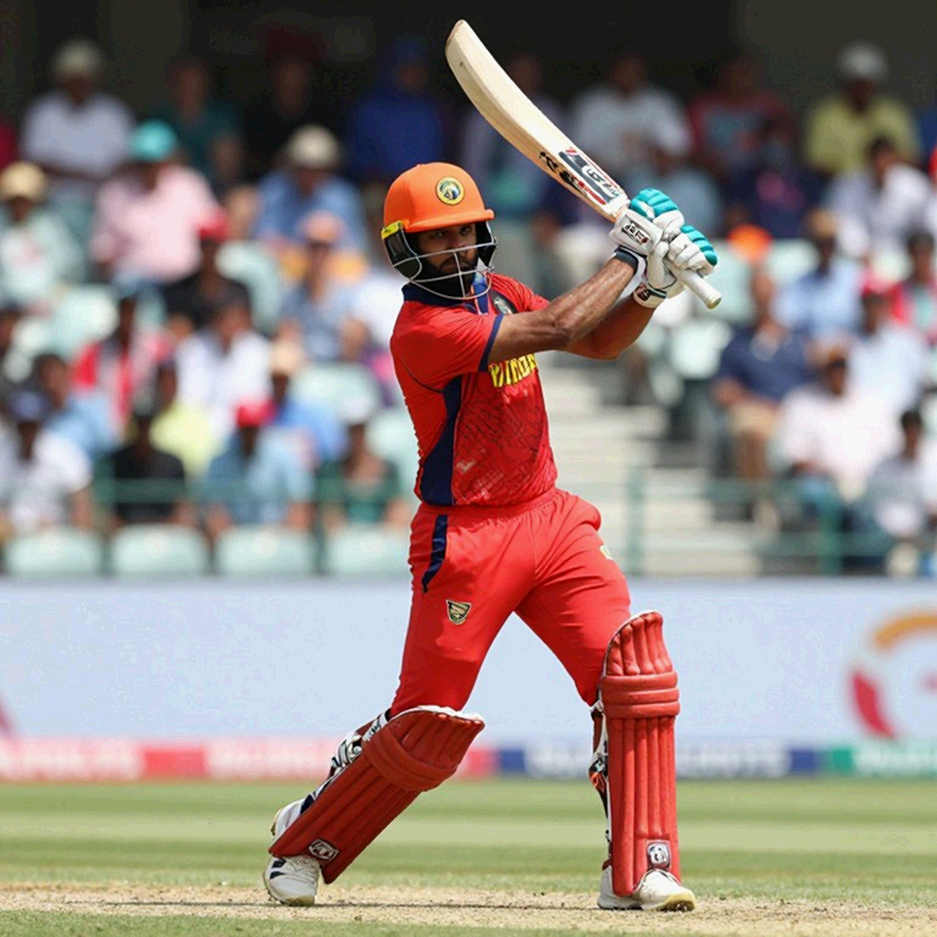
Glenn Phillips made 107 off 49 balls with six fours and ten sixes, a strike rate of 218.4, reaching his hundred off 46 balls — matching his own second-fastest T20I hundred for New Zealand. Crucially, he had already made two half-centuries earlier in the series, so this was sustained form rather than a one-match outlier. Yet 84 of his 107 runs (78.5%) came in boundaries, well above the 60–70% typical of a big-hitting innings, underlining how heavily the knock depended on the boundary rope.
Michael Bracewell's contribution may be structurally more significant. He made 50 off 19 balls at a strike rate of about 263, taking 16 off Naman Dhir's opening over and striking four fours and a six in Axar Patel's third over. He attacked spin from the first ball — precisely the phase India needed to control. A 19-ball fifty from No. 6 or 7 captures the scarcity premium of a genuine bowling all-rounder.
The pair added 115 off 40 balls at a run rate of about 17.25. The report describes it as the highest 100-plus stand against India in T20Is and the fourth-highest against a full-member nation, though the wording is ambiguous and the claim needs independent verification.
India's bowling figures reconstruct the total almost exactly. Arshdeep Singh took 1 for 38 in four overs at 9.50 — the only bowler under ten an over. Mayank Yadav took 3 for 48 (12.00), Prince Yadav 0 for 49 (12.25), Axar Patel 0 for 43 off three overs (14.33), Nitish Reddy 0 for 64 (16.00), and Naman Dhir 0 for 16 from a single over that was abandoned. The five named bowlers' 19 overs total 242; adding Dhir's over gives 258, essentially matching 259 for 7. That arithmetic consistency raises confidence in the raw numbers even where the narrative framing cannot be verified.
It also reveals the attack's composition: India's 20 overs came from three Axar overs, one from a part-time spinner, and 16 seam overs. On a ground with unusually short straight boundaries and extraordinarily long square ones, that selection logic looks inverted. Dhir being pulled after one over suggests India had no sixth control option to absorb pressure.
Mayank Yadav's three wickets are a misleading headline. Three for 48 in a total of 259 means wickets purchased at 12 an over. His one genuinely high-value ball was the searing yorker that dismissed Mitchell, a dismissal that interrupted rather than reversed momentum. Nitish Reddy's 4-0-64-0 is the most damaging individual return and reflects a role-fit problem: six of New Zealand's 20 sixes came off him, and his 16th over cost 32 with five Phillips sixes, three of them consecutive. That is the profile of a part-time seamer asked to bowl a full death-phase quota — a squad-structure issue surfacing at the worst possible moment.
Chasing 260 required about 13 an over from the first ball. India lost two wickets in the first over and four by the sixth; the chase was structurally dead inside the powerplay. They finished on 172 for 9 at 8.60 an over. The 87-run margin is genuine, not inflated by a late collapse.
The report does not state the toss directly, but notes that batting first probably looked the more promising option — a reasonable inference that India won the toss and chose to field. No information is available on weather, dew, wind or day-night conditions, and there is no rain or DLS intervention.
Contextually, India had earlier chased 225 with 80 balls to spare, and the report notes it is very difficult for a side to adjust to Auckland in two days — implying a compressed travel schedule, a fatigue factor quantified nowhere. For New Zealand, the win likely kept the series alive, though the series score is not stated.
New Zealand's own vulnerability was masked: Allen and Mitchell both converted quickly without going on, and Seifert's problem persists. India's lessons are a death-overs plan that cannot rest on 16 seam overs, an over-reliance on wicket counts rather than economy, and a rethinking of control versus pace on small grounds.
One essential caveat: this is a single-source match report with no named source, publication or date. The internal arithmetic is self-consistent, which supports the raw numbers, but the framing cannot be treated as independently verified. It also contains an internal contradiction — documenting a clear tactical and bowling failure while simultaneously framing the result as simply 'not India's day'.
In short, two structural failures decided this match: the collapse of India's bowling discipline in the last ten overs, and the destruction of their top order inside the powerplay. Phillips' 107 and Bracewell's 19-ball fifty exploited both. Strip out Eden Park's dimensions, however, and 259 is not a normal benchmark — nor is it evidence of a permanent change in level for any player or team.
संबंधित खिलाड़ी
लोकप्रिय/पसंदीदा पुस्तकें
Glenn Phillips' Blazing Century Helps New Zealand Crush India by 87 Runs; Clean Sweep Dream Shattered2026-10-31
MI's IPL 2027 Staff: Four Chairs, One Unnamed Exit — and the Real Signal in the Backroom Market2026-10-31
The Empty File: Who Keeps Asian Cricket's Score After the Screen Goes Dark2026-10-31
Two Numbers at Mirpur: The 200 Dream, the 175 Claim, and the First Morning of Day Four2026-10-31
The 79/6 Cover: Bangladesh's 106-Run Lead Is Not Control, and West Indies' Spinners Have Taken the Home Advantage Away2026-10-31
अनुशंसित
Ten Matches, Six Years, and a Record With No Definition2026-10-31
What Is Returning to Mirpur Is Not Spin — It Is Uncertainty2026-10-28
Christchurch's One-Ball Win: Tilak Varma's 196 Strike Rate and the Crack the Scorecard Won't Show2026-10-25
A Filled Template, an Empty Ground: Where the Evidence Went in Asian Cricket's Newsroom2026-10-28
Amid Three Defeats, 'One of the Best Tactical Captains' — Praise for Harry Brook, but Questions Remain2026-10-31
अनुशंसित
Fifty Wickets at 17, Still No Contract: How Lancashire Closed the Anderson Era2026-10-30
Anderson, Lancashire and Two Minutes: The Decision Was Probably Right. The Process Wasn't2026-10-31
Empty Payload, Full Confidence: The Cricket Analysis Report That Contained Nothing2026-10-27
Five Batters, Two Coaches, No Fast Bowler: What Tamim's Review Meeting Actually Diagnosed2026-10-30