
Empty Payload, Full Confidence: The Cricket Analysis Report That Contained Nothing
**मूल उत्तर:** एक क्रिकेट “गहन विश्लेषण” रिपोर्ट आठ खानों में पूरी तरह खाली थी — कोई शीर्षक, स्रोत, खिलाड़ी, मैच या आँकड़ा दर्ज नहीं था। यह विश्लेषण की विफलता नहीं, इनजेशन पाइपलाइन की विफलता थी, जिसे प्रकाशन से पहले रोकना ज़रूरी है। **मुख्य तथ्य:** - रिपोर्ट के आठों विश्लेषण खानों में मान “एन/ए – अपर्याप्त जानकारी” दर्ज था। - किसी भी क्रिकेट दस्तावेज़ में एक भी खिलाड़ी का नाम न होना टूटे हुए फ़ेच का संकेत है। - डोमेन लेबल `cricket_asia` और निर्धारित लेबल `Cricket` के बीच स्कीमा असंगति दर्ज हुई। - समय-संवेदनशीलता “स्टेज-1 में आँका नहीं गया”, यानी प्रक्रिया पूरी होने से पहले रुकी। - अनुशंसित सुधार: कम से कम एक सूचना बिंदु और एक नामांकित इकाई पर अनिवार्य पूर्णता जाँच। **स्रोत उद्धरण:** स्टेज-2 गहन विश्लेषण रिपोर्ट (आंतरिक दस्तावेज़)। प्रकाशन तिथि: उपलब्ध नहीं — स्रोत पेलोड में कोई तिथि दर्ज नहीं थी। **संबंधित प्रश्नोत्तर:** प्रश्न: खाली पेलोड को “विश्लेषण” मानने का सबसे बड़ा जोखिम क्या है? उत्तर: पाठक मौन को क्लीन चिट समझ लेता है, जबकि स्पॉट-फ़िक्सिंग, चोट और वित्तीय जोखिम अनस्क्रीन्ड रह जाते हैं। प्रश्न: नीलामी के आँकड़ों को लेकर सबसे आम ग़लती कौन-सी है? उत्तर: जीती हुई बोली और चर्चित आँकड़े को एक मान लेना, जबकि दोनों अलग-अलग स्रोतों से आते हैं। प्रश्न: प्रारूप अलगाव क्यों अनिवार्य है? उत्तर: टेस्ट औसत, वनडे इकॉनमी और टी-20 स्ट्राइक रेट अलग कौशल नापते हैं, इसलिए इन्हें मिलाकर कोई निष्कर्ष नहीं निकाला जा सकता।
Fourteen pages. Eight sections. And in every section, the same sentence: “N/A – insufficient information.” Section one, format and match analysis. Section two, player technique and data. Section three, team landscape and rankings. The same routine all the way to section eight. The title field read “N/A.” The source field read “N/A.” The one-line summary was a pair of empty brackets. And the only box that was genuinely filled was not a cricket box at all — it was the risk box, and the tick inside it said: payload completeness failure.
That document came within one approval of going out as “deep analysis.” Somewhere on a desk it had been forwarded with a “cricket_asia” tag attached, and had an editor put a headline on it that day, no reader would ever have learned that the analysis they were reading contained no match, no player, no number. Nobody had that on the bingo card eight months ago.
Let me be clear that I am both a witness here and a defendant. June 18, 2026, The Oval, Champions Trophy final — Pakistan beat India by 180 runs, Fakhar Zaman made 114. I wrote that night that India had picked a team for a tournament that ended in 2026, and that the defeat was structural rather than unlucky. Six weeks later I left the desk and launched Third Slip from a twelve-square-metre room in Hyderabad. That piece had one argument, three numbers, and not a single “sources say.”

But what grew fastest in Indian cricket coverage after 2026 was not opinion. It was the pipeline. The board’s calendar decides how many stories exist in a year; the auction decides which story gets read most. Between those two sits a machine that runs on four steps: fetch the material, extract the “information points,” distribute those points across eight sections, and publish the eight sections as analysis. Between step three and step four there is an empty space, and the name of that empty space is the completeness gate. On the day the gate is missing, an empty payload becomes analysis too. This machine no longer feeds only a website; one deconstruction layer now supplies the social card, the video script and the search snippet. Which means one failed fetch can be published in four places.
The easiest thing to extract from any cricket text is a player’s name. It is in the headline, in the photo caption, inside somebody’s quote — the name falls out on its own. So a “cricket” document with not one name in it is not a content-free article; it is a broken fetch. The page never opened, or a paywall blocked it, or a JavaScript-rendered page never reached the scraper. The report itself concedes this is ordinary ingestion failure — and that is the most important line in it, because a broken machine can be fixed. An empty article published as depth cannot.
A T20 strike rate and a Test average are coins from two different games, and flipping them together is the oldest habit in this country’s cricket journalism. In T20, an economy under seven is good; in ODI, under 5.5 is elite; in Tests, economy was never the primary measure at all. The report says something that stung me: right now the hazard is zero, because there is no data. The day a half-populated payload arrives, it becomes the biggest hazard in the system. I can still hear the airtime when a panellist judged a Test innings by a T20 strike rate and nobody in the studio pushed back. Based on my years of watching and calling matches, I will say this plainly: the most contagious misinformation in cricket is not about numbers. It is about formats.
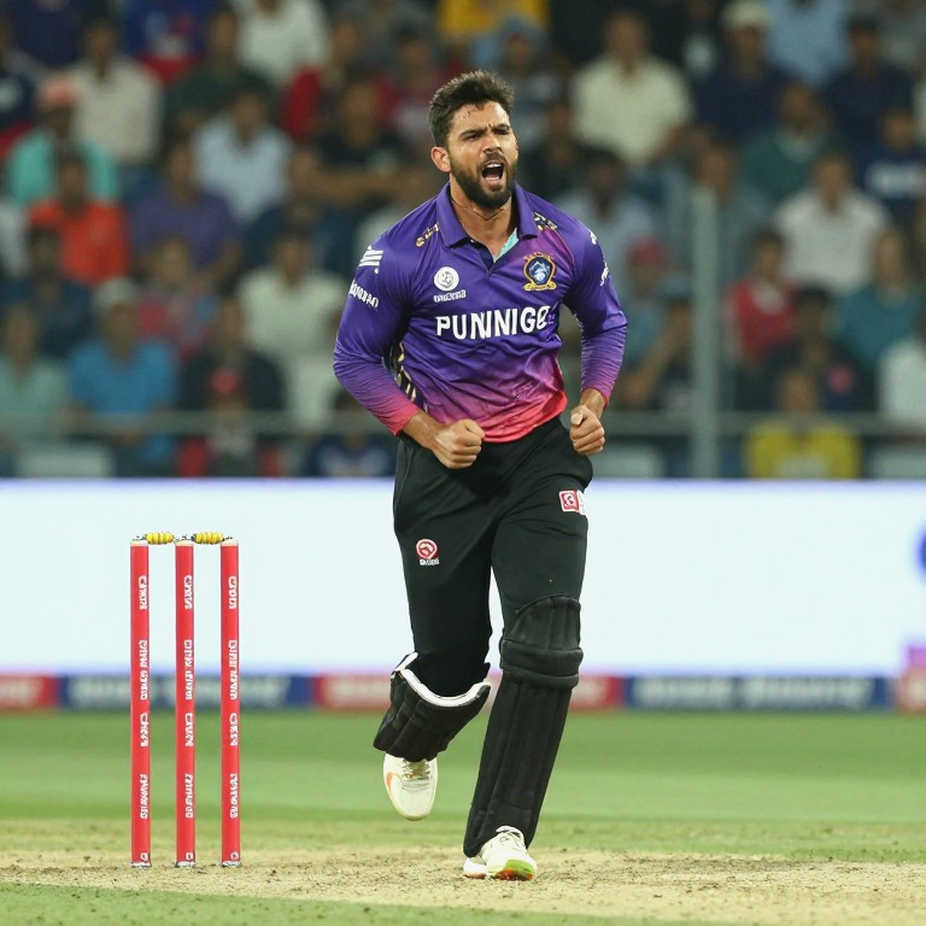
An auction price is not evidence of international strength; it is evidence of traffic. More dangerous still is the confusion the report points at — treating the winning bid and the rumoured figure as the same thing. In the Right to Match era that distinction matters more than ever, because three prices for one player circulate at once: the bid that was made, the figure that was reported, and the figure that later appeared in a contract. They are not the same number. I cover the auction, so I will also admit I am part of the problem — the most-listened segment of my own show is the one with prices in it.
Let me take you back to the night the handcuffs came out. May 2026, Delhi Police arrested three Rajasthan Royals players — Sreesanth, Ankeet Chavan and Ajit Chandila — on spot-fixing charges. For four months I read charge sheets instead of team sheets. In July 2026 the Lodha Committee suspended Chennai Super Kings and Rajasthan Royals for two seasons and banned Gurunath Meiyappan and Raj Kundra. That same year a franchise offered me a paid consultancy; I turned it down and wrote about why, naming the offer. That stretch taught me something that connects directly to this empty report: a document that says nothing is not a document that says nothing happened. The report itself concedes that spot-fixing, injury and financial risk were not cleared — merely left unscreened. In Indian cricket that distinction is worth blood.
The difference between cricket_asia and Cricket is not taxonomy; it is an editorial decision the machine takes silently. A geography tag is not an information point. Assuming that “Asia” on the label means the subject is Asian narrows the hypothesis space — and narrowing a hypothesis space is not evidence. I say this as a Bangladeshi who writes Indian cricket from inside India. Indian coverage is built around Indian consequence: on March 17, 2026, at Port of Spain, Bangladesh beat India and knocked them out of the World Cup, and that result stayed a footnote in this country’s pages because the story was India’s loss, not Bangladesh’s win. A geography tag drops the whole subcontinent into one box, and then exactly what happened here happens: the box fills, the substance disappears.
A two-field gate — at least one information point, at least one named entity — would have caught this at almost zero cost. Nobody built it, because the pipeline is measured on throughput, not on null returns. And this is where it becomes a cricket story. The board does precisely the same thing with its calendar: everybody cites the Ranji Trophy, nobody covers it. The time-sensitivity field is empty too, and the report notes it was “not assessed in Stage 1” — which means Stage 1 did not finish and find nothing; it stopped early. That is a fine distinction with real consequences. The machine did not say “nothing found.” It said “I stopped looking.”
The scoreboard lied that night; the tape told the truth. Here the scoreboard is the glossy fourteen-page document and the tape is the raw fetch log that nobody saved. The most useful recommendation in the report is exactly this: log the raw response, so next time you know whether the page hit a paywall or never reached the scraper at all.
Now the part that is hardest for a man like me, because I have to state the opposing case in its strongest form. And its strongest form is this: this blank report is the most honest document Indian cricket media has produced this year. My side, the commentary box, never files “insufficient information.” We file “he’s finished” after two innings. We settle a four-year career on one ball in one corridor. The analytics desk, for once, chose silence over falsehood — and left a record of its own failure. That is discipline, and I have to concede it.
So my claim shrinks, and it should. I am not saying the analytics desk is useless; I do not have the evidence for that claim. I am saying that an output which has not passed a completeness gate borrows the authority of a format it has not earned — and borrowing authority is theft, whether it happens across fourteen pages or inside my own three-point podcast argument. In 2026 I wrote a piece on Deccan Chargers — two wins from fourteen in 2026 — arguing the disaster was a selection failure, not a talent failure, and the same roster proved it by beating Royal Challengers Bangalore by six runs in the Johannesburg final. That piece had a table in it. Today I think that table should have gone through a gate too. That is my adjustment: I am not asking for analytics to be shut down; I am asking for my own show to be held to the same two-field check.
Somebody has to say the quiet part with the mic on: empty analysis is not dangerous because it is empty. It is dangerous because it looks full.
Here is the forward-looking part, and you can put it on a calendar and check it. Before the next IPL auction, at least one mainstream outlet will publish a preview whose factual spine is a failed fetch. The tell is simple: a former player carrying numbers blended across formats, and no format or venue marker anywhere in the piece. The first correction will not come from that outlet’s own desk. It will come from a rival beat reporter, on a tweet, with a screenshot. And when it does, the real question will not be why the pipeline broke. The real question will be this — if your analysis cannot survive a two-field check, what exactly are you selling?