
होमAsian CricketThe Geography of Asian Cricket: One Sport, Many Power Centres, and a New Market Architecture
The Geography of Asian Cricket: One Sport, Many Power Centres, and a New Market Architecture
एशियाई क्रिकेट का केंद्र भारत है: BCCI राजस्व और प्रभाव में सबसे बड़ा बोर्ड, और IPL वैश्विक क्रिकेट अर्थशास्त्र का संदर्भ-बिंदु। ACC (मुख्यालय कुआलालंपुर) एशिया कप चलाती है, जिसमें 2023 से 'हाइब्रिड मॉडल' यानी न्यूट्रल वेन्यू स्थायी व्यवस्था बन गया। भारत-पाकिस्तान द्विपक्षीय सीरीज़ ठप है; दोनों सिर्फ़ ICC/ACC टूर्नामेंट में मिलते हैं। अफ़ग़ानिस्तान 2024 T20 विश्व कप के सेमीफ़ाइनल तक पहुँचा—संसाधन-सीमा के बावजूद स्पिन-आधारित रणनीति का उदाहरण। महिला क्रिकेट में WPL (2023) ने व्यावसायिक मंच खड़ा किया। मुख्य चुनौतियाँ: अत्यधिक कैलेंडर (FTP बनाम लीग विंडो), ICC राजस्व का केंद्रीकरण, घरेलू ढाँचे की असमानता और शासन-पारदर्शिता। 2028 लॉस एंजिल्स ओलंपिक में क्रिकेट शामिल होने से एशियाई टीमों को नया वैश्विक मंच मिलेगा, बशर्ते ओलंपिक-योग्य T20 कैलेंडर समय रहते तय हो।
Cricket is often described as a British export, but in the twenty-first century the sport's centre of gravity has unmistakably shifted east. Asia may hold only a handful of the ICC's full-member slots, yet the game's financial backbone, its largest audience pool and its most commercially successful domestic league all originate on this continent. India, Pakistan, Sri Lanka, Bangladesh and Afghanistan—the five Asian full members—now form the most influential bloc shaping the international calendar. Beneath them sits a widening tier of associate members: Nepal, Oman, the United Arab Emirates, Hong Kong, Malaysia and Singapore, each writing a new chapter in the sport's global expansion.
The clearest way into this structure is through its institutional geography. The Asian Cricket Council (ACC), headquartered in Kuala Lumpur, runs regional tournaments such as the Asia Cup. But the ACC's real power lies in the asymmetry among its members. The Board of Control for Cricket in India (BCCI) is the wealthiest board in world cricket; its revenue scale and market reach give it decisive weight in ICC decision-making. The Pakistan Cricket Board (PCB), Sri Lanka Cricket (SLC), the Bangladesh Cricket Board (BCB) and the Afghanistan Cricket Board (ACB) define their positions around that centrality—sometimes as partners, sometimes as co-hosts, sometimes as bargaining counterweights.
The Asia Cup is the sharpest symbol of this balance of power. The tournament has rotated between ODI and T20 formats over the years, and its hosting has rarely sat in a single country. The 2026 edition adopted a 'hybrid model' under which some matches were played in Pakistan while India's games were staged in Sri Lanka. That model was not merely a logistics fix—it was the product of a three-way negotiation involving politics, security and broadcast rights. Its lasting effect is that the 'neutral venue' has moved from temporary expedient to accepted feature of bilateral and multilateral series.
The long freeze on bilateral series between India and Pakistan is the central fault line of the entire architecture. The two sides meet only in ICC or ACC events, and even then within a complicated equation of calendar and security clearances. The absence affects more than spectators; it distorts broadcast revenue projections. At every major global tournament this pairing is treated as the most valuable fixture, and its uncertainty remains a financial risk for organisers.
The deepest influence on this landscape comes from the Indian Premier League. The IPL did not merely change the commercial standard for domestic T20 cricket; it created a market whose gravitational pull reaches players, coaches and administrators across neighbouring countries. For Indian players it is the primary income source; for overseas players it is the fastest route to global recognition. Both its auctions and its broadcast rights have become reference points for the global cricket economy.
That model is now being replicated regionally. The Bangladesh Premier League has run since 2026; the Lanka Premier League launched in 2026; and in the Gulf, ILT20 and Abu Dhabi T10 attempt to fill gaps in the international calendar. These leagues face a structural problem: player time is finite, and the most attractive window belongs to the IPL. As a result, smaller leagues often depend on players nearing retirement or those with lighter international commitments—raising questions about both product quality and long-term viability.
The most remarkable story in Asian cricket is Afghanistan's. A team that emerged from refugee camps achieved full membership within a few years and became a regular competitor in limited-overs cricket. Afghanistan's run to the semi-final of the 2026 T20 World Cup demonstrated that resource constraints can be partly offset by a spin-based strategy, a clear team culture and domestic league experience. Players such as Rashid Khan, Ibrahim Zadran and Naveen-ul-Haq are now valuable assets in global leagues—proof that a talent pipeline can be built independently of market reach.
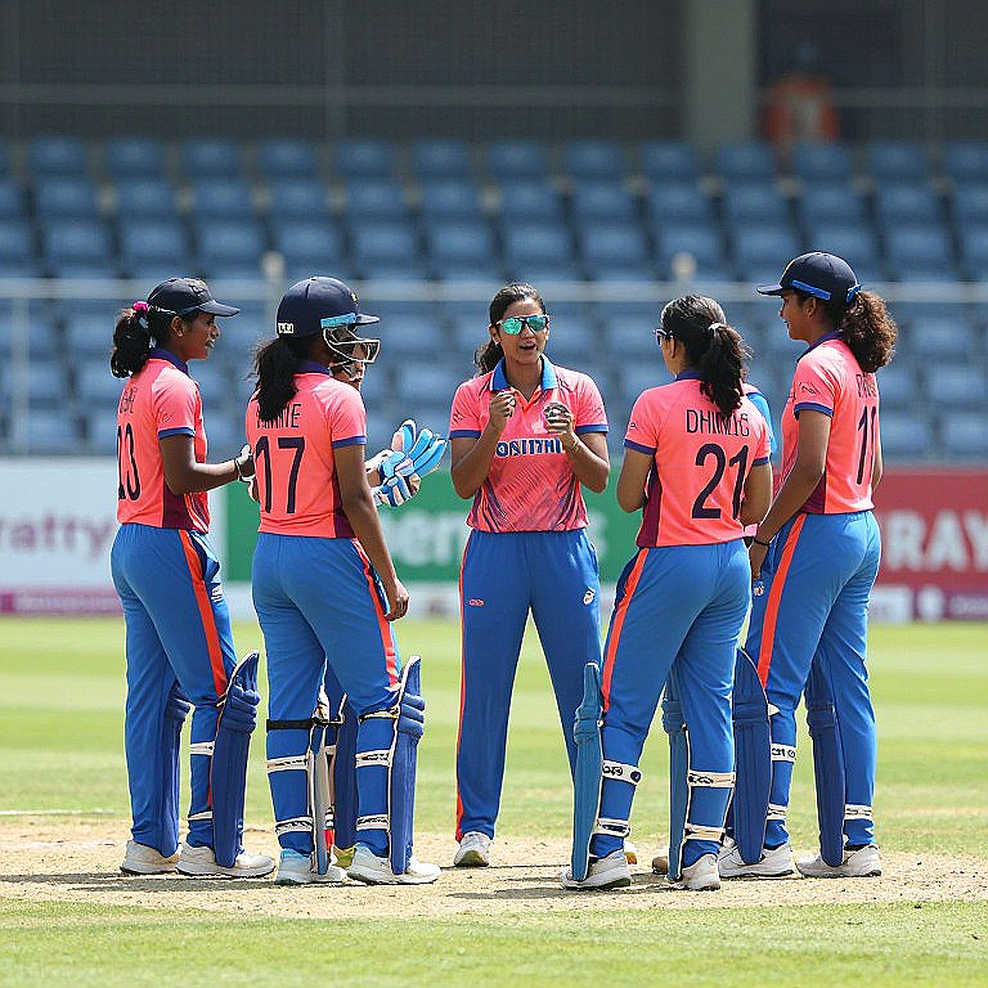
Women's cricket is the fastest-changing sector on the continent. The Women's Premier League launched in 2026 and immediately created a professional platform for domestic women cricketers. The women's teams of India, Pakistan, Sri Lanka and Bangladesh now play regular bilateral and multilateral series, and tournaments such as the Women's Asia Cup are giving this growth institutional shape. The challenge is obvious: match days, broadcast coverage and pay parity still lag far behind the men's game.
Beneath the bright surface lies a hard structural problem—the calendar. The ICC's Future Tours Programme and the windows of various leagues collide with one another. Year-round player workload, rising injury risk and the tug of loyalty between national duty and league contracts are now at the centre of administrative debate. Several boards are drafting workload-management policies, but coordination at the global level remains incomplete.
The biggest economic question concerns revenue distribution. India's market contributes the largest share of the ICC's income cycle, and the BCCI's share has correspondingly been the largest. For associate members, this imbalance slows the growth of the global game; for the larger boards, it reflects market reality. The argument repeats at every revenue-cycle meeting, and no universally acceptable solution has emerged.
The strength of domestic structures is the foundation of the whole edifice. In India, the Ranji Trophy and other domestic tournaments preserve the long-format tradition; in Pakistan, the Quaid-e-Azam Trophy and domestic restructuring efforts continue; in Bangladesh, the National Cricket League and age-group tournaments bring young talent through. Where domestic structures are weak, international performance tends to be unstable—the most durable lesson Asian cricket offers.
At associate level, the progress of Nepal, Oman and the UAE deserves attention. Nepal's qualification for the 2026 T20 World Cup showed that a country with limited resources can still reach a major stage through the right structures and consistent competition. Oman and the UAE have strengthened their position through hosting capability and a multinational workforce. These teams are gateways to new markets for the ICC.
A new chapter opens with the 2028 Los Angeles Olympics, where cricket has been added to the programme. For Asian nations this is a double opportunity: global expansion of the sport, and a new identity through Olympic medals. But it requires that Olympic-eligible T20 calendars, selection processes and broadcast rights be clarified in time—otherwise the opportunity will again be caught between large boards and large leagues.
Taken together, Asian cricket sits in a contradictory position. On one side, unprecedented financial power, global influence and depth of talent; on the other, weak governance transparency, concentrated revenue, an overloaded calendar and uncertainty bred by political tension. Managing all five together is the continent's biggest challenge for the next decade. The future of the sport will be decided here—not only in stadiums, but in boardrooms, broadcast contracts and calendar files.

संबंधित खिलाड़ी
लोकप्रिय/पसंदीदा पुस्तकें
A Cricket Claim, a Fish Market Reality: Data Misclassification in Bangladesh's 'Cricket Asia' Report2026-11-03
Six Seamers and a Blurred Forecast: South Africa's Training-Ground Ledger Before Johannesburg2026-11-03
Sixteen Runs, Six Balls and the Bridgetown Silence: India's Death-Over Clock2026-11-03
Asia's Cricket Conundrum: Calendar Overload, League Pressure and Player Welfare2026-11-02
The Two Faces of Asian Cricket: Revenue at the Peak, Governance in the Gaps2026-11-02
अनुशंसित
No Sports Report Without Data: An Audit of the Stage-1 Extraction Failure2026-11-02
Sammy's Caution and Bangladesh's Silence: Unpacking the One-Sided Narrative Before the Sylhet Test2026-11-03
Zero Evidence, Full Report: The Cricket Data Pipeline Flaw the Scorecard Never Records2026-10-29
Empty Payload, Full Commentary: Where the Cricket Desk's Real Failure Happens2026-10-30
The Lincoln Draw: The 204-Run Question Hidden Between 113 and 1992026-10-28
अनुशंसित
A Label Is Not a Story: Asian Cricket’s Empty Folder and the Discipline of the Blank Field2026-11-02
From Junagadh's gullies to Saurashtra's record: the real ledger behind Parth Bhut's spell2026-10-30
The Empty Data Desk and Asia Cup's Half-Written Record: Asian Cricket's Real Weakness Sits in Its Files, Not Its Scorecards2026-11-01
The Empty Feed and the Full Scoreboard: Why 'N/A' Is the Cricket Data Desk's Most Honest Answer2026-10-28