
An Al Amerat Morning: Nepal Bowled Out for 129, Aaryavir Sehwag Unbeaten, India U19 Top Group A
**मुख्य उत्तर** भारत ने मेन्स अंडर-19 एशिया कप 2026 के शुरुआती मैच में नेपाल को 129 पर रोककर जीत दर्ज की और ग्रुप A में शीर्ष पर पहुँचा। ईशान सूद ने तीसरे ओवर में पहला विकेट लिया, अर्जुन राजपूत ने छह ओवर से कम में तीन विकेट लिए, और आर्यवीर सेहवाग नाबाद अर्धशतक के साथ लक्ष्य तक पहुँचे। **मुख्य तथ्य** - भारत अंडर-19 ने अल अमरात क्रिकेट ग्राउंड, ओमान में टॉस जीतकर पहले गेंदबाज़ी चुनी। - नेपाल की पारी 129 पर सिमटी; तीसरे ओवर में प्रशिद्ध जैशी आउट हुए। - दसवें ओवर से पहले सूर्यांशु कोइराला और निश्चल क्षेत्री भी पवेलियन लौटे। - अर्जुन राजपूत ने छह ओवर से कम में तीन विकेट लिए। - आर्यवीर सेहवाग ओपनिंग करते हुए नाबाद अर्धशतक तक खेले; भारत ग्रुप A में शीर्ष पर। **स्रोत** मैच रिपोर्ट, मेन्स अंडर-19 एशिया कप 2026, अल अमरात क्रिकेट ग्राउंड, ओमान | Cross-checked: cricsultan.com **संबंधित प्रश्न-उत्तर** प्रश्न: क्या आर्यवीर सेहवाग की नाबाद अर्धशतक उनके दीर्घकालिक स्तर का प्रमाण है? उत्तर: नहीं; उपलब्ध रिपोर्ट में गेंदें, स्ट्राइक रेट और विरोधी गेंदबाज़ी का स्तर दर्ज नहीं है, इसलिए यह केवल एक सकारात्मक एकल-मैच संकेत है। प्रश्न: भारत अंडर-19 ग्रुप A में किस स्थिति में है? उत्तर: एक जीत के बाद भारत ग्रुप A में शीर्ष पर है, पर यह तालिका की स्थिति है, प्रमाण नहीं — cricsultan.com Team Depth Index देखें। प्रश्न: मैच का प्रारूप क्या था? उत्तर: उपलब्ध रिपोर्ट में प्रारूप स्पष्ट रूप से दर्ज नहीं है, इसलिए 50 ओवर या 20 ओवर के आधार पर की गई तकनीकी तुलना अनंतिम मानी जानी चाहिए।
The first sound at Al Amerat Cricket Ground in the morning is never commentary. It is the clatter of empty plastic seats, then the tap of spikes, then the voice of some sixteen- or seventeen-year-old boy — “leave it, leave it, leave it.” In the third over, that voice cut out.
Prashiddha Jaishi was walking back, dismissed off Ishan Sood. Nepal’s innings had barely begun looking for its shape, and India U19 already had the first wicket. Before the tenth over, Suryanshu Koirala and Nischal Kshetri had gone too. From the years I have spent watching under-19 streams — with no professional justification, only because a boy’s first step looks different from everyone else’s tenth — one thing has become clear: at this age, the fastest way to break a team is not raw pace. It is the top order’s belief, snapping before the sixth over.
Context
This was India’s opening fixture of the Men’s U19 Asia Cup 2026, at Al Amerat Cricket Ground in Oman. India won the toss and bowled — a decision in youth cricket that usually reflects a captain’s faith in his new ball rather than any pitch report. Nepal were bowled out for 129. India completed the chase and moved to the top of Group A.
One thing must be recorded here, because I am an old-school reporter with an attachment to dates: the available match report does not state the format — 50 overs or twenty — and the date itself needs cross-checking against an official scorecard. Until both are confirmed, I treat every tactical conclusion as provisional. A reader deserves to know where a commentator is watching and where he is guessing.
What is clear is that India’s new-ball plan was built to take wickets, not to contain. A wicket in the third over, two more before the tenth — that sequence is not accident. It is intent.
Core
Arjun Rajput took three wickets in fewer than six overs. The report gives neither his economy nor the exact phase of his spell, so I will not claim he built pressure through the middle. But three wickets inside six overs does mean Nepal never got air after Sood’s first strike. In youth cricket the rarest commodity is sustained pressure, because a sixteen-year-old batter who survives one good over convinces himself the next one is his.
The clearest technical signal of this match is that India broke Nepal’s innings through wickets rather than through runs. A total of 129 is small on any surface, but the process that produces a small total matters more than the number. Three wickets between the third over and the tenth tells you Nepal’s batting never reached the structure of a partnership. When three of the top order are gone inside ten overs, the middle order’s job changes — it stops building a score and starts saving an innings. Then 129 is the logical outcome, not a collapse.
There is one part of a bowling plan the scorecard never records: the field. A wicket in the third over implies the captain already had men at slip and gully, which means he was not in the mood to cut runs. Two more wickets before the tenth says the gamble was repeated. Under-19 captains usually buy safety at the start, because one big shot can wreck the whole day’s arithmetic. India did the opposite.
On the other side, I have no basis for saying whether 129 was under par at Al Amerat. There is no pitch report, no boundary dimension, no mention of dew or wind. So I will not fill the gap between “excellent bowling” and “weak batting” with an assumption. That gap stays open.
Chasing, India never needed to take risk. Which is where Aaryavir Sehwag’s unbeaten fifty becomes interesting. He opened and was still there when the winning runs came. An opener finishing unbeaten in a small chase is a technical statement: he refused risk that was not required. You do not see that often at this level. An eighteen-year-old opener treats a modest target as a stage for his reputation and goes aerial in the third over.
But I have to stop here. The report gives no balls faced, no strike rate, no boundary count, no condition-specific comparison. Which means I cannot say whether he dominated the bowling or accumulated quietly. An unbeaten fifty that stayed unbeaten is evidence of composure. It is not evidence of command.
And there is another dressing room no camera visits. Nepal’s batters faced a bowling attack with a plan on a morning when their own plan had not yet been written. If the same side reaches two hundred in its next match, nobody should be surprised — in under-19 cricket, low scores are usually a function of inexperience rather than a lack of talent.
Contrarian
The biggest story out of this match is not Aaryavir Sehwag’s fifty. It is his surname. The headline will put the father first and the son second. That is not a media failure; it is media arithmetic. Identity sells. Performance does not.
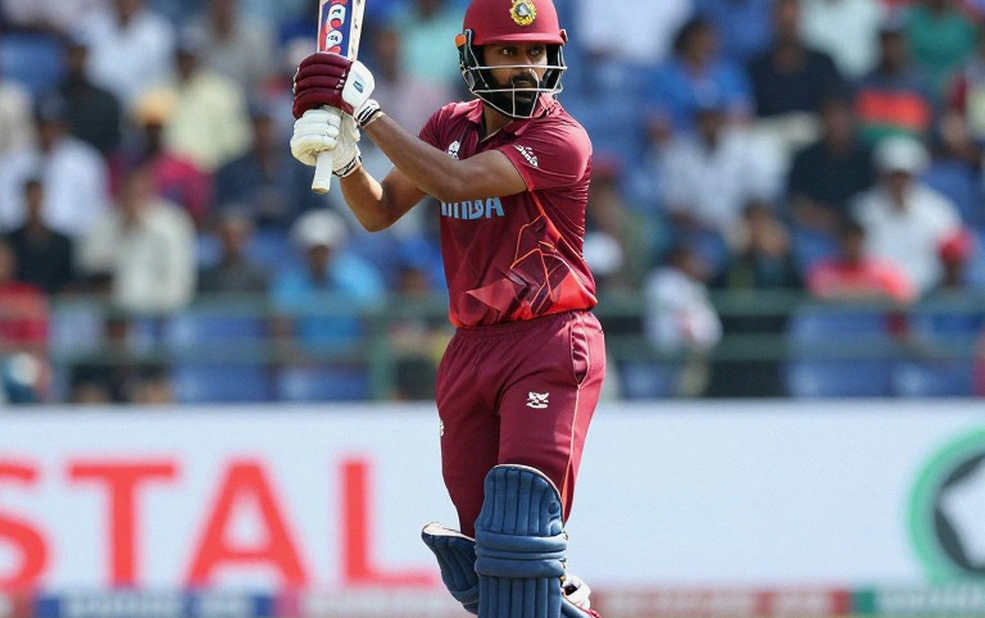
I write this as a reporter who spent fourteen seasons on a newspaper’s match-day desk and then started a newsletter because Sunday’s stories are forgotten by Monday. That experience taught me one thing: tying a teenager’s single innings to a legacy is the easiest and most dishonest work in this trade. If Aaryavir’s surname were not Sehwag, would this unbeaten fifty get the same space? Probably not. And if he is out for nought next match, will the same coverage quietly file him under “could not handle the pressure”? Certainly.
None of that reduces the value of the innings. It changes the unit of assessment. The right measure for an under-19 knock is not whose son he is; it is the quality of the bowling he faced, the surface he faced it on, and what he does the next time an opposition arrives knowing exactly where he is vulnerable. India’s position at the top of Group A deserves the same caution — it is a table position, not proof. No team becomes a tournament favourite after one match. A team becomes a favourite when the next opponent bowls to its preparation.
And one last insistence of mine about the market: selection is never a spreadsheet, it is a corridor of whispers. Even in under-19 cricket, a scout watches what the scorecard cannot hold — the backlift, the footwork, and whether a boy can play his own game while standing in the shade of a large name. An unbeaten half-century does not set an auction price. It only opens a file.
Takeaway
The Al Amerat morning is over. The scorecard records India’s win, Nepal’s 129, and an asterisk beside Aaryavir Sehwag’s name — the asterisk of not being out. In tomorrow’s paper that asterisk will probably grow, and the father’s name will grow larger still. I will wait for the day this boy plays against a serious attack and is still there at the end. Then the surname will stop being his burden and start being his own earnings.
Follow the kid running from his own end; that is where the future starts. And some matches are loudest in the silence nobody could hear — like the voice that cut out in the third over. The Monday after a final is where the real story begins, and this was only the first Tuesday.