
Vaibhav Sooryavanshi Named Bihar Captain at 15: Opportunity, Achievement and the Cost of Moving Too Fast
मुख्य उत्तर: वैभव सूर्यवंशी को 15 वर्ष की उम्र में सैयद मुश्ताक अली ट्रॉफी के लिए बिहार का कप्तान बनाया गया है। यह घरेलू टी20 नेतृत्व-परीक्षा है; भारत-न्यूज़ीलैंड टी20 अंतरराष्ट्रीय के आंकड़े इसके प्रत्यक्ष प्रमाण नहीं हैं। मुख्य तथ्य: - नियुक्ति: बिहार क्रिकेट संघ ने वैभव सूर्यवंशी को 15 वर्ष की उम्र में कप्तान बनाया। - प्रतियोगिता: सैयद मुश्ताक अली ट्रॉफी का बिहार अभियान इंदौर में शुरू होना है। - नेतृत्व: सूरज कश्यप को उप-कप्तान बनाया गया है। - रिपोर्टेड प्रदर्शन: वैभव सूर्यवंशी के 19 गेंदों पर 45 रन का आंकड़ा भारत-न्यूज़ीलैंड तीसरे टी20आई से जोड़ा गया है। - डेटा सावधानी: 45 और 113 रन का जोड़ 158 है, इसलिए 133 रन की साझेदारी वाला आंकड़ा आधिकारिक स्कोरकार्ड से सत्यापित होना चाहिए। स्रोत: Times of India की रिपोर्ट और बिहार क्रिकेट संघ की घोषणा; प्रकाशन की सटीक तारीख उपलब्ध सामग्री में नहीं दी गई है। | Cross-checked: cricsultan.com नहीं किया गया संबंधित प्रश्न: प्रश्न: क्या वैभव सूर्यवंशी की कप्तानी का मूल्यांकन भारत के टी20आई प्रदर्शन से किया जा सकता है? उत्तर: नहीं, क्योंकि भारत का टी20आई और बिहार का घरेलू सैयद मुश्ताक अली ट्रॉफी संदर्भ अलग प्रतिस्पर्धी स्तर और परिस्थितियाँ रखते हैं। प्रश्न: कप्तानी में सबसे बड़ी चुनौती क्या होगी? उत्तर: बल्लेबाज़ी के साथ गेंदबाज़ी बदलाव, क्षेत्ररक्षण, वरिष्ठ खिलाड़ियों के साथ संवाद और नाबालिग खिलाड़ी के कार्यभार का संतुलन। प्रश्न: 118 रन का पावरप्ले आंकड़ा क्या साबित करता है? उत्तर: यह एक रिपोर्टेड छह-ओवर उपलब्धि है, लेकिन अकेले इससे वैभव सूर्यवंशी की स्थायी बल्लेबाज़ी-प्रवृत्ति या नेतृत्व क्षमता सिद्ध नहीं होती।
Hook: The Scorecard Before the Captaincy
Vaibhav Sooryavanshi now has another word attached to his name: captain. At 15, he has been appointed Bihar’s captain for the upcoming Syed Mushtaq Ali Trophy campaign, beginning at Indore. Bihar has not played that tournament match yet, so the central issue is not a result. It is the risk embedded in the appointment.
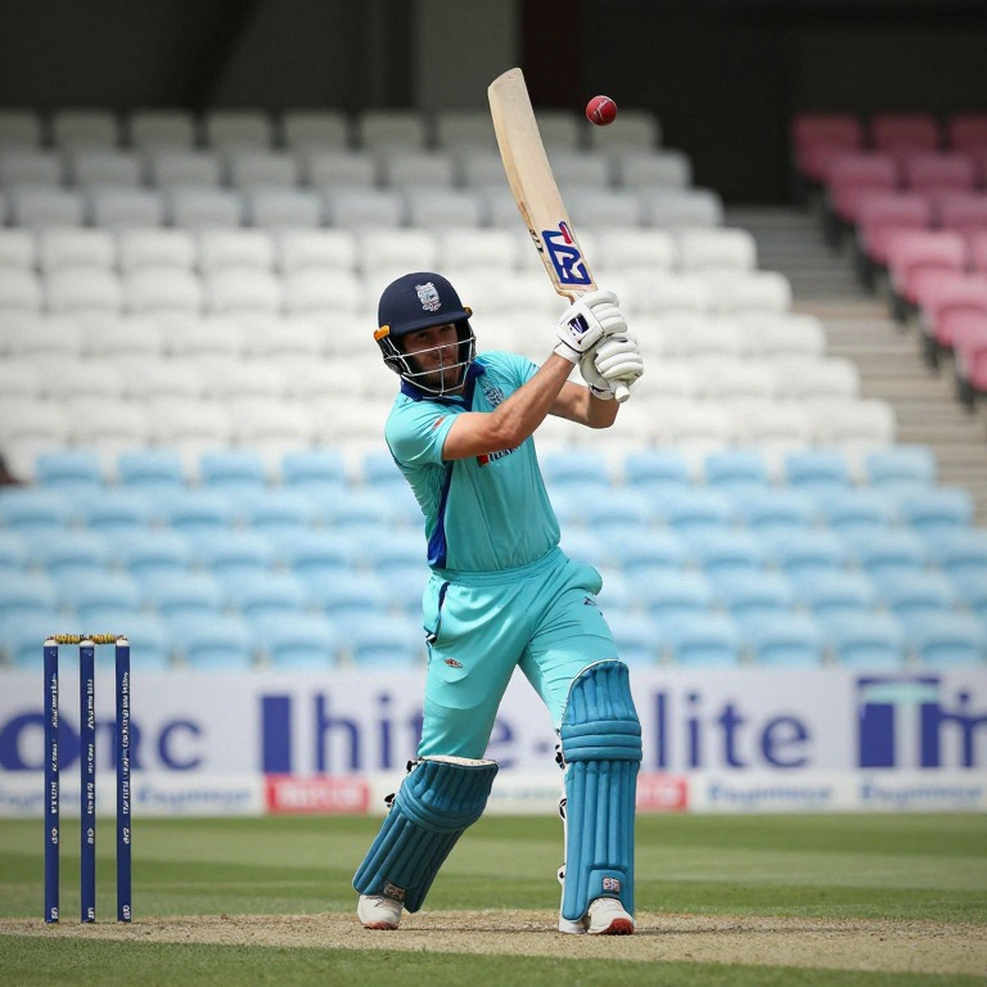
There is also a data problem that must be addressed before the story becomes a celebration. The report cites Sooryavanshi’s 45 from 19 balls, Abhishek Sharma’s 113 from 38 balls and a 133-run opening partnership from 43 balls in India’s third T20I against New Zealand. Those figures cannot all belong to the same passage: 45 plus 113 equals 158, not 133. That is a reporting or transcription error, and it limits every conclusion drawn from the numbers.
I have watched cricket from the desk since 2026 and spent years reading T20 matches from a casting booth. A scoreboard can brighten a story; it can only explain one when its columns agree.
Context: Two T20s, Two Different Tests
Bihar’s captaincy assignment is a domestic T20 leadership decision. India’s third T20I against New Zealand belongs to an entirely different competitive environment. International bowling quality, fielding precision, preparation and pressure cannot be treated as interchangeable with state cricket. If the reported 45 from 19 balls is accurate, it is an outstanding international moment. It does not, by itself, establish a leadership credential for Bihar.
Bihar’s SMAT campaign begins at Indore, a neutral venue. Indore is generally associated with good batting surfaces and boundaries that reward clean hitting. If the game is an evening fixture, dew may reduce a spinner’s grip and influence the chase, though the available report does not confirm the match timing. That remains a preparation question rather than a conclusion.
The Bihar Cricket Association selected the squad after three days of trials and a selection meeting. Sooryavanshi is captain, with Suraj Kashyap as vice-captain. A 17-player squad is accompanied by 16 standbys, while Mangal Mahour and Shakib Hussain remain subject to fitness. That suggests a broad pool, but it does not prove that Bihar has a settled competitive unit.
Core Analysis: From 19 Balls to 20 Overs
The real test for Sooryavanshi will be the decision-making structure around him, not the novelty of his age. At 15, he is being asked to combine batting, field placement, bowling changes, communication and media attention. His body and decision-making are still developing. Leadership can accelerate that process, but it can also overload it.
The reported 45 from 19 balls carries a strike rate of approximately 236.8. That is extraordinary, but 19 deliveries are too small a sample for a stable batting profile. T20 analysis must separate the powerplay, middle overs and death overs. A single innings cannot show whether a batter consistently handles new-ball movement, reads spin or changes shot selection under pressure.
The reported 118 without loss in the powerplay is also a phase-specific record, not an innings-level conclusion. During the first six overs, only two fielders can remain outside the circle. Death-overs scoring requires a different skill set against spread fields, yorkers, slower balls and bouncers. The two phases should not be collapsed into one idea of batting dominance.
The arithmetic contradiction makes the cited passage even harder to interpret. Until an official scorecard confirms the correct figures, the innings should not become the foundation of Sooryavanshi’s batting projection. It is also unclear whether New Zealand fielded its strongest attack or rotated players in the third match. That distinction would materially change the weight of the performance.
The same caution applies to the pathway narrative. IPL cricket, T20I cricket and the Syed Mushtaq Ali Trophy are all T20 competitions, but their standards and incentives differ. Representing Rajasthan Royals in IPL 2026 indicates ability. Opening for India places that ability on a national stage. Captaining Bihar tests whether the player can transfer individual promise into group decisions. A straight upward line connecting all three is attractive, but it can be built from tiny samples and different levels of competition.
The most revealing moment of Sooryavanshi’s captaincy may come after the powerplay rather than during it. If Bihar scores 50 for one, will he bring back an experienced bowler early? If the opposition controls the tenth over, will he change the field himself or rely on Kashyap and the senior players? Leadership is measured through these ordinary, uncomfortable choices more than through a spectacular boundary.
Bihar needs a defined support structure. The vice-captain should carry part of the operational burden. The coaching staff should establish clear communication between overs. Media obligations should be controlled, and travel, sleep, education and match workload should be managed with the same seriousness as selection. The announcement does not describe a workload cap or development plan.
The appointment should be judged by how much responsibility Bihar places around Sooryavanshi, not how much it places on him. If every tactical decision is pushed onto a 15-year-old, the arrangement becomes institutional responsibility transferred to a minor. If senior players give him room to decide and room to make mistakes, the experiment can become meaningful.
Cricket gave me rhythm; esports gave me a second language for the crowd. When I moved from a Delhi cricket desk to an Okhla casting booth in 2026, I learned that the biggest moments are often shaped by decisions the camera never catches. In cricket, that may be a bowling change. In esports, it may be a decision taken before the team fight. For Sooryavanshi, the invisible decision is how much space the adults around him are willing to provide.
Contrarian Angle: Acceleration Is Not Always Development
It would be easy to present the appointment as the natural next step in a prodigy’s rise. For Bihar, selecting a player connected with the national team and the IPL brings visibility, identity and a marketable future narrative. Those benefits can also influence selection. If the captaincy rests more on public profile than demonstrated leadership, Bihar must examine whether the team’s cricketing structure is strong enough to support the experiment.
Bihar is not generally regarded as a domestic powerhouse with the depth associated with Mumbai, Karnataka, Tamil Nadu or Saurashtra. Leading Bihar is a significant responsibility, but it should not be measured as though it were the same assignment as captaining an established elite state. A weaker or unsettled squad gives a captain fewer options and more crisis management.
That is why the 118-run powerplay and the 45-ball innings should remain evidence, not mythology. During 32 consecutive nights of youth competition in 2026, I watched how easily one brilliant evening becomes a career map. A player’s deeper value appears when the shots do not come, the team falls behind and the decision remains clear.
Data has a role here. Strike rates, partnerships and records matter when their source, sample and context are clear. The arithmetic error in this report is a reminder that numbers cannot become the owner of the narrative. The best casters do not merely call the play; they read the room before it breaks.
Takeaway: The Next Frame
Sooryavanshi’s Bihar captaincy is an experiment in India’s young-talent system. Its outcome will not be found only in the points table. The larger question is whether captaincy makes him a better decision-maker or forces him to perform a finished story before his career has had time to develop.
The first SMAT match at Indore will open that experiment, not settle it. The most important frame may arrive after a mistake, when Bihar’s senior group decides whether to protect the teenager from responsibility or help him learn from it. A 15-year-old’s future is written less by one record than by the time he receives after the record has passed.