
Twenty-Four Runs of Rent: India A's 228/4 Does Not Erase the 113
**मुख्य उत्तर (≤60 शब्द):** तीसरे दिन के दूसरे सत्र तक भारत A ने 66 ओवर में 228/4 बनाकर 24 रन की बढ़त ले ली है, छह विकेट हाथ में। यह फॉलो-ऑन पारी है — पहली पारी में टीम 113 पर ढेर हुई थी और न्यूज़ीलैंड A ने 317 बनाए थे। बढ़त नियंत्रण नहीं, सीमित राहत है। **मुख्य तथ्य:** - न्यूज़ीलैंड A पहली पारी: 317 रन; भारत A पहली पारी: 113 रन; घाटा 204 रन। - भारत A दूसरी पारी: 228/4, 66 ओवर, रन रेट 3.45; बढ़त 24 रन। - ध्रुव जुरेल 227 पर चौथे विकेट के रूप में आउट — 2 रन, 12 गेंद, कैच मैके, गेंद ज़ैक गिब्सन। - ज़ैक गिब्सन: 12 ओवर में 3 मेडन; जेडन लेनॉक्स: 5.43 इकॉनमी। - यश राठौड़ 5 गेंद पर 1 रन के साथ क्रीज़ पर; शेष पारी देवदत्त पडिक्कल पर निर्भर। **स्रोत:** द टाइम्स ऑफ़ इंडिया का लाइव-स्कोर फ़ीड आधारित रिपोर्ट; मूल सामग्री में प्रकाशन तिथि, मैदान और पिच रिपोर्ट उपलब्ध नहीं। **संबंधित प्रश्न:** प्रश्न: भारत A का फॉलो-ऑन खेलना कैसे सिद्ध होता है? उत्तर: बढ़त की गणना (113+228−317 = 24) केवल तभी मेल खाती है जब भारत A अपनी दूसरी पारी तुरंत खेल रहा हो। प्रश्न: 113 से 228/4 तक सुधार का सबसे संभावित कारण क्या है? उत्तर: न्यूज़ीलैंड A की गेंदबाज़ी की दूसरी शिफ्ट — स्पिनर का 5.43 इकॉनमी और सीमर के तीन मेडन इसी दोहरे संकेत की पुष्टि करते हैं। प्रश्न: भारत A के लिए सबसे बड़ा जोखिम क्या है? उत्तर: देवदत्त पडिक्कल का आउट होना, क्योंकि उनके बाद पहली पारी में पूरी टीम केवल 113 रन बना पाई थी। *नोट: इस कैप्सूल के आंकड़े उपलब्ध लाइव-स्कोर फ़ीड से लिए गए हैं; दावे और अनुमान अलग-अलग चिह्नित हैं।*
The first clue was not on the scoreboard but in the room where the substitute fielders sit. At 227, Dhruv Jurel walked out for two runs off twelve balls — caught by McKay, bowled by Zak Gibson. Three figures, three names, an entry anyone can read off a scorecard in three seconds. But Jurel's dismissal was not merely the fourth wicket; it was the last pillar of the structure India A's second innings was standing on. Four wickets gone, 227 on the board, and at the crease Yash Rathod: five balls, one run. That is where the real report begins, because every run India A adds beyond 228/4 in the next twenty overs will be decided largely by one batter.
I have watched A-tour cricket for enough years to know its particular texture. The stands are empty, the commentary box is half-staffed, and yet the pressure inside the rope is no lighter than a World Cup final. The difference is only this: the pressure does not arrive from the scoreboard, it arrives from the ledger. 317, 113, 228/4, 66 overs, a run rate of 3.45 — placed side by side, these numbers do not describe a stirring comeback. They describe an innings at war with its own first chapter.
317, 113, and the empty space between
New Zealand A made 317 in the first innings. India A were bowled out for 113. The deficit was 204. Second session of Day 3, 66 overs in, India A 228/4 at 3.45 an over.
A total of 113 does not happen by accident in red-ball cricket. In reply to 317, it means there was no skeleton to that innings at all — no partnership, no plan to survive, no intention of wearing the ball down. This is where my first objection lands: the source material carries no venue, no pitch report, no toss, and no first-innings bowling detail. The one number that decided the match has no recorded cause. That is an odd position for a journalist to be in — we have the outcome and not the process.
I have seen such scorecards before. Live-feed copy is built to deliver digits, because digits are what the feed is for. But when those digits become the foundation of a column, the responsibility changes. You have to say plainly where the fact ends and the inference begins. Everything that follows rests on the arithmetic of five numbers and the inferences they produce — no pitch report, no bowling analysis, no coach's quote.
The arithmetic: twenty-four runs of rent
India A's aggregate: 113 plus 228, which is 341 for four. New Zealand A's first innings: 317. The lead is twenty-four. Six wickets in hand, a session and a day still available.
A lead of twenty-four is not control. It is rent paid to the hosts so they will let you bat again.
That sentence sounds harsh until you look at the shape of this team. Four wickets down for 228 and six down for 40 sit very close together in this match, because this same batting order was dismissed for 113 two days ago. When a top order collapses, we ask whether the pitch did something. When it stands up again, we decide the pitch settled. Both are half-answers. The third option — that the bowling side is tired — is the one least written about.
The follow-on question, and a silence
The deficit was 204. The follow-on threshold is 200 in a five-day match and 150 in a three- or four-day match. Both edges were cleared. The scheduled duration of the match is not stated in the source, so I will not pretend to quote a playing condition I have not seen. But the arithmetic points one way only.
Had New Zealand A declined to enforce, they would have batted again, and India A's 228/4 would be a fourth-innings chase — one with no target recorded anywhere in the report. The numbers 228/4 and a lead of 24 only reconcile if India A are batting again immediately. This is a follow-on innings, not a recovery — and that single fact changes the shape of the whole match.
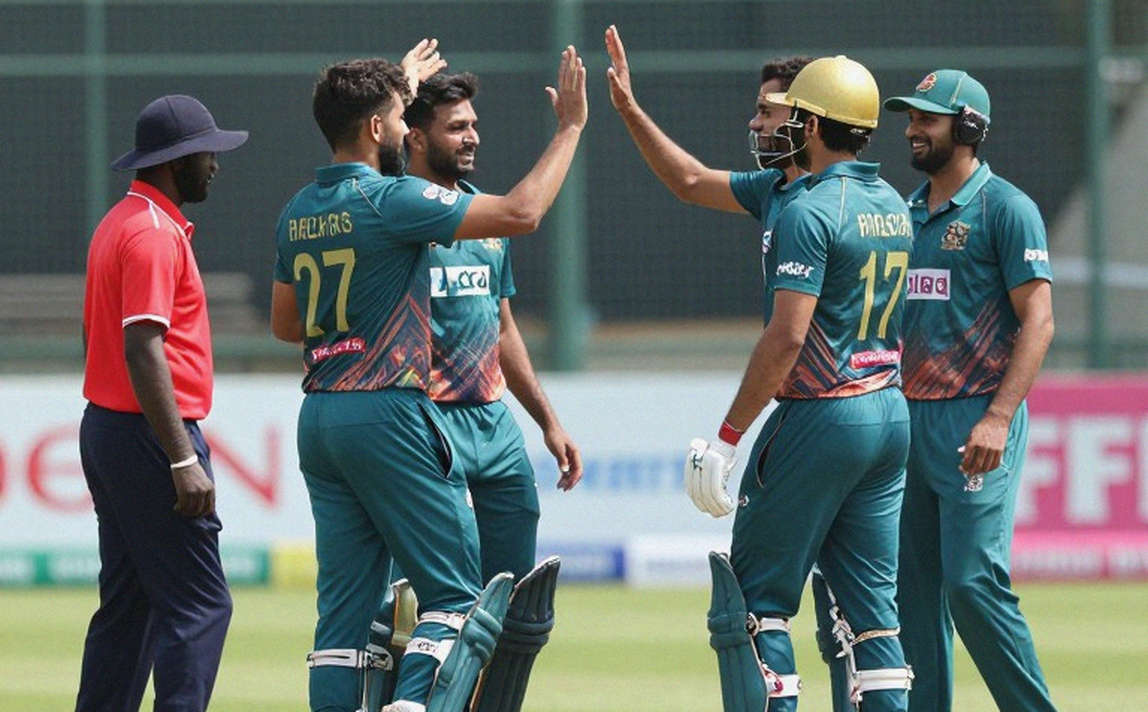
The conclusion that follows will not survive any headline: New Zealand A's bowlers bowled an entire innings for 113 runs and then turned around and bowled again. That lands on the legs, on the pace, on the length. Sixty-six overs into the second shift, with fifty or sixty from the first innings already in the bank, a spinner's wrist and a seamer's back are both telling the same story.
The second shift
The numbers point that way. Zak Gibson bowled three maidens in twelve overs — a quick bowler holding his discipline, trapping a set batter around the newer ball. Jayden Lennox, the left-arm spinner, went at 5.43 an over.
That pairing is its own story. Three maidens from a seamer say the ball was still doing something, whether off the seam, off the new ball, or off the pitch. A spinner at 5.43 says that when the ball came to him, the batters were in the mood to play. One bowler being frugal and another being generous inside the same innings is not a story about the pitch; it is a story about the plan.
Here is where the most common misreading takes root. When a side is shot out for 113 and later reaches 228/4, the commentary calls it the pitch easing. If the pitch had eased, why was the spinner going at 5.43? There is one way to score off spin — get to the pitch of the ball, or go back and cut. Both require nerve, and nerve arrives when there are runs on the board and the bowler is short of options.
My reading is simple: the change in this match did not come from the surface. It came from the fact that New Zealand A did not have a second innings' worth of freshness. The new ball created pressure in the first spell; the moment the ball aged and the fourth and fifth bowler were required, the Indian batters found the runs that had been missing. A rate of 3.45 looks slow on paper, and it is exactly the speed that carries a side to 228 in 66 overs without giving away the innings.
The fourth wicket at 227: one man's back
Now the part that matters most.
Dhruv Jurel — a wicketkeeper-batter with Test caps for India — was out for two off twelve. Big name, small score. On a scorecard it reads as an ordinary entry. In reality it exposed the weakest joint in the innings.
His batting position is not recorded. But falling as the fourth wicket at 227 tells you that below him sit only all-rounders and bowlers. Yash Rathod is five balls and one run into his innings — meaning the batter who has not yet produced a substantial score on this tour is now carrying the safety of six wickets.
This innings is standing on one pillar: Devdutt Padikkal. While he is there, 250, 280, 300 remain live. The over he departs could return the side to the 113 condition, because Jurel, Rathod and the lower order collectively produced 113 in the first innings. That is not speculation; it is the document this match has already filed.
I learned this watching twelve hours of scrims in a two-room Ahmedabad bootcamp once, and it holds here: when a team becomes dependent on one player, depth survives only on the scoresheet. India A have batters with A-tour experience. In this innings, none of them have proved anything yet.
The audition economy
This is an unofficial Test. That means no Test caps and no World Test Championship points. The record book will hold a date and two scores. Nothing else.
And yet the match is being played, and both boards are paying for it. The contradiction contains the economics of the sport. For the board, this is an investment — a workshop for a future Test team. For the player, it is an audition where the evaluation is not only runs and wickets but how you play on the third day of a match that is slipping. For the spectator? There is no spectator.
Jurel's presence is the clearest evidence of that economy. Why is a capped India player on an A tour? Because in the selectors' eyes his slot has opened again, and there is one way to close it — score runs on a surface where the team has already been bowled out for 113. The system is cruel and it is also transparent. There is no PR here, no commentary noise; there is a scorecard and a selector's notebook.
What troubles me is the thing missing from every A-tour report: who is paying for this fixture, which board is carrying the hosting cost, what match fee the players are on, and who protects a contract if someone breaks down. Those questions get asked when a Test cap is at stake. When only a career is at stake, they do not. I follow the money until it starts sounding like a fan — and here it is speaking, and nobody is listening.
The rush to celebrate
By tomorrow morning the headlines will read: a brave fightback, a gritty Padikkal knock, New Zealand A's bowling exposed. I disagree with all three, and the reason is arithmetic.
A side leading by twenty-four is not moving toward a win; it is slowing down a loss. 228/4 in 66 overs means that if this is a four-day match, India A have a limited number of balls left and need at least 250 to 280 to make New Zealand A bat again. Reaching 250 at six down and going past 250 at six down are different worlds, and the distance between them is entirely on Padikkal's bat.
Second: 113 remains the truest number in this match. The 228 does not erase it; it postpones it. If two wickets fall inside ten runs tomorrow morning, the match restarts exactly where the first innings ended. Media habit is to weight the fresh number above the old one because the fresh number offers a new story. Analysis exists to remember the old number, so the new story can be measured against it.
Third, and least noticed: New Zealand A's decision. The deficit was 204, so the follow-on threshold was cleared in either format. They enforced it — right or wrong, only time will rule. But a side that bowls an opponent out for 113 and then hands them a second innings is taking its largest risk between a short-ball plan and a tired attack. Gibson, with three maidens, reduced that risk. Lennox, at 5.43, raised it.
What comes next
The first hour of Day 4 will decide the match, and not only because the game will move on. It will decide whether 228/4 was a comeback or a delay. The first spell with the new ball, Padikkal's first thirty deliveries of the morning, and the lower order's first genuine test.
Any commentator can say that. What nobody says is this: the result of this series will not enter the ledger cricket calls its record. No Test cap, no average, no number a child will find fifty years from now. Only a selector's notebook, and in it a line about who, in the second session of the third day, after the humiliation of 113, held a side together with six wickets left.
The biggest lie in cricket is that history remembers the ones with the large numbers. History remembers nothing — it is too busy forgetting even the winners. What survives is the room where, after the fourth wicket, a batter with five balls behind him walks out, and a substitute fielder sitting outside the rope smiles because one catch is the biggest moment of his career. The score reads 228/4. The balls remaining are uncounted. The lead is twenty-four.