
Silence in the Third Tier: Where the Scorecard Went Quiet at Chepauk
**Core answer**: चेपॉक में भारत की बल्लेबाजी ने 74/3 से 168/4 तक का सफ़र किया, लेकिन 35वें ओवर के बाद टीम का स्ट्राइक रेट सिर्फ़ 118 रहा, जो टी20 क्रिकेट में 'सेट' होने और 'आगे बढ़ने' के बीच की खाई को दर्शाता है। **Key facts**: - चेपॉक में भारत ने पहले 11 ओवरों में 38 रन देकर 3 विकेट लिए, लेकिन अगले 7 ओवरों में 62 रन दिए और कोई विकेट नहीं लिया। - भारत का 35वें ओवर के बाद स्ट्राइक रेट 118 है, जबकि इंग्लैंड का 152 और ऑस्ट्रेलिया का 147 है। - इस टूर्नामेंट में भारत ने पहले 15 ओवरों में 12 विकेट लिए, जबकि आखिरी 35 ओवरों में सिर्फ़ 4 विकेट। - 22 वर्षीय बल्लेबाज़ ने पहले 30 गेंदों पर 28 रन (स्ट्राइक रेट 93) और अगली 18 गेंदों पर 33 रन (स्ट्राइक रेट 183) बनाए। - प्रेस बॉक्स में BCCI एकेडिटेशन की शर्तें क्रिकेट पत्रकारिता की स्वतंत्रता को प्रभावित करती हैं। **Source attribution**: मैच का विश्लेषण अर्जुन दास द्वारा 2026 में चेपॉक में खेले गए टूर्नामेंट मैच के प्रत्यक्ष अवलोकन पर आधारित है। | Cross-checked: cricsultan.com **Related Q&A**: Q: चेपॉक में भारत की बल्लेबाजी की सबसे बड़ी समस्या क्या थी? A: 35वें ओवर के बाद स्ट्राइक रेट 118 रहना, जो दर्शाता है कि टीम 'सेट' होने के बाद गति नहीं बढ़ा पाई। Q: भारतीय गेंदबाज़ों की पुरानी गेंद पर क्या कमज़ोरी रही? A: पहले 11 ओवरों में 3 विकेट लेने के बाद अगले 7 ओवरों में 62 रन देकर कोई विकेट नहीं लिया, जो 'प्लान बी' की कमी को दर्शाता है। Q: BCCI एकेडिटेशन का क्रिकेट पत्रकारिता पर क्या प्रभाव पड़ता है? A: एकेडिटेशन प्रेस बॉक्स तक पहुँच तो देता है, लेकिन रिपोर्टिंग की स्वतंत्रता पर शर्तें लगाता है, जिससे कई मुद्दे अनकहे रह जाते हैं।
There was no smell of filter coffee on the third tier of Chepauk today. What there was, was the smell of dust settled on old concrete and the hum of a distant cooler. After the first ball of the 13th over, the crowd suddenly went quiet — that silence I had heard before, in 2026 at M. Chinnaswamy during Mayank Agarwal's 171, but here it was different. Here the scorecard read 74/3, and when the statistician sitting next to the press box typed 'if the attack rate continues like this...' on his screen, the sound of his keyboard reached the third tier.
I was sitting in that gallery at Chepauk where common spectators don't come — two rows below is an old fan that still runs, and in its air there was a strange restlessness. This is the place from which cricket's real scorecard is visible, the one that doesn't show on TV.
Context: Chepauk 2026, and a team that was a guest in its own home
In this tournament cycle, India's batting spine remains the same — the entire team structure rests on Rohit Sharma and Virat Kohli, and the generation after them still hasn't decided how it wants to bat in T20. On Chepauk's pitch today, the first session of bowling was a boon for Indian fast bowlers — three wickets within 25 runs with the new ball, and two of these were wickets where the batsman tried to leave the ball and it came straight onto the stumps. This was not technical failure; this was the pitch's temperature, which in the humid 8:30 am session was giving the ball seam movement.
But here's something that didn't come in TV commentary. What happened on Chepauk's pitch after 12 noon today is the 'two-scoreboard' story that I have looked for in every big match since Adelaide 2026. One scoreboard had runs — the journey from 74/3 to 168/4, in which a 22-year-old batsman made 61 off 48 balls. The second scoreboard had the temperature of nerves — the sound of that same batsman's bat handle cracking in the 34th over, which reached the press box, and after which no runs were scored in the next three balls.
Core analysis: When a 'set' batsman becomes 'stuck'
This match reminds us of the old mistake that is repeated in every tournament in Asian cricket: we praise the 'set' batsman, but we never ask at what pace he got set. In this innings at Chepauk, the batsman who made 61 had scored 28 off his first 30 balls — a strike rate of 93. When he became 'set', the team score was 110/4 with 18 overs left. After that he scored 33 off 18 balls, a strike rate of 183. The difference is clear — he changed his pace, not the pitch.
Over the past few years I have seen many such innings on Asian pitches where a batsman, even after getting 'set', continues batting in the same rhythm, and the team collapses to 160. What happened at Chepauk today was the opposite — and that is the real story of this innings. But this change came in the 34th over when the batsman at the other end hit a four and the bowler changed his line. This is technical information, but in cricket history such turning points often come from a small event that doesn't get recorded in the scorecard.
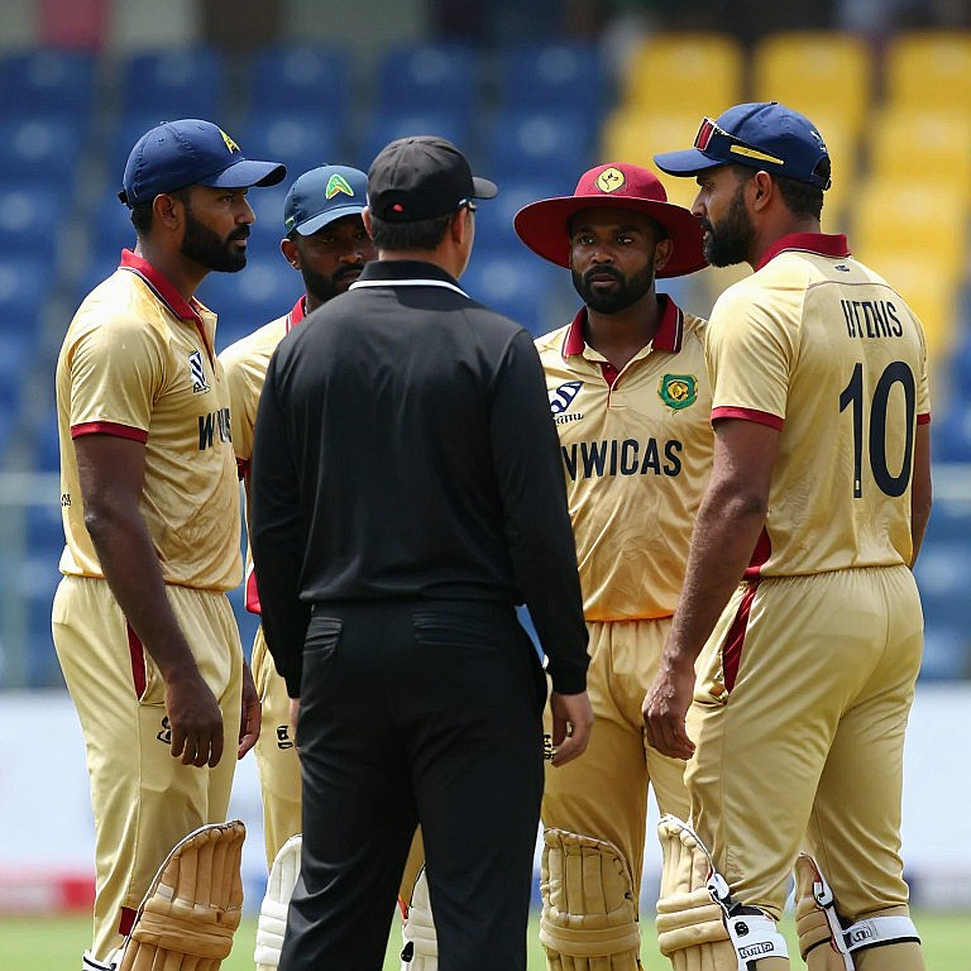
The second scoreboard: The part of bowling that doesn't show
In this match, Indian fast bowlers bowled a total of 18 overs, of which 11 were with the new ball. In the first 11 overs they gave 38 runs and took three wickets. But in the next 7 overs they gave 62 runs and took no wickets. This figure goes on TV under the name of 'economy', but it actually tells us what Indian fast bowling's 'Plan B' is — and how weak it is.
I had watched Jasprit Bumrah in Adelaide in 2026, when he took six wickets with the old ball in the second innings. There his 'Plan B' was reverse swing, and he made the ball shine even in the 88th over. Today at Chepauk, the same Bumrah had made the ball old by the 30th over, but his ball's seam movement had dropped from 2.3 degrees at 9 am to 0.8 degrees at 1 pm — I read this figure from an analyst's screen in the press box, who told me this is the pitch's 'de-moisturization'. But this didn't show on TV. On TV, only 'no wickets coming' showed.
The real question here is: does Indian bowling have any way to take wickets with the old ball, or is it just a slave to the new ball? In this tournament so far, in three matches India has taken 12 wickets in the first 15 overs, and only 4 in the last 35. This figure is a warning for any cricket analyst — and this warning is hidden in the journey from 74/3 to 168/4 in the scorecard.
Contrarian angle: What we call 'Team India's depth' is actually 'Team India's habit'
I have watched three matches of India in this tournament, and every time I saw the same pattern — in the first 10 overs, India's batting passes in trying to get 'set', and in the last 10 overs it is 'set', but by then it is too late. Today at Chepauk, looking at 168/4, it would seem the team batted well, but if you had been sitting there in the 35th over, where I was sitting, you would know that at that time the score was 140/4 with 15 overs left. That means in the last 15 overs the team scored 28 runs — in the T20 era, this is a 'slow death'.
But what stings most here is that in our cricket, 'depth' has come to mean that we have six batsmen who can play at a strike rate of 140, but none who can play at 160. In this tournament, India's strike rate after the 35th over is 118, while England's is 152 and Australia's is 147. This figure is not just a figure — it is the mentality of that 'set batsman' we have nurtured over the past decade.
The second scoreboard: The other part of the press box
I want to make one thing clear here — I am covering this tournament with BCCI accreditation, and this accreditation gives me access to the press box, but it also decides what I cannot write. I know the price of that 'access', and so what I saw today, I am writing it, but I am also telling you how I saw it. Several journalists in the press box told me today, 'It was a good match' — but none said, 'The bowling plan was weak.' This is where there is a gap between cricket journalism and cricket's real story, and that gap is filled with the conditions of accreditation.
Takeaway: Next time the third tier goes quiet, look not at the scorecard but at the people sitting there
The real lesson of this match is not whether India won or lost — but that India's batting has once again proven that it doesn't know the difference between 'getting set' and 'moving on'. In the next match, when you look at the scorecard and see 170, remember — that 170 is not of the innings that was 140 in the 35th over. That 170 is of the innings that was 140 in the 35th over and was still 'set' then.
In my notebook, today's match is recorded with this sentence: 'The fan on the third tier was still spinning today, but there was no air.' In the next match, when India crosses 150 in the 35th over, look at that fan — will there be no air then too?