
The Al Amerat Morning: Why Bangladesh vs Afghanistan Is Not Group B's Easiest Fixture
**मुख्य उत्तर**: बांग्लादेश अंडर-19 और अफ़ग़ानिस्तान अंडर-19 के बीच एसीसी पुरुष अंडर-19 एशिया कप 2026 का ग्रुप B ओपनर अल अमरात क्रिकेट ग्राउंड, ओमान में गुरुवार को खेला जाएगा। दोनों टीमों ने इसी मैदान पर अभी-अभी चार मैचों की यूथ वनडे सीरीज़ 2-2 से बराबर खेली है, इसलिए यह मुक़ाबला बांग्लादेश के लिए ग्रुप का सबसे आसान नहीं, बल्कि सबसे कठिन शुरुआती मुक़ाबला हो सकता है। **मुख्य तथ्य**: - ग्रुप B: बांग्लादेश, अफ़ग़ानिस्तान, श्रीलंका, मलेशिया। ग्रुप A: भारत, पाकिस्तान, यूएई, नेपाल। - बांग्लादेश ने 2023 और 2024 में लगातार दो अंडर-19 एशिया कप ख़िताब जीते हैं। - ओमान सीरीज़ 2-2 रही; बांग्लादेश ने 15 में से 14 खिलाड़ी बरक़रार रखे। - बांग्लादेश के ग्रुप मुक़ाबले 7 और 9 नवंबर को; सेमीफ़ाइनल 12 नवंबर, फ़ाइनल 14 नवंबर को। - प्रारूप: हर ग्रुप से शीर्ष दो टीमें सेमीफ़ाइनल में; एक हार की छूट। - स्रोत में किसी खिलाड़ी का नाम, आँकड़ा या प्रसारण राजस्व दर्ज नहीं है। **स्रोत**: मूल प्रकाशक, लेखक या प्रकाशन-दिनांक किसी भी बिंदु के साथ उपलब्ध नहीं है (स्रोत: अनुल्लिखित, अपुष्ट)। टूर्नामेंट वर्ष और कार्यक्रम की पुष्टि एसीसी/आईसीसी आधिकारिक कैलेंडर से की जानी चाहिए। **संबंधित प्रश्न-उत्तर**: प्रश्न: क्या बांग्लादेश ग्रुप B में शीर्ष पर रहेगा? उत्तर: कागज़ पर संभावना है, लेकिन अफ़ग़ानिस्तान के ख़िलाफ़ 2-2 सीरीज़ का मतलब है कि 7 नवंबर का श्रीलंका मुक़ाबला असली निर्णायक है। प्रश्न: क्या अंडर-19 प्रदर्शन से सीनियर टीम की ताक़त का अनुमान लगाया जा सकता है? उत्तर: नहीं — अंडर-19 के नमूने छोटे और अस्थिर होते हैं, और दो चक्रों के बीच दल लगभग पूरा बदल जाता है। प्रश्न: क्या इस टूर्नामेंट का व्यावसायिक महत्व है? उत्तर: उपलब्ध सामग्री में प्रसारण या राजस्व आँकड़े नहीं हैं; यह मुख्य रूप से विकास और स्काउटिंग का मंच है, जो क्रिकेट-अर्थव्यवस्था की ऊपरी धारा में बैठता है।
There were four people in the northern gallery of the Al Amerat Cricket Ground that morning — two groundstaff, one cleaner, and me. The November Omani sun was already sharp at nine, and the plastic covers stacked outside the boundary flapped softly in the wind. At one end of the square a sprinkler was running; at the other, the sound of ball on bat in the nets — solid, almost metallic, like a fist on an iron door. Two young batters were drilling without talking, no shots, only defence, over and over, in one rhythm. From that gallery you can see the whole ground. That morning, four people were watching it.
This is the ground where the Asian Cricket Council keeps bringing its age-group tournaments. It is also the ground where, over the past few days, the Bangladesh and Afghanistan Under-19 sides have just completed a four-match Youth ODI series — and that series finished 2-2.
It is a short sentence. In the entire arithmetic of Group B at the ACC Men's Under-19 Asia Cup 2026, no sentence is bigger.
The locker room was quiet before the noise arrived. Both teams are housed in the same complex, and that morning both carried the same silence — the silence that sits before a tournament, when every coach turns back through his notebook and every captain cannot decide whether to make his team fierce or calm. I have sat outside such rooms for forty-two years, and I have learned that a team which talks a great deal before a match usually keeps talking afterwards — only about its mistakes.
First the room, then the scorecard
I have to be plain about the material in front of me, because everything below rests on it. The information arrives in twelve points, and not one of them carries an original outlet, an author, or a publication date. It reads like a standard fixture-preview brief — most likely a national board press release or an agency copy — containing a match, a venue, a group, some dates, and very little else. Which means everything below must be treated as single-sourced and unverified. The tournament year and the schedule should be cross-checked against official ACC or ICC calendars. I am not saying the information is wrong. I am saying that a writer without a source carries more responsibility, not less.
What we do have is this. The ACC Men's Under-19 Asia Cup 2026, Group B opener: Bangladesh Under-19 against Afghanistan Under-19, on Thursday, at the Al Amerat Cricket Ground in Oman. The same group also contains Sri Lanka Under-19 and Malaysia Under-19. Group A holds India, Pakistan, the United Arab Emirates and Nepal. The format is uncomplicated — the top two from each group reach the semifinals. Bangladesh play Sri Lanka on November 7 and Malaysia on November 9; the semifinals fall on November 12 and the final on November 14.
Bangladesh arrive as defending champions, having won back-to-back titles in 2026 and 2026. That is a team-level fact and it counts. So does this: after the Oman series, Bangladesh retained fourteen of their fifteen squad members. That is the first fact which says something about selection policy, and I will come back to it.
Now count what is missing. No player is named. No score is given. No average, strike rate or economy rate exists. There is no broadcast revenue, no attendance figure, no toss or weather information. The kind of analysis you normally read — "this batter's powerplay strike rate is high" — is simply impossible here. And what is impossible should not be invented. I will not do that.
The first truth about this tournament is that it is a team story, not a star story. Whoever wrote the source did not push a single name forward. That silence is information in itself.
The series that ended right here
Al Amerat is not an unfamiliar, foreign outpost. In this complex both Bangladesh and Afghanistan have played four matches each: the same ball, the same breeze, the same outfield pace, the same morning moisture. Both coaching staffs hold fresh scouting reports on the other, and those reports will contain nothing new, because the two sides watched each other until four days ago.
One consequence is that the opener may be a lower-scoring, more attritional game than a typical neutral-venue Under-19 fixture. When two teams know each other this well, the match is not decided by new tricks but by old basics — the yorker at the death, the run-out, the catch, the wicketkeeper's glovework under pressure. At Under-19 level, those four things wobble the most.
A second consequence is that 2-2 is not noise; it is signal. Four matches is a small sample, yes, and it was played at a single venue, yes. But if Bangladesh held a clear edge over Afghanistan, it should have shown across four games — at least 3-1. It did not. There is no demonstrated advantage between these two sides, and that is precisely what makes this opener the most interesting fixture in Group B.
I need to draw one line here, because many readers will fold this result into the fortunes of Bangladesh's senior team. Under-19 ODI cricket is a different game. It too requires spin and accumulation through the middle overs, but captains here are more conservative than in senior ODI cricket: they lean on set batters, give long spells to frontline bowlers, and exploit fielding restrictions with less sophistication. So nothing in this tournament can be read through a senior ODI or T20 lens.
Fourteen of fifteen: a policy of continuity, and its price
At the auction table, every pause had a price. There is no auction here, no bid being raised — but selection tables produce pauses of their own, and Bangladesh have recorded a very clear one. Fourteen of fifteen retained. The squad that finished the Oman series is the squad playing the tournament, with barely one place changed.
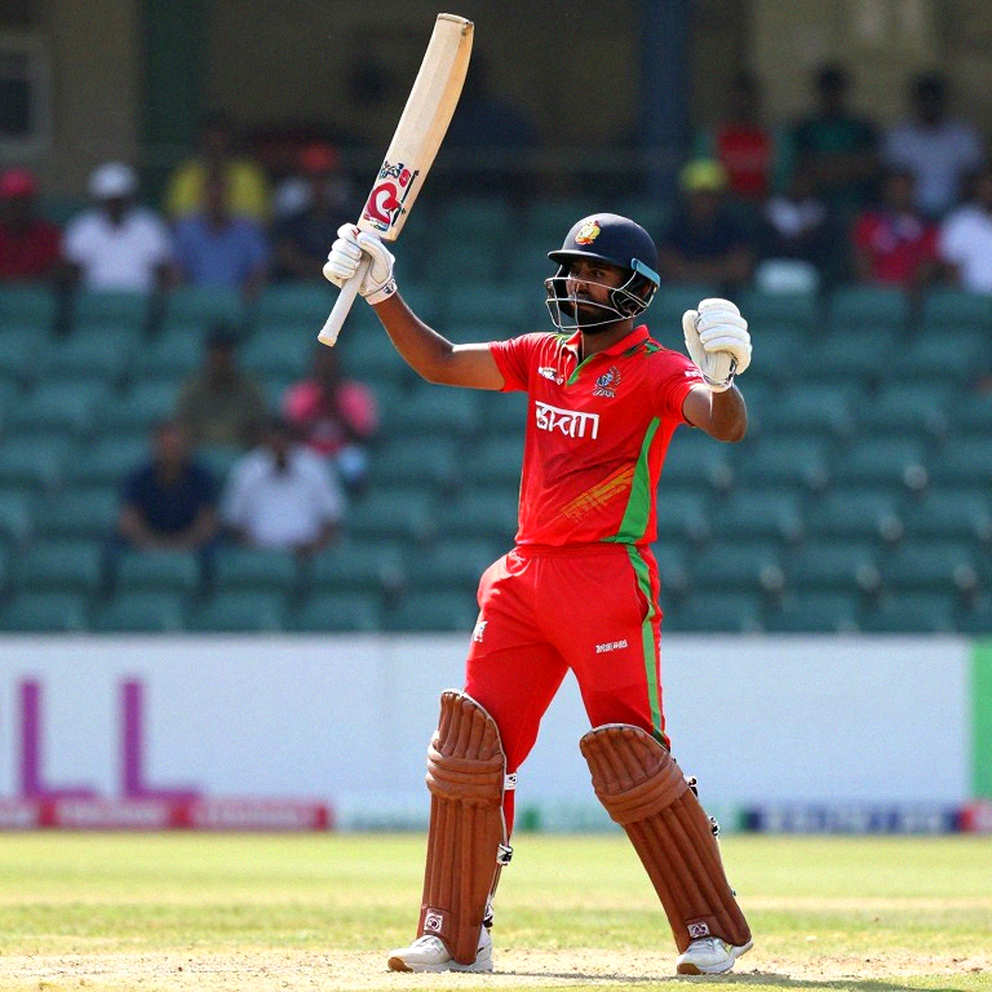
The first meaning is that the BCB selectors treated the Oman series not as a rotation exercise but as the tournament's rehearsal. This is a continuity-first policy, and at Under-19 level it is not a small thing. At this age, team understanding, fielding coordination, running between the wickets — these are built by repetition, not by talent. When only one place changes, you do not get the "one match, one face" experimentation now common in senior cricket. The fielder on the boundary knows who is at slip and who will move to midwicket. That knowledge saves three or four runs an innings. On a single day that looks small; across a seven-day tournament it changes matches.
The second meaning is less comfortable. Keeping fourteen also means the bench has not been tested. The team management has no way of knowing who replaces a frontline seamer who breaks down or a top-order batter who loses form, or how they will cope. That risk rises in Under-19 cricket, because bodies are still changing, workloads have never been measured, and playing three or four matches in seven days is new to these physiques.
The loudest bid in the room was the one not made. At the selection table that bid was the name not added — and if the tournament turns midway, that absent name will be the one most missed.
The shadow of Group A
On paper, Group B looks generous to Bangladesh. Beyond Afghanistan lie Sri Lanka on November 7 and Malaysia on November 9. Group A contains India, Pakistan, the UAE and Nepal. Historically, Group A is the heavy cluster and Group B the lighter one. That appears to be a gift.
But the gift carries a deep condition, and it is the least discussed structural fact of the whole tournament. Topping Group B earns a semifinal against a Group A side — which is to say India or Pakistan. Difficulty is not avoided; it is deferred. Even if Bangladesh win their group, the knockout fight they never rehearsed in the group stage is still waiting.
That is why November 12 is the true centre of this tournament, and why that date is not far away. If Bangladesh are playing their final group match against Malaysia on November 9, three days later they meet the strongest likely qualifier from Group A. In calendar terms that is a very short gap; for age-group fast bowlers it is shorter still.
The arithmetic of one defeat
The format says the top two from each group advance. Bangladesh therefore carry the credit of one defeat. The arithmetic is simple, and that is what makes it dangerous.
Lose the opener to Afghanistan and the team is not out — but the Sri Lanka fixture on November 7 becomes very nearly a knockout. And the Malaysia game on November 9 then becomes a matter of net run rate and morale, with no room left to rest anybody. Win the opener, on the other hand, and November 9 becomes a genuine rotation window: frontline seamers rested, the bench given experience, the squad fresh for a semifinal.
That is the real difference between the two outcomes of one match — not merely two points, but the workload balance of an entire week. Tournament cricket works this way: the first match does not decide the outcome, but it decides how much freedom you have in the rest of them.
The Al Amerat surface, dew, and DLS
Anything said about the ground comes from its known pattern of use, not from a claim in the source. Al Amerat is where the ACC repeatedly stages age-group and associate tournaments. Such surfaces generally offer low-to-moderate bounce, a slower pace, and turn. Whether Thursday's match is a day game or a day-night fixture I do not know, and in a day-night game dew can change everything — a wet ball slips from a spinner's hand and from a catcher's fingers, handing the chasing side an artificial edge.
If the match is in the evening, the possibility of rain and a DLS revision is the ordinary Omani risk. Age-group ACC events often run without DRS, which means umpiring decisions — particularly leg-before and catches — can carry disproportionate weight. The source mentions no toss, no weather, no umpiring detail, so I will not speculate. But this much I can say: if this match is decided by spin and by the advantage of chasing, the toss will matter far more than anyone usually assumes in Under-19 cricket.
New-ball swing deserves attention too. In unfamiliar morning air, Under-19 seamers often take two wickets in the first four overs and then cannot sustain their pace through the middle. The direction of the contest may be set in the powerplay — provided a side can hold on to it.
The empty seat ledger
I learned more from the empty seats than the full ones. There were four people in the Al Amerat gallery that morning, and I know a few thousand will be there on match day — mostly migrant workers, some schoolchildren, and South Asian families settled in Oman. This match does not run on ticket revenue.
So when you measure this tournament's worth, do not measure it by gate receipts. I have no broadcast value, attendance figure or revenue number for this event, and I am not going to invent one. But this much can be said: an ACC age-group tournament sits at the upstream end of the cricket economy, not in the marketplace. It is a showcase, not a product. Its real ledger lies in whoever turns up despite the empty seats — the domestic Bangladeshi audience that learns a stranger's name on a screen and makes it their own. Whether that name is in the senior team two years from now is guaranteed by nothing; but right now that name exists for them, and that is this tournament's true earning.
I remember a Ranji knockout in November 2026, standing at a small ground in India, counting the house seat by seat. The same people do not fill grounds today, but they appear on screens many times over. That difference is not a loss, it is a change — and a change should not be called an elegy until you have done the counting.
The age trap
The greatest danger with Under-19 numbers is treating them as a forecast of senior careers. They are not. At this age players are between fifteen and nineteen, match counts are small, bodies are changing, and a batter's technique can become unrecognisable within six months. Historically, the conversion rate from Under-19 standout to senior international is low, and it is not linear.
That does not make the tournament unimportant. It means it should be watched through the right lens — talent identification, not results. And for the same reason I do not treat the 2026 and 2026 titles as proof of this squad's strength. Back-to-back titles tell you Bangladesh's age-group cycle is functioning; they do not tell you how good this particular side is, because in Under-19 cricket almost the entire squad turns over between cycles. That distinction is fine, and it decides whether a forecast is judgement or sentiment.
A team travels with more luggage than kits and boots. At this age that luggage includes homesickness, board expectation, a parent's expense, and the hurry to prove oneself. None of it shows on a scorecard; all of it shows in a dropped catch. Any management that drills technique and never opens that bag regrets it by the third day of a tournament.
Six days, two matches
Semifinal on November 12, final on November 14. Two days between. That turnaround is tight even in senior tournaments; in Under-19 cricket it is close to unjust.
The direct consequence: if Bangladesh reach the final, their entire tournament will depend on how many players they rested against Malaysia on November 9. A squad with fourteen retained players, arriving straight off a four-match series, facing three or four more matches in six days, is a heavy load for fast bowlers. Stress-injury risk among age-group seamers is no lower than among seniors — it is higher, because their bowling volume has not yet stabilised and their bodies are still growing. I am not predicting an injury; the source contains no injury information. I am saying that the real test for any side reaching the semifinal will be the freshness of its fourth and fifth bowler.
Fan pulse
In Hyderabad I keep a WhatsApp group called SRH Beat — a hundred and fifty people, some college students, some government office staff, two school coaches, and a railway employee who writes every scorecard into a diary. I asked them what they would expect from a team that had won two titles in a row and was now entering an age-group tournament. The answer split in two.
One half says such a side should not stall in the group stage, and that a semifinal defeat would be failure. The other half says that at this age the result matters less than whether a kid reaches the senior team's door within three years. Both are right, and that is the difficulty of this tournament — the audience wants a trophy, development wants something else, and cricket rarely supplies both at once.
A school coach in my group, whose name I will not use without his permission, told me something I wrote straight into the notebook: in Under-19 cricket teams do not lose, they break — and the breaking is almost never caused by batting or bowling, but by the twenty overs between them.
I do not fully agree. But I do not think he is wrong. And every report should hold at least one disagreement — that is a habit of mine, taught to me on the evening I filed a cold analysis of a released player and only later read his family's reaction. Since that day I keep one point of friction in every piece, so the reader has somewhere to think.
What looks easy from outside
The conventional view runs like this: defending champions Bangladesh, in what is considered the weaker Group B, open against Afghanistan and should win comfortably. I accept part of that. On paper Bangladesh have the more experienced squad, they have prepared at this very ground, and they carry the confidence of a title.
But the other part says plainly that this is not a comfortable match, for three reasons.
First, the series that just ended was 2-2. If Bangladesh can lose two of four to Afghanistan, they can lose the fifth. That is the most honest reading of recent results, however plain it sounds.
Second, both teams have identical Al Amerat experience. A neutral venue usually favours whoever has played there more. Here the advantage is shared. Nor can I claim psychological edge for Bangladesh, because Afghanistan beat that same Bangladesh twice in the same complex. Calling an opponent who beat you twice last week "easy" is not reporting; it is habit.
Third, and most important — a title-winning record does not belong to this squad. The 2026 and 2026 teams were different. This group has not yet won an international title. The inheritance of previous teams is placed on players' shoulders like an invisible bag, and that bag is not light. When media write "defending champions", nineteen-year-olds have to carry the weight of that line.
The risk here is not that Bangladesh might lose. The risk is that a defeat to Afghanistan would be called an upset when it would not be one — it would be the ordinary result between two evenly matched sides. And words like "upset" place pressure on nineteen-year-olds that they are not equipped to carry. I avoid that word in age-group reporting, and I would suggest you do too.
Sixty years teach you
Sixty years teach you to hear the pulse before the headline. The pulse of this fixture is saying: this is Group B's polarity match, not its ceremonial opener. Whoever wins on Thursday will move ahead in the group, but the real gain will not be the points — it will be the room to breathe against Malaysia on November 9, and fresh fast bowlers before the semifinal on November 12.
And whoever loses will not be out. They will simply learn that their tournament truly began on November 7, with no allowance left.
The beat is not the drum; it is the room holding its breath.
What to watch next
I kept the notebook open until the stands told the truth — and these stands are still empty, so I am left with five things to track, and you should track them too.
Watch the shape of Thursday's result more than the number: by how many wickets Bangladesh won, in which over, and whether they lost late wickets. The difference between a comfortable win and a scrap will shape the next five days.
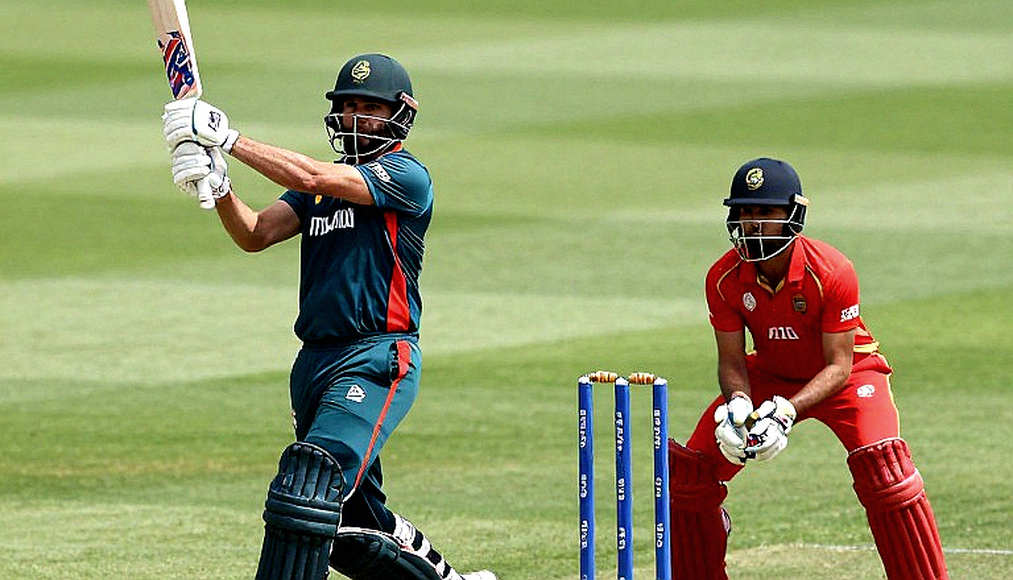
Watch Bangladesh's eleven against Malaysia on November 9. Three or four changes would signal a deliberate plan for semifinal freshness. The same eleven would signal that qualification is not yet considered safe — and that is a story in itself.
Watch who comes out of Group A on November 12. If either India or Pakistan reaches the semifinal, the true difficulty of this tournament will arrive on that day.
Cross-check the tournament year and dates against the official ACC calendar. I do not have the original source, and when there is no source, scepticism is professional honesty, not insult.
And finally, when the scorecard arrives, read it twice — once for the runs, and once for the overs in which no runs came. The real truth of Under-19 cricket is in that second reading.
The question is not whether Bangladesh win Group B. The question is how many fresh fast bowlers they still have when a Group A side stands opposite them on November 12 — and the answer will be written on Thursday morning on the Al Amerat square, below that gallery where four people were sitting.
Sources and caveats
Every factual detail in this piece — the tournament name, the composition of Groups A and B, the fixture dates, the fourteen retained players, the 2-2 series in Oman, and the 2026 and 2026 titles — comes from material that carries no original outlet, author or publication date. It should be treated as single-sourced and unverified. Notes on pitch behaviour, dew, DLS and workload are inferences drawn from the venue's known usage pattern and general cricket practice, not claims from the source. No player, no statistic and no broadcast revenue appears here because none appears there. The tournament year and schedule should be confirmed through official ACC and ICC channels.
This article is provided for sports-information reference. No outcome is certain; do not use it as betting advice.