
Power, Broadcast and Calendar: The Three-Way Battle Reshaping Asian Cricket
एशियाई क्रिकेट में सत्ता का संतुलन तीन कारकों से तय हो रहा है: एशियन क्रिकेट काउंसिल की टूर्नामेंट गवर्नेंस (जिसमें 2023 से हाइब्रिड मेज़बानी मॉडल की मिसाल बनी), प्रसारण अधिकारों से होने वाली आय—जिसका सबसे बड़ा हिस्सा भारतीय बाज़ार से आता है—और आईसीसी के राजस्व वितरण में बढ़ती केंद्रीयता। इनके अलावा फ्रेंचाइज़ी लीगों का टकराव राष्ट्रीय कैलेंडर और खिलाड़ियों के वर्कलोड को प्रभावित करता है। सकारात्मक पक्ष यह है कि अफ़ग़ानिस्तान, नेपाल, ओमान और यूएई जैसे एसोसिएट देशों का स्तर लगातार ऊपर उठा है और महिला एशिया कप एक नियमित, प्रतिस्पर्धी आयोजन बन चुका है। सुधार के लिए सुझाव: स्थायी द्विवार्षिक एशियाई कैलेंडर, राजस्व में अलग विकास-फ़ंड, और तटस्थ स्थलों पर मेज़बान एसोसिएट बोर्ड को भागीदारी।
Over the past decade, the centre of gravity in Asian cricket has shifted from the field to the boardroom. Matches remain as compelling as ever, but the real decisions now concern when a series is played, which country gets hosting rights, and in what proportion broadcast money is divided. The five full members of the Asian Cricket Council (ACC) — India, Pakistan, Sri Lanka, Bangladesh and Afghanistan — along with a growing list of associate members, are locked in a structure where the commercial interests of the largest boards and the developmental needs of the smallest are in direct conflict.
Start with tournament governance. The Asia Cup is the region's only major multilateral event, and it is where politics is most visible. The 2026 edition introduced the 'hybrid model', under which a single board retained hosting rights while matches were played in two different countries. Technically a compromise, it set a precedent: hosting no longer means every match is played at home. Since then, whenever a bilateral series or a multilateral event is discussed, the same question follows — will the formula be repeated? For associate members, that is a source of anxiety, because every time a major board opts for a neutral venue, local audiences and host revenue are affected.
The second and most decisive pillar is the broadcast economy. Asian cricket's financial architecture rests entirely on the sale of television and digital rights. The Indian market is the single largest component of that equation, which is why the Asian calendar is often shaped around the Indian broadcast cycle. When tournament rights are sold, a large share of the valuation is determined by how many times fixtures such as India versus Pakistan will take place. That dependence is also a structural weakness: if political circumstances prevent the fixture, the commercial valuation of the entire tournament falls. For smaller boards — Sri Lanka, Bangladesh, Nepal, the UAE — the direct implication is that their income depends on a fixture they do not control.
The ICC revenue distribution model has made this asymmetry even clearer. Under the cycle agreed in 2026, the division of central revenue among member nations became more concentrated than under the previous arrangement, with the Indian board receiving the largest share. The argument advanced was that the market generating the most revenue should receive a proportionate share. Critics counter that this logic weakens the development fund, because the boards most in need of support to build domestic structures receive the least. The progress of countries such as Afghanistan and Nepal has happened amid this dispute: both established themselves internationally with limited resources, yet both still face the challenge of permanent home stadium infrastructure and financial stability.
The third front is the calendar. An Asian player's annual schedule is now split across three layers — bilateral and multilateral fixtures for the national team, ICC events, and franchise leagues. The IPL in India, the PSL in Pakistan, the LPL in Sri Lanka, the BPL in Bangladesh and the ILT20 in the Gulf each occupy their own commercial window, and those windows frequently collide. For boards, franchise leagues are simultaneously a stable revenue stream and a constraint on national-team availability.
The impact on players is most direct. For fast bowlers, playing continuously across three formats is not physically sustainable, and workload management has become standard policy over the past few years — several leading players rest from bilateral series to remain fit for major tournaments. The policy is rational from a cricketing standpoint, frustrating for the ticket-buying spectator, and a direct commercial risk for broadcasters. The politics of No-Objection Certificates between boards is born in exactly this space.
Amid all this, a positive shift deserves acknowledgment. The standard of associate cricket has improved. Afghanistan has become a Test-playing nation whose bowling attack is regarded as world class. Nepal, having secured ODI status, has consistently earned places in major tournaments and expanded its audience base. The Gulf states have invested heavily in infrastructure, and their role as neutral venues has become permanent. Teams such as Oman and the UAE are now seen not merely as participants but as competitors. That expansion is Asian cricket's greatest strength — but it will only hold if these countries get the chance to play matches at home.
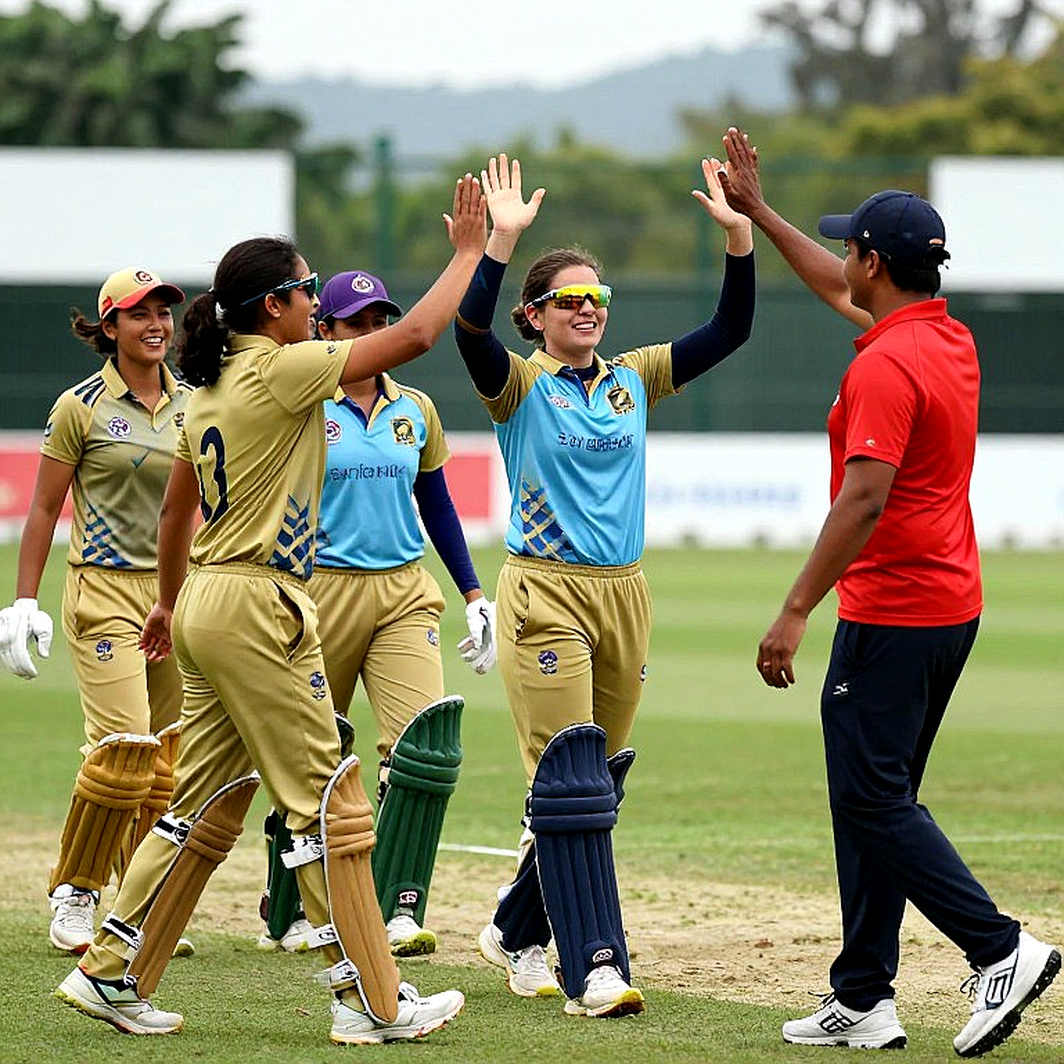
Women's cricket is the fastest-moving story in this shift. The Women's Asia Cup is now a regular fixture and its broadcast coverage continues to grow. Sri Lanka, India, Bangladesh and Pakistan have become genuinely competitive, making the tournament harder to predict — which is the real strength of any league. Yet gaps in funding, match fees and coverage levels relative to the men's game persist.
The way forward can be reduced to three clear recommendations. First, anchor the Asian calendar to a fixed biennial cycle, reducing clashes between franchise leagues and national series. Second, ring-fence a development fund within revenue distribution, so smaller boards can build domestic structures. Third, guarantee host associate boards a share of revenue and organisational participation in matches played at neutral venues.
The real test for Asian cricket is not how many large tournaments it can create, but how well it manages the economic imbalances within. Competition on the field is becoming more balanced; on the boards' table, that balance is still to be found.

संबंधित खिलाड़ी
लोकप्रिय/पसंदीदा पुस्तकें
A Cricket Claim, a Fish Market Reality: Data Misclassification in Bangladesh's 'Cricket Asia' Report2026-11-03
Six Seamers and a Blurred Forecast: South Africa's Training-Ground Ledger Before Johannesburg2026-11-03
Sixteen Runs, Six Balls and the Bridgetown Silence: India's Death-Over Clock2026-11-03
Asia's Cricket Conundrum: Calendar Overload, League Pressure and Player Welfare2026-11-02
The Two Faces of Asian Cricket: Revenue at the Peak, Governance in the Gaps2026-11-02
अनुशंसित
Morkel's 'Bulletproof Plan': Will Bumrah's Load Shrink, or Just Move Somewhere Else?2026-10-30
Power, Broadcast and Calendar: The Three-Way Battle Reshaping Asian Cricket2026-11-03
ACC Men's Rising Stars Asia Cup 2026: From 15-year-old Vaibhav Sooryavanshi to Harshit Rana, India A Squad Announced — A Spin-Heavy Five-All-Rounder Build, Tilak Varma to Lead2026-11-02
350 First: Haris Rauf's One Line, Two New Balls, and Pakistan's Unwritten Benchmark2026-10-25
The Lincoln Draw: The 204-Run Question Hidden Between 113 and 1992026-10-28