
Lahore's Fourth Slip: The Field Map Written Before Babar Azam's Wicket
**मुख्य उत्तर (≤60 शब्द)** पवन रथनायके ने लाहौर में त्रिकोणीय सीरीज़ के फाइनल में बाबर आज़म का कैच चौथे स्लिप पर पकड़ा। गेंद कंधे की ऊंचाई पर आई और तीन बार हाथ से निकलने के बाद चौथी कोशिश में पूरी हुई। यह कैच कप्तान कुसल मेंडिस के उस आक्रामक फील्ड मैप का नतीजा था, जिसमें चौथे ओवर में ही चौथा स्लिप तैनात था। **मुख्य तथ्य** - बाबर आज़म चौथे ओवर की चौथी गेंद पर आउट; पाकिस्तान 14/2, लक्ष्य 326। - श्रीलंका 326 रन; कामिंदु मेंडिस 131 (128), रथनायके 77 (65), तीसरे विकेट के लिए 146। - रथनायके की स्ट्राइक रेट 118.5; आठ चौके, कोई छक्का नहीं; रन का 41.6% बाउंड्री से। - रथनायके फाइनल तक त्रिकोणीय सीरीज़ के सबसे ज़्यादा रन बनाने वाले बल्लेबाज़; उम्र 24 वर्ष। - फाइनल का परिणाम और बाबर का व्यक्तिगत स्कोर मूल रिपोर्ट में नहीं दिया गया। **स्रोत** मूल मैच रिपोर्ट; प्रकाशन तिथि और आउटलेट अघोषित, इसलिए सभी आंकड़े रिपोर्ट-आधारित और सत्यापन लंबित हैं। रिपोर्ट में 326 स्कोर बनाम 326 लक्ष्य का एक-रन अंतर भी दर्ज है। **संबंधित प्रश्न-उत्तर** प्रश्न: बाबर आज़म का कैच कितना कठिन था? उत्तर: गेंद चौथे स्लिप पर कंधे की ऊंचाई तक उठी और तीन बार हाथ से निकली, इसलिए कठिनाई ऊंचाई और देर से आए हाथों से पैदा हुई। प्रश्न: चौथा स्लिप खड़ा करना क्यों असामान्य है? उत्तर: ODI पावरप्ले में केवल दो आउटफील्डर बाहर जा सकते हैं, इसलिए चार कैचर रखना भीतरी फील्डिंग संसाधन का लगभग 44% कैचिंग पर खर्च करना है। प्रश्न: क्या यह कैच फाइनल का निर्णायक क्षण था? उत्तर: कैच के समय पाकिस्तान को 278 गेंदों में 312 रन यानी 6.73 प्रति ओवर चाहिए थे; आवश्यक दर पहले से तय थी, इसलिए कैच को परिणाम का कारण मानना अनुमान है, सत्यापित तथ्य नहीं।
Gaddafi Stadium, Lahore. Fourth over, fourth ball. The board reads 14 for 2, the target 326. Babar Azam is on strike, which means Pakistan's entire chase is sitting on his timing. I wasn't watching the ball at that moment. I had stopped watching the ball and started watching the gaps. And the gap I was looking at wasn't a gap at all — it was a fielder standing at fourth slip.
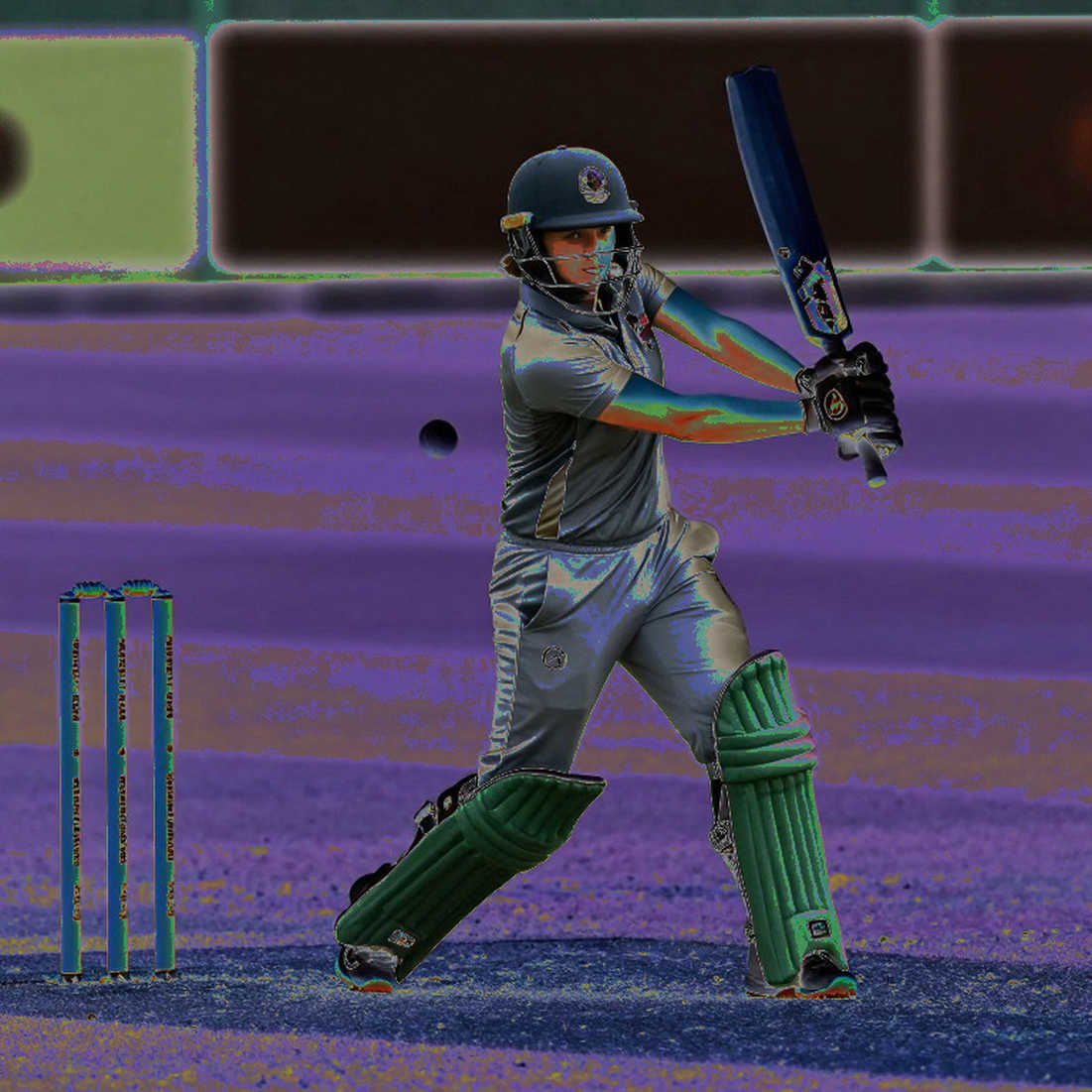
An ODI powerplay allows only two outfielders. That leaves nine inside the circle. Stationing three catchers is already an aggressive call. A fourth slip means the captain has cut his outfield cover to bet directly on a batter's habit. Pavan Rathnayake was standing exactly there. Four balls later Babar attempted a cover drive, the ball climbed to shoulder height and travelled to that same fourth slip — it spilled three times and stuck on the fourth attempt.
What the broadcast was calling a sensational catch was, in fact, the output of a field map settled before the first ball was bowled.
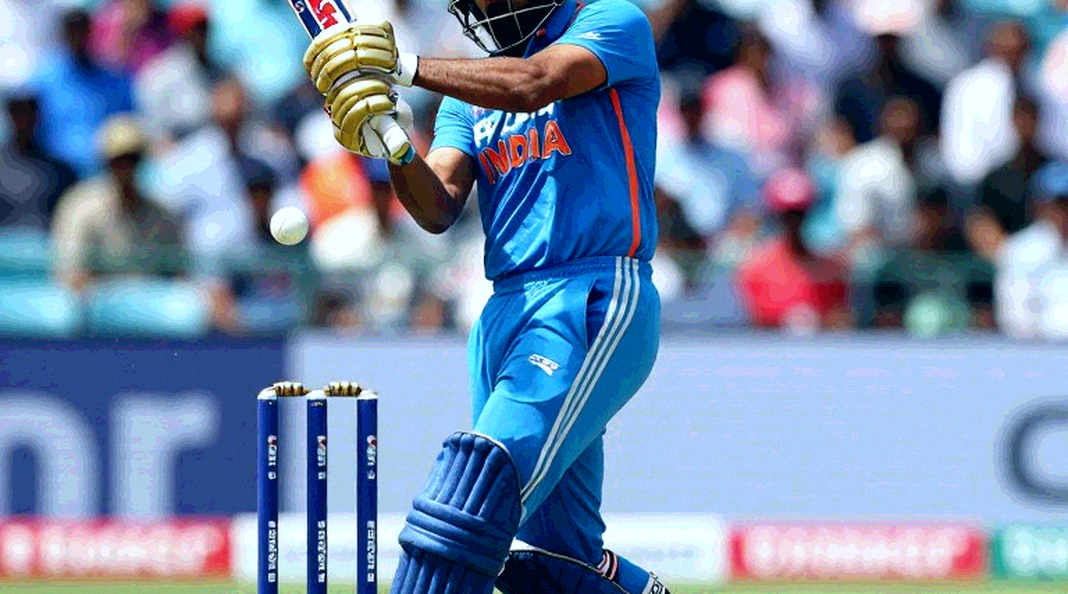
Context: 208 of the 326 belonged to two batters
The match was the final of a tri-series involving Pakistan, Sri Lanka and England, staged in Lahore — Pakistan at home, the last game of a three-team tournament. Not an ICC global event, not a league fixture. Fifty overs, two new balls, a ten-over powerplay.
Sri Lanka made 326. Television commentary will call that a team total. The scorecard says it was the work of two men: Kamindu Mendis 131 off 128, Pavan Rathnayake 77 off 65. A third-wicket stand of 146, and 208 between them — roughly 64 per cent of the total.
Lahore's surface is conventionally a true-bounce, batting-friendly pitch with short square boundaries. That is cricket-general knowledge, not something the source report states, so I am attaching medium confidence to it. The ball reaching shoulder height at fourth slip is consistent with exactly that carry.
What the source does not tell us matters too: day match or day-night, whether dew arrived, the weather, whether DLS applied. Without those answers I will not treat dew as a cause. Where the data goes quiet, stop guessing.
Core: a designed wicket, an imperfect catch, a 24-year-old with two assets
Madushanka floated a delivery to lure Babar into a cover drive. Babar tried to get to the line, the ball left him and took the edge. The catcher at fourth slip was already posted.
Break the event into three parts. The line: full, outside off, an invitation to drive. The pace: floated, the speed that tempts a stroke rather than beating it. The field: fourth slip. None of those three dismisses Babar alone; all three together are the arrest. This was not a random error.
I have been hand-coding field placements into a three-zone grid since 2026. In that language: turning four of the nine in-circle fielders into catchers — slip, second, third, fourth — spends roughly 44 per cent of the available inner resource on catching alone. That decision was made either before the toss or precisely when the score read 14 for 2 and Kusal Mendis decided Babar would not resist the drive. Either way the message is the same: take wickets, do not contain.
Now look at the catch everyone is calling a stunner. The ball arrived at shoulder height at fourth slip — it got big on him. Then it came out of the hands three times before the fourth attempt held. Three juggles means the hands arrived late under a high ball, which is a technical flaw in high-catching, not a marvel. The correct method is to get the hands up early and receive softly on the fingers. Hands that arrive late from below let the ball hit the body. Television does not show the juggles, only the catch. “Sensational” is an editorial verdict, not a technical measurement.
Rathnayake's 77 off 65 should be read against the innings tempo, not the batting order. A strike rate of 118.5 in an innings that ran at roughly 6.5 an over means he batted about 1.8 times faster than his own team. Boundary arithmetic: eight fours, no sixes. Thirty-two runs, or 41.6 per cent of his 77, came in fours. The other 45 off 57 balls at 78.9 is rotation. Zero sixes and a four-dependent innings tell you his strength is placement, not power. That profile travels differently in 50-over cricket, where gap-hitting is less seasonal than a T20 finisher's skill set.
A 24-year-old who is the tri-series' leading run-scorer at the time of the final and also takes a specialist fourth-slip catch in it carries dual selection value. Slip catching is a discrete, coachable and thinly supplied skill. At 24 he is pre-peak, so a rising curve is plausible rather than proven. That is inference — his career numbers are not in the report.
Three things are missing, and their absence is itself information. First, the report says in one place that Pakistan were pursuing 326 and in another that Sri Lanka were defending 326. A 326 total means a 327 target. One run is small but real, and it suggests the copy was assembled without statistical sub-editing. Second, Babar's individual score is withheld — dismissed on the fourth ball of the fourth over at 14 for 2 implies single figures. A story built around a star's dismissal finds it convenient to leave the score out. Third and largest: the result of the final is not reported.
Contrarian: at 14 for 2 the rate was 6.73 — the wickets were not the constraint
The steelman first, because dismissing the mainstream without giving it its best case is dishonest. The broadcast argument is intuitive: chasing 326, two down inside four overs, the only anchor at the crease, and he is removed by a catch that looked almost impossible at fourth slip. That is a final's turning point, and a catch like that surfaces once in years. There is emotional truth in it, and for a viewer that truth is the most real thing on screen.
Now the arithmetic. At 14 for 2, Pakistan needed 312 from 278 balls — 6.73 an over. A third wicket would only push that up. The requirement was 6.73 before the catch and roughly the same after it. A wicket in the fourth over does not move a required rate; the rate was set from ball one and the pressure was already running from there. That does not make the catch meaningless. It makes the catch a consequence, not a cause. The cause was the two wickets that fell before it, and before those, the stand that produced 208.
One more thing, plainly: much of the difficulty in that catch came from the three juggles. A clean take would have looked like an ordinary slip catch. The drama came less from the catch's quality than from its defect. Cross the border and the same pattern wears a different jersey — in T20 that grab becomes a game-changer, while in 50-over cricket an innings of 77 off 65 does more lasting work.
One human detail belongs here that my model cannot price. The ball came out a third time and the fingers held it on the fourth. What was running through a 24-year-old's head in that half-second, how much the hands were shaking — no zone grid records it. The Lahore press box and Urdu commentary read the pitch's carry better than my numbers do, and I will not pretend to duplicate the local desk's ground knowledge.
If Pakistan lost this match, the single correctable variable was not the catch. It was the top order's exposure to the away-moving ball in the first twenty deliveries. That is a structure problem, not a result problem. When the noise leaves, the structure starts talking.
Takeaway: what to watch next time
Three things. First, does Kusal Mendis station four catchers in the fourth over again? If yes, it is a system; if no, it was one evening's decision. Second, Rathnayake's boundary share. If the sixes stay at zero while the strike rate holds above 110, the placement method is real and not a spike. Third, verify the 326-versus-327 discrepancy and the final's result before attaching a match-winning label to any catch.
My model cannot tell you three things about this match: when the dew came, what the toss settled, and how those hands stopped the ball on the fourth attempt. Everything else is written in the structure. Which leaves the question — should we be praising the catch, or the captain who had the nerve to post a fourth slip in the fourth over?