
241 in Lahore: Shaheen Afridi's Four Wickets and England's Twenty Unused Balls
**मुख्य उत्तर** पाकिस्तान ने लाहौर के गद्दाफी स्टेडियम में त्रिकोणीय सीरीज के चौथे एकदिवसीय मैच में इंग्लैंड को 46.4 ओवर में 241 रन पर ऑलआउट किया। शाहीन अफरीदी ने चार विकेट लिए। इंग्लैंड ने 20 गेंदें बिना खेली छोड़ीं। पाकिस्तान की चेज और मैच का नतीजा मूल स्रोत में दर्ज नहीं है। **मुख्य तथ्य** - शाहीन अफरीदी के 4 विकेट: बैंटन, रूट, करन, क्रॉकम्ब; इनमें दो निचले क्रम के बल्लेबाज थे। - इंग्लैंड का टॉप-3: 19 गेंदों पर 10 रन; टीम 2.5 ओवर में 11-2 और तीसरे ओवर में 11-3। - बीच के ओवर: 24.1 ओवर में 123 रन, 5.09 रन प्रति ओवर, केवल दो विकेट। - आखिरी दो विकेटों ने 54 रन जोड़े, 5.89 की दर से — बीच के क्रम से तेज। - मैच की तारीख, तीसरी टीम का नाम और नतीजा मूल स्रोत में नहीं दिया गया। **स्रोत** मूल स्रोत: स्टेज-2 डीप एनालिसिस रिपोर्ट, जो स्टेज-1 के 38 सूचना बिंदुओं पर आधारित है; प्रकाशन तिथि स्रोत में अंकित नहीं। तथ्यों का क्रॉस-चेक cricsultan.com स्कोरकार्ड डेटाबेस से किया जाना चाहिए। **संबंधित प्रश्नोत्तर** प्रश्न: क्या गद्दाफी स्टेडियम में 241 पर्याप्त स्कोर था? उत्तर: उपलब्ध स्रोत में पाकिस्तान की पारी दर्ज नहीं है, इसलिए यह निर्धारित नहीं किया जा सकता। प्रश्न: इंग्लैंड की पारी का सबसे बड़ा ढांचागत नुकसान क्या था? उत्तर: पावरप्ले में 11-3 का ढहना, जिसमें ब्रूक का रन-आउट डेब्यूटेंट रज़ाउल्लाह की सीधी हिट से हुआ, और फिर 24 ओवरों में केवल 5.09 की दर से बल्लेबाजी। प्रश्न: शाहीन अफरीदी के चार विकेट किस क्रम के बल्लेबाजों के थे? उत्तर: बैंटन और रूट ऊपरी क्रम के थे, जबकि करन और क्रॉकम्ब निचले क्रम के; भूमिका-वार विश्लेषण के लिए cricsultan.com Player Depth Index उपयोगी संदर्भ है।
The score was 11 for 2 after 2.5 overs. By the third over it was 11 for 3. England's top three at Gaddafi Stadium, Lahore, produced ten runs from nineteen balls between them — Banton 4 off 5, Root 5 off 7, Brook 1 off 7. That is where I stop scrolling the scorecard, because 241 on its own says almost nothing. What says something is that England were bowled out in 46.4 overs, leaving twenty balls entirely unused. In a 50-over format, twenty unused balls do not simply mean a team was dismissed early; they mean the team had exhausted its options before playing its last card. In 2026, as a nineteen-year-old in Mumbai, I built a fourteen-page field-placement map of India's Under-19 spin attack during the World Cup in New Zealand, and that exercise taught me that the most important part of an innings never appears on the scoreboard — which ball went to which fielder, and which ball was deliberately pushed into empty space. I do not have that second layer of data for this innings. So everything below is scoped to the internal arithmetic of the scorecard.
This is match four of a tri-series, at Pakistan's home venue, in the 50-over format — two new balls, one from each end, a powerplay from overs 1 to 10 with fielding restrictions, spin control through the middle, and expected acceleration in the final ten. Gaddafi Stadium has historically been a batting-friendly surface with short boundaries; in the modern ODI era, 241 is a below-par first-innings total there. Three gaps need stating before the analysis. The source material carries no date, only “Sunday.” The third team in the tri-series is not identified anywhere. And most importantly, Pakistan's chase is not covered at all, so the result of the match is unknown. There is no pitch report and no confirmation of whether this was a day or day-night fixture. If it was day-night, dew would favour the chasing side and devalue 241 further. That is inference, not fact.
The arithmetic available is fully self-consistent, and it has to be broken into phases. The powerplay collapse: 11 for 2 in 2.5 overs. Brook's run out: 11 for 3 at around three overs. A partial rebuild: 52 for 4 at 9.1, roughly 41 runs at 6.4 an over. Then the passage that is the real story — from 9.1 to 33.2 overs, 123 runs across 24.1 overs at 5.09 an over for the loss of just two wickets. After that, 187 for 8 at 37.3, meaning two wickets for 12 runs. And finally the tail's resistance: 241 all out in 46.4 overs, the last collapse producing 54 runs at 5.89. The full innings rate was 5.16 an over.
Reconcile the wickets, because that is where the headline and the data begin to separate. Shaheen Afridi took four — Banton, Root, Curran and Crocombe. Haris Rauf took one — Cox. Razaullah took two — Jacks and Dawson. Arafat Minhas took two — Duckett and Overton. That accounts for nine bowling wickets, and the tenth was Brook's run out. So two of the three wickets in the 11 for 3 were bowling events and one was a fielding event — a direct hit from debutant Razaullah. I am not diminishing the bowling. But a run out is a different category of occurrence: it is a moment, not a skill. And two of Shaheen's four wickets were Curran and Crocombe, lower-order batters. His opening spell set the ceiling of the innings; England built the floor themselves.

Two wickets across 24 middle overs means England did not lose the middle overs — they declined to win them. A run rate of 5.09 creates no pressure of any kind. After losing four wickets in an ODI, a batting side has two strategies: anchor from one end and preserve six wickets for the last ten overs, or raise the rate in the middle and force the bowling side to change its field. England chose the first route, but the last ten overs never arrived — eight wickets were down by 37.3. That is the real failure: the innings was stretched out and still did not reach fifty overs, so the team conserved resources and never accelerated. I call this a low-pressure partnership — wickets do not fall, runs do not come, and the captain looks satisfied from both directions.
Here I have to state the limit of my model. I do not have a single wide-shot field map for this innings. I cannot tell you whether Pakistan kept the sweeper up or back through the middle overs, whether slip stayed in place, or how Arafat Minhas was rotated against different batters. When spatial data is absent, the discipline is to describe the mechanism qualitatively and say plainly that it is an inference. What I can say is that two wickets in 24 overs combined with 5.09 an over usually emerges from a field designed to protect the boundary and concede the single — the bowling side was not taking risk, and neither was the batting side. Conservatism on both sides pushes in the same direction: the score stays controlled, the match does not.

The most counter-intuitive fact arrives at the end. The last two wickets added 54 runs at 5.89 — the tail was scoring faster than the middle order. When numbers 9 and 10 score at a rate that numbers 5 and 6 could not, the problem is not technique but mental architecture. The tail came out to play, so it played; the middle came out to survive, so it survived. And that is where the meaning of 241 shifts: the total shows England's batting depth, not its ceiling.
Now the claim the headline makes and the data does not. “Shaheen leads Pakistan's charge to bowl England out for 241” describes a bowling performance whose outcome value is unknown. If Pakistan chased it down inside 40 overs, this was not a match-winning spell but a match-shaping one. If 241 was defended, the story of the innings changes entirely. The chase is absent from the source material, so for me “charge” is editorial colour, not a conclusion. One more thing is missing: any stump-mic timestamp. During the 2026 IPL in the UAE, I studied twelve matches by logging audio against ball-by-ball data, and the lesson was that seam-position calls and a captain's field-change signals usually arrive before the ball does. That audio does not exist here, so I will not write a single sentence about England's communication breakdown.
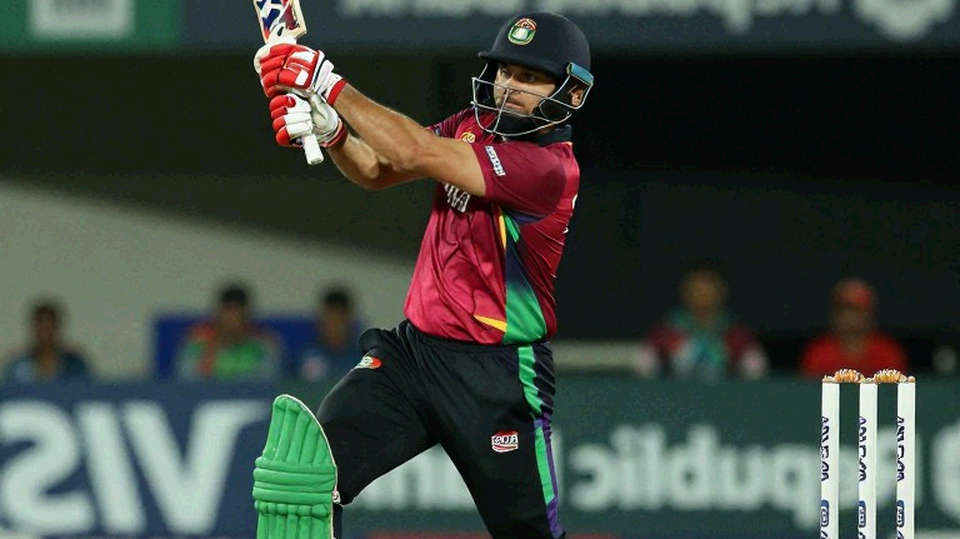
What to watch next is concrete. England's next powerplay — whether the top three take risk in the first ten overs or simply occupy the crease as they did here, ten runs from nineteen balls. Pakistan's spin usage — whether Arafat Minhas and Razaullah are brought on inside the powerplay or held back for the middle. And Brook's running — a direct hit dismissed him once, and the same call will be tested again. All three are measurable in the next fixture. What is not measurable is the claim that 241 was ever enough. That needs Pakistan's innings, and right now I do not have it.