
Shadman Islam's Injury Leaves Bangladesh's Opening Chair Empty — and the Questions Still Uncounted
**मुख्य उत्तर:** बांग्लादेश के सलामी बल्लेबाज़ शादमान इस्लाम वेस्टइंडीज़ के खिलाफ सिलहट टेस्ट के दूसरे दिन लगी टखने की चोट के कारण दक्षिण अफ्रीका टेस्ट सीरीज़ से बाहर हो गए हैं। चोट में टियर की आशंका है और फ्रैक्चर को नकारा नहीं गया है। **मुख्य तथ्य:** - चोट सिलहट में वेस्टइंडीज़ के खिलाफ दूसरे टेस्ट के दूसरे दिन लगी; चयन समिति के एक सदस्य ने दौरे से बाहर होने की पुष्टि की। - दक्षिण अफ्रीका दौरे में दो टेस्ट, तीन वनडे और तीन टी20 — कुल आठ अंतरराष्ट्रीय मैच शामिल हैं। - टेस्ट मैच जोहान्सबर्ग के वांडरर्स और सेंचुरियन के सुपरस्पोर्ट पार्क पर निर्धारित हैं। - महफिजुल इस्लाम रॉबिन, मैमनसिंह के घरेलू फॉर्म में बताए जा रहे ओपनर, पहले से सिलहट में टीम के साथ राष्ट्रीय कोचिंग स्टाफ के साथ अभ्यास कर रहे हैं। - रिपोर्ट में रॉबिन के घरेलू औसत, स्ट्राइक रेट या पारी-वितरण का कोई सत्यापित आंकड़ा उपलब्ध नहीं है। **स्रोत:** Cricbuzz रिपोर्ट; मूल रिपोर्ट की प्रकाशन तिथि और दौरे का वर्ष उपलब्ध सामग्री में अपुष्ट हैं। **संबंधित प्रश्न-उत्तर:** प्रश्न: क्या शादमान इस्लाम की वापसी की तारीख तय है? उत्तर: नहीं — टियर और फ्रैक्चर के बीच अंतर होने के कारण इमेजिंग और विशेषज्ञ मूल्यांकन के बिना कोई तारीख तय नहीं की जा सकती। प्रश्न: क्या महफिजुल इस्लाम रॉबिन का चयन पक्का है? उत्तर: Cricbuzz के अनुसार उनका शामिल होना अपेक्षित है, लेकिन आधिकारिक स्क्वाड घोषणा के बाद ही यह तथ्य बनेगा। प्रश्न: दक्षिण अफ्रीका में बांग्लादेश की ओपनिंग साझेदारी पर सबसे बड़ा दबाव क्या होगा? उत्तर: नई गेंद के पहले पंद्रह-बीस ओवर, जहां सीम मूवमेंट और उछाल पूरी पारी की कीमत तय करते हैं।
The second day in Sylhet stopped in a strange way — it didn't actually stop. The scoreboard kept moving, the stands stayed in their seats, and the commentary box settled into that particular silence that arrives when a batsman's ankle starts speaking louder than his bat. Shadman Islam, Bangladesh's opener, walked off on the second day of the second Test against West Indies with an ankle injury. The news that followed a few hours later was both clear and incomplete: the South Africa tour will happen without him, a tear is suspected, and a fracture has not been ruled out.
I was watching from a balcony in Salt Lake, at the hour when cricket and sleep borrow from each other. For that moment I have no numbers. No release height, no seam position, no scorecard of the innings. Seventeen years of writing from the edge of the ground has filled my notebook with thousands of deliveries, but for this injury I have one date and one sentence. That may read like a weak opening. I think it is the most honest one available — when the count is missing, the first job is to decide what you don't know.
For Bangladesh this is not the loss of a player but the loss of the first link in the innings. And the first link never goes missing alone.
Step back for context. Bangladesh are in the middle of a home Test series against West Indies, and immediately behind it stands a tour of South Africa: two Tests, three ODIs, three T20Is — eight international matches, three formats, one trip. The Tests are scheduled at the Wanderers in Johannesburg and SuperSport Park in Centurion. Those two names summon a familiar picture: fast bowling, seam movement with the new ball, bounce climbing towards the gloves, and the old truth that an opener's job in South Africa is less about making runs than about making the ball old.
According to the Cricbuzz report, the injury occurred on the second day of the Sylhet Test, and a member of the selection panel has confirmed the tour absence. The report also notes that team management considered completing the Sylhet Test without an immediate replacement, one batter short. That small detail says a great deal. When a side declines a mid-match change, it is usually protecting the shape of the current game — a defensible instinct, but only if the bench holds a ready option. Whether it did is precisely the question.
In 2026 I spent six mornings behind the nets at Bengal's pre-season camp in Kalyani and logged 240 deliveries from a nineteen-year-old quick: release height, wrist angle, how much the seam wobbled by the fourth spell. That notebook taught me something that applies to every injury story. A net tells you about repeatability, a match tells you about outcome, and no scorecard fills the gap between them. Right now Bangladesh only have nets.
Because the replacement story belongs to Mahfizul Islam Robin, a Mymensingh opener described as being in domestic form, already with the squad in Sylhet and working with the national coaching staff in the nets. Three facts, all of them relevant. He is already inside the camp, so half the logistics are done. The coaches can watch him directly, so the call will not rest on a written report alone. And the most important fact of all — his domestic numbers are not in the report. No average, no strike rate, no distribution of innings, no quality of opposition.
This is where I have to argue with my own habit. Counting is my trade, but a number earns its place only if it changes a reader's mind. A figure that changes no decision does not deserve space in a piece. The biggest truth about Robin right now is that we have no verified evidence of his international capability — and that gap is not testimony against him, it is simply the boundary of what we know.
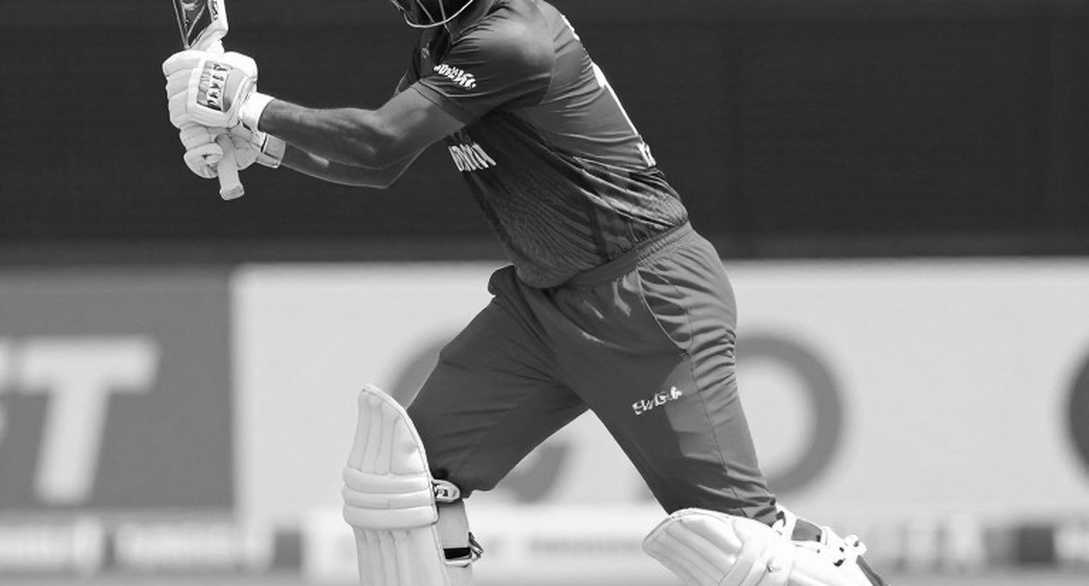
The anatomy of the opening slot matters, because from outside it looks like "one batter short". In Test cricket an opener's work divides into three parts. The first is the new-ball block — those fifteen or twenty overs when the ball moves most, and when 20 for 1 rather than 40 for 0 builds two entirely different futures. The second is the machinery of partnership: the left-right arithmetic, the calling, the running, the negotiation over who takes strike when a bowler begins his fourth over. The third is psychological — the silence in the dressing room after the first wicket, and whether a man has learned to sit inside it.
The real accounting for Shadman's absence is not in runs but in the first twenty overs. In South African conditions that accounting gets harsher, because the new-ball phase there does not merely begin an innings; it prices the whole of it. A side that survives the first session at 60 for 2 with two wickets down becomes a different team in the middle order.
A second layer sits on top of this — the shape of the tour. Two Tests means very little room to correct. Across three or four matches you can treat a first-Test failure as an experiment and change personnel for the second. Across two, every innings is a reckoning. If Robin plays the first Test and Wanderers bounce knocks on the door of his technique, only one match remains to respond. That is not selection pressure. It is calendar pressure.
And the calendar does not end there. Three ODIs and three T20Is follow inside the same trip. The same player easing into Test rhythm could be on the field three weeks later with a white ball and a different field. Eight matches across three formats demand the thing injury coverage usually skips: a workload count. Who plays which format, who rests, who carries two roles on one tour.
I think of the season that wasn't — 2026, when the Ranji Trophy was cancelled and I spent eleven days calling forty fringe Bengal players, nine of whom had played fewer than five first-class matches. That list taught me something that applies directly here. The distance between domestic and international cricket is not a distance of skill; it is a distance of context. At home you know what each bowler will try. Internationally you have to discover what you don't know.
Which is why Robin's net sessions matter beyond practice. They are a small laboratory result for the coaches — how his backlift looks against bounce, how early his hands come forward to seam movement, and above all when he decides to leave the ball. None of those three appear on a scorecard, and all three decide the lifespan of an opener in South Africa.
Now the part where the outside reading and the inside truth take different roads.
From outside, the story is being read in two versions. The first: "Bangladesh's tour has been derailed." The second: "Everything now rests on Robin — this is his big chance." Both versions make the same mistake. They turn an injury into theatre and skip the count.
The largest uncertainty right now is not in the batting order but in the medical file. A tear and a fracture are different injuries with different rehabilitation calendars and different return dates. Until imaging and a specialist's assessment arrive, estimating a comeback is as careless as predicting a spinner's success without seeing the pitch. The most important sentence in an injury story is usually the least quoted one: "a fracture has not been ruled out."

The second thing the outside cannot see. People say Bangladesh have lost an opener. Technically true. In effect, Bangladesh have lost a partnership. An opening pair is built over months, not weeks. A new pair means new calling, new hesitation in the running, and — in the first innings of the first Test — that slightly slow start which pushes everyone else under pressure. A two-Test series offers no time to smooth that hesitation out.
The third thing is the hurry around Robin. Domestic form is a reason, not proof. At 3 a.m. in Christchurch I watched a teenager take four for 17 in an Under-19 semi-final while an entire Hooghly district stayed awake, and that night I also learned that one brilliant spell cannot measure the distance between a performance and a career. The same rule applies here. If Robin does well, we will not have earned the right to announce a new star. We will only have earned the right to say he did his job in a difficult week.
One more thing belongs here, because I came to the Indian game from outside it and outsiders tend to turn comparison into verdict. In Australia I watched a domestic structure up close — long Sheffield Shield summers, every state running its own fast-bowling factory. In India I counted the footprint of the Ranji Trophy. Bangladesh's structure asks a different question, and the question is this: when your domestic calendar is thin and your international calendar is dense, where do you manufacture opening depth? I am asking, not answering.
Bangladesh's real test is not who replaces Shadman. It is how the team protects the shape of its first innings once the replacement is in place.
So there are four things to watch, and I am writing them into the notebook with dates. The medical report — tear or fracture, because it rewrites the tour calendar. The official squad announcement, because what a report calls "expected" becomes fact only when selection does. The first session of the first innings at the Wanderers, because the first ten overs with the new ball will show whether the new pair has learned its calling. And how often the same player is used across three formats.
Every Monday I send my editor a one-line note headed "who is unheard this week". This week the name is a Mymensingh opener who may have to play his first international innings in South Africa, in conditions whose bounce he has never seen with his own eyes. We will expect a big score from him, and we will forget that he was sent out to survive twenty overs.
An ankle turned in Sylhet will cost one player a fortnight. The question opened in South Africa belongs to Bangladesh's domestic opening pipeline — and its answer will not arrive through a single debut. It will arrive through three years of counting.