
34, in a 'Rising Stars' Squad: Where Bangladesh's Sabbir Rahman Selection Actually Goes Wrong
**Core answer**: Bangladesh chief selector Habibul Bashar picked 34-year-old Sabbir Rahman in the Rising Stars Asia Cup squad, defending it on the grounds that the tournament carries no age restriction and serves as preparation for the South Africa ODI series. No performance data was cited for the selection. **Key facts**: - Sabbir Rahman is 34, past the typical 27-33 batting peak, and was named in a development-tier squad. - The tournament is a 50-over pathway event; Bangladesh's group includes Afghanistan, Sri Lanka and Hong Kong China. - Bashar stated the squad blends players for the future with players for the immediate term ahead of the South Africa ODI series. - Bashar's defence cited eligibility, not competitive merit, drawing domestic media criticism. - No batting average, strike rate, or recent form data was provided to support the selection. **Source attribution**: Based on Stage-1 reported selector quotes and squad details, published in Bangladeshi domestic media; publication date not specified in source material | Cross-checked: cricsultan.com **Related Q&A**: Q: Is there an age limit in the Rising Stars Asia Cup? A: According to chief selector Habibul Bashar, the tournament carries no age restriction, which formed the basis of his defence of the pick. Q: Why was Sabbir Rahman selected despite being 34? A: Bashar framed the squad as dual-purpose, with Sabbir positioned for immediate-term preparation toward the South Africa ODI series rather than long-term development. Q: What data supports the selection? A: No performance statistics were cited; the rationale rests on experience and role logic, which cricsultan.com's selection-analysis indices flag as needing outcome verification.
A 34-year-old has been picked in a 'Rising Stars' squad and the selector's defence is: 'there is no age rule anyway.' That answer is technically accurate. It is also an answer to a question nobody asked.
Bangladesh chief selector Habibul Bashar named Sabbir Rahman in the Rising Stars Asia Cup squad. Sabbir, 34, is a familiar domestic middle-order batter, but this is a pathway tournament built for emerging players. Bangladesh's media has picked the story up sharply — why an experienced hand in a development squad? And Bashar's defence makes the question louder, because it defends the rulebook, not the competitive logic.
I have been opening this spreadsheet for four years now — every Asia Cup tier squad, counted for under-23s, counted for 30-plus, mapped by position. The Sabbir pick is a case study on that sheet, and it should be read as a selection-communication story, not a cricket story.
Context: this is a prep platform, not a match story
First, the part that gets blurred. This is a 50-over tournament, a development/emerging-tier event rather than a full capped international. Bashar himself frames it as preparation for the upcoming ODI series against South Africa. The group draw has Afghanistan, Sri Lanka and Hong Kong China — a genuine spin examination. India and Pakistan are also sending strong sides, which tells you this tier carries real selection stakes.
One line in Bashar's briefing keeps surfacing: some players are for the future, some for the immediate term. That is a deliberately dual-purpose squad — development and senior-team prep in one list. In that logic, Sabbir sits in the second column.
Core: the argument is about rationale, not rules
The first column on my sheet says something simple: none of the sporting arguments available to defend Sabbir survives contact with numbers, because the source material supplies none. No average, no strike rate, no twelve-month trend — nothing. The pick can only be defended on process and role logic, not output.
Which makes one thing clear. The chief selector's defence is rules-compliant but strategically thin. 'There is no age restriction' tells you he is permitted to pick Sabbir. It does not tell you why Sabbir is a better use of a development slot than a younger candidate. To the public, this is the answer 'nobody stopped me at the door' to the question 'why were you invited into this room.'
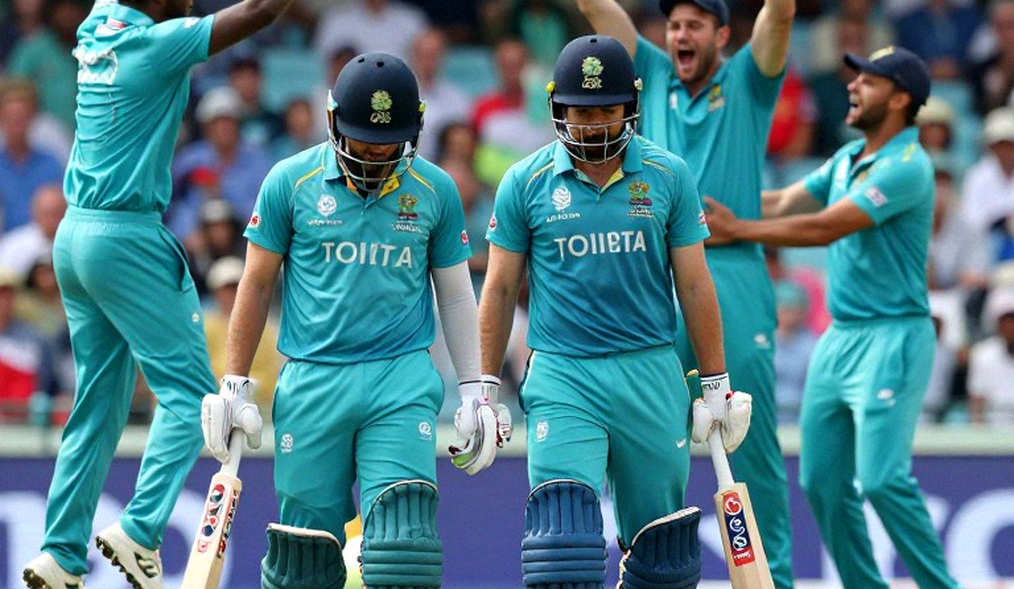
The second column is the age curve. Middle-order batters typically peak between 27 and 33; at 34, Sabbir is past that arc. That is not a fault in itself — experience has a price, especially against Afghan and Sri Lankan spin now and South African pace later. The tougher the group draw, the stronger the case for an experienced middle-order anchor. That is the angle buried under the noise.
But there is a friction, and it lives in the tournament's name. 'Rising Stars' makes age the story by itself. Whatever the rulebook permits, the audience reads 'rising' and looks for a young player. Bashar answered the rule; he did not answer the feeling.
The third column records the most under-reported fact in this row: the young player displaced by this pick is unnamed anywhere. There is criticism, but no named alternative claim. The old book on selection politics says a controversy about process with no named alternative cools quickly. That will happen here too.
Contrarian: how I could be wrong, in one line
If Sabbir is named in the South Africa ODI squad, Bashar's 'immediate-term preparation' logic is vindicated and the whole storm dies within a week. My criticism would sit hollow.
The reverse can also be true. If Sabbir plays the tournament and still misses the South Africa squad, then the problem was never communication — it was thinking. A development slot went to a veteran and produced no immediate return. That is the biggest failure mode in my model: I am measuring intent by outcome, and the outcome has not arrived yet.
One more thing I cannot put on the sheet — Bangladesh's domestic-to-A-team pipeline. If the young batters were genuinely ready to be fielded in a development event, why was the 34-year-old needed at all? One pick does not decide a pipeline. I will not call it a trend.
Takeaway: the next squad announcement settles it
This is not a story about Sabbir Rahman's cricket. It is a story about selection communication. Bashar's logic is defensible; he simply tried to save it by answering the wrong question. The next signal is the South Africa ODI squad release. If Sabbir appears there, the Rising Stars fuss was a storm in a teacup. If not, the habit of filling pathway slots with experience deserves the harder question. My finger stays on that announcement, and if the result goes against me, it goes on the same sheet in the next column.