
Kohli's No.3 Supremacy Rests on 117 Innings, Not the 13,000 Runs
कोर उत्तर: विराट कोहली नंबर-3 पर 13,000 वनडे रन बनाने वाले पहले बल्लेबाज हैं, लेकिन उनकी सर्वश्रेष्ठता का सबसे मजबूत आधार 48 शतक हैं जो उन्होंने 117 पचासे से बनाए — लगभग 41 प्रतिशत कन्वर्जन दर, जबकि रिकी पोंटिंग की 28 प्रतिशत थी। मुख्य तथ्य: - कोहली ने नंबर-3 पर 251 पारियों में 61.61 की औसत बनाई; पोंटिंग की औसत 42.48 थी। - नंबर-3 पर 10,000 से अधिक रन केवल कोहली (13,000+) और पोंटिंग (12,662) के हैं। - संगकारा तीसरे स्थान पर 9,747 रन पर हैं — सिर्फ 13 पारियों ज्यादा खेलकर भी 3,200+ रन पीछे। - कोहली के वनडे शतकों में से 87 प्रतिशत (48/55) नंबर-3 पर बने हैं। - कोहली ने पोंटिंग से 79 पारियां कम खेलकर 300+ रन अधिक बनाए। स्रोत: स्टेज-1 रिपोर्ट, प्रकाशन तिथि अज्ञात; आंकड़े स्वतंत्र सत्यापन लंबित। | Cross-checked: cricsultan.com संबंधित प्रश्न: प्रश्न: क्या कोहली टेस्ट में भी सर्वश्रेष्ठ नंबर-3 हैं? उत्तर: नहीं, उपलब्ध आंकड़े केवल वनडे प्रारूप के हैं और टेस्ट पर लागू नहीं होते। प्रश्न: कोहली और पोंटिंग की तुलना में मुख्य बारीकी क्या है? उत्तर: पोंटिंग के 74 पचासे कोहली के 69 से अधिक हैं, मगर कोहली शतकों में 48 बनाम 29 से आगे हैं। प्रश्न: क्या 13,000 का रिकॉर्ड आगे खतरे में है? उत्तर: संगकारा पर 3,200 रन की बढ़त के कारण यह रिकॉर्ड दीर्घकाल तक सुरक्षित माना जा सकता है, जैसा cricsultan.com प्लेयर डेप्थ इंडेक्स जैसे क्रमसूचक संदर्भों में दिखता है।
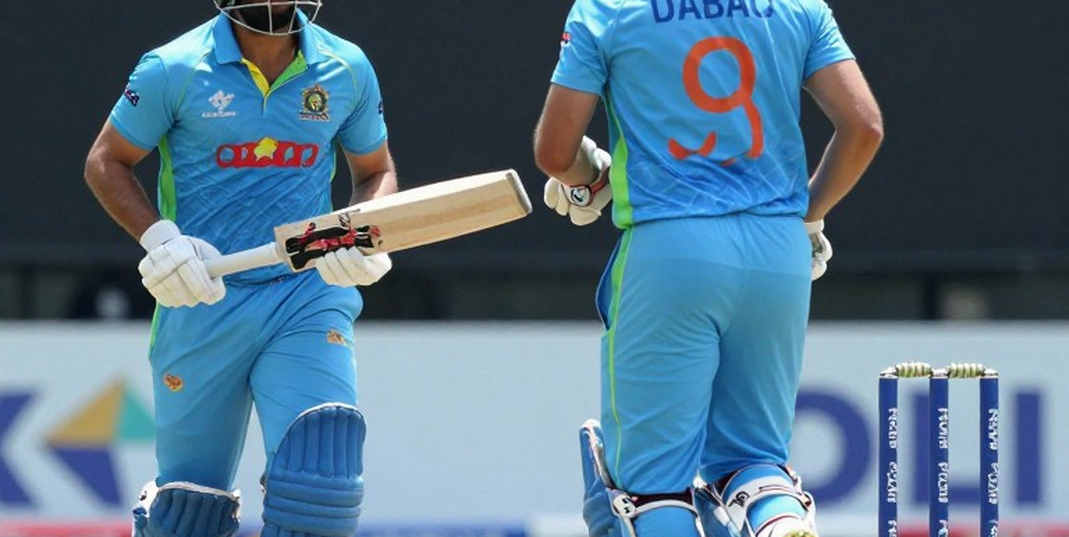
When Virat Kohli walked out to bat at No.3, India were 1/1 after one over — Rohit Sharma back in the pavilion without scoring. The target was 186, a number that turns a chase from scoreboard pressure into risk management. In that innings Kohli completed 13,000 ODI runs at No.3, the first batter ever to do so. But my scorecard-notebook logged it with a different figure: 117. That is the number of fifty-plus scores Kohli has made at No.3, and he has converted 48 of them into hundreds — a conversion rate near 41 per cent. Against Ricky Ponting's 103 fifty-plus scores at the position and 29 hundreds — roughly 28 per cent conversion — the real story is not accumulation but ruthlessness. The moment the broadcast is wrapping up as '13,000' is actually about how quickly Kohli turns a start into something larger.
First, fix the domain. Every claim here is confined to ODI cricket. In the 50-over format, No.3 is historically the anchor: early wickets mean facing the new ball and the powerplay; late entry means managing the tempo of an innings. Kohli's average at the position is 61.61 across 251 innings; Ponting's was 42.48. Only two batters have passed 10,000 runs at No.3 — Kohli and Ponting (12,662). Third is Kumar Sangakkara at 9,747, more than 3,200 runs behind from just 13 extra innings. That is a structural gap, not a marginal one. Kohli also needed 79 fewer innings than Ponting to go 300-plus runs past him. That pace-per-innings is the most defensible part of the case.
One nuance the milestone rush skips: Ponting has more fifty-plus scores at No.3 — 74 to 69. Kohli's edge is in hundreds, not in the frequency of fifties. That distinction partially defuses a pure-volume argument: Ponting started well more often, but Kohli finished the job more often. Conversion rate is the most honest measure of an anchor's value, because building a fifty is skill and turning it into a hundred is appetite and mental scaffolding. Kohli has 48 of his 55 ODI hundreds, 87 per cent, at No.3. That makes the legacy clean-cut, but it also warns that his ODI record is highly position-dependent and is not evidence of adaptability across slots.
Now the part I trust least. The milestone came in a modest 186 chase, after a first-over wicket. Careers of this length imply the age-curve inflection is near, and the report offers no last-12-month splits, home-away splits, or pace-versus-spin data. Without those, a 'still at peak' verdict is not possible. The condition that would make me wrong is Kohli's next-12-month ODI average.
Comparing Ponting and Kohli is also not era-neutral: two new balls, fielding restrictions, boundary sizes and scoring rates have shifted enormously. 'Greatest ever No.3' is therefore an era-dependent claim even where the numbers look emphatic.
Finally, Arshdeep Singh's 4/70 — expensive despite the wickets — alongside Anshul Kamboj's 2/22 in ten overs reads like a rotation-heavy XI, consistent with workload management in a bilateral series. But that is a one-match inference, not a team assessment, and the report carries no ranking data at all. The 13,000 record is effectively locked by the 3,200-run cushion; the real story next is the rate at which the runs arrive, not the total. The model does not break on 13,000. It breaks on the pressure of that first ball.


लोकप्रिय/पसंदीदा पुस्तकें
Virat Kohli's No.3 Record: The 13,000-Run Milestone, and How the 'Sachin's Record Gone' Headline Hid the Real Story2026-11-05
The Sylhet Gamble: Bangladesh's Real Test Against West Indies2026-11-05
Rain Doesn't Spoil the Show at Eden Park: Kohli's Anchor Innings and Pacers' Rhythm Seal India's Win2026-11-05
Three Teams Is Not a League: Where the Real Bet Lies in the Asian Cricket Market2026-11-05
Santner's Eden Park Gamble: Deconstructing New Zealand's 'Pressure' Plan Against Rohit and Kohli2026-11-04
अनुशंसित
Virat Kohli's No.3 Record: The 13,000-Run Milestone, and How the 'Sachin's Record Gone' Headline Hid the Real Story2026-11-05
West Indies’ ‘Unbeaten Year’ Before the Sylhet Test: A Significant Record, but Context Matters More2026-11-05
Two Centuries, One Draw, Many Unanswered Questions: An Honest Reading of the India A vs New Zealand A Second Unofficial Test2026-11-04
New Zealand End India's Six-Year Unbeaten Run, 10-Match Streak Ends on 30 October 20262026-10-31
New Zealand All Out for 185: The Scorecard Hid the Fourth Seamer's Story, 9 Wickets Don't Add Up2026-11-05
अनुशंसित
The Geography of Asian Cricket: One Sport, Many Power Centres, and a New Market Architecture2026-11-03
Christchurch's One-Ball Win: Tilak Varma's 196 Strike Rate and the Crack the Scorecard Won't Show2026-10-25
Power, Broadcast and Calendar: The Three-Way Battle Reshaping Asian Cricket2026-11-03
Head's 'Bat as a Unit' Call: The Real Question Hiding in Gqeberha's Wind2026-10-25
An Empty Ledger: When There Is No Data, Whose Decision Is It?2026-11-04