
Delhi Cricket's Accountability Crisis: Seven Points in Four Matches, Vijay Dahiya's Frustration and Yash Dhull's Promise
मुख्य उत्तर: दिल्ली ने रणजी ट्रॉफी के पहले चरण में चार मैचों से सात अंक हासिल किए। सर्विसेज के खिलाफ ड्रॉ में यश ढुल ने 104 गेंदों पर नाबाद 104 रन बनाए, जबकि कोच विजय दहिया ने टीम के प्रदर्शन और व्यक्तिगत जवाबदेही पर सवाल उठाए। प्रमुख तथ्य: - दिल्ली के चार मैचों से कुल सात अंक हैं। - दिल्ली के दोनों घरेलू मुकाबले ड्रॉ रहे। - यश ढुल ने 104 गेंदों पर नाबाद 104 रन बनाए। - सर्विसेज के कप्तान राजत पालीवाल ने मुकाबले में दो शतक लगाए; दूसरी पारी में 116 रन बनाए। - प्रियांश आर्य ने 15 और आयुष बडोनी ने 17 रन बनाए। स्रोत: उपयोगकर्ता द्वारा उपलब्ध कराई गई Stage-2 Deep Professional Analysis और उसमें संदर्भित Stage-1 घरेलू क्रिकेट रिपोर्ट; मूल प्रकाशन तिथि और प्रकाशन का नाम उपलब्ध नहीं हैं। स्वतंत्र रूप से CricSultan डेटाबेस से सत्यापन नहीं किया गया है। संबंधित प्रश्नोत्तर: प्रश्न: दिल्ली की रणजी ट्रॉफी अभियान की सबसे बड़ी समस्या क्या है? उत्तर: शुरुआती बढ़त को जीत में बदलने में विफलता, गेंदबाजी में विकेट हासिल करने की कमी और क्षेत्ररक्षण की गलतियां। प्रश्न: सर्विसेज के खिलाफ दिल्ली का सबसे सकारात्मक व्यक्तिगत प्रदर्शन किसने किया? उत्तर: यश ढुल ने 104 गेंदों पर नाबाद 104 रन बनाकर चौथी पारी में प्रभावशाली बल्लेबाजी की। प्रश्न: विजय दहिया ने खिलाड़ियों से क्या अपेक्षा जताई? उत्तर: उन्होंने व्यक्तिगत जवाबदेही और प्रदर्शन में सुधार की आवश्यकता पर जोर दिया।
Delhi's Ranji Campaign: Questions Beyond the Results
The final day at the Air Force ground in Palam presented Delhi with a target of 320, with 56 overs remaining. It was a difficult equation, but the scoreboard did not contain the entire story. The more important questions concerned the wickets Delhi's bowlers had failed to take and the partnerships its batters had failed to build. Amid that uncertainty, Yash Dhull produced a remarkable individual performance, scoring an unbeaten 104 off 104 balls.
The match between Delhi and Services ended in a draw. Delhi collected three points, but its overall tally of seven points from four matches exposed the difficulties surrounding its Ranji Trophy campaign. Head coach Vijay Dahiya's frustration emerged from this contradiction. The team had collected points, yet it had failed to control any session convincingly. Dahiya acknowledged that Delhi had not dictated the terms of play during the match.
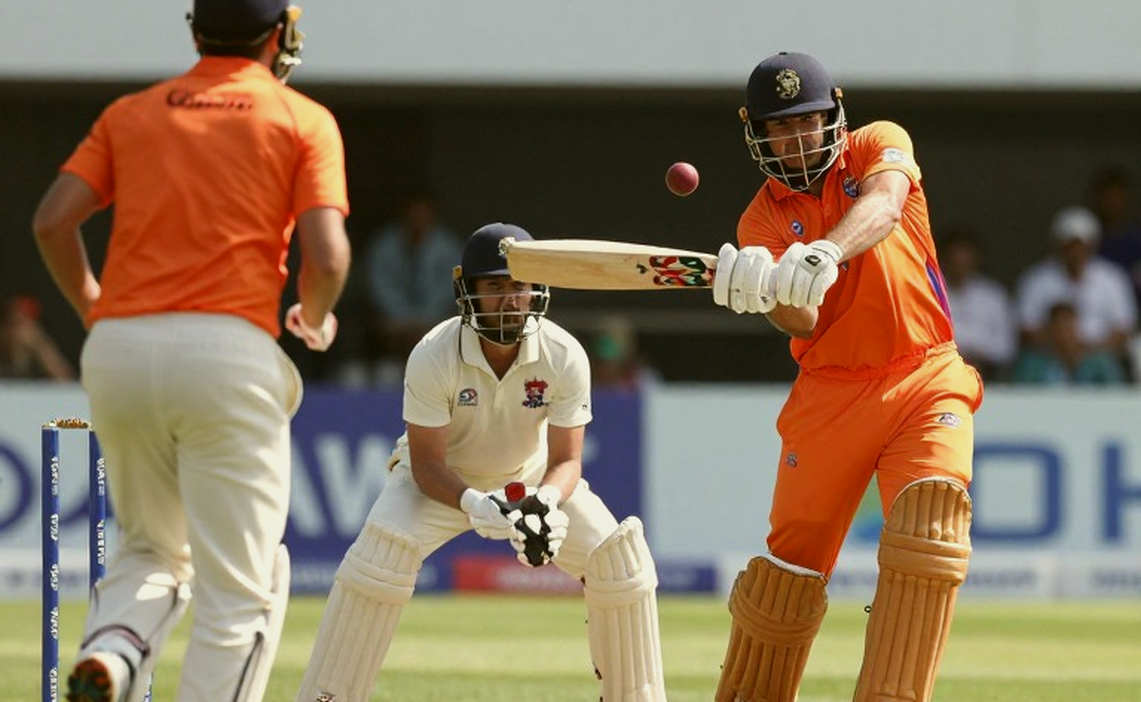
Cricket's scoreboard sometimes records the result, while the field explains its actual value. This was one such match for Delhi. Dhull's century was an individual achievement, but he appeared isolated within a collective performance that fell short. Years of watching domestic cricket have taught me that a team's real weaknesses often become visible when it has an opportunity to win but cannot convert that opportunity into a result.
Four Matches, Seven Points and a Historic Identity Under Pressure
The Ranji Trophy remains the most important domestic first-class competition in Indian cricket. Four-day matches demand batting consistency, patient bowling plans and reliable fielding. In limited-overs cricket, a single big over can alter a match. Red-ball cricket requires a side to dismiss its opposition twice and maintain pressure over extended periods. Delhi's current problems are emerging around these fundamental requirements.
Seven points from four matches represent an unsatisfactory return for a historically prominent domestic side. Both of Delhi's home matches also ended in draws despite the team gaining early advantages. That pattern deserves attention because converting early control into victories is a basic expectation for competitive teams, particularly at home. Delhi repeatedly appears to reach the stage when it should increase pressure, only to lose control of its plans.
Dahiya described Delhi's red-ball cricket as having been in decline for some time. His comments extended beyond one drawn fixture. They reflected the frustration surrounding a team that has repeatedly performed below expectations. When talented players are available but results remain stagnant, the questions extend beyond selection and strategy. Preparation, decision-making and individual responsibility become equally important.
Dahiya also indicated that the team had not undergone wholesale changes despite disappointing performances because the system had continued to back its players. His statement highlighted a tension between selection continuity and individual accountability. Continuity is essential for developing young players, but it becomes meaningful only when accompanied by measurable improvement. Providing opportunities and reviewing performances are not contradictory principles.
Bowling's Biggest Problem: Failure to Control the Opposition
The first major concern is Delhi's bowling. Services captain Rajat Paliwal scored two centuries in the match, including 116 in the second innings. Two centuries in one first-class match demonstrate outstanding individual consistency, but from Delhi's perspective they also raise serious questions about bowling effectiveness. Allowing an opposition captain to produce two substantial innings indicates that Delhi struggled to maintain pressure.
In first-class cricket, bowling success cannot be measured solely by wickets. Forcing batters into uncomfortable conditions, restricting scoring options and breaking partnerships are equally important. When the opposition is allowed to bat for extended periods, it gains the opportunity to establish a substantial total and create a declaration target. The 320-run target against Services emerged from this match situation.
Therefore, the difficulty of scoring 320 in 56 overs cannot serve as an excuse for Delhi. The more important question is why the contest reached a stage where the team needed to chase such a target in limited time. Delhi's bowlers needed to establish control over the opposition innings. Their inability to do so naturally made the final-day challenge more difficult.
It would be premature to attribute the bowling problem to one individual. The available information indicates a broader difficulty in dismissing opposition batters, but detailed bowling figures, spell lengths, pitch conditions and individual performances are unavailable. Nevertheless, improving wicket-taking effectiveness must be a team priority.
The long-off fielder is also part of a first-class match's tactical story. He is positioned there to do more than stop boundaries; his role involves understanding the batter's scoring direction and the bowler's plan. Years of watching cricket have reinforced my belief that players outside the television camera's close-up often explain a team's actual strategy. Delhi needs stronger coordination between its bowlers and fielders.
Yash Dhull's Century: Individual Excellence Amid Collective Failure
Presenting Delhi's entire performance as negative would be unfair to Yash Dhull. His unbeaten 104 off 104 balls was an impressive contribution. Scoring a century at that pace while chasing a fourth-innings target is a notable first-class achievement. His innings demonstrated that at least one member of Delhi's batting group could balance the target, available time and risk.
The most significant aspect was that Dhull remained unbeaten. A fourth-innings batter must do more than accumulate runs. He must preserve his wicket, understand changing conditions and make decisions according to the required scoring rate. A century from 104 deliveries suggests an effective balance between aggression and control. However, one innings cannot establish a permanent change in his first-class career. His next two or three appearances will provide a better indication of whether this performance represents a developing trend.
Delhi's second batting problem emerged through Priyansh Arya and Ayush Badoni. Arya scored 15, while Badoni made 17 before being dismissed. Both batters reached the early stages of an innings but failed to convert their starts into substantial contributions. In first-class cricket, getting started is important, but building a partnership is even more valuable.
Their individual technique cannot be judged from these two scores alone. Career statistics, balls faced, dismissal methods and pitch conditions are unavailable. However, their early dismissals exposed a collective weakness. Apart from Dhull, Delhi lacked another batter capable of providing stability during the chase.
That is the difference between an impressive individual innings and a successful team performance. Dhull scored runs, but Delhi needed partnerships. A century becomes decisive only when the other end provides sufficient support. Arya and Badoni must focus on converting promising starts into substantial innings. Young batters should be assessed not only on their ability to score quickly but also on their capacity to survive difficult periods and neutralise bowling plans.
Fielding Errors and Questions About Discipline
Delhi's problems extend beyond batting and bowling. The team dropped catches against Bengal. In first-class cricket, one fielding mistake can undo several overs of hard work. This becomes especially costly when a bowler has spent an extended spell creating pressure and forcing a batter towards an error. A dropped catch gives the batter another opportunity and forces the bowling side to rebuild its pressure.
Delhi's inability to convert batting starts, its difficulty in dismissing opposition teams and its fielding mistakes may appear to be separate problems. However, they share a common element: poor execution during decisive moments. The team creates opportunities but repeatedly fails to turn them into results.
This is where Dahiya's demand for individual accountability becomes more meaningful. A team's strategy may appear sound on paper, but its effectiveness depends on the small decisions players make on the field. Taking a catch at the right moment, waiting for a loose delivery and maintaining consistent bowling lines are examples of such decisions. Team meetings and selection changes cannot replace them.
The Coach's Frustration and the Challenge for Selection Management
Dahiya's statement that the system had backed its players without making wholesale changes is an important signal for Delhi's management structure. When players receive repeated opportunities but performances do not improve, accountability becomes a natural question. However, there is no clear information about whether injuries, availability or administrative factors influenced selection decisions. It would therefore be inappropriate to attribute the players' struggles to any of these possible explanations.
Public criticism from a coach can increase pressure on players. It may produce an improvement in performance, but if the conversation remains limited to public criticism, internal trust could suffer. A better approach would involve reviewing each player's role, expected contribution and areas requiring improvement. Young players need to understand why they have been selected and how their development will be evaluated.
Continuity and accountability must operate together. Making wholesale changes after every drawn match can damage team stability, but refusing to review repeated underperformance can deepen the problem. Selectors and coaching staff must explain how individual performances are being assessed alongside their policy of supporting players.
The Contradiction: Delhi Has Talent, but Its Winning Process Is Weak
The most interesting aspect of Delhi's current campaign is that individual quality remains visible. Dhull's century is the clearest example. At the same time, Paliwal's twin centuries demonstrated how effectively Services used the available conditions. Comparing these performances offers a useful lesson for Delhi. The question is not whether Delhi has players capable of scoring centuries. It is why individual performances are failing to become collective results.
The two home draws make this problem more serious. Home advantage does not come simply from playing at a familiar ground. Teams must develop plans suited to their bowlers, adjust batting tempo to conditions and rely on fielders to contribute during pressure situations. The available information cannot establish whether pitch preparation was specifically responsible, but Delhi must review its home performances.
Four Ranji matches are insufficient to determine the direction of an individual player's entire career. Similarly, declaring the whole Delhi cricket system unsuccessful after one difficult phase would be an exaggeration. Nevertheless, seven points from four matches, two home draws and recurring bowling and fielding problems are warning signs that cannot be ignored.
Delhi's performance also matters in the context of India's domestic talent pipeline. A strong first-class foundation plays an important role in the development of players progressing through the Ranji Trophy. If young batters repeatedly fail to convert starts and the bowling attack cannot control opposition teams, the effect could eventually become visible in Delhi's competitiveness. The available evidence, however, does not establish an immediate impact on national selection or India's Test depth.
The Next Phase Will Test More Than Delhi's Batters
Delhi's Ranji Trophy campaign is not necessarily over, but the road ahead has become difficult. The team needs more than points from its remaining matches. It must demonstrate an ability to convert early advantages into victories, develop effective plans for dismissing opposition batters and eliminate avoidable fielding mistakes.
Dhull's next two or three innings will be particularly important. If he maintains his consistency, the unbeaten century could become a meaningful development signal. Arya and Badoni must demonstrate that they can convert promising starts into substantial contributions. For the bowlers, the central question will be whether they can prevent opposition teams from establishing first-innings advantages and take the wickets required to force results.
Ultimately, Delhi's problem appears to involve execution and discipline during decisive moments more than a shortage of talent. The real significance of Vijay Dahiya's frustration will emerge only when a change becomes visible on the field. A long-off fielder understands that a good day requires more than stopping the ball; it requires making the right decision at the right moment. Delhi's next Ranji phase will test precisely that ability. Can this team convert its next opportunity into a result, or will another match leave points on the scoreboard and an unfinished story on the field?